
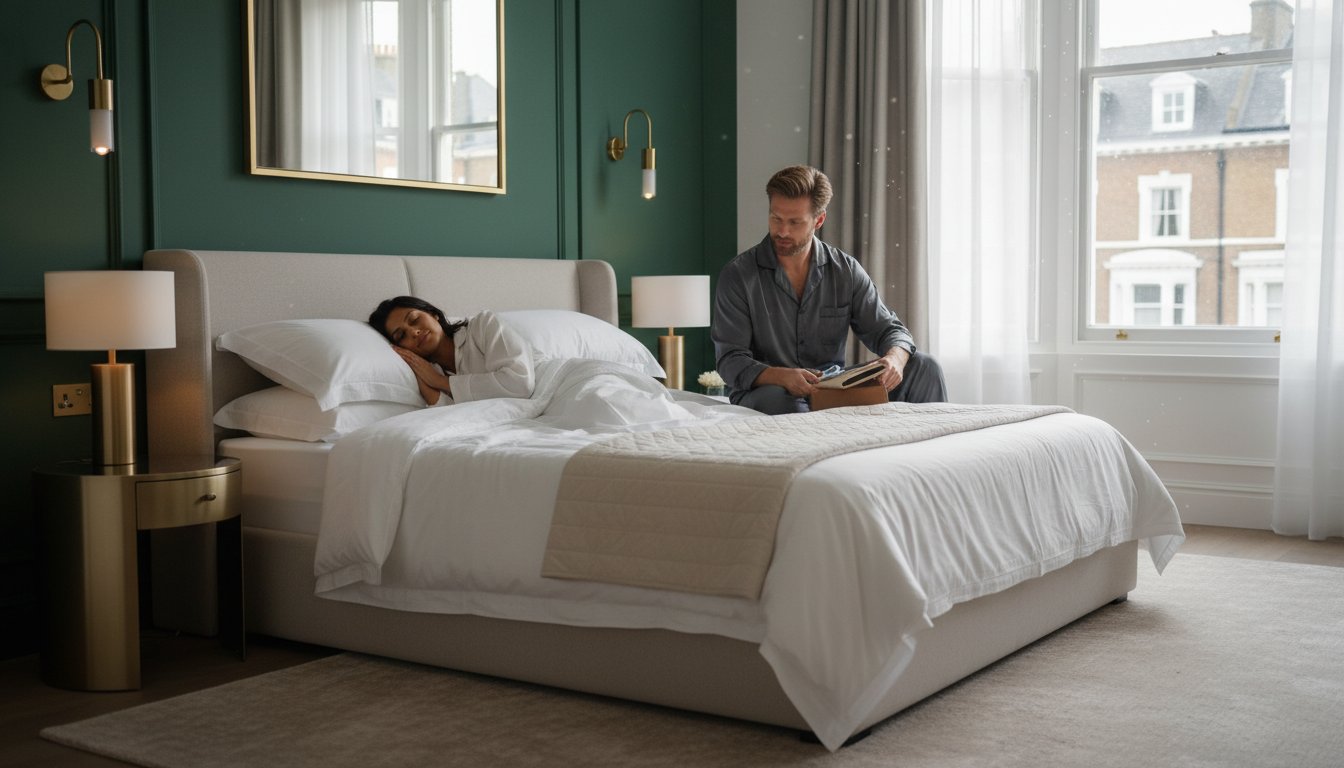
That budget memory foam topper might be doing less for your sleep than you think. While many people believe any soft surface stops movement, true rest actually comes from energy decoupling. This is a process where your mattress absorbs vibrations instead of passing them across the bed. If you are searching for the best motion isolation mattress for light sleepers, you need a combination of individualized spring response and high-density surface dampening that heritage brands have mastered over decades.
We understand the frustration of waking up every time your partner shifts or the dog jumps onto the bed. It’s exhausting to start your day feeling like you’ve been in a wrestling match rather than experiencing a deep sleep. We want to help you eliminate those sensory wake-ups and replace nighttime resentment with genuine morning energy and comfort.
In this guide, you will discover how to choose a mattress that feels stable, quiet, and perfectly suited to your specific needs. We’ll break down the differences between pocket springs and foam layers while looking at trusted names like Hypnos, Sealy, and Relyon. You will finish this article with a clear understanding of which technology will finally deliver the deep, uninterrupted sleep you deserve.
Key Takeaways
- Learn why low-quality open-coil systems create a "trampoline effect" that disrupts your rest and how modern energy decoupling can fix it.
- Discover how to choose the right motion isolation mattress for light sleepers by comparing the independent response of pocket springs with high-density foam.
- Understand the vital role of edge support and surface tension in preventing the surface "sway" that leads to frequent sensory wake-ups.
- Use our simple two-step assessment to match your mattress choice to the weight differences between you and your partner for a stable sleep surface.
- See why we curate heritage brands like Hypnos and Sealy to provide the professional build quality you need for deep, restorative rest.
The Science of Motion Transfer: Why Light Sleepers Struggle
Motion transfer is the travel of kinetic energy from one side of the bed to the other. When your partner shifts position, that energy moves through the mattress materials like a wave in a pond. For many, this is a minor annoyance. For a light sleeper, it's a direct wake-up call. Finding a high-quality motion isolation mattress for light sleepers is about breaking that wave before it reaches your side of the bed.
Traditional beds often suffer from the "Trampoline Effect." This usually happens in open-coil or low-quality spring systems where every coil is wired together in a single unit. If one part moves, the whole unit reacts. It's a fundamental difference when comparing pocket springs vs. traditional coils. Independent springs allow for localized compression, meaning the bed only reacts exactly where the weight is applied. This prevents the "dip" that often causes partners to roll toward each other in the night.
The Physics of Undisturbed Sleep
Material density plays a huge role in how far a vibration can travel. High-density materials act as a dampener. In the industry, we look at "hysteresis" in foam. This is the material's ability to absorb energy rather than reflecting it back like a rubber ball. Our goal for any motion isolation mattress for light sleepers is energy decoupling. This process ensures the mechanical movement on one side of the bed is physically separated from the other side. By using layers that "eat" the energy of a toss or turn, we can keep your side of the bed perfectly still and stable.
Common Triggers for Light Sleeper Awakenings
Light sleepers often have a heightened sensory profile. You don't just feel the big movements; you feel the micro-vibrations of a partner entering a new sleep cycle or adjusting a pillow. We categorize these disruptions into three distinct types of motion:
- Vertical Bounce: The traditional up-and-down movement common in bouncy, low-density beds that lack proper dampening layers.
- Horizontal Sway: A side-to-side wobble that makes you feel unstable as you're trying to drift off.
- Edge-Sink: When the side of the bed compresses too much, creating a "roll-together" effect that pulls both sleepers into the middle.
Beyond the physical movement, the sound of internal components can be a trigger. Older or cheaper springs often create friction noise. Premium brands like Sealy and Hypnos focus on silent, reinforced builds to eliminate these auditory wake-ups. We believe your bedroom should be a sanctuary of quiet, stable comfort. By understanding these physics, you can move away from guesswork and choose a bed that truly respects your need for stillness.
Pocket Springs vs. Memory Foam: Which Isolates Best?
Choosing between springs and foam often feels like a toss-up, but the right choice depends on how much movement you're willing to tolerate. While traditional open-coil beds create a "whole-bed" reaction, modern technology offers a much more refined experience. If you are looking for a motion isolation mattress for light sleepers, understanding the difference between these two core materials is your first step toward a quiet night.
This guide from the New York Times explains the science of mattress materials and how they impact your rest. It's not just about the top layer; the way the core of the bed handles energy determines whether you'll sleep through your partner's late-night movements.
The Pocket Spring Advantage
In a Hypnos mattress, each pocket spring is housed in its own fabric sleeve. This design allows every individual coil to move independently. When your partner moves, only the springs directly under them compress. This creates a localized reaction that prevents energy from traveling across the bed. High-end brands often use hand-nesting techniques to fit these springs together. This process reduces friction and eliminates the metallic clicking sounds that can wake a light sleeper. It isn't just about having a high spring count. It's about how those springs are arranged to ensure they don't pull on their neighbors.
Visco-Elastic Foam and Energy Absorption
Memory foam is famous for its "dead-stop" feel. The molecular structure of visco-elastic foam is designed to trap and dissipate energy rather than reflecting it. Slow-recovery foams take longer to bounce back, which is great for dampening big movements. However, some people prefer the "active" feel of latex. A Dunlopillo latex mattress provides excellent isolation but allows you to move more freely without that sinking sensation. It's a perfect middle ground for those who want stability without feeling "stuck."
Many people worry about foam getting too hot. While early versions struggled with temperature, modern foams use open-cell structures and gel infusions to keep you cool. If you can't decide between the two, a hybrid mattress offers a sensible compromise. These beds combine the deep support of pocket springs with a thick dampening layer of foam on top. This combination provides the "on-top" feel of a spring bed while keeping motion transfer to an absolute minimum. If you're unsure which feel is right for your bedroom, we'd love to help you compare these technologies in person at our showroom.
The Role of Edge Support and Mattress Firmness
Improved stability is often the missing piece of the puzzle for people struggling with nighttime disturbances. If the perimeter of your bed feels weak, the entire surface can develop a subtle "sway" every time someone moves. This lack of structural integrity makes the bed act like a see-saw. For those seeking a motion isolation mattress for light sleepers, a reinforced edge is just as important as the springs themselves. It ensures the mattress stays flat and quiet, regardless of where you or your partner are lying.
Reinforced Edges: Preventing the Roll-Together
Light sleepers often feel a sense of "edge-sink" on lower-quality beds. When the side of the bed compresses too easily, you naturally feel like you are about to roll off or, worse, roll toward your partner in the center. We solve this by recommending beds with specific perimeter reinforcements. Some designs use an "edge-guard" wire, which is a high-tension steel frame that keeps the springs in perfect alignment. Others utilize foam encapsulation, which creates a sturdy wall around the internal components. Sealy's Posturepedic technology is a fantastic example of this, as it stabilises the entire sleep surface to provide a consistent feel from one side to the other. This extra support is essential for couples sharing smaller beds, as it maximizes the usable sleep area without increasing movement transfer.
Firmness and Vibration Conduction
Surface tension acts as a conductor for kinetic energy. Think of a drum skin; the tighter and firmer it is, the more it vibrates when struck. An "extra firm" mattress can sometimes be a poor choice for a light sleeper because the surface is too rigid to absorb micro-vibrations. Instead, the movement skips across the top of the bed. We often find that a "Medium-Firm" tension is the "Goldilocks" zone for stability. It provides enough support to keep your spine aligned but offers enough "give" to dampen movement before it reaches your side of the bed.
Natural comfort layers also play a significant role in this dampening effect. Materials like wool, silk, and cotton, which you'll find in many Relyon mattresses, act as organic shock absorbers. These fibers don't have the "spring-back" energy of synthetic materials. They help to deaden the feel of the bed, ensuring that your partner's REM cycle transitions don't become your wake-up call. Choosing a tension that allows for a slight "sink" without losing core support is the best way to keep your environment still and peaceful.

Practical Buying Guide: Matching the Mattress to the Sleeper
Finding the perfect bed is a personal journey that goes beyond simply picking a comfort level. For couples, the challenge is often balancing two different body types on a single surface. We want to help you move past the confusion of technical specs and focus on what actually creates a peaceful environment. When selecting a motion isolation mattress for light sleepers, you should follow a structured approach to ensure the technology matches your lifestyle.
The Weight Differential Challenge
If your partner is significantly heavier than you, they will naturally create a larger depression in the mattress. This "funnel effect" pulls the lighter sleeper toward the center, making every minor shift feel magnified. It's a common cause of nighttime frustration. To solve this, we often suggest a "Zip and Link" system or a dual-tension mattress. These clever designs allow each side of the bed to be tailored to the individual sleeper's weight. By giving each person the specific support they need, you achieve total isolation on a shared king-size surface. It's a practical way to ensure neither of you feels the other moving during the night.
Natural vs. Synthetic Dampening Layers
Natural materials are often the secret to a truly quiet bedroom. Relyon's natural fillings, such as horsehair, wool, and silk, are incredibly effective at muffling both sound and vibration. Unlike some synthetic fibers that can rustle or feel "bouncy," these organic layers act as a heavy, dense blanket over the spring unit. This creates a much quieter sleep environment. For the conscious light sleeper, these materials also offer better breathability and sustainability, ensuring your comfort doesn't come at the cost of the planet or your physical well-being.
To make the best choice for your home, we recommend following these four steps during your search:
- Step 1: Assess the weight gap between you and your partner to decide if a dual-tension core is necessary.
- Step 2: Decide between a "sink-in" foam feel or an "on-top" spring response based on your sensory preferences.
- Step 3: Check for quality markers like hand-side-stitching, which provides structural integrity and prevents the walls from bowing.
- Step 4: Test for edge-to-edge stability in a showroom by lying on the very perimeter of the bed with your partner.
Taking the time to test these features in person can save years of poor sleep. We invite you to browse our full range of motion-isolating mattresses to find the perfect match for your bedroom and your budget.
Premium Solutions at Belfast Bed Superstore
At Belfast Bed Superstore, we believe your home should be a place of total relaxation and well-being. We've spent years listening to our neighbors' concerns about poor rest and partner disturbance. This is why we carefully curate our collection to include only the most dependable names in the industry. Choosing a motion isolation mattress for light sleepers shouldn't feel like a gamble. We prioritize brands that use physical engineering rather than just clever marketing to keep your side of the bed still. We don't just sell beds; we sell better mornings.
We know that a mattress is a significant investment in your quality of life. To help you feel confident in your choice, we offer a 30-night sleep trial for light sleepers. This gives you the time to ensure the motion-isolating technology works in your own bedroom environment. Our professional assembly service also plays a vital role. We ensure your new bed is set up correctly and remains squeak-free, eliminating the mechanical noises that often trigger nighttime awakenings. If you're looking for flexible finance options to make premium comfort more accessible, we can discuss the various paths available to suit your budget and needs.
Hypnos: The Royal Standard of Motion Isolation
A Hypnos mattress represents the pinnacle of British bed-making. Their ReActive™ pocket spring system is specifically designed for an individualized response. Each spring senses your body shape and weight distribution, ensuring that movement is contained exactly where it happens. The hand-tufting process is another mark of quality. It keeps every internal component secure and silent, preventing the layers from shifting over time. As a holder of the Royal Warrant, Hypnos provides an enduring standard of quality that we are proud to offer our customers.
Sealy and Relyon: Engineered for Stillness
If you need a stable sleep boundary, Sealy mattresses are an excellent choice. Their Unicased edge support creates a firm perimeter that prevents the "sway" we discussed in earlier sections. This technology stabilizes the entire surface, making the bed feel much larger and more secure. For those who prefer a more traditional touch, Relyon mattresses bring a heritage of hand-craftsmanship. By using dense, natural fillings and hand-side-stitching, they significantly reduce mechanical noise and vibration. We invite you to visit our showroom to explore our full range of motion-isolating mattresses and find the perfect fit for your lifestyle.
Wake Up Refreshed Every Single Morning
Finding the right motion isolation mattress for light sleepers is about more than just picking a brand. It's about combining energy-absorbing materials with independent spring technology and sturdy edge support. We've explored how heritage names like Hypnos and Sealy use these principles to ensure your partner's movements stay on their side of the bed. You now have the tools to choose a setup that prioritizes your physical well-being and domestic comfort. True rest is finally within your reach.
We want to make your journey to better sleep as smooth as possible. You can take advantage of our 30-night sleep trial guarantee to ensure your new bed is the perfect fit for your home. We also offer 0% finance and interest-free instalments to help you invest in quality without any financial stress. Plus, our team provides professional old bed removal and recycling to save you the heavy lifting. Find your perfect night's sleep with our motion isolation range and start enjoying the quiet, stable rest you deserve. Better sleep is just around the corner, and we can't wait to help you achieve it.
Frequently Asked Questions
Is a memory foam mattress better than pocket springs for motion isolation?
Memory foam generally provides the most effective "dead-stop" energy absorption for a motion isolation mattress for light sleepers. Its visco-elastic structure is designed to trap movement and prevent it from traveling across the surface. However, high-quality pocket springs from brands like Hypnos move independently, offering a very similar level of stillness with a more traditional feel. Both technologies are excellent choices for reducing partner disturbance.
Can a mattress topper help reduce motion transfer on my old bed?
A mattress topper can act as a helpful dampening layer, but it's usually a temporary fix for a larger problem. While a thick foam topper can muffle some surface vibrations, it cannot fix a support core that has lost its structural integrity. If your old springs are sagging or wired together, you'll likely still feel the underlying "sway" regardless of the topper you use. Investing in a new mattress is a better long-term solution for deep sleep.
What is the 'trampoline effect' in mattresses and how do I avoid it?
The 'trampoline effect' happens when the springs in a mattress are interconnected, causing the entire bed to bounce when one person moves. This is most common in older open-coil systems where the movement on one side pulls the entire spring unit down. You can avoid this by choosing a mattress with independent pocket springs. Because each coil is housed in its own fabric sleeve, they only react to direct pressure without affecting the springs next to them.
How do I stop my partner's movements from waking me up?
Upgrading to a mattress with high-density foam or pocketed coils is the most effective way to eliminate partner disturbance. If you and your partner have different body weights, a dual-tension mattress can be a total game-changer. This allows each side of the bed to be tailored to your specific needs, ensuring the surface stays stable and quiet even when the other person shifts position during the night.
Are hybrid mattresses good for light sleepers who get hot at night?
Hybrid mattresses are fantastic for light sleepers who need both isolation and temperature control. They use foam layers to dampen movement while the spring unit below allows for natural airflow to keep you cool. Many of our hybrids also feature breathable natural covers that help regulate your body temperature. It's the perfect middle ground for anyone who wants the "dead-stop" feel of foam without the risk of overheating.
Does a bed frame affect the motion isolation of a mattress?
A bed frame plays a vital role in how stable your mattress feels. If your frame is loose, squeaky, or has uneven slats, it can create vibrations that wake you up, even if your mattress is high-quality. We recommend using a solid divan base or a sturdy bedstead with slats spaced no more than 7cm apart. This provides a flat, quiet foundation that allows your mattress to perform its job properly.
What is a 'Zip and Link' mattress and does it stop motion transfer?
A 'Zip and Link' mattress consists of two separate mattress units that are zipped together to form a king or super-king bed. This is the ultimate solution for total motion isolation because the two spring units are physically separate. It's a very popular choice for our customers in Belfast who want the look of a large bed but need the absolute stillness of two independent sleep surfaces.
How often should I replace my mattress to maintain its isolation properties?
You should generally look to replace your mattress every 7 to 10 years to maintain its performance. Over time, the materials inside will naturally degrade and lose their ability to absorb energy and dampen movement. If you start noticing that you're feeling your partner's movements more than you used to, it's often a sign that the internal components have reached the end of their functional life.


