

The fullest pillow isn’t automatically the best pillow for shoulder pain. Choose one that keeps your head and neck aligned with your spine, with enough loft to fill the gap between your shoulder and head. An adjustable shredded memory foam pillow may suit you if you can tailor its fill to your sleeping position and comfort.
If you’re wondering whether shredded memory foam pillows are any good, it depends on how well one supports your posture and feels throughout the night. It’s understandable to hope a new pillow will ease pressure, but its shape, firmness and your sleeping position all matter. Comfort is personal: a pillow that feels supportive to one sleeper may feel too high or too soft to another.
This guide explains how to choose pillow loft for side sleeping, pair your pillow with a supportive mattress, and position your body to reduce pressure on a sore shoulder. It also covers pillow types and practical adjustments for a more comfortable sleep setup.
Key Takeaways
- For side sleeping, consider whether your pillow fills the gap between your shoulder and head; a suitable height is generally between 10 and 15 cm.
- Adjustable-fill pillows let you tailor the loft to your sleeping position, while a stable shape helps keep your head and neck supported.
- Pair your pillow with a supportive mattress, since the surface beneath you affects how your shoulder and spine rest.
- Try sleeping on your back or on the side that isn’t sore, and use pillow placement to support a more comfortable position.
- Compare memory foam and latex pillows for their feel and support, then explore mattress options from Belfast Bed Superstore if your current sleep setup needs attention.
1. Do side sleepers need thicker pillows?
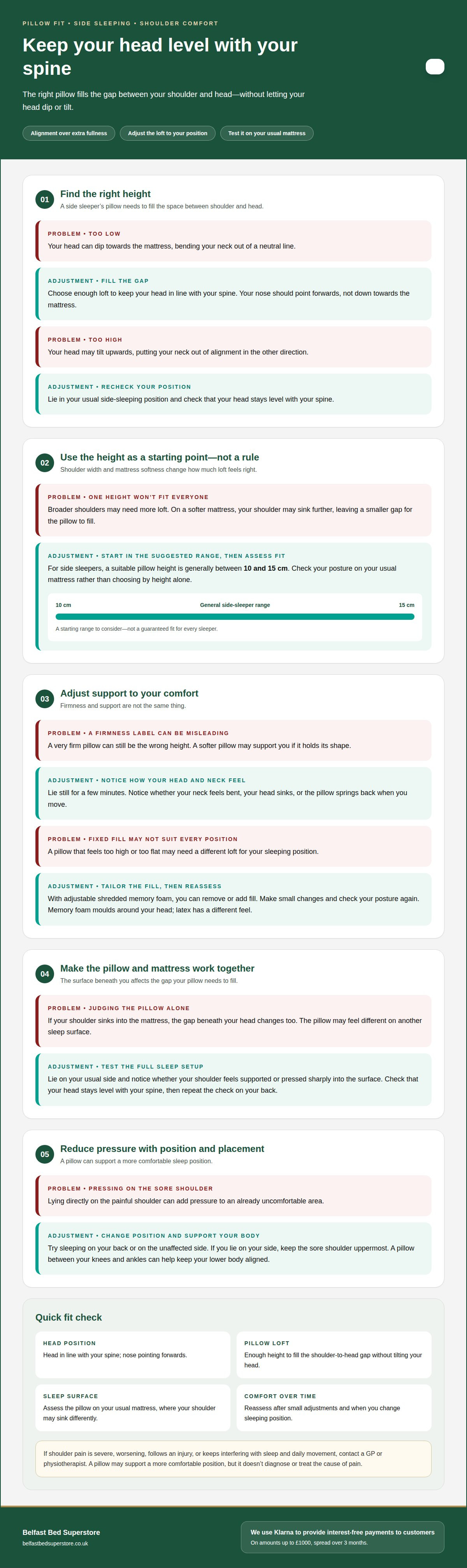
Often, yes. A side sleeper needs enough loft to fill the space between the outside of the shoulder and the head. A pillow that is too low can let the head dip towards the mattress; one that is too high can tilt it upwards. For side sleepers, a suitable pillow height is generally between 10 and 15 cm, but shoulder width and mattress softness affect the fit.
Try this position check: lie on your side with your nose pointing forwards, not down towards the mattress. Your head should line up with your spine, without bending towards either shoulder. Broader shoulders may need more loft. On a softer mattress, your shoulder may sink further, leaving a smaller gap for the pillow to fill.
Adjustable shredded memory foam can be useful because you can remove or add fill to change the loft. This lets you refine the support if the pillow feels too high or too flat. Latex has a different feel, while a pillow that holds its shape can provide more consistent support as you move. Stomach sleepers usually need a lower profile than side sleepers, since a high pillow can turn the head sharply.
For shoulder pain, try sleeping on your back or on the unaffected side. If you lie on your side, keep the sore shoulder uppermost rather than pressing it into the mattress. A pillow between your knees and ankles can also help keep your lower body aligned. A change of position may ease pressure, but persistent pain can still disrupt sleep and cause neck or shoulder discomfort.
There’s no single UK price for a shoulder-pain pillow. Cost varies with the filling, construction and adjustability, so compare these features with the support you need rather than choosing by price alone. Memory foam and latex are options to consider if their height and feel suit your sleeping position.
Follow the care label for washing and drying, and replace a pillow when it loses its shape or support. A removable cover may be machine washable, while the foam inside may require different care. A sleep trial is not the same as a product warranty, so understand what each one covers; a 30-night sleep trial is available with the retailer’s offer.
Contact a GP or physiotherapist if shoulder pain is severe, worsening, follows an injury, or keeps interfering with sleep and daily movement. A qualified clinic such as RED Physiotherapy can assess your symptoms and advise on appropriate treatment. A pillow may support a more comfortable position, but it doesn’t diagnose or treat the cause of pain.
2. Pillow support and spinal alignment
For side sleepers, a suitable pillow height is generally between 10 and 15 cm. Firmness has no single ideal setting for everyone: the pillow should hold your head without feeling rigid or letting it sink too far. Your shoulder width, mattress softness and preferred sleep position all affect how much support feels comfortable.
Check your alignment while lying in your usual position. Ask someone to view your head and upper body from behind, or use a mirror if practical. Your nose should point forwards, and your head should sit in line with your spine rather than tipping towards the mattress or ceiling. A supportive pillow can help keep the head and neck aligned at around 30 degrees.
Loft describes a pillow’s height and how much it compresses under your head. A pillow that looks high before use may flatten when you lie down. Memory foam moulds around your head, while adjustable shredded fill can be removed or added to change the loft. Make small adjustments, then reassess your posture in your usual sleeping position.
When sleeping on your back, you may find a flatter pillow more comfortable if you have a smaller frame. Removing some fill can reduce excess lift beneath your head. Keep your shoulders on the mattress, not on the pillow, and check that your chin doesn’t tilt towards your chest. If the pillow shifts during the night, reposition it beneath your head and neck.
Firmness and support aren’t the same. A very firm pillow can still be the wrong height, while a softer one may support you if it holds its shape. Lie still for a few minutes to test it: notice whether your neck feels bent, your head sinks, or the pillow springs back when you move. These signs are more useful for assessing fit than a label alone.
Use your usual mattress when judging pillow height, because your shoulder may sink differently on a soft surface than on a firm one. If you change sleeping position, reassess the loft rather than assuming the same setup will work for each posture. Aim to keep your head neutral and steady; ongoing shoulder pain or numbness needs attention beyond pillow adjustments.
If you have a smaller frame and sleep on your back, try removing some fill to create a flatter pillow surface that helps keep your alignment neutral.
3. Pairing a pillow with a supportive mattress
A pillow and mattress work together as a sleep surface, not as separate fixes. The mattress supports your shoulders, ribs and hips, while the pillow supports your head. If your shoulder sinks into the mattress, the gap beneath your head changes too. This can affect your neck position and leave your muscles feeling strained after a night in bed.
Assess the pillow and mattress together rather than judging the pillow on its own. Lie on your usual side and notice whether your shoulder feels supported or pressed sharply into the surface. Check that your head stays level with your spine. Repeat the check on your back, as the mattress distributes your weight differently in each position.
A mattress that feels comfortable at first may still lack even support across its surface. For example, if your hips sink noticeably while your upper back stays raised, your posture may feel twisted. Look for a consistent feel from the shoulder area through the waist. A pillow can’t correct a mattress that dips beneath your body.
Use a simple sequence to adjust your setup: settle into your usual position, let your body relax, then assess your head, shoulder and hips together. If your shoulder sinks further, reassess how the pillow meets your neck. Make one change at a time, such as adjusting the pillow fill or changing position, so you can tell what feels different.
Mattress materials respond differently to pressure. Foam moulds around the body, while a sprung mattress provides support through its spring system. Neither material automatically suits every sleeper. Your body shape, preferred position and the mattress’s condition all affect how your shoulder settles. Focus on whether you can rest without feeling pushed into an awkward angle.
Think about the whole night, not just the first few minutes. If you wake repeatedly to shift your shoulder or reposition your pillow, note where the discomfort begins. Pressure directly beneath the shoulder, for example, points to a different issue than a head that keeps tilting. These details can guide a more informed adjustment and may ease pressure while you rest.
Check the mattress surface for visible dips, uneven areas or a change in feel where you usually sleep. Then reassess your pillow on that same surface, as another bed can change its effective loft. A supportive mattress paired with a well-fitting pillow can create a more comfortable base for rest, while persistent pain needs attention beyond bedding adjustments.
4. Pillow positioning for shoulder pain
Start with a position that keeps pressure off the sore shoulder. Side sleepers can lie on the unaffected side, or try sleeping on their back. If you stay on your side, keep the painful shoulder uppermost rather than trapped beneath your body. These positions can help you settle without placing direct weight on the sore area.
When lying on your side, place the pillow beneath your head and neck, not under your shoulder. Rest your head centrally, with your face pointing forwards and your neck in a neutral line. Keep your upper shoulder relaxed instead of raising it towards your ear. If your head tilts up or down, adjust the pillow’s loft before settling.
Give your upper arm a comfortable place to rest. Bring it slightly forwards and support it with a pillow in front of your chest, so it doesn’t hang unsupported. Keep your lower arm clear of the space beneath your shoulder. For rotator cuff pain, a pillow with an arm pocket can support your head and neck while giving the affected arm a place to rest.
When sleeping on your back, place a pillow beneath your head and keep your shoulders on the mattress. Let your arms rest beside your body or gently across your torso. If one shoulder feels compressed, try a small pillow beneath that arm. Adjust until the shoulder feels neutral, rather than pulled backwards or pressed firmly into the bed.
When side sleeping, place a pillow between your knees and ankles. This can help align your lower body and reduce twisting through your trunk. If your hips roll forwards, move the pillow closer to your knees; if your ankles press together, extend its support lower. Small changes in placement can make your whole position feel more stable.
Changing sides can help, too. Alternating your sleeping side means you aren’t keeping muscles extended on just one side for most of the night. If both sides feel uncomfortable, try lying on your back and adjusting your arm support. Don’t force a position that increases pain. A pillow may help you find relief, but it won’t address every cause of shoulder pain.
Before bed, take a moment to set up your position. Place your head pillow first, then arrange support for your arms and legs, and check that your neck and shoulder remain neutral. If you move during the night, repeat the same simple sequence. Consistent positioning makes it easier to notice which adjustments feel comfortable and which create extra pressure.
5. Which pillow types are best for shoulder pain and side sleepers?
The right pillow type depends on how you sleep, the support you prefer and where pressure builds. For side sleeping, a pillow should hold your head and neck comfortably while leaving room for your shoulder to settle. Memory foam and latex are two options, but neither suits everyone or guarantees pain relief.
Memory foam: This option moulds around your head and can feel steady if you want less movement during the night. Shredded memory foam offers an added benefit: you can adjust the fill to change the loft. Remove a little if your head sits too high, or add fill if the pillow compresses too far.
Latex: Consider latex if you prefer a different feel from memory foam. Focus on how it supports your head in your usual sleeping position, rather than choosing by material name alone. Lie on your side and check that your neck stays level, without the pillow pushing your head upwards.
Contoured designs: Some pillows have a shaped surface, with a central dip and raised edges. The dip may suit back sleeping, while a raised side can support your head when you turn. Try each position before settling and notice whether the shape keeps your face pointing forwards or encourages your neck to bend.
Rotator cuff pillows: A rotator cuff pillow can support your head and neck while providing a pocket for the affected arm to rest in. This may help reduce pressure on the shoulder. It’s a specific design for a particular positioning need, not a general replacement for every side sleeper’s pillow.
Compare pillow types by checking three things: head height, neck position and how easily you can stay comfortable. Lie on your unaffected side, place the pillow beneath your head and neck, then rest your upper arm on a separate pillow. If your head tilts or your shoulder feels compressed, adjust the setup before deciding whether the pillow fits.
The best pillow for shoulder pain supports your sleeping position without forcing your head or shoulder into an awkward angle. Fill, shape and stability all matter, but the mattress beneath you also affects how your shoulder settles. Compare memory foam and latex with shaped or arm-support designs, then choose for fit and comfort rather than a broad “best” label.
Belfast Bed Superstore
Belfast Bed Superstore offers mattresses to consider if your pillow feels right but your sleep surface doesn’t. We stock Hypnos, Sealy, Relyon and Dunlopillo mattresses, giving you options when assessing how your mattress supports your shoulder and body. A pillow works alongside the mattress, so considering both can help you create a more comfortable sleep setup.
Consider your mattress if it dips, feels uneven or makes it difficult to settle in your usual position. A new pillow alone may not address pressure from the surface beneath you. We can help you explore mattress options that suit your sleep setup and preferences.
Contact Belfast Bed Superstore to discuss mattress options for a more supportive night’s rest.
Make your next sleep setup work for you
Notice how your shoulder feels through the night, then decide whether your pillow, mattress or both need attention. Choosing the best pillow for shoulder pain is personal: aim for a comfortable position that suits your body and usual sleeping habits, not simply the firmest or most expensive option.
If your mattress also needs a closer look, Belfast Bed Superstore offers Hypnos, Sealy and Relyon Mattresses to consider as part of your sleep setup. We use Klarna to provide interest free payments on amounts up to £1000, spread over 3 months.
For practical help exploring mattress options, contact Belfast Bed Superstore today. A thoughtful adjustment to your bed can be a positive step towards more comfortable nights.
Frequently Asked Questions
Are shredded memory foam pillows any good?
Yes, shredded memory foam pillows can suit sleepers who want to adjust the amount of fill. If a pillow feels too full after you change sleeping position, for example, removing some filling can alter its feel. Check the care label before cleaning: a removable cover may be washable, but don’t wash the foam itself. A good fit depends on how it supports you through the night.
Do side sleepers need thicker pillows?
Side sleepers often need more pillow loft than back sleepers because their shoulders create a wider gap beneath the head. The right thickness also depends on shoulder width and how much the mattress gives beneath you. Notice whether your head tilts after you settle, rather than judging the pillow by its height alone. If you change sides or move onto your back, reassess how it feels in that position.
What is a rotator cuff pillow?
A rotator cuff pillow is designed to support the head and neck while providing a pocket for the affected arm. This may help reduce pressure on the shoulder during sleep. Unlike a standard pillow, which mainly supports the head, this design may suit you when arm placement affects your comfort. It doesn’t treat the underlying cause of shoulder pain.
How do memory foam, latex, and adjustable-fill pillows compare for shoulder pain?
Memory foam moulds around your head, latex has a different feel, and adjustable-fill designs let you change the amount of filling. Compare them by checking how each supports your head in your usual sleeping position. If you often shift positions, for example, see whether the pillow still feels supportive afterwards. Material alone won’t tell you which pillow fits; assess comfort and alignment.
Can a pillow cause or worsen shoulder pain?
A pillow can contribute to discomfort if its height or shape keeps your head and neck at an awkward angle. A pillow that compresses heavily may leave your head unsupported, while one that pushes your head upwards can strain your sleeping posture. Shoulder pain can have other causes, so a pillow isn’t a diagnosis. If discomfort persists or affects daily movement, seek advice from a healthcare professional.
How much do recommended shoulder-pain pillows cost in the UK?
There isn’t one fixed UK price.


