

A safer bedroom comes from how furniture is placed and secured, not just what it’s made of. Arrange child-safe bedroom furniture away from windows, anchor wardrobes, chests of drawers and shelves to the wall, and keep heavy items out of a child’s reach. Leave clear floor space for play and everyday movement.
It’s natural to focus on a sturdy bed or a practical place to store clothes and toys. Everyday habits matter too: keep blind cords out of reach, store heavy belongings in lower drawers, and make sure children can’t use drawers or shelves as steps. This guide explains how to arrange the room, secure storage and choose a bed suited to your child, helping make the bedroom comfortable and safer.
Key Takeaways
- Keep beds, dressers and shelves away from windows, and keep blind cords out of children’s reach.
- Leave clear space for play and movement, and soften sharp furniture corners with suitable guards.
- Anchor wardrobes, bookcases and chests of drawers securely to the wall to help prevent tip-overs.
- Choose a bed that suits your child’s age and stage, and check that its mattress fits snugly.
- Keep televisions and other heavy objects off furniture children could climb on; Belfast Bed Superstore offers Hypnos mattresses when you’re choosing a new mattress.
1. Furniture placement away from windows
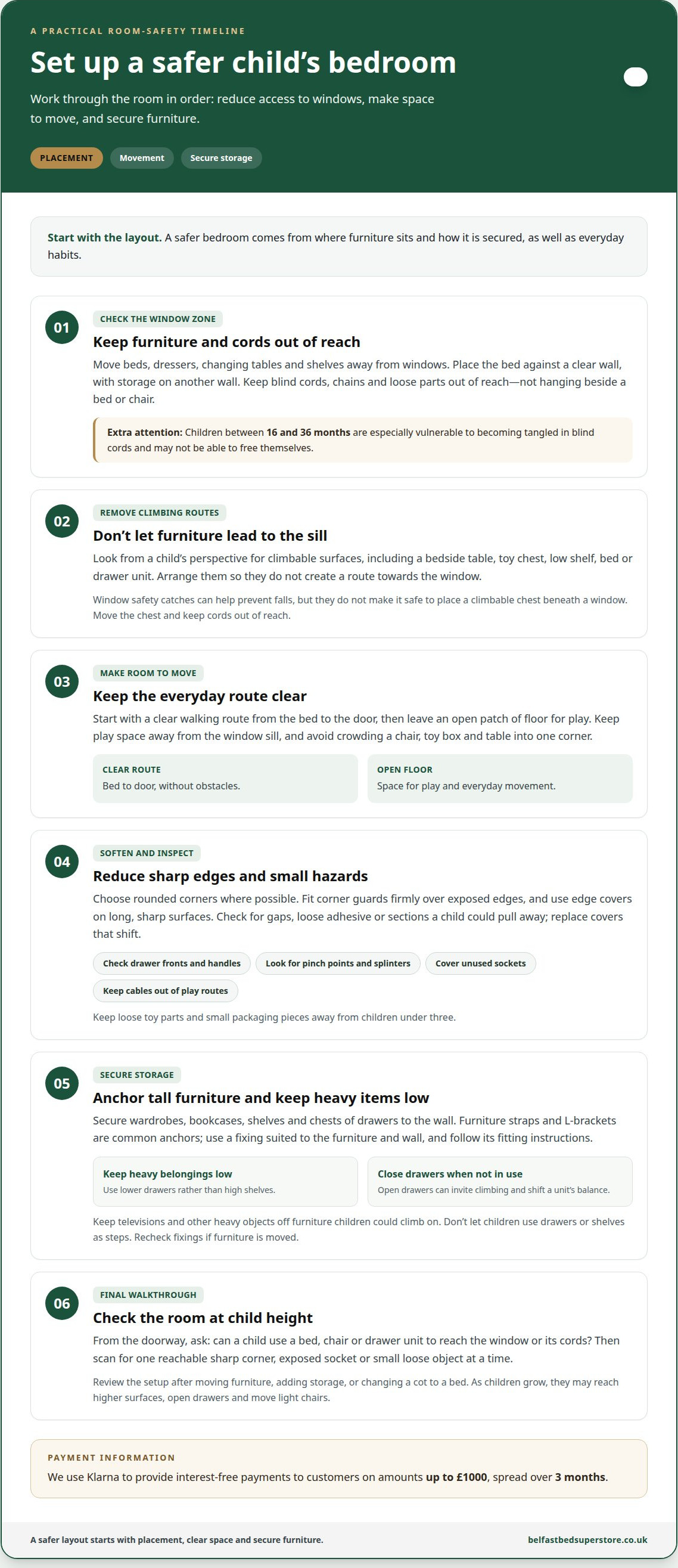
Keep beds, dressers, changing tables and shelves away from bedroom windows. A child might climb onto a bed or drawer unit to reach the sill, turning ordinary furniture into a step. Moving these pieces elsewhere removes that easy route and helps reduce the risk of falls. Place the bed against a clear wall rather than beneath a window, then position storage on another wall.
Look at the room from a child’s perspective. Notice which surfaces could be climbed, including a bedside table, toy chest or low shelf, and arrange furniture so they don’t lead towards the window. Leave a clear route between the bed and door, with play space away from the sill. This makes everyday movement easier without creating a tempting climbing route beside the glass.
Window coverings need attention too. Keep blind cords, chains and other loose parts out of reach, and don’t let cords hang beside a bed or chair. Children between 16 and 36 months are especially vulnerable to becoming tangled in blind cords and may not be able to free themselves. Check the position of curtains and blinds after moving furniture, since a new arrangement can bring cords closer to a child’s hands.
Window safety catches can help prevent falls and allow a window to be locked ajar. Use them alongside a furniture layout that keeps children away from the sill. A catch doesn’t make it safe to put a climbable chest beneath a window; moving the chest removes the invitation to climb. Review the setup when the room changes, such as when a cot becomes a bed or new storage arrives.
If you’re considering Birlea Furniture for a child’s room, decide where each piece will sit before arranging the rest of the space. Measure the available wall areas, note the window and its opening, then avoid placing beds or storage directly beneath it. The key is the position, not a particular finish or colour. A neutral scheme can look calm, but it doesn’t replace safe placement.
Make a final check from the doorway: can a child use a bed, chair or drawer unit to reach the window or its cords? If so, move the furniture and check the blind again. These simple adjustments make child-safe bedroom furniture part of a safer everyday layout, rather than relying on supervision alone.
2. How should furniture be arranged in a child’s room to enhance safety?
Begin with the main walking route from the bed to the door. Keep that route clear, then leave an open patch of floor for play. Avoid squeezing a chair, toy box and table into the same corner, where a child may bump into hard edges while moving quickly. A parent can sit on the floor to spot hazards at a child’s height, including sharp corners hidden behind bedding or toys.
There’s no single UK price for a safer bedroom layout. The total depends on the furniture’s material, size and storage features. Prioritise essential pieces, then consider whether suitable corner guards and socket covers can make existing furniture safer.
Choose furniture with rounded corners where possible, especially tables and low storage beside play areas. Rounded edges can reduce the chance of injury from a sharp corner during a stumble. For an existing square-edged unit, fit corner guards firmly over exposed points. Use edge covers on long, sharp surfaces, such as a desk edge at a child’s standing height.
Check each guard after fitting it. Press gently along the edges to find gaps, loose adhesive or sections a child could pull away. Replace covers that shift or expose a corner. Foam padding can soften an edge, but shouldn’t create a loose strip that children could pull or chew. Keep small packaging parts out of reach, especially if a child might put them in their mouth.
Inspect furniture by sight and touch. Carefully run a hand over table edges, drawer fronts and handles, then open and close each drawer to identify pinch points. Look for gaps that could trap fingers, rough splinters, loose fittings and chipped finishes. Check the floor and underside of furniture for detachable pieces. For children under three, remove loose toy parts from the floor and low shelves to reduce choking hazards.
Fit socket covers to unused outlets and keep cables away from play routes. As children grow, they can reach higher surfaces, open drawers and move light chairs towards furniture. Recheck corner covers and socket access after changing the room or moving a bed. A layout that works for a crawling baby may need adjustment once a child walks, climbs or uses drawers independently.
Finish with a walkthrough at child height. Look for one reachable sharp corner, exposed socket or small loose object at a time, and deal with each before returning the room to everyday use. This practical sweep can reveal hazards that are easy to miss when standing at adult height.
3. Securing shelves, dressers and wardrobes to walls
Anchor shelves, dressers and wardrobes to the wall so a child can’t pull them over while climbing or reaching. Even a stable-looking unit—whether mass-produced or bespoke from makers like Chris's Custom Creations—can tip if weight shifts towards an open drawer or shelf. Furniture straps and L-brackets are common anchors. Choose a fixing suited to the furniture and wall, then follow its fitting instructions carefully. Attach it firmly, not just around a loose section of furniture.
Start with a room-by-room check. Look for tall or top-heavy pieces, including bookcases, freestanding wardrobes and narrow drawer units. Secure each one, even if it stands beside another piece. Two unanchored units don’t become stable just because they touch. Keep furniture in its intended position after securing it, since moving a dresser can loosen or strain its fixings.
If a nursery dresser also serves as a changing table, secure it before using the top for care tasks. Fit the anchor according to its instructions, and keep one hand on the baby during changes. Have nappies and wipes within easy reach before placing a baby on the changing surface. Keep drawers closed when not in use, as an open drawer can invite climbing and shift the unit’s balance.
Check the wall and fixing points before installation. Use anchors designed for the furniture and wall, and attach them to wall studs where the fitting instructions require it. Don’t choose a fixing based only on its appearance. If the unit has a manufacturer’s anti-tip kit, use it and follow the directions. A bracket that’s secure on one wall material may not suit another.
Desks and dressing tables also need attention if they’re tall, heavy or easy to climb. Drawers, handles and open shelving can give a child footholds. Secure the unit, keep drawers closed and avoid placing tempting toys on top. Assess a bedside table’s height and stability, particularly if a child could pull on it while standing by the bed.
Make checks part of regular room care. After moving furniture, cleaning behind a wardrobe or adjusting a desk, inspect the anchor and tighten any loose connection according to its instructions. Look for a gap between the furniture and wall, a bent bracket or a shifted strap. Repeat the check when the room changes, such as when a new dresser replaces a smaller chest. These steps keep storage functional while helping reduce the risk of furniture tipping.
4. What kind of bed is safe for a child?
Choose a bed to suit your child’s age, movement and ability to climb. A low bed keeps the sleeping surface closer to the floor, which can reduce the risk of injury from a fall. Check that the frame is stable, with firmly joined parts and no sharp edges. The mattress should fit snugly within the frame, without large gaps around its edges.
A child’s crib slats should be no more than 2 3/8 inches apart, according to the U.S. Consumer Product Safety Commission. This is a US measurement, not a statement of UK law. Check the bed’s instructions and construction, and make sure the mattress fits the frame without leaving an entrapment gap.
For a child moving from a cot to a regular bed, a toddler bed, suitable guard rails or a mattress placed low can ease the transition. Choose an option based on how confidently the child gets in and out and whether they move around during sleep. Check that rails are secure and positioned to reduce gaps where a child could become trapped. Recheck the bed’s stability and rail fixings during regular room maintenance.
Bunk beds need particular care because the upper sleeping space is higher. Choose a design with full-length guard rails and a secure ladder, then follow the assembly instructions closely. Check that the ladder doesn’t wobble and the rails remain firmly attached. The bed’s height and layout should suit the room, with safe access and no nearby furniture that could be used to climb onto it.
Certification claims need context. Some standards relate to materials or finishes, rather than the bed’s structure or guard rails. Check product details to understand what claims about furniture finishes or glues cover. UK retailers’ ranges differ, so compare individual product listings and look for clearly identified certification information instead of assuming one label applies to every item.
For toys and children’s clothes, choose stable storage that’s easy to use without climbing. Low drawers or a toy box keep belongings accessible, while a wardrobe with a clothes rail keeps garments together. Store heavier items low, and anchor storage securely so opening a drawer doesn’t affect its stability.
Check wardrobes and clothes rails for loose fittings, sharp edges and parts that could catch clothing. Secure each unit, keep the floor around the bed clear and review the setup as your child grows. A bed that supports easier movement now may need different rails or storage arrangements as climbing ability and independence develop.
5. Keeping heavy objects off chests of drawers and bookcases
A television, large mirror or heavy ornament can make a chest of drawers more dangerous if a child climbs or pulls at it. Keep these objects off drawer units and bookcases, even when the top looks broad and stable. Place a television on a secure stand designed for it, or use a suitable wall fixing. Secure a mirror to the wall rather than balancing it on furniture.
Keep heavier belongings in the lowest drawers. This helps lower the chest’s centre of weight and avoids loading the top drawers with bulky items. For example, store folded blankets or larger toys low, and put lighter clothing in upper drawers. Close each drawer after use: an open drawer can act as a climbing step and shift the unit’s balance.
Childproof locks can limit access to cupboards and drawers containing items children shouldn’t handle. Choose a lock suited to the furniture and use it on the relevant drawers or cupboard doors. Locks don’t replace secure furniture or careful storage. Keep medicines, cleaning products and small hazardous objects out of reach rather than relying on a lock as the only barrier.
Keep bookcase tops clear. Don’t place heavy books, speakers or decorative items above a child’s reach, where they could fall during play or if a shelf is pulled. Put heavier books on lower shelves and lighter items higher up. Arrange favourite books so children can reach them without standing on a chair or climbing the unit. If you have sound equipment or collections in shared living areas, furniture craftsmen like Urban Reclamation share advice on choosing purpose-built, stable cabinets designed to keep heavy media securely housed at ground level.
A chest of drawers can be comfortable and practical in a child’s room. Choose a stable position, keep its top clear and avoid placing toys or cushions beside it that might encourage climbing. Rounded edges may soften the impact if a child bumps into furniture, but they won’t prevent a heavy object from falling. Consider both the furniture and its contents when planning the room’s look.
Make a quick storage check while tidying. Look for a television, mirror or heavy ornament on top and move it to a safer location. Then open the drawers and shift bulky items downwards. Check that locks work, drawers close fully and the floor nearby doesn’t provide a handy step. Repeat after rearranging the room or changing what each drawer holds.
For a safer storage refresh, explore bedroom furniture options and plan where each piece will sit before adding heavy belongings.
Belfast Bed Superstore: Hypnos Mattresses
Belfast Bed Superstore can help you choose a mattress for a safer, more comfortable bedroom. The range includes Hypnos Mattresses, alongside Sealy, Relyon and Dunlopillo options. Compare them with your child’s bed and room layout in mind, so the mattress suits the sleeping space.
We use Klarna to provide interest free payments to customers for amounts up to £1000, spread over 3 months. This gives you a way to spread an eligible payment while planning a bedroom update.
If you’re considering a mattress for your child’s room, contact Belfast Bed Superstore or visit belfastbedsuperstore.co.uk.
Make safety part of the room’s routine
A child’s room changes as their confidence, reach and daily habits develop. Treat its layout as something to revisit, not a one-time task. When you move furniture, add a new toy or change how the room is used, take another look from your child’s point of view. Small, thoughtful adjustments can help child-safe bedroom furniture remain practical as well as comfortable.
Choose your next step based on what the room needs now. You might be planning a new bed, replacing worn storage or making the existing setup work better. Understanding the room’s layout and how your child uses it can make choosing bedroom furniture more straightforward.
If you’re ready to consider options for a child’s bedroom, contact Belfast Bed Superstore. A comfortable, carefully arranged room can grow alongside your family.
Frequently Asked Questions
How can safety rules be implemented in the daily use of a child’s room?
Build a short safety check into tidying and bedtime. Put toys away, close drawers, return chairs to their usual place and check that cables haven’t crossed the walking route. Store toys with small detachable parts where younger children can’t reach them. Repeat the routine after playdates or room changes, when unfamiliar toys or moved belongings may introduce hazards.
How should furniture be arranged in a child’s room to enhance safety?
Plan the room around clear routes between the bed, door and play area. Keep furniture from narrowing those paths, and put frequently used items where a child can reach them without climbing. For example, place a book basket on a low, stable surface rather than on a tall unit. Leave open floor for play without crowding the room with extra pieces.
What inspirations can make a room both safe and aesthetic?
Use a simple colour palette, soft furnishings and practical storage to create a calm look without filling the room with ornaments. A rug with a non-slip backing can help reduce sliding, while bedding and wall colours add visual interest without introducing climbable objects. Low shelves make favourite books easier to reach. Keep decorative items light and place them where they can’t fall onto the bed or play area.
What kind of bed is safe for a child?
Choose a bed that matches your child’s current ability to get in and out safely. A low sleeping surface may suit a child moving from a cot, while a bunk bed needs secure access and protective rails. Check that the mattress fits its frame and the bed remains steady during ordinary use. Reassess the choice as your child becomes more confident at climbing.
What materials and accessories ensure safety?
No single material or accessory makes a bedroom safe on its own. Look for smooth, intact finishes, firmly fitted parts and rounded edges; use corner guards on exposed sharp points and covers on unused sockets. Choose a rug with a non-slip backing, and keep small accessories or detachable parts out of reach. Follow the product’s care and assembly instructions so cleaning or adjustments don’t loosen fittings.
What safety standards apply to children’s bedroom furniture in the UK?
Check product information for safety requirements and instructions relevant to the particular item, such as a cot, mattress or bunk bed. Don’t mistake an overseas recommendation for a UK rule: the U.S. Consumer Product Safety Commission’s crib-slat guidance, for example, is American, not a UK standard. Follow the manufacturer’s assembly, use and age guidance, and keep the documentation for reference.
How can you anchor a child’s wardrobe, chest of drawers or bookcase to prevent tipping?
Use the furniture’s anti-tip kit or a suitable strap or bracket, following the fitting instructions. The fixing must suit both the unit and wall, and attach firmly at the specified points. Once installed, open and close drawers carefully to see whether the unit shifts. Recheck the connection after moving furniture or cleaning behind it, and don’t use a loose or damaged fixing.
What should you check when buying a child-safe cot, bed or bunk bed?
Inspect the frame, joints, slats, rails and ladder for damage or movement, then check the mattress size against the bed’s instructions. Confirm that guard rails and other parts fit securely and that assembly guidance is clear. For a cot, examine the spacing and condition of its slats; for a bunk bed, consider whether your child can use the ladder safely. Keep the instructions for future checks.


