

Comfortable, flexible clothes make mattress testing easier. When deciding what to wear when mattress shopping, choose light clothing that lets you bend, stretch and lie in your usual sleeping positions, such as a T-shirt with trousers or shorts. Wear shoes that are easy to take off, and remove your coat before trying a bed.
Lying down in a showroom can feel unusual, but you’ll get a better sense of a mattress when you move naturally and settle into your usual sleeping position. Tight jeans, bulky layers and restrictive outfits can get in the way of this simple test.
This guide covers what to wear, what to bring and how to compare mattresses during your visit. You’ll also find practical tips for testing a bed comfortably, whether you’re shopping alone or choosing a mattress with someone you share a bed with.
Key Takeaways
- Choose flexible clothes that let you bend and settle into your usual sleeping position.
- Wear trousers or shorts for a practical, comfortable way to lie down and move.
- Take off bulky coats and jackets before testing so extra padding doesn’t affect how the mattress feels.
- Bring your own pillow or shopping partner, and note which mattresses feel most comfortable as you compare them.
- We use Klarna to provide interest free payments for amounts up to £1000, spread over 3 months.
1. What Should You Bring to a Mattress Shopping?
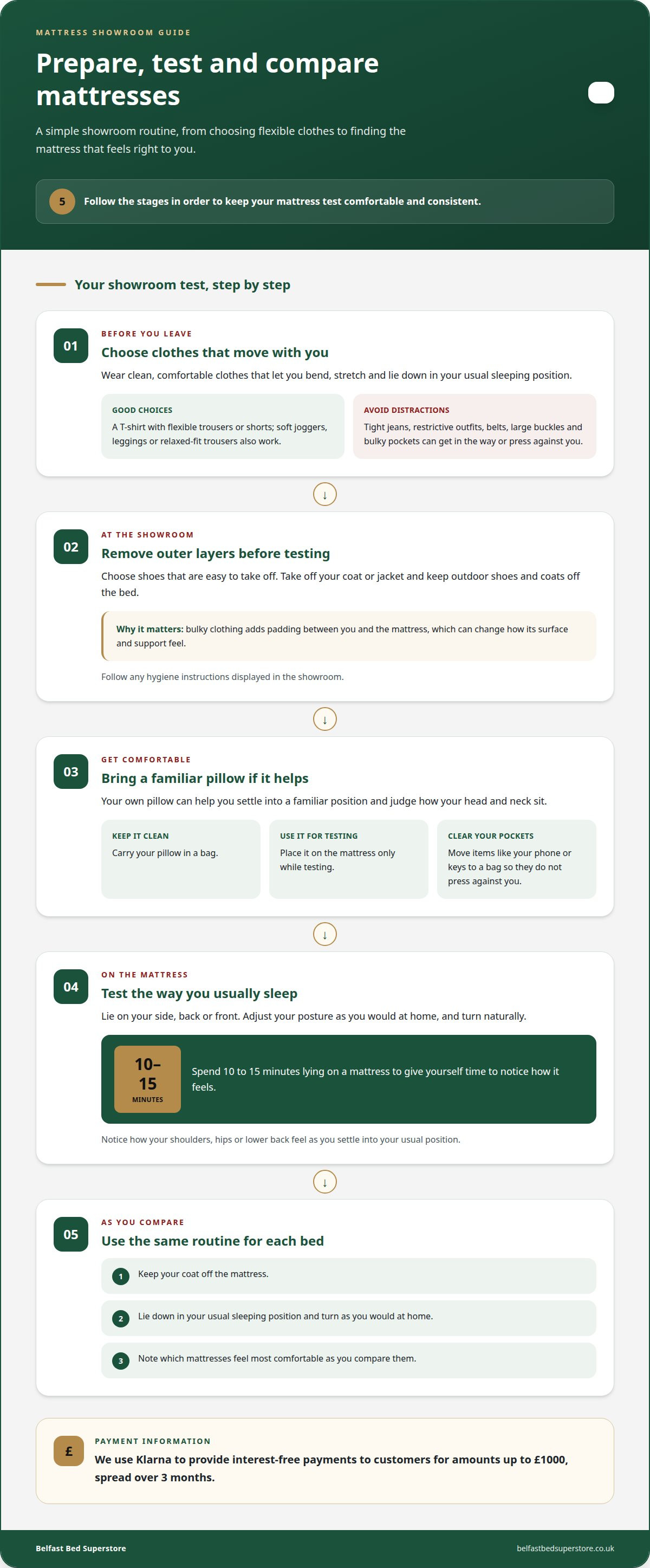
For mattress shopping, wear clean, comfortable clothes that let you bend, stretch and lie down. The answer to what to wear when mattress shopping is simple: choose a T-shirt with flexible trousers or shorts. Shoes that slip off easily, such as simple trainers or flat slip-ons, make it easier to get onto a showroom bed and test how it feels.
Keep your clothes clean and wear a top and bottoms while testing mattresses. Follow any hygiene instructions displayed in the showroom, and keep outdoor shoes and coats off the bed. These simple steps help keep the mattress surface clean as you compare options. You can assess the feel without removing more clothing than you’re comfortable with.
Choose clothes that won’t restrict the movements you make while sleeping. Stretchy joggers, leggings or soft trousers let you bend your knees and turn your hips. A loose T-shirt or breathable top is easier to move in than a stiff shirt or tight jumper. Avoid belts, large buckles and bulky pockets, which can press against you when you lie on your back.
Pyjamas are suitable if you feel comfortable wearing them in a showroom. Athletic clothing is another practical choice: a T-shirt and sports shorts allow easy movement without much padding. Avoid tight jeans if they stop you bending your legs. Heavy layers can also change how the mattress feels against your body, making it harder to judge the surface accurately.
Try each mattress in the sleeping position you normally use. Lie on your side, back or front, then adjust your posture as you would at home. Spending 10 to 15 minutes lying on a mattress gives you time to notice how it feels. Flexible clothes make it easier to assess pressure around your shoulders, hips or lower back.
Should you bring your own pillow? Yes, if it helps you settle into a familiar position. Your usual pillow can make the test feel more like sleeping at home and help you judge how your head and neck sit. Keep it clean, carry it in a bag, and place it on the mattress only while testing.
Before leaving home, do a simple outfit check. Sit, bend both knees and lie on your side without adjusting your clothes. If your outfit stays comfortable, it should let you test naturally. Bring a removable layer for travelling, then take it off before lying down so its padding doesn’t affect your impression.
2. Choosing trousers instead of a dress or skirt
Trousers make it easier to lie down, turn and sit up without adjusting your outfit. A skirt or dress can shift as you climb onto a mattress, especially when you roll onto your side or bend your knees. Choose trousers if you want to focus on the bed’s feel rather than keeping fabric in place.
Comfort matters more than a particular style. Stretchy leggings, soft joggers or relaxed-fit trousers let you move into your usual sleeping position. For example, bend both knees as you would when curling onto your side. If the waistband digs in or the fabric pulls, choose a looser pair before testing more beds.
A skirt can make some movements awkward. A short hem may ride up when you lie down, while a long skirt can bunch beneath your legs or hips. These folds could distract you from noticing how the mattress feels around your shoulders and waist. Trousers keep the fabric more predictable as you change position.
If you prefer wearing a dress, you can still test a mattress comfortably. Choose a longer, loose-fitting style that stays in place when you sit and lie down. You might wear breathable leggings underneath for coverage and easier movement. Avoid stiff fabric or a fitted skirt that limits your stride when stepping onto the bed.
Check your outfit before leaving home with a simple movement test. Sit on a chair, bend your knees, then lie on your side and roll onto your back. Notice whether the waistband shifts, fabric twists or seams press against you. This quick rehearsal helps you choose clothes that won’t distract you during a showroom test.
Keep pockets simple, too. A phone, keys or bulky wallet can press into your hip when you lie on your side. Empty your pockets before testing, or put those items in a bag. Smooth trousers without rigid details make it easier to notice pressure from the mattress rather than your clothing.
Choose trousers that suit the temperature as well as your movements. Lightweight cotton or soft jersey can feel more comfortable indoors than thick, heavy fabric. If you arrive wearing a dress or skirt, bring leggings or trousers to change into before testing. The rule is simple: wear an outfit that stays covered, feels comfortable and lets you move naturally.
3. Avoiding bulky coats and jackets
Take off your coat or jacket before lying on a showroom mattress. A padded winter coat adds bulk between your body and the mattress, changing how the surface feels. Its sleeves can also restrict your arms as you reach forward or settle onto your side. Leave it on a chair or hold it while you test the bed.
Even a lighter jacket can affect your movements. For example, a fitted leather jacket may pull across your shoulders when you lie on your back. A zipped fleece can bunch beneath your waist when you roll onto your side. Remove your outer layer, then check that your clothes let you move freely.
Extra padding can make it harder to judge support accurately. A thick coat between you and the mattress may soften the sensation around your shoulders or hips. It can also make a firm surface feel different from how it does without that layer. Test the mattress in your usual indoor clothes instead.
Removing your coat helps you assess the mattress itself, including its surface and support. If you’re comparing a pocket-sprung mattress with another type, bulky clothing can make subtle differences harder to notice. Focus on whether your body feels supported and whether any area feels uncomfortable. Your coat shouldn’t become another layer in that comparison.
Use the same routine for each bed: take off your coat, put it away from the mattress, then lie down in your usual position. Turn from your back onto your side and notice whether your shoulders, hips and lower back feel settled. Repeat the same movements on each mattress to make your impressions easier to compare.
A coat can also get in the way as you climb onto a bed or move between showroom displays. Long sleeves may catch beneath your body, while a bulky hood can bunch behind your neck. Removing these layers lets you move naturally and keeps fabric from distracting you during the test.
In a cold showroom, keep your coat nearby for warmth between tests. Put it on while walking around, then remove it before lying down again. If you’re wearing several layers, take off the thickest one first. Keep a light top on so you can test comfortably without outerwear changing how the mattress feels.
When comparing beds, make removing outerwear the first step of each trial. A coat can affect both how you move and the padding between you and the mattress, so testing in it may give you a less reliable impression of the surface. Set it aside before getting onto the bed, rather than adjusting it once you’re lying down. This keeps your attention on the mattress, not the extra layer.
As you change position, notice whether movement feels unrestricted and whether the mattress feels different without your coat or jacket. If you realise you’ve left one on, get up, remove it and start the test again. Use the same approach on each bed, so outerwear doesn’t affect one mattress test but not another. This makes it easier to judge each mattress on its own.
4. Wearing pants or shorts to lie down comfortably
Trousers or shorts provide coverage while allowing you to move naturally on a showroom bed. Choose a pair that stays in place as you sit, lie down and turn. Soft joggers flex at the knees, while loose cotton shorts leave your legs unencumbered. The best choice lets you focus on the mattress, not your outfit.
Check the fit before leaving home. Sit on a chair, lift each knee and bend forward, then lie on your side. If the waistband digs in or the fabric pulls across your thighs, try a different pair. Tight clothing can restrict the positions you need to test, including curling onto your side or stretching out on your back.
Fabric and seams matter when you’re lying down. Thick seams, buttons or zips can press against your skin and distract you from the mattress surface. Choose smooth fabric with a comfortable waistband. If you wear shorts, check that the hem stays in place when you sit on the edge and lie back. Loose hems shouldn’t bunch beneath your hips.
If practical, wear the same outfit while comparing beds. Changing from thick denim to thin shorts adds a different layer between your body and each mattress. Keeping your clothing consistent helps you focus on the support and pressure you notice around your shoulders, hips and legs. Change one thing at a time, such as your position, rather than your outfit.
Consider the showroom temperature. Lightweight trousers or breathable shorts can feel more comfortable indoors than lined or heavy fabrics. If you tend to feel cold, choose soft, flexible full-length trousers rather than adding a bulky layer that may affect how the mattress feels. You can keep a cardigan nearby and take it off before lying down.
Shorts suit shoppers who prefer less fabric around their legs, while full-length trousers offer extra coverage. Either can work, provided you can move freely and feel comfortable. Try your usual sleeping position, then shift onto your back or side. This helps you notice whether your hips settle naturally or feel pushed upwards.
A showroom test gives you only a brief impression of how you might feel sleeping at home, so make each movement count. Lie down as you normally would, relax your legs and notice whether the mattress feels stable beneath them. Adjust your trousers if they twist or ride up, then settle again before judging the bed. Practical clothes make comparisons simpler and more consistent.
5. What to bring to the showroom
A few familiar items can make comparing mattresses easier. If you share a bed, bring your partner so you can both test the same surface. Lie down together, change position and notice whether one person’s movement disturbs the other. Comfort is personal, so compare what you each feel rather than relying on one person’s first impression.
Your own pillow is another useful item to bring. A familiar pillow can help you settle into a natural position, especially if showroom pillows feel different from yours. Keep it in a clean bag between tests, then use it consistently on each mattress. That way, you can focus on how the bed feels beneath you rather than adjusting to unfamiliar head support.
Bring a phone or small notebook to record your impressions. After trying several beds, details can blur quickly. Note each mattress label or model name, then add a few words about its feel. For example, write “comfortable on my side” or “pressure at shoulders” beside the name. Use the same simple prompts each time to make your notes easier to compare.
Photographing a product label can help you match your notes to the right mattress later. Before taking a picture, make sure the name and displayed details are readable. A quick photo followed by a short note creates a practical record without relying on memory. Keep the images together in a dedicated phone album if you’re viewing multiple beds.
Think about the questions you want answered before you arrive. Write down whether you need a mattress for one person or two, your preferred sleeping positions and any comfort concerns. If your current mattress feels uncomfortable around your hips, for example, make a note of it. Clear prompts help you assess support and pressure rather than getting distracted by appearances.
Keep your belongings together in one small bag. A pillow, notebook and phone are easier to manage in one place than beside different display beds. Bring only what helps you test and compare, and avoid loose items that could fall onto the mattress or interrupt your assessment.
Before leaving, review your notes and label photos while each impression is fresh. Mark the mattresses you’d like to test again and record what stood out about each one. If you’re shopping with a partner, add both viewpoints. You’ll have a clearer comparison to discuss afterwards, instead of trying to remember which bed felt supportive or comfortable.
Belfast Bed Superstore: Hypnos Mattresses
Belfast Bed Superstore is a natural next step if you’re ready to compare mattresses in person in Cambridgeshire. Once you’ve chosen comfortable clothes and planned what to bring, focus on how different options feel as you lie down and change position.
Explore Hypnos Mattresses alongside Sealy, Relyon and Dunlopillo mattresses to compare the options available. Use your showroom notes to consider what felt supportive, then narrow your selection according to your comfort preferences. A familiar pillow can help you settle into a natural position while testing.
When you’re ready to continue your mattress search, contact Belfast Bed Superstore for help exploring its range.
Make your next mattress choice with confidence
A showroom visit is a starting point, not the whole decision. Use what you noticed about comfort and support to guide your next comparison, then consider how each mattress suits your everyday routine. The right choice is the one that feels comfortable to you, not simply the one that looks appealing at first glance.
If you’re ready to explore options, Belfast Bed Superstore offers Hypnos, Sealy and Relyon mattresses. We also use Klarna to provide interest free payments for amounts up to £1000, spread over 3 months.
A clear idea of what to wear when mattress shopping can make testing feel more natural, so take your time and trust the comfort cues you noticed. Contact Belfast Bed Superstore today to take your next step towards a mattress that feels right for you.
Frequently Asked Questions
What Should You Bring to a Mattress Shopping?
Bring a clean pillow, your partner if you share a bed, and a phone or notebook to compare options. A short note about your current mattress can also help: record what feels uncomfortable, such as a sagging middle or pressure at your shoulders. This gives you a useful point of comparison while testing. Keep your belongings together in a small bag so nothing gets left beside a display.
Should you wear comfortable clothes when mattress shopping?
Yes. Comfortable clothes help you move naturally and focus on how the mattress feels. A soft top with flexible trousers is a practical outfit, especially if you plan to test several beds. Choose clothes that don’t need frequent adjustment as you sit, turn or lie down. For example, avoid stiff waistbands or prominent fastenings that might press against you during a side-lying test.
What footwear is best for trying mattresses in a showroom?
Choose shoes you can remove quickly, such as slip-ons or trainers with simple fastenings. Take them off before lying down to keep outdoor soles away from the mattress surface. If you’re wearing lace-up boots, loosen them before approaching the display so changing shoes doesn’t interrupt your visit. Follow any showroom instructions about footwear or mattress testing.
Can you test a mattress while wearing a coat or bulky clothing?
You can lie down in a coat, but it’s better to remove it first. A padded parka, thick cardigan or bulky hood adds material between you and the mattress, which can change how the surface feels. It may also bunch beneath your back or shoulders. Keep your coat close by, then put it on again while walking around the showroom.
What should you bring when mattress shopping in the UK?
For a showroom visit in Cambridgeshire, bring your usual pillow, a companion if you share a bed, and a way to record your impressions. Before you go, write down your preferred sleeping position and any features you want to compare, such as edge stability or how much movement you feel from a partner. A phone can capture mattress labels, helping you match your notes to each display.


