

A mattress collection fee is more than a charge for moving an old bed out of the bedroom. Mattress removal service cost in the UK depends on the collection arrangement and what it includes, such as labour, transport and disposal or recycling. An old mattress may also be collected when a replacement bed is delivered, depending on the service.
It’s reasonable to want a clear price and to know whether the mattress will be handled responsibly. The fee can cover more than the time spent carrying it away: bulky items take up vehicle space, and recycling may involve separating different materials.
This guide explains what affects the cost, what a removal fee may cover and how collection with a replacement works. It also outlines what to consider when arranging collection, so you can plan for a tidier, more comfortable bedroom without unexpected steps.
Key Takeaways
- Compare single-item collection with a larger removal job, as the arrangement can affect the cost per mattress.
- When replacing a bed, establish how old-bed collection fits into the delivery arrangement and what the fee includes.
- Note the mattress’s condition before arranging removal, as damp, stained or soiled items may need separate handling.
- A removal fee can cover more than lifting and transport, including facility charges and disposal record-keeping.
Mattress removal service price
The price depends on the collection route, the mattress’s condition and access to your home. Compare what each option includes, not just the collection charge.
Location and Access Considerations
The collection location and route from your bedroom to the vehicle can affect the work involved. A mattress carried down several flights of stairs requires a different plan from one placed beside an accessible front door. Before arranging collection, note the floor, lift access, parking and any narrow turns. These details can explain why mattress removal service cost estimates differ between households, even when each has one mattress.
Lower-Cost Disposal Options
A charity collection or retailer take-back may cost less than arranging a separate removal, particularly when a replacement mattress is being delivered. Eligibility varies: a charity may accept only mattresses in suitable condition. Contact your preferred charity shop before planning a donation, and ask the retailer whether old-mattress collection is included with delivery. Compare whether each option includes carrying the mattress from your room.
The mattress removal service cost for a shared collection may differ from a standalone item charge. Check which items, labour and disposal arrangements the quoted total covers.
Council Collection Charges
A council’s charge depends on its collection scheme and the items included. Check your local council’s bulky-waste information for the booking process, collection conditions and item limits.
Private collection prices also depend on whether the mattress is collected alone or alongside other bulky items. A larger job may share vehicle space and collection labour across several items, while one mattress still takes up space. Distance, access and the destination facility can also affect the work and transport involved. Give an accurate item list and describe access so estimates cover the same job.
To check that waste will be handled legally, use a registered upper-tier waste carrier. In the UK, householders have a Duty of Care to ensure collected waste is handled by an appropriately registered carrier. Keep collection details and any receipt or transfer record with your household paperwork. If waste is fly-tipped, it can be traced back to its original owner, so a low quote alone isn’t enough to judge a disposal option.
Before booking, remove the bedding and make the mattress accessible near the door if the arrangement allows. Mention if it is damp, stained or soiled, as its condition can affect handling and recycling. Ask for a clear breakdown of collection, transport and disposal charges. This makes it easier to compare a council booking, retailer collection and separate removal on the same basis.
Like-for-like bed and mattress removal
Like-for-like collection means taking away an old mattress or bed when its replacement arrives. The arrangement might cover only a mattress, or the mattress and bed frame together. Be precise about what is leaving your home: replacing a mattress on a divan differs from replacing the mattress, base and headboard. The collection details should match the items you want removed, so the delivery team knows what to take and the charge reflects the actual load.
Include collection in the delivery plan rather than assuming it is covered. Compare the replacement order with the removal details: mattress size, number of items, and whether the old base or headboard is included. For example, if a new mattress is arriving but the existing bed frame is staying, specify mattress removal only. A clear item list helps avoid confusion on delivery day and makes quotes easier to compare.
Combining removal with a replacement delivery may mean the old item travels in a vehicle already making a journey to your home. However, combined delivery does not automatically mean collection is included or free. The charge may cover collection labour, transport and disposal. Check the old mattress charge separately from the new bed order, then compare it with a standalone collection for the same items. This gives you a clearer view of the total cost.
Ask how the retailer handles the mattress after collection. In the UK, bulky household waste collected by a retailer is typically taken by a licensed waste carrier to a licensed waste transfer or recycling facility. Retailers typically keep evidence that collected items were disposed of correctly. Recycling may involve separating steel springs, foam, wadding and fabric rather than sending the whole mattress straight to landfill. The route depends on the item’s materials and condition.
Before delivery, remove the bedding and clear the route from the bedroom to the exit. If the bed has several parts, identify which are included in collection, such as the mattress, divan base or headboard. Keep the collection confirmation and any disposal record with your order paperwork. These steps help distinguish a complete bed removal from mattress-only collection and clarify what happens to the old bed.
Old bed removal limitations
Mattress collection has practical limits beyond the number of items in your home. A mattress takes up substantial space in a collection vehicle and does not stack efficiently with other loads. That can reduce the number drivers can carry per trip, even if the mattress is relatively light. A bed frame, headboard or divan base adds separate pieces, so list each item when arranging removal. This helps the collection team plan transport and match the booked load to what is ready.
In the UK, householders have a Duty of Care to ensure collected waste is handled by a registered upper-tier waste carrier. Check that anyone removing household waste is properly authorised to handle and dispose of it. If waste is fly-tipped, the homeowner risks a criminal record and a fine. Choose a carrier with the appropriate registration, and keep collection paperwork or a disposal record with your household documents.
A mattress’s condition can affect whether it enters a standard recycling line. Damp, stained or soiled mattresses may need separate handling or may be rejected from that line. For example, a mattress with visible damp patches is not necessarily treated like a clean, dry one. Describe its condition before collection so the disposal route can account for it. Don’t conceal marks beneath bedding or covers, as the condition still matters after removal.
Recycling can also have handling limits. Mattresses may contain metal springs, foam, wadding or fibre, outer fabric and sometimes natural materials. Facilities may need to dismantle each mattress to separate those components, a process that can be slow and labour-intensive. Recovered materials can include steel and some foams. Collection does not automatically guarantee that every part will be recycled, especially if damage or soiling affects processing.
Remove the bedding and make the mattress accessible for collection. Keep it dry and separate from household rubbish where practical, then tell the carrier about any stains, dampness or damage. If the bed includes a mattress, base and headboard, list all three rather than describing the load simply as “a bed”. Accurate details help match vehicle space and handling plans to the items being removed.
Don’t leave bulky waste in a public place for an unarranged collection. Use an authorised collection route and keep a record of who took the mattress. If a collection is refused because of its condition, the reason may relate to the facility’s recycling process or handling requirements. Knowing these limits beforehand helps you plan a suitable route and avoid leaving the mattress without a responsible disposal arrangement.
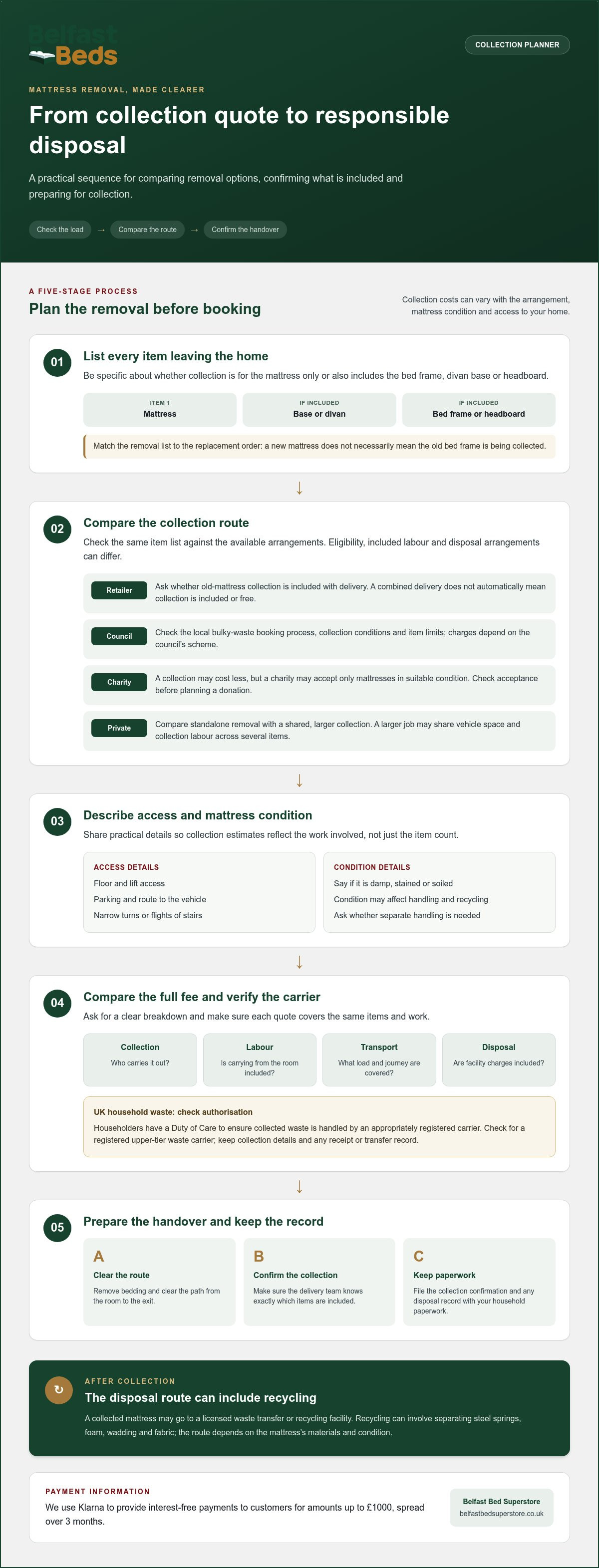
What the fee covers
A mattress removal fee can cover several steps between collection and disposal. The main cost components include collection labour, transport, facility gate fees, compliance and record-keeping. A quote may bundle these into one amount or list them separately. The total is meaningful only when you know what work is included, so compare the service details as well as the final figure.
Collection labour covers moving the mattress from the agreed collection point. For example, a quote might cover lifting an item from the ground floor, while another arrangement includes carrying it from a bedroom. Check where the team will collect the mattress and whether the fee covers the route out of the property. This helps you compare like with like.
Transport covers taking the mattress from your home to a waste facility. A mattress occupies vehicle space and does not stack efficiently with other items. If a collection includes several bulky pieces, the quote should specify which items are covered. A mattress-only price, for example, cannot be directly compared with a charge covering a mattress and bed base.
Facility gate fees are charges for delivering waste to a transfer or recycling facility. They relate to the disposal route, not the physical collection from your home. The fee may also cover directing the mattress to an appropriate facility. Ask whether disposal is included in the total or shown separately, so you know what remains payable.
Compliance and record-keeping relate to handling collected waste through the disposal chain. A retailer collecting bulky household waste typically uses a licensed waste carrier and a licensed waste transfer or recycling facility. Retailers also typically retain evidence of correct disposal. A clear quote or collection record can show what was taken and help you keep disposal details with your household paperwork.
Use a short checklist before booking. Record the item count, collection point, transport, facility charges and any disposal documentation included. If one quote includes removal from a bedroom and another covers collection at the door, their totals describe different work. Ask for the scope in writing, then compare each line against the same mattress and collection arrangement. This helps reveal whether a lower figure excludes a necessary step.
For example, a bundled quote may include labour, vehicle transport and disposal in one total, while an itemised quote lists those components separately. Neither format explains the full service unless it states what happens to the mattress after collection. Check each step, from lifting to facility delivery, before choosing.
How much do local councils charge to collect a mattress?
These are broad guide figures, not a nationwide tariff. The total depends on the council’s collection scheme and the items included. If you have one mattress, look for the charge for that item rather than assuming a multi-item fee applies. Your council’s bulky-waste information gives the relevant booking route and collection conditions.
Multi-item collections show why local charges vary. This figure is a useful comparison point, not a guaranteed price for a local booking. Councils set their own charges and collection arrangements, so use the tariff for your area in Cambridgeshire or East Anglia to estimate your household’s total.
Before booking, compare the council option with other routes using these steps:
- Find your local council’s bulky-item collection information.
- Check whether the listed charge covers one mattress or a group of items.
- Read the collection rules, including where the mattress must be placed.
- Compare the total charge and booking process with a separate removal service.
This comparison matters if you also need a bed base or other bulky items removed. A combined collection may be more practical than arranging separate pickups, but compare the full charge for your actual item list.
Timing can also shape your decision. Council furniture collections in the UK typically require a wait of at least two weeks. If a replacement mattress is arriving sooner, that collection window may not fit your plans. Have the mattress ready at the agreed collection point, and don’t leave it outside before the permitted time. This keeps your disposal plan aligned with the council’s arrangements.
Some councils collect certain bulky items for free, but that does not mean every mattress qualifies. Read the item rules and booking conditions before choosing a date. If a charge applies, check whether it covers transport and disposal or only a particular collection combination. This helps ensure a free or low-cost headline doesn’t obscure what the booking includes.
For example, compare the charge for one mattress with the total for a collection that includes other bulky items. Use your own council’s tariff to decide, then weigh the fee against the wait and collection conditions.
Belfast Bed Superstore: Hypnos Mattresses
Belfast Bed Superstore can help you compare replacement mattresses and plan what to do with the old one. Its range includes Hypnos, Sealy, Relyon and Dunlopillo mattresses, giving you several established brands to consider. Old bed removal is also available, making it a practical option when you’re planning a mattress change in Cambridgeshire.
We use Klarna to provide interest free payments on amounts up to £1000, spread over 3 months. This can help you plan the cost of a new mattress alongside your household budget. Consider the mattress that suits your comfort needs, then include removal in your changeover plans.
Contact Belfast Bed Superstore or visit belfastbedsuperstore.co.uk to explore the mattress range.
Plan your next comfortable night’s sleep
Once you’ve settled on a responsible way to clear the old mattress, you can focus on choosing a replacement to suit your bedroom and comfort preferences. Include collection in your plans so the changeover feels manageable and your old bed has a clear next step. Understanding mattress removal service cost can help you plan with fewer surprises.
If you’re considering a new mattress, Belfast Bed Superstore offers Hypnos, Sealy and Relyon mattresses. Compare your options and think about the support and feel you prefer. A well-planned replacement can make refreshing your bedroom straightforward, from choosing a mattress to arranging what happens to the old one.
For help exploring mattress options, contact Belfast Bed Superstore. A comfortable bedroom can be the next step towards more restful nights.
Frequently Asked Questions
Can you take away and recycle my old bed?
Yes, old mattresses and bed parts can be collected for disposal or recycling when included in the collection arrangement. Retailers often offer removal alongside a replacement delivery. List each item, such as the mattress, divan base and headboard, so the collection covers the whole bed you’re replacing. A licensed waste carrier takes collected bulky waste to an authorised facility, where recycling depends on the materials and condition.
How should I prepare my mattress for collection and recycling?
Remove all bedding and keep the mattress dry before collection. Clear a path from the room to the agreed collection point, moving any loose items that could obstruct the route. If the mattress has stains, damp patches or other damage, describe its condition when arranging collection. This gives the collection team useful handling information and helps avoid confusion if the item needs a different route.
How much does mattress removal cost in the UK?
On the market, a mattress removal and recycling service typically costs between £25 and £37, with a median of about £35. These are market figures, not a specific quote for every collection. The total reflects the items collected, access to the property, transport and disposal arrangements.
What is the average cost of mattress disposal by size?
There isn’t one UK average price for every mattress size. Size affects how much vehicle space an item uses, while access affects the lifting and movement involved. For example, a larger mattress carried down stairs needs a different collection plan from a smaller one placed at an accessible entrance. Compare prices for the same mattress size and collection point to judge quotes fairly.
How much do private rubbish removal companies charge for mattress collection?
These market examples show why the number of items matters. Compare the full load and included disposal arrangements, rather than treating a larger-job rate as a standalone mattress price.
Do mattress removal prices include collection from inside the home?
Not every collection price covers carrying a mattress from a bedroom. A quote should distinguish between a doorstep or accessible-point pickup and removal from inside the home. The route matters: stairs, narrow turns and distance to the vehicle affect the labour involved. Compare quotes that describe the same collection point, such as a first-floor bedroom, to avoid comparing different levels of service.
How can I book a mattress removal service and prepare the mattress for collection?
Start by listing every item for removal and where each one is located. Give the collection address, access details and the mattress’s condition, then choose an arrangement that suits your delivery or clearance plans. Remove the bedding and leave the item at the agreed point. Keep the booking details and disposal record together so you have a clear record of what was collected.


