

The biggest mistakes when buying a mattress are choosing by price or firmness label alone, overlooking return terms and trusting star ratings without reading the detail. When avoiding mistakes when buying a mattress online, match the feel to your sleeping position: side sleepers often need pressure relief around the shoulders and hips, while back sleepers need balanced support and stomach sleepers need to limit excessive hip sinking. Body weight and sleeping style can also affect how firm a mattress feels.
It’s understandable to look for a good deal, but comfort and support matter more than a discount. Before deciding, compare the mattress materials and how its features relate to your needs, then read the return, exchange and warranty terms carefully. Reviews are more useful when they describe sleeping position, firmness preference and how the mattress feels in regular use, rather than offering only a star rating. This guide brings those checks together so you can compare brands, materials and claims with a clearer idea of what may suit your sleep and home in Cambridgeshire.
Key Takeaways
- Match firmness to your usual sleeping position, while remembering that body weight and sleep style can change how a mattress feels.
- Look beyond discounts: compare what each mattress offers for comfort and support, not just its price.
- Read return, exchange, sleep-trial and warranty terms before you buy so you understand the conditions that apply.
- Look for review patterns from people with sleep preferences like yours, and compare materials and claims against your needs.
- We use Klarna to provide interest free payments on amounts up to £1000, spread over 3 months.
1. Choosing firmness based on sleeping position
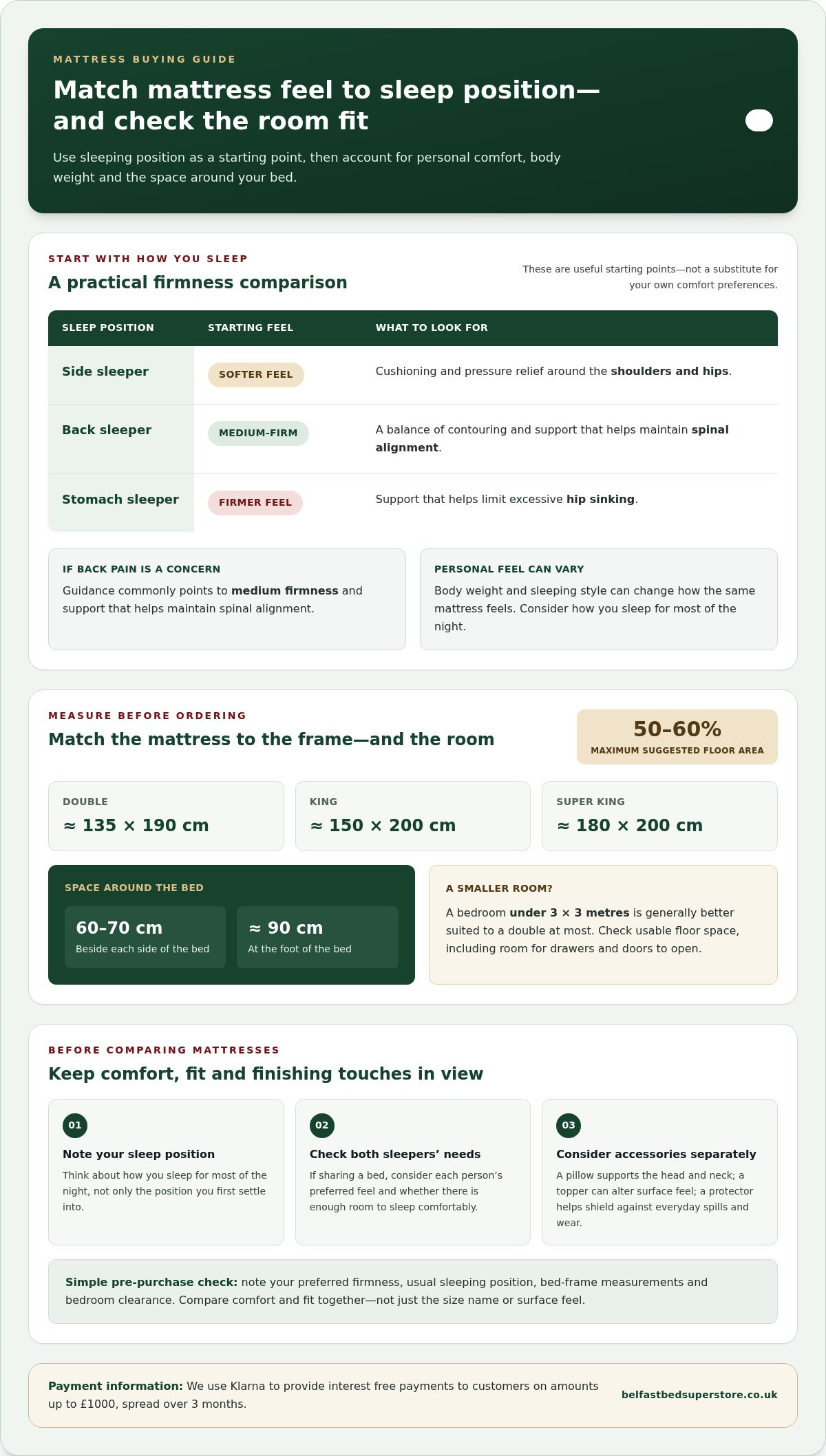
Start with your usual sleeping position, then consider where your body needs cushioning or support. Side sleepers often prefer a softer feel to cushion pressure around the shoulders and hips. Back sleepers commonly suit medium-firm support, balancing contouring with support for spinal alignment. Stomach sleepers generally need a firmer feel to help prevent their hips sinking too far. These are useful starting points, not a substitute for your own comfort preferences.
Your weight and sleeping style can change how the same mattress feels. A mattress that feels supportive to one person may feel too firm or too yielding to another. Think about how you sleep for most of the night, not just the position you first settle into. If you share a bed, consider both people’s preferred feel and whether there’s enough room for each to sleep comfortably. For back pain, mattress guidance commonly points to medium firmness and support that helps maintain spinal alignment.
Before ordering, measure the bed frame and bedroom rather than relying on the size name alone. UK mattress sizes provide a practical reference: a double is approximately 135 x 190 cm, a king is around 150 x 200 cm, and a super king is around 180 x 200 cm. Match the mattress dimensions to the frame, then check the room’s usable floor space, including space for drawers and doors to open.
Room layout matters as much as the mattress measurement. A bedroom under 3 x 3 metres is generally better suited to a double at most. Aim to leave 60-70 cm beside each side of the bed and about 90 cm at the foot, so there’s room to move around it. As a further guide, the bed should take up no more than 50-60% of the floor area. Sketching the room and marking out the bed size can reveal awkward clearances before you buy.
Use accessories to fine-tune comfort rather than choosing a mattress by feel alone. A pillow should support your head and neck in your usual sleeping position; side sleeping often calls for a different pillow height from back sleeping. A topper can alter the surface feel, while a mattress protector helps shield the mattress from everyday spills and wear. Check how these additions fit your needs and mattress dimensions, and compare their materials if temperature or texture affects your comfort.
For a more reliable decision, note your preferred firmness, usual sleeping position, bed-frame measurements and bedroom clearance before comparing options. This simple check helps you assess comfort and fit together, rather than discovering after delivery that the mattress suits your sleep but not your frame.
2. Avoiding decisions based solely on discounts or low prices
A discount can make a mattress look like an obvious bargain, but the reduced price doesn’t tell you whether it suits your sleep. Compare comfort and support first, then use price to distinguish between options that meet those needs. A cheaper mattress with a feel you dislike may be poor value, even if its advertised reduction looks impressive. Set your priorities before opening several product pages, so a bold sale label doesn’t make the decision for you.
Compare like with like. Check each mattress’s construction, materials, stated firmness and dimensions, then note what differs between models. A pocket-sprung mattress and a memory foam mattress may feel different, so comparing their prices alone won’t show which offers better value for you. Look for a clear product description that explains the materials and support features. If those details vary, the products aren’t direct equivalents, even if their prices are close.
Think about durability as well as the amount paid today. A good mattress should last for 10-12 years, so assess whether the construction and comfort appear suitable for regular use over time. Check the warranty terms separately: coverage can depend on the issue and the conditions attached. A long warranty doesn’t prove that a mattress is comfortable, but understanding what it covers helps you judge the overall offer rather than focusing only on a promotional price.
Comfort is personal, so use your sleeping position and firmness preference as practical filters. If a heavily discounted mattress has a listed feel that doesn’t match your needs, the saving may not compensate for an uncomfortable night. Compare descriptions carefully and look for meaningful differences, such as material layers or support design. Don’t treat a higher price as automatic proof of better quality, either. Product details matter more than a premium-sounding label.
Make comparisons easier with a simple note. Record each option’s price, materials, stated firmness, warranty conditions and delivery or return terms. This helps show whether a discount genuinely improves value or simply draws attention away from important details. Review your notes before checkout and ask whether each option still meets your comfort priorities. A considered purchase is more likely to feel worthwhile than a decision driven by a short-lived promotion.
3. Reviewing return, exchange, and sleep-trial policies
Under the Consumer Contracts Regulations 2013, UK shoppers generally have 14 days from receiving an online order to tell the retailer they want to cancel. After notifying the retailer, they usually have a further 14 days to send the goods back. A sealed-goods hygiene exception can affect cancellation rights if a product is unsealed after delivery, so read the mattress terms before opening its packaging.
Return delivery costs usually fall to the buyer when the retailer explained this before purchase. If the retailer didn’t provide that information, it must cover the direct return cost. Read the delivery and cancellation terms before paying. Mattress collection may involve different arrangements from posting a small item, so check whether the policy explains collection, packaging and how to arrange a return.
Separate statutory cancellation rights from a retailer’s sleep trial. A 30-night trial, for example, is a retailer policy, not the same as the legal 14-day cancellation period. Check when the trial begins, whether you need to sleep on the mattress for a minimum period, and whether the retailer offers a refund or exchange. Look for conditions on mattress protectors, stains, damage and the original packaging.
Consider the policy in light of your sleep needs. If you’re a side sleeper considering memory foam, check whether a trial allows enough time to assess pressure around your shoulders and hips. Find out whether an exchange is available if the firmness feels wrong, and whether exchanges have separate conditions from refunds. A clear policy should explain how to start a claim, the required mattress condition and how collection is arranged.
Read the warranty separately from cancellation rights and trial terms. A warranty usually addresses specified faults or manufacturing defects, while a sleep trial relates to comfort and suitability. Before ordering, note the warranty length, what it covers, how to report a problem and any conditions that could void cover, such as using an unsuitable base. Keep the order confirmation and policy wording so you can refer to the terms that applied when you bought the mattress.
Before checkout, save or note the cancellation instructions, return-cost terms, trial conditions and warranty details. This record helps distinguish a comfort exchange from a faulty-product claim and shows which process applies if the mattress doesn’t meet expectations.
4. Evaluating reviews for relevant sleep preferences
A star rating can help you shortlist a mattress, but it can’t explain whether it suits your sleep. Read reviews for details that match your preferences. For example, a side sleeper describing shoulder pressure may offer more relevant insight than a general comment that the mattress is “comfortable”. Look for reviews that mention sleeping position, preferred firmness and how the mattress feels with regular use.
Compare recurring themes across customer reviews instead of letting one glowing or unhappy account decide for you. If several reviewers describe a firm feel, that pattern may help you interpret the product description. If comments differ, consider whether they come from people with different sleep habits or comfort preferences. Reviews can show how a mattress feels to other people, but they can’t predict exactly how it’ll feel to you.
Read critical reviews carefully, too. Separate comfort complaints from delivery issues, damaged packaging or a mismatch with a bed frame. A comment that a mattress feels too soft may be relevant to your firmness preference, while a complaint about late delivery says little about its support. This distinction prevents mistakes such as dismissing useful product feedback because a review focuses on a separate service issue.
Independent reviews can add another perspective alongside those on a retailer’s product page. Check whether the reviewer names the mattress model and describes their experience in useful detail. A review that compares the feel with a previous mattress or explains how it suited a particular sleeping position gives you more to assess than a brief rating without context. Specific observations about comfort and use are more useful than promotional language.
Look for comments about the mattress over time, not just first impressions. Reviews describing regular use may indicate whether the reviewer’s initial impression changed. Pay attention to repeated remarks about firmness, support and surface feel. One comment may reflect an individual preference; a pattern across separate reviews is more informative. Don’t treat one reviewer’s adjustment period as a promise about how quickly you’ll adapt.
Use a simple review check before deciding: note recurring comments, identify reviewers who share your sleeping position, and separate mattress feedback from delivery or packaging issues. Compare those observations with the product description and your priorities. If reviews repeatedly mention an issue that matters to you, such as a feel that differs from the stated firmness, factor it into your decision rather than relying on the headline rating alone.
5. Comparing mattress brands, materials and marketing claims
A brand name can help you recognise a maker, but it can’t tell you whether a mattress suits your sleep. Compare each model’s construction and stated feel with your needs. Pocket-spring and memory-foam mattresses use different materials, so descriptions may focus on different support and comfort features. Avoiding mistakes when buying a mattress online starts with comparing those details, not choosing by reputation alone.
Start with the material layers. Pocket springs respond individually to pressure, while memory foam moulds around the body. A hybrid combines spring and foam elements, but the balance varies by model. Read how the product describes its construction instead of assuming all hybrids feel alike. Then consider whether its stated firmness and support suit your usual sleeping position. Look for useful details, not just a materials list or polished model name.
Connect each feature to a practical need. If you tend to feel warm at night, look for specific information about the cover and materials rather than relying on a broad “cooling” claim. If spinal support matters, assess the stated feel and support design alongside your preferred sleeping position. A marketing claim is easier to judge when the listing explains what it means and how it relates to the mattress.
Scrutinise terms such as “orthopaedic”, “natural” and “eco-friendly”. They may sound reassuring, but don’t explain construction on their own. Look for named materials or details that clarify the claim. If a listing refers to a certification, check what it assesses before treating it as proof of comfort or support. A technical-sounding term isn’t a substitute for clear product information.
Compare brands using the same details for every model: materials, construction, firmness, support features and evidence behind claims. Familiarity can help narrow the choice, but the particular mattress still needs to suit your requirements. Avoiding mistakes when buying a mattress online also means separating practical specifications from persuasive wording. Don’t assume a higher spring count or premium-sounding description automatically makes a mattress the right fit.
Before purchase, write down the features that matter most and assess each listing against them. This gives you a consistent way to compare different constructions and identify which claims have useful detail behind them. Explore mattress options by brand as you compare construction, materials and feel.
Belfast Bed Superstore: Hypnos Mattresses
Belfast Bed Superstore offers Hypnos Mattresses for shoppers comparing brands, materials and mattress claims. If you’ve narrowed down the firmness and features you want, browsing a specific brand can help you assess models against those priorities. You can also compare Sealy, Relyon and Dunlopillo Mattresses, considering each product’s construction and feel rather than relying on brand names alone.
Keep your notes on sleeping position, preferred firmness and the materials you’re looking for beside you as you browse. That makes it easier to compare options consistently and choose a mattress that fits your own requirements. If you’d like to discuss your mattress options, contact Belfast Bed Superstore.
Make your next step a confident one
A practical approach to avoiding mistakes when buying a mattress online is to turn your priorities into a personal shortlist. Note what matters most for your sleep, then use those criteria to assess the options available. This keeps your decision grounded in the comfort and support you want, rather than pressure to choose quickly. If you’re still weighing up different possibilities, Belfast Bed Superstore’s Cambridge showroom gives you the chance to try beds and compare options in person.
Belfast Bed Superstore can help you explore mattress options that fit the preferences you’ve identified. Bring your questions and the details you’ve been comparing, and take the next step at a pace that feels right for you. Contact Belfast Bed Superstore today to continue your search for a mattress that feels right for your home.
Frequently Asked Questions
Quick Answer: What Are the Biggest Mistakes People Make When Buying a Mattress?
The biggest mistakes include choosing a mattress from its headline description alone, overlooking practical fit and assuming impressive wording proves quality. A mattress may suit your preferred feel but still be awkward to move through a narrow staircase or fit on your existing base. Before ordering, check the full product specifications and consider the route into your bedroom, not just the space beside your bed.
Are There Mistakes First-Time Buyers or Couples Make Specifically?
First-time buyers may find it useful to check the bed base, access route and practical needs of sharing a mattress. Couples should discuss differences in preferred feel and sleeping habits before settling on an option. If one person moves frequently or gets up earlier, consider how the mattress may work for both routines. Measure access through the bedroom, too, so delivery and positioning don’t become an unexpected challenge.
Can Ignoring Online Reviews Lead to a Bad Bed Purchase?
Yes. Reviews can reveal details a product description may not explain, such as how a mattress feels in everyday use or whether buyers found its stated firmness accurate. Read comments from people with similar sleep preferences and compare recurring observations rather than relying on one review. Also distinguish feedback about the mattress from reports about delivery, packaging or customer service.
Can You Buy a Good Bed Online Without Seeing It in Person?
Yes, if you use the product information carefully. Check the exact mattress dimensions, construction, materials and stated firmness, then compare them with your needs and bed base. Look for clear photographs and descriptions that identify what’s included, such as whether the listing is for a mattress alone or a bed set. Delivery access matters too: measure tight hallways, stairs and doorways before ordering.
Do People Forget to Check Storage Options When Buying a Bed Online?
They can, especially if buyers focus on the mattress and overlook the bed base. Decide whether you need storage, then check whether drawers or an ottoman mechanism are included. For drawers, consider whether bedside furniture leaves enough room to open them fully. For an ottoman bed, allow clearance above the base and check that the lift mechanism suits your room layout.
How Do You Know If a Bed Is Good Quality Online?
Look for specific construction details rather than relying on words such as “premium”. A useful listing identifies the mattress materials, spring type where relevant, cover and stated firmness. Check that the photographs match the written specifications and that the product name refers to the model being sold. Clear descriptions make it easier to compare like with like and spot missing details that matter to your choice.
How to buy mattress online?
Begin by measuring your bed base and deciding which mattress feel suits your sleeping habits. Compare product specifications, materials and customer feedback, then read the retailer’s cancellation, return and warranty terms before ordering. Check whether the listing includes only the mattress or additional items, and plan how it will reach your bedroom. Keep your order confirmation and product details together after purchase for easy reference.
What mattress size should I buy in the UK, and how do UK mattress dimensions compare?
Match the mattress measurements to your bed frame, rather than relying on the size label alone. A UK single is 90 x 190 cm, a double is approximately 135 x 190 cm, a king is around 150 x 200 cm, and a super king is around 180 x 200 cm. Measure the frame’s internal dimensions and bedroom access before choosing, particularly if replacing a mattress on an existing base.


