

An unwanted online bed isn’t automatically a free return: who pays for return shipping depends on the retailer’s terms and whether the goods are faulty. You can usually cancel an online order within 14 days of receiving it, and understanding online bed retailer return policies helps you know what to do next. According to The National Archives, after telling the retailer you’re cancelling, you have 14 days to return the goods.
Before arranging a return, check the online bed retailer return policies for delivery, collection and refund terms, especially because beds and mattresses are bulky. The rules differ depending on whether you’ve changed your mind or the item is faulty, and store credit may not meet your legal rights.
This guide explains who may pay return transport, when you’re entitled to a refund rather than store credit, and how the cooling-off period works. It also covers change-of-mind returns for divans, mattresses and headboards, so you can understand the practical steps before deciding what to do.
Key Takeaways
- Separate a change-of-mind return from a fault claim: the reason for returning an item affects the remedy and who pays.
- Before accepting store credit, understand when a refund to your original payment method may apply.
- Keep the order details and evidence of damage or an incorrect delivery ready to help explain the issue.
- For a bulky bed or mattress, return transport arrangements can affect the practical cost of sending it back.
- Check how opening, assembling or using a mattress or bed may affect a change-of-mind return.
Can you refund as store credit?
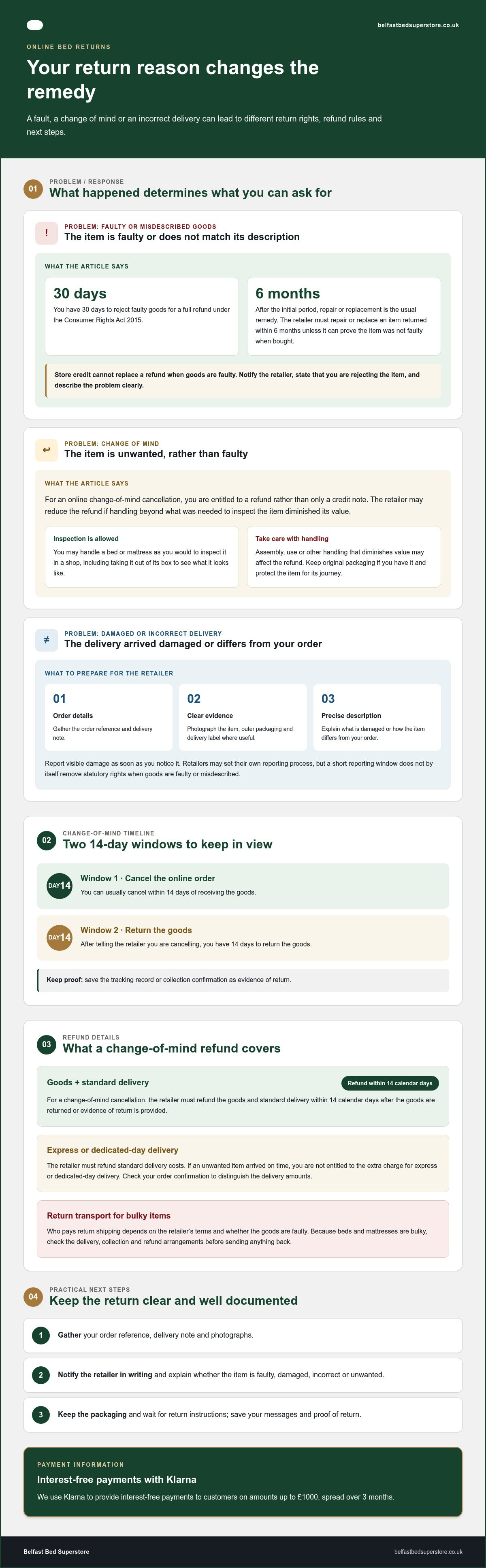
A faulty good is an item that fails to meet the standard a buyer can expect. A misdescribed good is one that differs from its listing or description. The Consumer Rights Act 2015 is a key UK law governing consumer rights and remedies for goods bought from online retailers, according to The National Archives. For faulty or misdescribed goods, the legal remedy depends on the fault and when it is reported.
A full refund is available for qualifying faulty goods rejected promptly. In the UK, consumers have 30 days to reject faulty goods for a full refund under the Consumer Rights Act 2015, according to The National Archives. Notify the retailer that the item is faulty and clearly state that you’re rejecting it. Include the order details and describe the problem, such as a damaged frame or a mattress that does not match its product description.
Repair or replacement is the usual remedy after that initial period. According to The National Archives, retailers must repair or replace an item returned within 6 months unless they can prove it was not faulty when bought. If a repair or replacement does not resolve the issue, a customer may still be able to reject the goods. A warranty does not replace these statutory rights.
Store credit cannot replace a refund when goods are faulty. A retailer cannot require you to accept vouchers instead of a refund for faulty goods. For an online change-of-mind cancellation, you’re also entitled to a refund rather than only a credit note. The reason for return matters: describe it accurately when you notify the retailer, rather than presenting a fault as a preference change.
Standard delivery means the retailer’s ordinary delivery option; express delivery costs more because it is faster or scheduled for a particular day. For a distance-sale cancellation, the retailer must refund standard delivery costs, even if you chose a more expensive option. If an unwanted item arrived on time, you aren’t entitled to the extra express or dedicated-day delivery charge. Check your order confirmation to distinguish the delivery amounts.
A refund deadline is the period within which the retailer must return the money. For a change-of-mind cancellation, the refund for the goods and standard delivery must be paid within 14 calendar days after the goods are returned or evidence of return is provided. Keep the tracking record or collection confirmation as evidence. The retailer may inspect returned goods, and handling beyond what was needed to inspect them may reduce the refund if it diminished their value.
For a bed or mattress, you may handle the item as you would to inspect it in a shop, including taking it out of its box to see what it looks like. There is no single packaging requirement in the stated return rules; keep the original packaging if you have it and protect the item for its journey. If handling reduces its value beyond what’s needed for inspection, the retailer may reduce the refund.
How Should the Online Returns Process Work?
A returns process sets out how to report a problem, agree on a remedy and send goods back. If an item arrives damaged or incorrect, keep the order details and packaging together while you notify the retailer.
Major UK online bed retailers set their own return procedures, but consumer rights apply across retailers when goods are faulty or misdescribed. The most generous policy is the one that clearly explains return arrangements and offers helpful terms beyond those legal rights. Compare the stated conditions, not just the headline return period.
Exchanges for Damaged or Incorrect Items
An exchange replaces an item that arrived damaged or differs from what you ordered. Contact the retailer with your order reference, a brief description and clear photographs of the damage or incorrect item. For example, photograph a torn mattress cover or a bed frame delivered in the wrong finish.
Say whether you want a replacement or another appropriate remedy. Include photographs of the outer packaging and delivery label if they help show what arrived. These details help the retailer identify your order and understand the problem. Keep the item and packaging until you receive return instructions, and save your messages.
A delivery-damage reporting deadline is the time a retailer sets for notifying it about transit damage. There is no single deadline for every retailer, so report visible damage as soon as you notice it. A short reporting window in a retailer’s process does not, by itself, remove your statutory rights when an item is faulty or misdescribed.
For an incorrect delivery, compare the item with your order confirmation and the product description. Describe the mismatch precisely, such as a different size or model, rather than simply saying the order is wrong. Keep the delivery note, which can help identify what was left at your home.
Handling and Damage Deductions
A handling deduction reduces a refund when handling beyond inspection has diminished an item’s value. The retailer may assess its condition, including any damage from assembly or use. For instance, a scuff caused during assembly is different from damage shown in delivery photographs.
Take dated photographs before packing the return, and describe any existing marks when you notify the retailer. Use suitable packaging to protect the bed or mattress in transit. These steps help distinguish delivery damage from damage arising after arrival, creating a clearer record if you dispute a deduction.
A returns policy sets out the retailer’s process and conditions for sending an item back. Read the instructions and follow the steps in order:
- Gather the order reference, delivery note and photographs.
- Notify the retailer in writing and explain whether the item is faulty, damaged or incorrect.
- Keep the packaging and wait for return or collection instructions.
- Save proof of dispatch or collection with the retailer’s response.
For a distance-sale cancellation, The National Archives says customers have 14 days after telling the retailer to return the item. Keep proof of return alongside your order records.
Return shipping costs
Return transport is the cost of getting an unwanted or faulty item back to the retailer. Under UK consumer rights, customers shouldn’t have to pay the return cost for faulty goods, including protections associated with the Consumer Rights Act. Tell the retailer the item is faulty before arranging transport, so the return is handled as a fault claim rather than a change of mind. Comparing online bed retailer return policies can clarify who arranges collection.
A change-of-mind return is when you send back an item that isn’t faulty but no longer suits you. Check the retailer’s terms to see who arranges collection and pays for it. For example, a bed bought online may need to be collected by the seller rather than dropped off as a parcel. The return method and the item’s size affect the practical arrangements.
Return transport is the collection or delivery service used to take goods back. Before cancelling, read the instructions for booking collection, preparing the item and confirming its address. Don’t book a carrier until you know the retailer’s process: an unapproved route may complicate tracking or delivery to the correct returns point. Keep the booking confirmation and proof of collection with your order records.
Packaging is the material used to protect a bed or mattress during transit. Use the original packaging if you still have it, or secure the item carefully with suitable protective materials. Photograph the item and packaging before collection, especially if you can see damage. These images can help show the goods’ condition when they left your home and support a clear record of the return.
If you notice damage at delivery, photograph the marks and outer packaging before moving or assembling the item. Notify the retailer in writing and describe what arrived, such as a split panel or torn mattress fabric. Reporting it promptly helps distinguish transit damage from damage arising later. Keep the delivery note and messages, then follow the retailer’s directions for collection or return.
Separate the original delivery charge from the cost of returning goods. For a cancelled distance-sale order, standard delivery costs must be refunded. If you selected a more expensive option, only the standard-delivery amount is refundable. If an unwanted item arrived on time, the extra cost for express or dedicated-day delivery isn’t refundable. This concerns delivery to you, not the return journey, so compare both parts of online bed retailer return policies.
Before cancelling, use this checklist:
- Identify whether the return is for a fault or a change of mind.
- Read the retailer’s collection, packaging and return-shipping instructions.
- Photograph the item and retain proof of collection or dispatch.
The 14-day cooling-off period for distance sales
A cooling-off period lets a consumer cancel a distance purchase without giving a reason. It applies to eligible online, mail or telephone orders, even when the goods aren’t faulty.
For an online order, the cancellation period starts after you receive the goods. Tell the retailer clearly that you’re cancelling, and keep a copy of your message with the order confirmation. According to The National Archives, customers who cancel an online, mail or telephone order have 14 days after telling the retailer to return the item. This return period follows your cancellation notice, so notifying the retailer and sending the item back are separate steps. Review online bed retailer return policies to identify the retailer’s cancellation instructions and return arrangements.
The cancellation right must be explained to the customer. If a UK retailer doesn’t tell you about that right, the change-of-mind cancellation period can be extended by up to 12 months, according to The National Archives. Keep the order information and any terms supplied with it, as these help establish what cancellation information you received.
You may handle online goods as you would in a shop, such as taking a mattress out of its packaging to inspect its appearance. Handling beyond inspection can reduce the refund if it diminishes the item’s value. Keep packaging where possible, avoid sleeping on the mattress during inspection, and photograph its condition before arranging a return. A retailer’s hygiene conditions may also appear in its terms, but they don’t erase statutory rights.
Mattress expansion is the time a compressed mattress takes to reach its intended shape after unpacking. Some compressed mattresses may need 24-72 hours to fully expand, and some may soften during their first 4-6 weeks of use. Those settling periods don’t extend the legal cancellation deadline. Note the delivery date, then plan any inspection within the cancellation period rather than waiting for the mattress to settle fully.
Trial periods and comfort guarantees are retailer-specific extras, separate from the statutory cooling-off right. Their terms may set conditions for mattress use, hygiene, packaging and collection, so read them before relying on a trial instead of cancellation rights. Comparing online bed retailer return policies helps distinguish an optional comfort trial from the legal cancellation period.
A refund deadline is the time allowed for the retailer to return your payment after cancellation. For a change-of-mind return, the retailer must refund you within 14 days of receiving the goods or evidence that you sent them, whichever happens first, according to The National Archives. Keep dispatch or collection proof. If the retailer collects the goods, it must refund within 14 days of being told about the cancellation, without waiting for collection.
To keep the process clear, record when the item arrived, send cancellation notice in writing, and save proof of return. This helps you track the return window and refund deadline.
Change-of-mind returns for divans, mattresses and headboards
A change-of-mind return is a request to send back an item that isn’t faulty. For divans, mattresses and headboards, distinguish statutory cancellation rights from any additional trial or exchange terms the retailer offers.
The Consumer Contracts (Information, Cancellation and Additional Charges) Regulations 2013 govern change-of-mind protections for UK online purchases. A customer can cancel an eligible distance sale even if the goods are in good condition. However, personalised or custom-made goods can fall outside the usual cancellation right. A headboard made to a customer’s specification is different from a standard stocked design.
An exchange is a replacement offered instead of a refund. For a change of mind, an exchange usually depends on the retailer’s own policy; it isn’t the same as rejecting faulty goods. If you prefer a different firmness or headboard colour, request an exchange through the stated return process. If the product is faulty or misdescribed, explain the problem clearly rather than presenting it as a preference change.
Handling means examining or using an item after delivery. You may inspect online purchases as you would in a shop, but using or assembling a bed can affect its condition and value. A retailer may reduce a refund if handling beyond inspection diminished the goods’ value. Assembly alone doesn’t automatically justify a deduction; the item’s condition and loss of value matter.
Mattresses need particular care because sleeping on one goes beyond a brief inspection. Some retailers set extra hygiene or packaging conditions for voluntary returns, while consumer rights still apply to faulty goods. Keep protective covers and packaging until you’ve decided whether to keep the mattress. Check the policy before opening sealed materials, since health or hygiene exceptions can apply to opened sealed goods that cannot be returned.
Divans and headboards can be assembled or fixed in place, making their condition harder to restore. Before assembly, compare the delivered parts with your order and inspect visible surfaces. Keep fittings and packaging together, and photograph any marks before installation. If you’ve already assembled an item, describe its condition accurately and ask how the retailer assesses returns under its terms.
Before you buy, look for these distinctions in the returns policy:
- Whether change-of-mind returns cover mattresses, divans and headboards.
- Whether opening, sleeping on or assembling the item affects eligibility.
- Whether an exchange is offered, or whether cancellation means a refund.
- How the retailer handles custom-made or personalised products.
Clear terms help you choose a bed with greater confidence. If you’re comparing comfort and construction before ordering, explore mattress options.
Belfast Bed Superstore: Hypnos Mattresses
Belfast Bed Superstore can help you compare Hypnos Mattresses when choosing a new mattress and considering comfort alongside clear purchase terms. If you are located within our Cambridgeshire and East Anglia delivery areas, you can also explore Sealy, Relyon and Dunlopillo mattresses to find an option that suits your preferences.
Before ordering, read the relevant returns information so you understand how change-of-mind returns differ from claims about faulty goods. If payment options matter to your decision, we use Klarna to provide interest free payments on amounts up to £1000, spread over 3 months.
For customers in our local service region taking a considered next step, explore the Hypnos mattress range. Eligible shoppers are welcome to contact Belfast Bed Superstore or visit belfastbedsuperstore.co.uk.
Choose your next bed with confidence
Understanding online bed retailer return policies can help you make a considered purchase, but comfort and support matter too. Think about how you sleep, what feels comfortable and which mattress qualities matter most. This makes it easier to compare options with your everyday needs in mind.
Belfast Bed Superstore offers Hypnos Mattresses, Sealy Mattresses and Relyon Mattresses. Explore these options as a practical next step when comparing comfort with the purchase terms you’ve read about.
Take your time, and choose with the details that matter to you in view. If you’d like help exploring the range, contact Belfast Bed Superstore. A more comfortable night’s rest starts with finding an option that feels right for your home.
Frequently Asked Questions
Do I have to pay to return unwanted goods?
For an unwanted item that isn’t faulty, you may have to pay return transport, depending on the retailer’s terms. Check whether the policy requires you to arrange and pay for collection, particularly for bulky goods such as a divan. Faulty goods are different: customers shouldn’t have to pay the return cost. Explain the reason for return in writing before booking transport.
What must a UK returns policy include in 2026?
A useful policy should explain how to cancel, how to return goods, who pays transport, and how refunds are handled. It should distinguish change-of-mind returns from faulty-item claims and explain any conditions for mattresses or assembled beds. The National Archives says that if a retailer doesn’t tell customers about their cancellation right, the change-of-mind cancellation period can be extended by up to 12 months.
Can I get delivery costs refunded?
For a cancelled distance-sale order, the retailer must refund the standard delivery cost. If you chose express delivery, only the standard-delivery amount needs to be refunded. For example, if you paid extra for a chosen delivery day, that additional amount isn’t refundable when an unwanted item arrived on time. Check your order confirmation to see which delivery option you selected.
Can the retailer deduct any money from me?
A retailer may reduce a refund if handling beyond inspection diminished the goods’ value. For example, marks from assembling a bed could affect its resale value, while briefly checking a headboard’s finish is closer to ordinary inspection. Photograph the item before packing it and keep a record of its condition. A faulty-item claim is different from a change-of-mind return.
Can you charge a restocking fee?
A retailer can’t use a routine restocking charge to remove your cancellation rights. For a distance-sale cancellation, deductions relate to goods used or damaged, including handling beyond what was needed for inspection. If a retailer proposes a charge, ask what condition or loss in value it reflects. A stated fee doesn’t replace an assessment of the item’s actual condition.
Can you charge for returns?
For a change-of-mind return, the retailer’s terms may make you responsible for return transport. Check those terms before cancelling, especially for a heavy mattress or bed that needs collection rather than a parcel service. Faulty goods are treated differently: customers shouldn’t have to pay the return cost. Explain the reason for return in writing before arranging transport, and keep the retailer’s instructions.
Can you refuse a worn or opened return?
A retailer may reduce a change-of-mind refund if use or handling beyond inspection diminished the item’s value. Opening a mattress package to inspect it isn’t automatically the same as sleeping on the mattress. Sealed goods that cannot be returned for health or hygiene reasons may have specific restrictions once opened. Faulty goods are a separate case, so describe any defect clearly rather than calling it a preference change.
How long do UK bed retailers allow customers to return a bed or mattress?
For an eligible online purchase, the statutory change-of-mind process includes a 14-day period to return goods after notifying the retailer of cancellation, according to The National Archives. A retailer may offer additional returns or comfort-trial terms, but those conditions differ. Check the policy for the product type, its condition requirements and how collection works before relying on an extended trial.


