

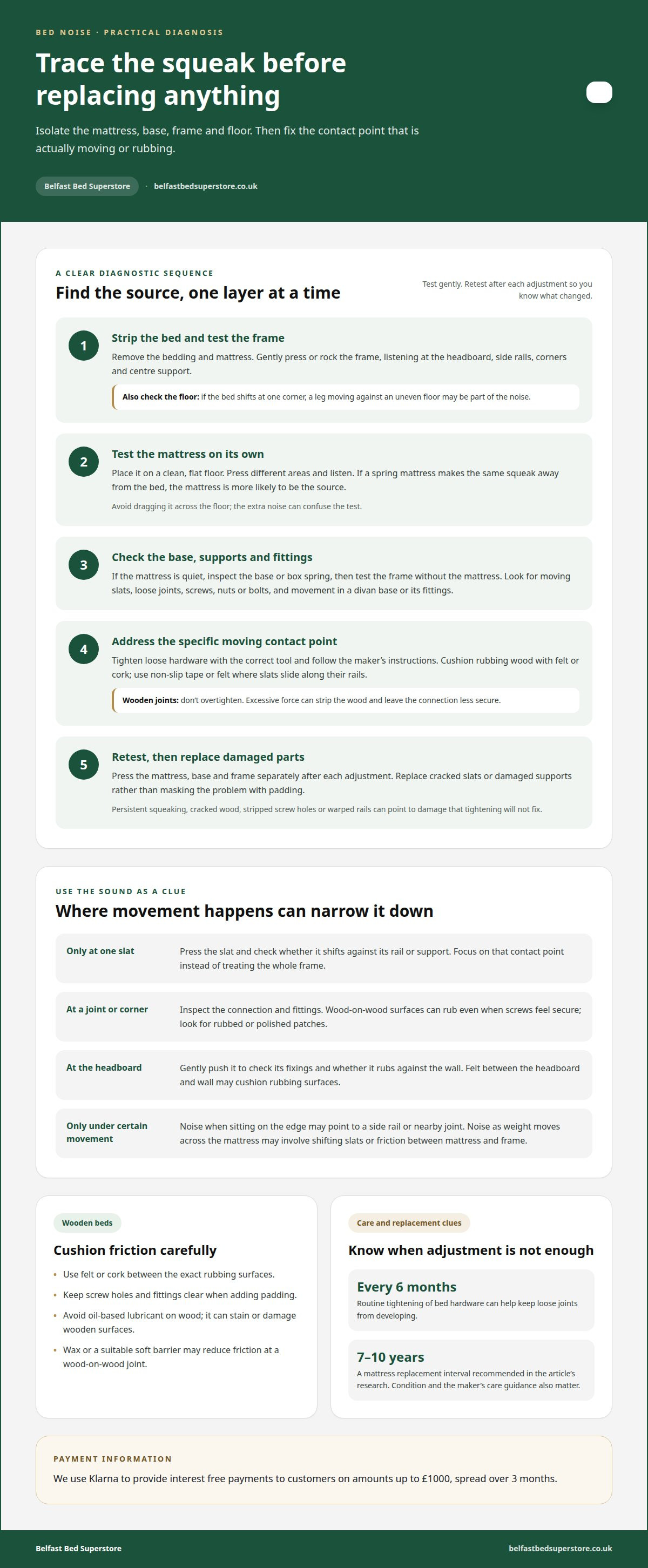
A squeak usually stops once you find the part that’s moving or rubbing. To work out how to stop a bed from squeaking, remove the bedding and mattress, test the mattress separately, then gently press or rock different parts of the base and frame to pinpoint the noise. Tighten loose fittings and cushion rubbing contact points, but replace damaged slats or supports rather than hiding the problem.
A creaky bed can disturb a peaceful night, and the sound isn’t always coming from where you expect. A mattress may squeak on its own, while a wooden frame can creak at a joint or slat; divan beds have different areas to inspect. This guide walks you through tracing the noise and choosing a practical fix, including how to check the mattress, wooden frame, slats, joints and divan base. You’ll also learn when an adjustment may help and when damage calls for more than padding or tightening.
Key Takeaways
- Test the mattress separately from the bed base, then check the frame and floor to narrow down where the noise starts.
- Look for loose joints, moving slats and rubbing contact points when inspecting a wooden bed.
- Use felt or cork to cushion rubbing surfaces, but replace cracked slats or damaged supports rather than covering them up.
- Choose lubricant carefully: oil-based products can stain or damage wooden surfaces, even if they may help with some metal parts.
- For a divan bed, inspect its fittings and base for movement so you can target the source instead of treating the whole bed.
Could your mattress be causing the squeak?
Test the mattress, base, bed frame and floor separately to identify which part moves or rubs. The cost of a repair or replacement in the UK depends on the cause: tightening a loose fitting is different from replacing a damaged frame or worn mattress, and the parts needed affect the total.
- Remove the bedding and mattress, then gently press different areas of the bed frame. Listen at the headboard, side rails, corners and centre support. If the frame makes the sound, rock it gently in different directions and note where it creaks. Check whether the floor is uneven: a bed that shifts at one corner may squeak as its legs move against the floor.
-
Test the Mattress and Frame Separately
Lift the mattress off the frame and place it on a clean, flat floor. Press several areas, then move across the surface and listen for a squeak. If a spring mattress makes the same noise away from the bed, the mattress is more likely to be the source. If it stays quiet, inspect the base or box spring, then test the frame without the mattress. Avoid dragging the mattress across the floor, as this can make noise and confuse the test.
- Inspect the joints, screws, nuts and bolts where the frame connects. Tighten loose hardware with the correct tool, following the maker’s instructions; stop if a fitting is damaged or resists movement. Don’t overtighten wooden joints, because excessive force can strip the wood and leave the connection less secure. As routine maintenance, tightening bed hardware every 6 months can help keep loose joints from developing.
-
Replace Worn Mattress or Bed Frame
Replace the part if testing reveals a persistent squeak from a worn mattress or visible frame damage. A creaking mattress may have reached the end of its natural life; cracked wood, stripped screw holes, warped side rails or movement that returns after tightening suggest frame damage. A mattress replacement interval of 7-10 years is recommended in the research for this article, but condition and the maker’s care guidance help determine what is suitable.
- Retest the bed after each adjustment: press the mattress, base and frame separately before replacing the bedding. This confirms whether the fix worked or another contact point is still moving. Finding the exact source is the practical first step in how to stop a bed from squeaking without replacing parts that remain sound.
Why do creaky wooden beds need fixing?
- Rock the wooden bed gently and listen for movement at each corner. Loose joints, screws or bolts can shift under pressure and creak as the frame moves. Check where the side rails meet the headboard and footboard. If one connection seems to be the source, inspect its fittings before tightening them according to the maker’s instructions.
- Press each slat and watch whether it slides against its rail. A slat that shifts under the mattress can rub against the wood and squeak as weight moves across the bed. Check the slat ends and their supports, too. If the sound occurs only when one slat moves, you’ve narrowed the cause to that contact point rather than the whole frame.
- Look for wood-on-wood friction where two frame parts touch. A joint may creak even when its screws feel secure if the surfaces move against each other. Check for polished or rubbed patches around the connection, then test that area with gentle pressure. Wax or a suitable soft barrier may reduce friction, but don’t use oil-based lubricant on wood.
- Check the headboard against both the frame and the wall. Its fixings may squeak as they move, or the headboard may rub against the wall when the bed shifts. Gently push the headboard and listen to identify which contact point makes the sound. Carefully tighten a loose fitting; place felt between the headboard and wall if those surfaces rub.
- Consider whether changes in room humidity could be affecting the wooden frame. Wood can respond to humidity by moving slightly, which may put pressure on joints or cause surfaces to rub. If a squeak appears alongside a visible gap or shifting connection, inspect that joint rather than assuming the mattress is responsible. Retest the same area after any adjustment.
- Check for damage before treating a creak as a minor nuisance. A cracked slat, split joint or warped rail can move under pressure and make repeated noise. Don’t use padding to mask a damaged support, as it won’t restore the part’s strength. Replace a cracked slat or damaged support with a suitable part, and reassess the frame if movement continues.
- Notice when the noise happens. A creak only when someone sits on the edge may point to a side rail or nearby joint; noise during movement across the mattress may come from shifting slats or friction between the mattress and frame. Repeat the same gentle movement to identify the trigger. Fixing the actual contact point can prevent unnecessary work elsewhere.
Cushioning wooden slats and joints with cork or padding
To quiet a wooden bed frame, tighten loose fittings, then cushion the exact wooden contact point with felt or cork. For mattress or slat noise, test each separately. Add non-slip padding where slats shift, but replace any cracked support instead of covering the damage.
- Remove the mattress and bedding, then identify the moving contact point before adding material. Press each slat and joint in turn, listening for friction as the wood shifts. Fit felt, cork or another thick material between rubbing surfaces, keeping screw holes and fittings clear. A small piece of cork wedged between noisy slats can reduce direct wood-on-wood contact.
- Secure slats that slide along their rails with non-slip tape or felt where they rest. Check that each slat sits flat and doesn’t rock after cushioning. If soft material bunches beneath a slat, remove it and use a thinner, stable piece. Towels or fabric can serve as a temporary test, but shouldn’t conceal a loose or damaged support.
- Tighten loose screws, nuts and bolts with the correct tool, following the bed maker’s instructions. Work around the frame evenly rather than forcing one fitting tight while others remain loose. Stop if a screw turns without gripping or a joint still moves after tightening. Washers may help hold a wooden joint together more securely, but they won’t repair stripped screw holes or split timber.
- Wax a wooden joint where two surfaces rub, including the joint between a rail and headboard. Apply wax to the contact area before reassembling the connection, then test it with gentle pressure. Avoid oil-based lubricants on wood because they can stain or damage the surface. For metal fittings, use a suitable metal lubricant sparingly and keep it away from wooden parts.
- Repair a sound but loose wooden joint with wood glue only when the joint can be separated and fitted correctly. Apply glue to the joint, clamp the pieces firmly, and allow them to dry for 24 hours before using the bed. Don’t glue over a cracked joint or slat. Treat glue as a repair aid only for a sound joint that fits correctly, not as a substitute for fixing damaged wood.
- Replace a cracked slat or damaged support with a suitable part instead of padding over the break. Check that the replacement sits securely on its rails and doesn’t shift when pressed. If the frame still moves after you tighten sound fittings, inspect the joints for cracks or stripped holes. Persistent movement may mean the frame needs repair beyond simple cushioning.
Will WD-40 Stop Bed Squeaking?
WD-40 or a suitable metal lubricant may quieten friction at metal joints, bolts or moving parts. Don’t spray it on wooden surfaces: oil-based lubricants can stain or damage the frame. First locate the squeak, because lubrication won’t fix a loose joint, damaged support or uneven floor.
- Remove the bedding and mattress, then gently rock the bed frame in different directions. Listen at each corner, the headboard, side rails and centre supports. A noise that occurs as the frame moves points to a joint or fitting. Note which movement brings the sound back so you can focus on the right contact point.
- Press each section in turn rather than shaking the whole bed. Apply gentle pressure to a rail, then a nearby joint, and listen for a change in the squeak. Check bolts and joints around the noisy area for looseness. If the frame stays quiet without the mattress, test the base and mattress separately before applying lubricant.
- Check whether the bed stands evenly on the floor. Push gently at each corner and look for a leg that lifts or shifts. An uneven floor can make the frame rock, creating noise at otherwise sound joints. Furniture pads under a bed leg, a rug or a suitable leg-height adjustment may help level the base and stop the movement.
- Use WD-40 only after identifying a metal contact point that rubs or moves. Apply a small amount to the relevant metal joint or fitting, not across the whole frame. Keep spray away from wood, fabric and the mattress, then move the joint gently to distribute the lubricant. If the sound comes from wood rubbing on wood, use wax instead.
- Retest the same movement after treating the joint. If the squeak remains, check whether a bolt is loose, a fitting is worn or another part is moving nearby. Tighten hardware with the correct tool and don’t force damaged fittings. Lubricant can reduce friction, but it won’t secure a loose connection or repair a cracked frame part.
- Listen again with the mattress and bedding back in place. Added weight can make a different joint, slat or support move, so compare the sound with your earlier test. If the bed squeaks only when weight is on one area, inspect the support directly beneath it. Persistent noise after tightening and lubrication points to movement or damage that needs a different fix.
Fixing squeaks in divan beds
- Remove the mattress and press different areas of the divan base, listening for the squeak. Test near the corners, along the sides and across the centre. A noise under pressure may point to a moving fitting or part of the base, while a mattress that squeaks separately needs a different fix. Note the exact area before adjusting anything.
- Inspect the base joints and connecting bolts where sections meet. Tighten a loose bolt with the correct tool, taking care not to force a fitting that resists or appears damaged. If a bolt won’t stay tight, a washer between the bolt and frame may help it hold more securely. Retest the same point by gently pressing the base.
- Check whether the divan bed sits steadily on the floor. Apply gentle pressure at each corner and listen for movement or rocking. An uneven floor can make the base shift and squeak even when its fittings are secure. Adjusting the bed’s position or placing a suitable furniture pad beneath an uneven leg may reduce the movement.
- Listen for noise where the mattress meets the base. Lift the mattress and check for rubbing, shifting or visible damage to the supporting surface. Put it back carefully, then press the same areas again. If the squeak occurs only with the mattress in place, check its care guidance and whether the base provides stable, even support.
- Look for slats if your divan base uses them. Press each one and listen for movement where its ends meet the rails. Securing a moving slat so it can’t shift may stop the friction. A small amount of baby powder or silicone spray on slat ends may also reduce rubbing, but don’t use either to conceal a cracked or damaged support.
- Don’t add a board beneath the mattress without considering its support requirements. A piece of plywood at least three-quarters of an inch thick is suggested for placing beneath a mattress, after checking with its manufacturer. If a slat or support is cracked, replace it with a suitable part rather than covering the damage. Persistent movement after tightening may mean the base needs replacing.
- Retest the divan bed with the mattress in place, applying pressure to the same corners and sections that made noise. If the squeak remains, note whether it comes from a joint, slat, mattress or floor before choosing the next step. For a replacement base, explore divan bed options suited to your bedroom.
Belfast Bed Superstore
If your mattress or bed base remains noisy after practical fixes or shows signs of wear, Belfast Bed Superstore can help you explore a replacement. Our range includes Hypnos, Sealy, Relyon and Dunlopillo mattresses, giving you options to consider for a quieter, more comfortable bedroom in Cambridgeshire.
We use Klarna to provide interest free payments on amounts up to £1000, spread over 3 months. If you’re weighing up whether a replacement mattress could suit your needs, contact Belfast Bed Superstore to talk through your options.
Make room for quieter, more restful nights
A squeak is useful information: it points to movement that deserves attention, not a reason to keep adding random fixes. Knowing how to stop a bed from squeaking means following the clue to its source, then deciding whether a careful adjustment is enough or the bed needs replacing. Take the same measured approach when choosing your next bed. Pick a setup that feels supportive and suits your room, rather than focusing on noise alone.
If ongoing noise is making it harder to settle, or your mattress no longer feels comfortable, we’re here to help you consider your options. Belfast Bed Superstore offers a range of mattresses to explore, so you can take the next step towards a calmer, more comfortable bedroom. Contact Belfast Bed Superstore to talk through what you’re looking for. A quieter night starts with a choice that feels right for you.
Frequently Asked Questions
Why does my bed squeak when I move?
A bed squeaks when movement makes two parts rub, shift or flex against each other. A change in pressure can bring out a noise that isn’t heard while the bed is still. For example, turning over may move a spring mattress, while sitting on the edge may flex a side rail. The timing and location of the sound can help distinguish between these causes.
Why Does My Bed Creak When I Move?
A creak often comes from a wooden part flexing or shifting as weight changes. A loose connection may creak as it moves, while wood rubbing against wood can make a similar sound. Notice whether it happens only when you sit down, turn over or get out of bed. That pattern can help narrow down which part is under pressure.
How do you find the source of a squeaking bed?
Recreate the noise with a small, controlled movement, then rest your hand on nearby parts to feel which one vibrates. Start where the sound seems loudest and work outwards, checking the headboard, rails and supports. If someone else gently moves on the bed, you can listen beside each area without changing your position between tests.
How do you stop a metal bed frame from squeaking?
Find the noisy metal connection and tighten its fitting with the correct tool, following the frame maker’s instructions. A washer may help a bolt that keeps loosening, while a suitable metal lubricant can reduce friction at a moving joint. Apply lubricant only to the metal contact point. If a fitting is bent or damaged, tightening it may not resolve the noise.
Can tightening bed frame bolts and screws stop squeaking?
Yes, tightening a loose bolt or screw can stop noise caused by movement at that connection. Use the correct tool and tighten gradually, checking whether the joint becomes secure. Don’t force a damaged fitting or overtighten hardware in wood, as this can strip the screw hole. If the connection still shifts after careful tightening, inspect it for damage rather than applying more force.
What lubricant is safe for squeaky bed joints and hinges?
Use wax on a wooden joint where two surfaces rub, and a suitable metal lubricant on metal joints or hinges. WD-40 may help quieten friction between metal parts, but oil-based lubricants can stain or damage wood. Apply lubricant sparingly to the identified contact point, keeping it away from fabric and the mattress. Lubrication won’t repair a cracked part or secure a loose fitting.
How can you tell if a squeak comes from the bed frame, mattress or floor?
A mattress that squeaks when tested away from the base may be the source. Noise from the frame often follows pressure on a particular rail or joint, while rocking at one leg may point to an uneven floor. Compare the sound during separate tests rather than relying on where it seems loudest while lying down. This helps identify which component to address.
When should you replace a squeaky bed frame or mattress?
Consider replacing a mattress if it continues creaking on its own or no longer provides comfortable support. A frame may need replacing when cracked wood, warped rails or stripped screw holes cause recurring movement. Noise alone doesn’t reveal the full condition of the bed, so look for visible damage and check whether the frame remains stable after securing sound fittings.


