
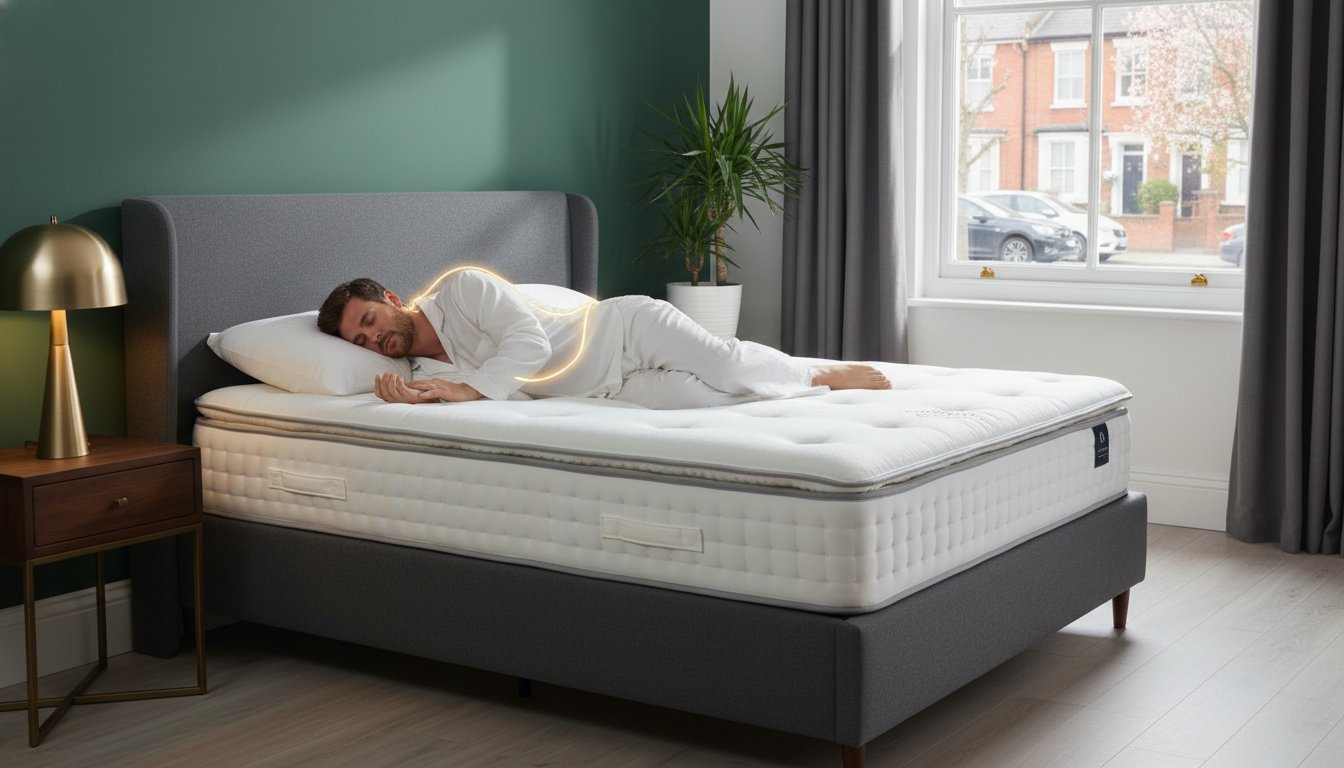
Did you know that the rock-hard mattress you bought to fix your back might actually be making your sciatica worse? It's a common mistake to think that "firmer is always better," but for many of our neighbors across the UK, an overly stiff bed only adds pressure to an already angry sciatic nerve. We understand how draining it is to spend your nights chasing a comfortable position, only to wake up with that familiar radiating leg pain and a stiff lower back. You deserve a bedroom that feels like a sanctuary, not a source of morning aches.
In this guide, we'll help you find the best mattress for sciatica UK by focusing on what really matters: "Reactive Contouring." You'll discover how to choose a mattress that balances vital spinal alignment with the soft surface cushioning needed to reclaim your rest. Since research shows that 50-60% of back pain sufferers actually find the most relief on a medium-firm surface, we're moving past the confusing labels to look at the science of sleep. We'll preview the top-performing hybrid and latex options from trusted brands like Sealy, Hypnos, and Relyon that are designed to support your body for the next 10 years and beyond.
Key Takeaways
- Stop sciatic nerve pinching by learning how to prevent your spine from 'hammocking' on an unsupportive or sagging surface.
- Wake up with less stiffness by discovering why medium-firm support often beats the traditional 'extra firm' mattress myth.
- Identify the best mattress for sciatica UK for your body by comparing the reactive support of pocket springs with pressure-relieving foam.
- Achieve perfect spinal alignment with targeted tips for side and back sleepers that help fill uncomfortable gaps in the lower back.
- Shop with peace of mind using a 30-night sleep trial to ensure your new mattress delivers the pain-free sleep you deserve.
What is Sciatica and How Does Your Mattress Affect It?
Sciatica isn't just a simple backache; it's a specific, often debilitating pain that travels from your lower back down through your hips and legs. To understand what is sciatica, you need to picture the sciatic nerve being compressed or irritated, usually right at the source in your lumbar spine or glutes. When you lie down at night, your mattress should be your biggest ally in relieving this pressure. However, if your bed has seen better days or doesn't suit your body type, it might be doing the exact opposite. We've seen many neighbors struggle with this, and the solution often starts with understanding the physics of your sleep surface.
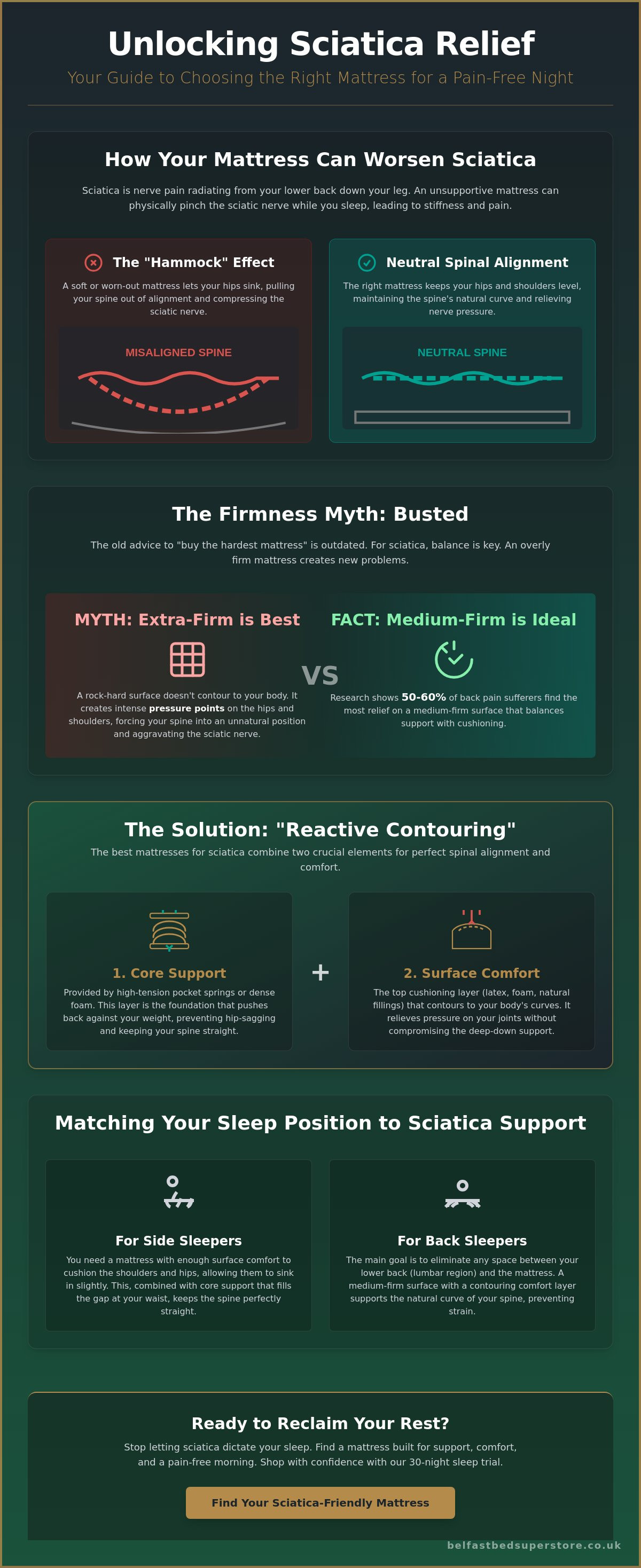
A mattress that has lost its tension or internal support causes your body to "hammock." This happens when your heaviest parts, typically your hips and midsection, sink too deep into the surface while your head and feet stay elevated. This dipping pulls your spine out of its natural alignment and physically pinches the nerve, leading to those sharp, radiating pains that keep you awake. Finding the best mattress for sciatica UK involves searching for a surface that holds you on top of the bed rather than letting you fall into it. We often talk about the "Goldilocks Zone" of support: a bed that isn't so soft that you sag, but isn't so hard that it feels like sleeping on a floor. Neutral spinal alignment is the foundation of nerve health because it ensures the vertebrae remain spaced correctly, preventing the mechanical compression of the sciatic nerve.
The Role of Spinal Neutrality in Pain Relief
To get the rest you deserve, try to visualise your spine as a perfectly straight line running from your neck down to your tailbone. Your mattress needs to contour to your unique curves while pushing back with enough force to keep your hips level with your shoulders. When your hips dip even slightly, it triggers a sciatic flare-up by tugging on the lower lumbar region. If you're waking up with intense stiffness every single morning, your current mattress is likely the primary culprit, as it's failing to maintain that neutral line during the night.
Why 'Orthopaedic' is Often Just a Marketing Label
It's a common misunderstanding, but there's actually no official UK standard or medical certification for an "orthopaedic" mattress. Often, brands use this label simply to describe a very firm feel. While a firm surface might suit a small percentage of sleepers, it isn't a guaranteed fix for nerve pain. We always advise looking for construction quality, such as the high-tension pocket springs found in Sealy or Relyon models, rather than just trusting a label. Real relief comes from how the mattress is built to support your weight, not what's written on the marketing tag. When searching for the best mattress for sciatica UK, focus on material density and spring counts to find true medical-grade support.
The Firmness Myth: Why 'Extra Firm' Isn't Always Best for Sciatica
For decades, the standard advice for anyone with a bad back was to sleep on the firmest surface possible. We've spoken to countless customers who spent years sleeping on beds that felt like a wooden board, believing it was the only way to find relief. In reality, an "extra firm" mattress can often be the enemy of recovery. While you need support to prevent the dipping we discussed earlier, a surface that is too hard creates intense pressure points on your hips and shoulders. For a sciatica sufferer, these pressure points can actually aggravate the nerve by forcing the body into an unnatural position. Finding the best mattress for sciatica UK is about finding a balance, not just picking the hardest option on the shop floor.
The secret lies in distinguishing between "Surface Comfort" and "Core Support." Core support comes from the spring system, such as the deep-down pushback found in Sealy mattresses, which keeps your spine aligned. Surface comfort is the cushioning layer on top that allows your joints to sink in just enough to relieve tension. By 2026, sleep technology has advanced to allow for "dual-tension" designs. These modern hybrids use plush top layers, like natural latex or high-density foam, paired with a high-tension spring base. This combination ensures your spine stays straight while your sciatic nerve remains uncompressed. If you're looking for expert advice on managing sciatic pain, you'll find that most specialists now recommend this middle-ground approach over extreme firmness.
If you're unsure which level of tension suits your specific needs, our team can help you browse our range of supportive mattresses to find your ideal match.
Body Weight and the Firmness Scale
Your weight plays a massive role in how a mattress feels and performs. A "medium" mattress will feel firm to someone under 10 stone but may feel far too soft for someone over 16 stone. Use this guide to help narrow your search for the best mattress for sciatica UK:
- Under 10 stone: Look for Soft-Medium tension. You need a more forgiving surface to ensure your hips can sink in enough to keep your spine level.
- 10 to 16 stone: A Medium-Firm tension is usually the "sweet spot." It provides enough resistance for your core without sacrificing comfort.
- Over 16 stone: Firm or Bariatric support is essential. Brands like Relyon offer reinforced spring units that prevent heavier sleepers from bottoming out.
Zoned Support: The Modern Solution for Nerve Pain
One of the most effective innovations for sciatica is zoned support. Instead of having the same tension from head to toe, these mattresses vary the resistance in different areas. A premium mattress will typically be softer at the shoulders to allow for a comfortable sink, but much firmer in the middle third where your hips and lower back sit. This reinforced lumbar section is vital for preventing that "pinching" sensation in the lower back. By providing extra lift exactly where the sciatic nerve originates, zoned mattresses help maintain a neutral posture all night long, letting you wake up feeling refreshed rather than restricted.
Top Mattress Types for Sciatica Relief in 2026
Choosing between different mattress technologies can feel overwhelming when you're already dealing with the exhaustion of chronic pain. We often see customers who've been told that memory foam is the only solution for nerve issues, but that isn't the full story. The best mattress for sciatica UK is one that responds to your movements throughout the night, ensuring your spine never loses its neutral position. Whether you prefer the traditional bounce of springs or the body-hugging feel of modern foams, the goal is always to decompress the sciatic nerve while you rest.
Pocket sprung mattresses remain a favorite across the UK because each spring moves independently, contouring to your body's shape without affecting the person sleeping next to you. Memory foam is indeed excellent for pressure relief, but it requires high density to prevent the "hammocking" effect mentioned earlier. For those who find foam too warm, latex is a brilliant natural alternative that offers instant push-back. Choosing the best mattress for sciatica UK often means looking at how these materials work together in hybrid models, which combine the deep support of springs with the soft surface comfort of specialized foams.
Natural Pocket Sprung Mattresses
We take great pride in recommending Hypnos mattresses for those seeking sustainable and reactive support. These beds are built with a focus on spinal integrity, using pocket springs that adjust to your weight in real-time. Similarly, Relyon mattresses are renowned for their traditional hand-tufting. This process involves passing ribbons through the entire mattress to keep the natural fillings and springs in place, ensuring the tension remains consistent for years. Using natural fillings like wool and cotton isn't just about luxury; these materials help regulate your body temperature, preventing the restless tossing and turning that often triggers sciatic pain.
Pressure-Relieving Hybrid Technology
If you prefer a more modern feel, Sealy mattresses are a fantastic option thanks to their world-class Posturepedic technology. This system is specifically engineered to provide extra support in the middle third of the mattress where you need it most. Many of these models use Geltex, a specialized foam that helps you feel like you're "floating" rather than sinking, which significantly reduces pressure on the sciatic nerve. We also recommend looking for models with reinforced edge support. If you find it painful to get in and out of bed, a sturdy edge provides a stable platform to push off from, making your morning routine just a little bit easier.
Matching Your Sleep Position to Sciatica Support
Your preferred sleeping position is more than just a habit; it's a blueprint for how your body interacts with your mattress. When you're dealing with the sharp, shooting pains of sciatica, your position can either open up the space around the nerve or clamp down on it. We've found that many of our neighbors are unaware that their favorite way to sleep might be the very thing sabotaging their recovery. Identifying the best mattress for sciatica UK requires a deep look at how your specific posture affects your lower back and pelvis throughout the night. By aligning your bed's tension with your sleeping style, you can finally move from restless nights to restorative, pain-free rest.
The Side Sleeper's Dilemma
Side sleeping is the most popular choice for comfort, but it presents a unique challenge for nerve health. If your mattress is too firm, your shoulder and hip act as rigid pillars that hold your torso up, leaving your waist to sag toward the bed. This causes your pelvis to tilt at an awkward angle, which physically stretches and pulls on the sciatic nerve as it exits the spine. To prevent this, you need a "sink-in" factor of at least 2-3 inches. This depth allows your hips to settle into the surface, keeping your spine straight and your pelvis square. For most people with a lighter or average frame, a Medium or Medium-Soft tension provides the necessary give to soothe those pressure points and keep the nerve relaxed.
Back Sleeping and Lumbar Health
Sleeping on your back is often considered the gold standard for spinal neutrality, provided your mattress fills the natural "gap" in the small of your back. If the bed is too soft, your buttocks sink too deep, creating that "hammock" shape we discussed earlier that rounds the lower spine and compresses the nerve. Conversely, a bed that's too hard leaves the lumbar region unsupported and strained. A Medium-Firm mattress is typically the best mattress for sciatica UK for back sleepers, as it offers the push-back needed to keep the spine level while gently cushioning the glutes. This ensures the weight of your body is distributed evenly, taking the direct pressure off your lower vertebrae.
To find the perfect balance for your preferred position, you can view our Sealy Posturepedic range, which is specifically designed for targeted lumbar support and spinal alignment.
- Front Sleepers: We generally discourage this position for sciatica because it forces the neck to turn and the lower back to arch, which often worsens nerve compression. If you can't switch, place a thin pillow under your hips to flatten the spine and reduce the arch.
- The Pillow Trick: This is a simple but effective tool for pain relief. For side sleepers, placing a pillow between your knees keeps your hips from rotating. If you sleep on your back, a pillow under the knees reduces the pull on your lower back muscles and helps maintain the spine's natural curve.
Expert Advice: Choosing Your Sciatica-Friendly Mattress
We believe that everyone deserves a bedroom that feels like a retreat, not a source of morning dread. Our commitment to our neighbors across the UK is simple: we want to help you find that perfect night's sleep without the stress or high-pressure sales tactics. Choosing the best mattress for sciatica UK is a deeply personal decision that impacts your quality of life for the next decade. Because we value your long-term comfort over a quick transaction, we offer flexible payment options to ensure that a high-quality, supportive bed is accessible to everyone who needs it.
Managing nerve pain is hard enough without the physical strain of setting up a new bedroom. To protect your back from further injury, we provide professional assembly and old bed removal services. This means you don't have to worry about heavy lifting or navigating bulky mattresses up the stairs; our team handles the logistics so you can focus on your recovery. It's all part of our goal to make the purchasing process as straightforward and comfortable as the beds we sell.
The 30-Night Adjustment Period
It's vital to remember that your body often needs 2 to 4 weeks to fully adjust to a new sleep surface. If you've been sleeping on a sagging mattress for years, your muscles and spine have likely developed "compensatory habits" to cope with the lack of support. When you switch to a mattress with correct alignment, you might experience some initial "new bed" soreness. This isn't usually a sign that the mattress is wrong; it's often your body relearning how to sit in a neutral position. Our 30-night sleep trial is essential for sciatica sufferers because it gives you the time needed to move past this adjustment phase with total peace of mind.
Next Steps for a Pain-Free Morning
Before your new mattress arrives, we recommend checking your existing bed frame for any signs of "dipping" or broken slats. Even the most advanced mattress cannot perform correctly on a compromised base. If you need a fresh start, you can explore our range of solid, supportive frames from Birlea furniture or Flintshire Furniture. These bases provide the stable foundation required to keep your new mattress performing at its best for years to come.
If you're still feeling unsure about which tension is right for you, don't hesitate to reach out. Our friendly team is here to provide personalized advice based on your height, weight, and specific pain points. Contact us today to start your journey toward the best mattress for sciatica UK and the restorative sleep you've been missing.
Reclaim Your Rest and Wake Up Pain-Free
Finding the right balance between deep core support and soft surface cushioning is the secret to soothing an irritated sciatic nerve. We've explored how the "firmness myth" can often lead to more discomfort and why matching your specific sleep position to the right mattress tension is vital for long-term health. Finding the best mattress for sciatica UK is the first step toward reclaiming your quality of life and ending the cycle of restless nights and stiff, painful mornings.
We're here to make this transition as easy and reassuring as possible for you. You can shop with total confidence thanks to our 30-Night Sleep Trial Guarantee; this gives your body the necessary time to adjust to a new, healthy alignment. To make high-quality sleep even more accessible, we offer 0% finance options that suit your budget. Our team will even handle the professional home assembly and old bed removal, so you don't have to worry about heavy lifting or tricky logistics. Find your perfect sciatica-relieving mattress at Belfast Bed Superstore today. We look forward to helping you discover the luxury of a truly restful, pain-free night.
Frequently Asked Questions
Is a firm or soft mattress better for sciatica?
A medium-firm mattress is usually the ideal choice for most people. While the old advice suggested extra-firm beds, modern research shows that a balance of core support and surface cushioning prevents pressure on the sciatic nerve. If you pick a bed that is too soft, you'll sag; if it is too hard, your joints won't sink in, causing the pelvis to tilt and pull on the nerve.
How do I know if my mattress is causing my sciatica?
If your pain is worse in the morning but improves once you've been moving for an hour, your bed is likely the culprit. You should also check for visible dipping or "hammocking" in the center of the mattress. A mattress that has lost its tension can't keep your spine neutral, which leads to the mechanical compression of the nerve during the night.
Can a mattress topper help with sciatic nerve pain?
A topper can provide temporary surface relief if your current bed is too firm, but it won't fix a lack of support. If your mattress is sagging, adding a topper is like putting a plaster on a deep wound; it doesn't solve the underlying issue of spinal alignment. To find the best mattress for sciatica UK, you need a resilient core that prevents your hips from sinking too deep.
What is the best sleeping position for sciatica?
Sleeping on your side with a pillow between your knees is widely considered the most effective position for relief. This setup keeps your hips, pelvis, and spine in a square, neutral alignment. Alternatively, sleeping on your back with a pillow under your knees can help flatten the lumbar curve and reduce the strain on your lower vertebrae.
How much should I spend on a mattress for back pain in the UK?
You should view a mattress as a ten-year investment in your physical well-being. While prices vary across different brands, focusing on high-quality names like Sealy or Hypnos ensures you're getting a bed built with durable components that won't sag after a few months. Investing in a mid-to-high range model usually pays off through better sleep quality and a much longer product lifespan.
Should I choose memory foam or pocket springs for sciatica?
Both have benefits, but a hybrid that combines both often works best. Pocket springs provide the reactive push-back needed for spinal alignment, while a foam or latex top layer offers the pressure relief your hips and shoulders need. If you choose memory foam, ensure it's high-density so you don't feel "stuck" or unsupported as the material warms up during the night.
How often should I replace my mattress if I have back problems?
Most experts recommend replacing your mattress every seven to eight years. However, if you have chronic back issues, you should listen to your body rather than the calendar. If you notice a return of morning stiffness or radiating leg pain before the eight-year mark, it's a clear signal that the internal support system has started to fail and can no longer protect your spine.
Does a 30-night trial really matter for sciatica sufferers?
A trial period is absolutely vital because your body needs time to unlearn old, painful postures. When you switch to the best mattress for sciatica UK, your muscles may feel slightly sore for the first fortnight as they adjust to proper alignment. A trial ensures you aren't stuck with a bed that doesn't suit your specific needs after this initial adjustment phase has passed.


