
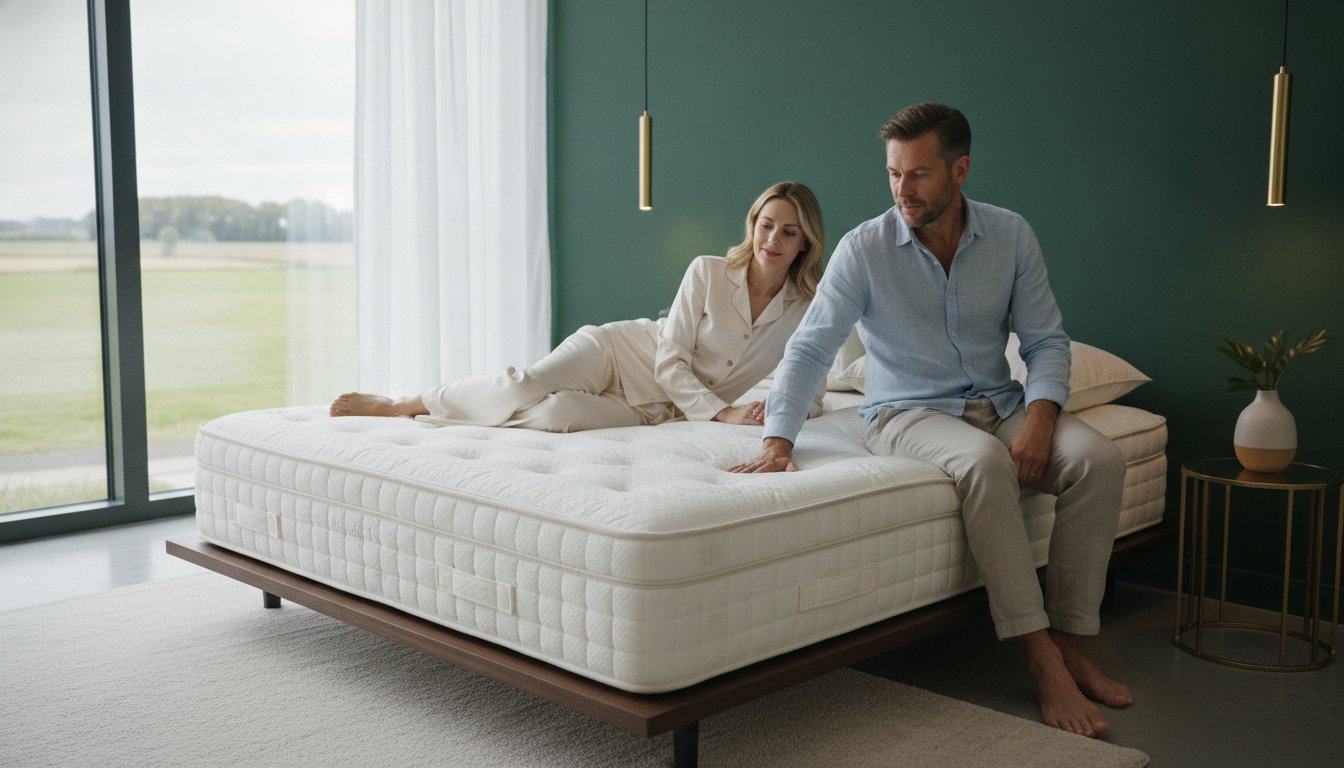
That luxuriously soft mattress you fell in love with in the showroom might actually be the hidden cause of your morning back pain. It's a common mistake to confuse a plush surface feel with proper spinal support, but the two are very different things. To help you find the right fit, we've developed this 2026 mattress tension guide by weight so you can stop "bottoming out" and start waking up refreshed. We know how frustrating it is to invest in your sleep only to find the tension doesn't match what your body actually needs to recover overnight.
You deserve a bed that respects your biology and provides genuine pressure relief. We'll show you exactly which tension your weight requires for optimal alignment, whether you are a lighter sleeper needing a softer touch or require the sturdy support of a firmer model. We also explore how to navigate choices for couples with different body types, giving you the confidence to choose a premium brand like Sealy or Hypnos. Let's look at the specific weight brackets that will transform your quality of rest and your daily well-being.
In this guide, you will learn:
- How to distinguish between the initial surface "feel" of a mattress and the deep support your spine needs to stay healthy.
- A clear mattress tension guide by weight to help you identify whether a soft, medium, or firm tension suits your specific body type.
- The ways your preferred sleeping position can shift your support requirements to protect your shoulders and hips from uncomfortable pressure points.
- Common physical signs that your current bed is a poor match for your weight, such as waking up with a stiff or aching lower back.
- Why visiting us to test high-quality brands like Hypnos and Relyon in person is the most reliable way to guarantee your long-term comfort.
Understanding Mattress Tension: Support vs. Surface Feel
Finding the right bed shouldn't feel like a guessing game. When we talk about Understanding Mattress Tension, we're really talking about the mechanical resistance of the internal spring system. This is usually provided by high-quality pocket springs, which act like individual shock absorbers for your body. It's the engine room of your sleep quality. Many of our customers arrive at our showroom confused because they've tried a "firm" bed that feels like concrete, yet they still wake up with back pain. This happens because there is a massive difference between "Firmness" and "Support". Firmness is that initial sensation when you first sit or lie down, which is mostly determined by the comfort layers like wool, cotton, or latex. Support is the deeper work the mattress does to keep your spine in its natural position all night long.
A mattress can have a wonderfully soft surface feel but still offer incredible support if the spring tension is correctly matched to your build. This is where our mattress tension guide by weight becomes so helpful. If the springs are too stiff for your weight, they won't compress enough to follow your body's curves. Conversely, if they're too weak, you'll sink right through the comfort layers and hit the "bottom", leaving your muscles to do the work of supporting your frame instead of resting. The comfort layers are there to provide a cushion of luxury, but they shouldn't be used to mask a spring system that is fundamentally wrong for your body type.
The Science of Spinal Alignment
Your body is designed to rest in a neutral position where your head, shoulders, and hips are all naturally aligned. When you lie on your side, your shoulders and hips are the heaviest points, so they need to sink in just enough to keep your spine straight. Gravity pulls on these points differently depending on your weight, which is why a tension that works for a 10 stone sleeper will fail a 16 stone sleeper. Spinal alignment is the horizontal plane of the vertebrae when the mattress correctly counters body weight. When this balance is hit, your muscles finally get the chance to fully relax and recover.
Why One Size Does Not Fit All
There is an old myth that a rock-hard mattress is the only cure for a bad back. We see the results of this misconception every day. If a light sleeper chooses a very firm tension, they often experience painful pressure points because the mattress isn't letting their shoulders and hips sink in. On the other hand, if a heavier individual chooses a mattress that is too soft, they experience "hammocking". This is where the middle of the body dips too low, arching the spine and causing that dreaded lower back ache by morning. This mattress tension guide by weight helps you avoid these common pitfalls by matching your unique profile to the right engineering.
The Ultimate Mattress Tension Guide by Weight
Premium British manufacturers like Hypnos design their spring systems with specific weight brackets in mind. Understanding these categories is the first step to securing a better night's sleep. While many online retailers offer vague "soft" or "firm" labels, we believe in being precise about what your body actually needs. This mattress tension guide by weight provides the clarity you need to make a confident choice for your health and comfort. You don't have to settle for a "one-size-fits-all" approach that leaves you tossing and turning.
- Soft Tension: Best for individuals under 11 stone (70kg). Lighter sleepers need a more flexible spring to ensure the mattress contours to their shape.
- Medium Tension: The most popular "universal" choice, ideal for those between 11 and 16 stone (70-101kg). It offers a perfect balance of give and resistance for most people.
- Firm Tension: Recommended for individuals over 16 stone (101kg). This prevents the "dipping" sensation and ensures the mattress doesn't lose its shape prematurely.
- Extra Firm (Orthopaedic): Typically reserved for those over 18 stone (114kg) or individuals with specific medical requirements for a very rigid sleeping surface.
It's vital to remember that these aren't just suggestions. Scientific research into how body weight affects mattress needs shows that choosing the wrong tension can lead to chronic discomfort. If you're on the border between two brackets, your sleeping position usually acts as the tie-breaker. We want you to feel supported, not strained.
Weight Brackets and Spring Gauges
The tension of a mattress is determined by the "gauge" or thickness of the wire used in the pocket springs. A lower gauge number means a thicker, stiffer wire. If you're a lighter sleeper on a firm mattress, you simply don't have enough mass to "engage" the springs. You'll end up floating on top, which leads to hip and shoulder pain. Conversely, heavier sleepers will "overpower" soft springs. This doesn't just cause back pain; it leads to premature wear and tear as the springs are constantly compressed to their limit. You can explore our range of supportive Sealy mattresses to see how different spring technologies cater to these specific needs.
Couples and "Tension Compromise"
Sharing a bed often means compromising on everything from the duvet to the room temperature. However, you shouldn't compromise on your mattress tension. If one partner is 9 stone and the other is 17 stone, a single tension mattress will leave one of you in pain. We often recommend Zip and Link mattresses as the gold-standard solution. This allows two different tensions to be joined together seamlessly. Another option is a "Dual Tension" one-piece mattress, which features different spring gauges on each side within a single cover. If you're unsure which path is right for your bedroom, our team at Belfast Bed Superstore is always here to help you find that perfect middle ground.
How Sleep Position Adjusts Your Tension Requirements
Your body weight sets the foundation for your support needs, but the way you lie on the bed dictates where that support is most critical. Think of weight as the volume and your sleeping position as the equaliser settings. While our mattress tension guide by weight provides the essential baseline, your posture determines how that weight is distributed across the spring system. If you're a side sleeper, your weight is concentrated on the narrow points of your shoulders and hips. Without enough give in the tension, these areas bear the brunt of the resistance, leading to restless nights. Back sleepers distribute their weight more evenly, requiring a tension that fills the gap of the lumbar curve without letting the spine slump into a curve.
For those who prefer their stomach, the challenge is keeping the midsection from dipping too low. Front sleepers often need a slightly firmer tension than their weight suggests to prevent lower back arching. This extra resistance helps maintain a flat profile for the spine. Finally, if you're a combination sleeper who moves throughout the night, a medium tension usually offers the safest middle ground. It's flexible enough for side sleeping but sturdy enough to support you when you roll onto your back. We find that most people who move frequently benefit from this balanced approach to ensure they never wake up feeling stiff.
The Side Sleeper’s Pressure Point Challenge
If you wake up with pins and needles in your arms or a dull ache in your hips, your mattress tension is likely too firm for your weight. This is a common issue for lighter side sleepers who can't compress the springs enough to let their shoulders sink. We often suggest looking at Sealy Mattresses with Posturepedic technology, as they're specifically engineered to handle these transition zones where your body needs extra relief. Adding comfort layers like latex or memory foam can also help cushion these heavy contact points while the underlying springs do the heavy lifting. It's about finding that sweet spot where you feel weightless rather than pushed back.
Front Sleepers and the "Arching" Risk
Stomach sleepers face a unique struggle with spinal health. When the pelvis sinks too deep into a soft mattress, it creates an unnatural curve in the lower back that leads to significant morning pain. It's a common reason why many front sleepers feel "broken" when they first stand up. Front sleepers should generally opt for one tension level higher than their weight bracket suggests to protect the lower spine. By choosing a firmer support, you ensure your hips stay level with your shoulders, keeping your body in a healthy, flat plane throughout the night. This simple adjustment can often be the difference between a night of tossing and a night of deep, restorative sleep.

Signs Your Current Mattress Tension Is Failing You
Your body is incredibly good at telling you when something is wrong. Often, the aches and pains we dismiss as "just getting older" are actually clear signals that your sleep surface has failed. If you wake up with a stiff lower back that eases after you move around for ten minutes, it's a classic sign that your mattress is too soft. In this scenario, your spine lacks the structural support needed to stay neutral, causing your muscles to stay tense all night. On the flip side, if you feel a sharp ache in your shoulders or hips, the tension is likely too firm. This mismatch creates pressure points that restrict blood flow, often leading to that familiar numbness or "pins and needles" in your arms.
We often see customers who've fallen into the "Support vs. Comfort" trap. They choose a soft mattress because it feels lovely for five minutes in a shop, but they lack the heavy-duty spring resistance their weight requires. This is why our mattress tension guide by weight is so vital; it helps you distinguish between a plush surface feel and the structural integrity your frame needs. If you find yourself rolling into your partner in the middle of the night, the springs are likely exhausted or weren't designed for your combined weight. You might also notice visual sagging, where the mattress no longer returns to its flat, neutral state once you get up. These aren't just cosmetic issues; they're signs that your bed is no longer doing its job.
The "Hand Test" for Tension Accuracy
You can perform a simple check at home to see how your current bed measures up. Lie on your back and try to slide your flat hand into the small of your back. If there is a large, obvious gap, the mattress is too firm for your build. If you have to struggle to slide your hand in at all, the mattress is too soft and is letting your spine slump. Ideally, your hand should slide in with just a little resistance. For more detailed advice on managing these specific issues, take a look at our guide on the best mattress for a bad back and hips.
When to Replace vs. When to Add a Topper
We're often asked if a topper can save a failing mattress. The truth is, a topper can only help if your mattress is too firm by adding a layer of cushioning. It cannot fix a mattress that is too soft or one that has started to sag. A sagging foundation is a structural failure that no amount of extra padding can "cure". If your bed has reached the end of its life, we offer a hassle-free old bed removal and recycling service for our Cambridge customers to make the transition easier. If you're ready to find a bed that actually fits your frame and weight, you can browse our full range of mattresses today and start sleeping better.
Finding Your Perfect Match at Our Cambridge Showroom
While this mattress tension guide by weight gives you a solid scientific foundation, we always say that the final decision should be made with your eyes closed. Every body is unique, and sometimes a "medium" tension in one brand feels subtly different from a "medium" in another. That's why we invite you to visit our Cambridge showroom to experience the difference for yourself. We've spent over 30 years as a family-run specialist, helping our neighbors find the rest they deserve without any high-pressure sales tactics. You'll find a guiding hand from people who truly understand the industry and care about your quality of life.
If you're looking for the pinnacle of bespoke support, we often point people toward Relyon Mattresses. Their hand-stitched excellence and traditional craftsmanship mean the tension is consistent across every inch of the sleeping surface. It's the kind of quality that turns a bedroom into a genuine sanctuary. We also offer a 30-night sleep trial guarantee because we want you to be completely sure of your choice once you've had time to settle into it at home. It's all part of our commitment to your long-term comfort.
Testing Premium Brands in Person
To get the most out of your visit, we recommend wearing comfortable, loose clothing that allows you to move naturally. Don't be afraid to spend at least 10 or 15 minutes lying on a potential choice in your usual sleeping position. This gives the materials time to react to your body heat and weight, giving you a true sense of the support. Our showroom allows you to compare Hypnos, Sealy, and Relyon side-by-side. Our friendly local experts are always on hand to answer questions, ensuring you find a bed that meets your specific needs.
Logistics and Local Service
We know that luxury beds can be quite heavy, which is why we offer professional home assembly for a small fee to take the stress out of your delivery. We also believe that high-quality sleep shouldn't be a financial burden. We provide flexible payment options, including 0% finance, to make that premium support more affordable for everyone. We'd love for you to visit us in Cambridge soon to find your "forever bed" and start enjoying the physical well-being that comes with a perfectly matched mattress. We're here to make the process straightforward and transparent from start to finish.
Start Your Journey to Better Sleep Today
Your journey to a pain-free morning starts with understanding that your mattress should work with your body, not against it. By matching your build and sleeping position to the correct spring resistance, you're investing in years of better health and genuine comfort. We hope this mattress tension guide by weight has given you the clarity needed to move away from morning aches and toward truly restorative rest.
As a family-run specialist since 1990, we take immense pride in being a helpful, neighborly presence for our local community. We are official stockists for premium brands like Hypnos, Sealy, and Relyon, and we invite you to visit our Cambridge Showroom to test the 2026 Hypnos & Sealy collections in person. With our 30-night sleep trial guarantee, you can choose your next bed with total confidence and zero pressure. You don't have to settle for another night of tossing and turning. We look forward to seeing you soon and helping you find the perfect support for your lifestyle.
Frequently Asked Questions
Is a firm mattress always better for back pain?
No, the idea that a rock-hard bed is the only cure for back pain is a common myth. If a mattress is too firm for your build, it won't allow your shoulders and hips to sink, which actually forces your spine out of its natural alignment. The goal is always a neutral spine, which often requires a medium or even soft-medium tension depending on your unique weight and shape.
What tension do I need if my partner and I are different weights?
You should consider a Zip and Link or a dual-tension mattress if there's a significant weight gap between you. These clever designs allow each side of the bed to be manufactured with a different spring gauge. This ensures both of you receive the correct support for your individual needs without forcing one partner to compromise on their comfort or spinal health.
Can I change the tension of my mattress with a topper?
You can use a topper to add a layer of surface comfort if your mattress feels too firm, but you can't use one to fix a mattress that is too soft. A topper only changes the "feel" of the top layer; it doesn't change the underlying spring resistance. If the internal springs are too weak for your weight, the only real solution is to replace the mattress with a more supportive model.
How long does it take for a new mattress tension to feel "normal"?
Most high-quality mattresses require a break-in period of 30 to 60 days for the materials to soften and conform to your body. It's perfectly normal for a new bed to feel slightly firmer than expected during the first few weeks. We always recommend giving your body at least a month to adjust to the new support levels before making a final judgment.
What is the best mattress tension for a 15-stone side sleeper?
A medium tension is typically the best starting point for a 15-stone side sleeper. This tension provides enough resistance to support your weight while offering enough "give" for your shoulders and hips to sink in comfortably. It's a balanced choice that prevents painful pressure points from developing, ensuring you don't wake up with "pins and needles" in your arms.
Does mattress tension affect the lifespan of the bed?
Yes, choosing the correct tension is essential for the longevity of your investment. If you're a heavier sleeper using a soft tension, you'll constantly "overpower" the springs, causing them to fatigue and sag much faster than they should. Following a mattress tension guide by weight helps ensure your bed lasts for its full intended lifespan and maintains its supportive properties.
Is "Orthopaedic" just another word for "Extra Firm"?
In the mattress industry, "orthopaedic" is usually a term used to describe the firmest tension available. These beds are designed to provide a very rigid support system that resists sinking. While they can be helpful for those over 18 stone or people with specific medical needs, they may be too stiff for lighter individuals, potentially causing more discomfort than they solve.
How do I know if my mattress has lost its tension over time?
You'll likely notice visual sagging or a permanent "dip" where you usually sleep if the tension has failed. Another clear sign is the "roll-together" effect, where you and your partner find yourselves sliding toward the center of the bed. If you're waking up with new lower back pains that gradually disappear once you're up and moving, it's a strong indicator the springs have lost their integrity.


