
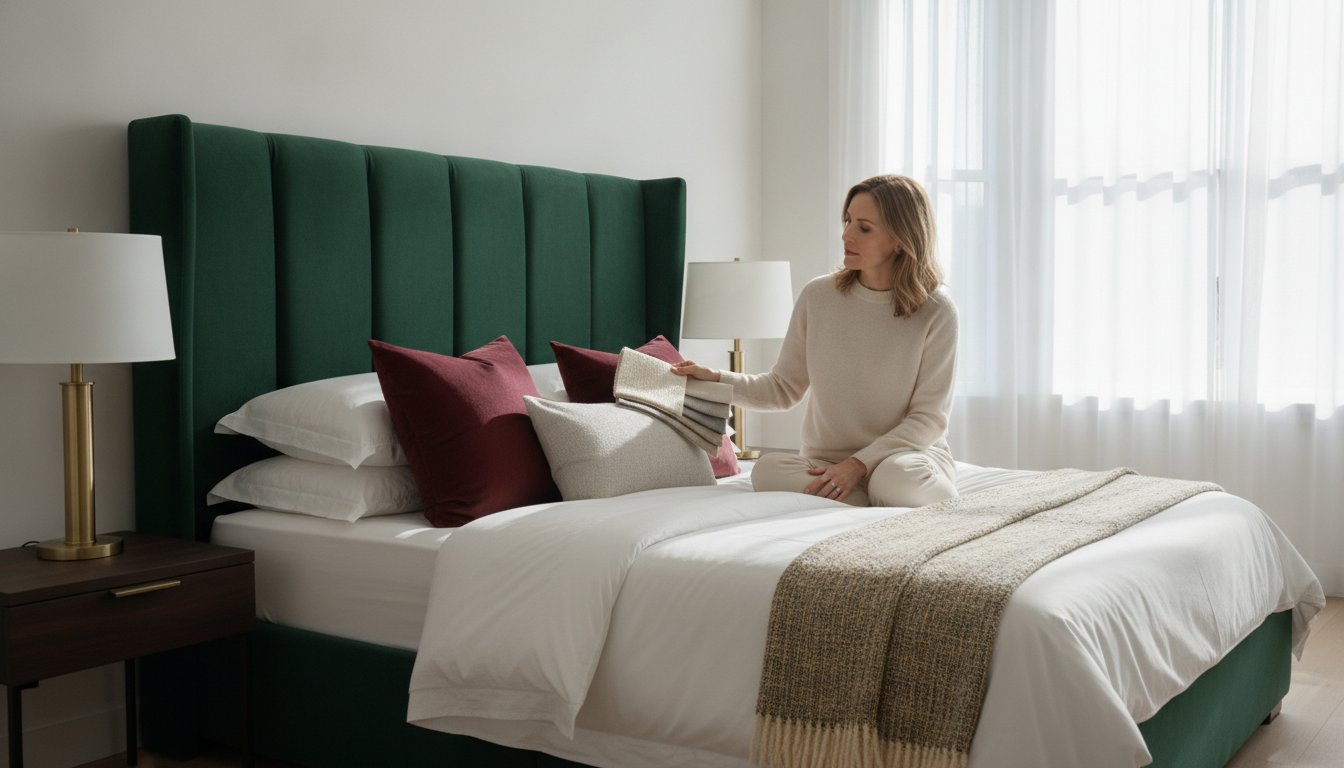
The most stunning fabric in the showroom can quickly become a source of stress if it isn't built for your actual life. It's a common story; you fall in love with a delicate weave or a pale linen, only to realize it's a magnet for pet hair or Sunday morning coffee spills. Choosing fabric for an upholstered bed isn't just about picking a color you like. It's about finding a material that feels like a luxury but works like a workhorse for your home.
We understand that you want a bedroom that feels like a sanctuary, not a "do not touch" zone. You're likely looking for that perfect balance of a soft, tactile centerpiece and a material that won't pill or stain within a year. In this guide, we'll show you how to navigate 2026's top trends, from textured bouclé to high-performance velvets. You'll learn how to interpret durability ratings and how to pick a sustainable, safe fabric that meets the latest CPSC flammability standards. We're here to help you find a bed that looks incredible and lasts for years to come.
Key Takeaways
- Learn the distinct benefits of popular materials like durable performance velvet and breathable linen to find a texture that suits your personal comfort.
- Understand the Martindale Rub Test scores so you can select a fabric that stands up to daily life, pets, and children without losing its premium look.
- Discover how to tailor your fabric choice to local architecture, whether you are styling a traditional Cambridge terrace or a sleek East Anglian new build.
- Simplify the process of choosing fabric for an upholstered bed by following our expert steps for shortlisting materials and testing physical swatches in your room's unique light.
- Gain the confidence to invest in a bed frame that serves as a beautiful design centerpiece while offering the long-term durability your home deserves.
Why the Right Fabric is the Foundation of Your Bedroom Aesthetic
Your bed is likely the largest piece of furniture in your home. It isn't just a place to rest; it's the anchor of your master suite. When you start the process of choosing fabric for an upholstered bed, you're deciding on the atmosphere of your entire room. Unlike a standard utility item, an upholstered frame adds a layer of softness that wood or metal simply cannot replicate. It transforms the bed from a piece of furniture into a design focal point that invites you to relax.
We often talk to customers about "visual weight" in bedroom design. This concept refers to how much space a piece of furniture appears to take up. A bed wrapped in a heavy, dark navy velvet feels grounded and substantial. It commands attention and makes a large room feel more intimate. On the other hand, a light cream linen-blend makes a small room feel airy and open. For those wondering What is Upholstery? in a modern context, it's the art of combining structural support with padded comfort and beautiful textiles to create a piece that's as functional as it's aesthetic.
Choosing the right textile also affects the warmth of your space. Fabric acts as a natural insulator, both thermally and acoustically. In a room with hard flooring or large windows, an upholstered bed helps dampen sound and creates a physically warmer environment. This makes the room feel less like a gallery and more like a lived-in sanctuary.
The Role of Texture in Sleep Quality
Your brain begins to relax long before you close your eyes. Feeling a soft-touch fabric like velvet as you brush against the headboard signals to your body that you've entered a safe, comfortable space. While aesthetics matter, the "feel" of the material is what supports your nightly routine. Natural fibres like cotton or wool offer excellent breathability, helping to regulate your temperature throughout the night. Synthetic blends often provide better stain resistance, which is a fair trade for many busy households. Choosing a tactile, high-quality fabric is the single most effective way to elevate the cosiness factor of a master suite.
Fabric vs. Other Bed Materials
While wooden bedsteads offer a classic look, they don't provide the same support for your evening routine. If you enjoy reading or working in bed, an upholstered headboard acts as a built-in cushion for your back. This comfort doesn't mean you have to sacrifice longevity. Modern fabrics are incredibly resilient, often outlasting the trends that inspired them. We see many customers choosing Birlea furniture because their contemporary upholstered designs manage to look high-end while standing up to the rigours of a real home. Choosing fabric for an upholstered bed allows you to customize your comfort in a way that solid materials never will.
- Tactile Comfort: Soft surfaces for leaning and lounging.
- Acoustic Benefits: Reduces echoes in larger bedrooms.
- Style Versatility: Endless colours and patterns to match your decor.
Comparing Popular Upholstery Materials: From Velvet to Linen
When you're choosing fabric for an upholstered bed, the material you select dictates how much time you'll spend on maintenance. Velvet remains a top choice for those seeking a touch of opulence. Modern performance velvets offer incredible depth of colour while being surprisingly resistant to crushing and staining. It's a far cry from the delicate, high-maintenance fabrics of the past. These materials catch the light beautifully, making your bed the undisputed star of the room.
Linen offers a completely different vibe. It creates a breezy, natural aesthetic that's perfect for a relaxed, scandi-style bedroom. However, 100% linen is prone to creasing. If you love the organic look but want a tidier finish, look for linen-look polyester blends. These give you that textured, earthy feel without the constant need for smoothing. For a more traditional or rustic feel, wool and tweed are excellent options. They are naturally warm, hold their shape beautifully, and offer a sophisticated, tailored appearance.
If you prefer a wipe-clean surface, faux leather or suede are the practical kings of the bedroom. They're ideal for allergy sufferers since they don't trap dust or pet dander as easily as woven fabrics. They provide a sleek, modern look that's incredibly easy to maintain with just a damp cloth. If you're ready to see these textures in person, you can browse our full collection of upholstered frames to find your perfect match.
Natural Fibres vs. Synthetic Blends
Choosing between 100% natural fibres and synthetic blends often comes down to your daily habits. Natural materials like cotton or wool are highly sustainable and offer superior breathability. Synthetic blends, usually involving polyester, are the secret behind "easy-clean" labels. They resist fading and pilling much better than pure natural yarns. When evaluating fabric durability, always look for a tight, consistent weave. A loose weave might look rustic, but it's more likely to snag or stretch over time. We always recommend feeling the weight of the fabric to ensure it has enough substance for long-term use.
The Rise of Bouclé and Woven Textures
The "Soft Modernism" trend of 2026 has brought bouclé to the forefront of bedroom design. Its bubbly, looped texture adds incredible visual interest without needing a bold or busy pattern. Brands like Flintshire Furniture are leading the way by incorporating these rich, tactile textures into their latest frames. While bouclé looks stunning and feels incredibly cosy, keep in mind that heavy weaves can make a bed look larger. In a compact room, a smoother fabric might be a better fit to keep the space feeling open and airy. Choosing fabric for an upholstered bed is all about balancing these tactile trends with the physical layout of your home.
Selecting Fabrics Based on Your Lifestyle and Durability Needs
Your lifestyle is the ultimate test for any material. When choosing fabric for an upholstered bed, you need to look beyond the colour swatch and check the technical specs. In the UK, the most important figure is the Martindale Rub Test score. This test simulates daily wear by rubbing a piece of wool against the fabric until the fibres break. For a bed frame, which sees less friction than a sofa, a score of 20,000 to 25,000 cycles is perfect for general domestic use. You don't need the 50,000 plus scores found in commercial hotels, but anything under 15,000 might show wear too quickly. For more detail, this university guide to selecting upholstery breaks down how different fibres handle this stress.
Sunlight is another factor people often overlook. If your bed sits under a large south-facing window, check the lightfastness rating. This is usually scored from 1 to 8; you should aim for a 5 or higher to ensure your deep blues or rich greens don't turn into dusty greys within a year. For allergy sufferers, the news is actually very good. Tight weaves, particularly synthetic velvets, are excellent because they don't have the large "pockets" that trap dust mites and dander like loose linens do. This makes your sleeping environment much cleaner and easier to manage.
The Best Fabrics for Families and Pets
Many people worry that choosing fabric for an upholstered bed is a mistake if they have cats or dogs. It's actually the opposite if you choose wisely. Distressed textures and multi-tonal weaves are brilliant at hiding stray hairs and minor snags. Synthetic velvets are a secret weapon for pet owners because they lack the looped threads that claws usually catch on. Darker tones like charcoal, chocolate brown, or navy also help mask the occasional muddy paw print or sticky fingerprint from the kids.
Maintenance and Cleaning Realities
It's vital to know what you can handle at home. Most modern polyester blends are designed for easy spot-cleaning with a damp cloth and mild detergent. Natural fibres often require professional steam cleaning to avoid shrinking or watermarks. Safety is also a priority for us. All our fabrics meet strict UK fire retardant (FR) standards, ensuring your peace of mind and home security. If you're looking for a practical solution that combines style with utility, check out our guide to Storage Beds Cambridge to see how fabric ottomans can transform your space.

Matching Bed Upholstery to Your Cambridge Home’s Interior Style
The architecture of East Anglia is beautifully diverse. This means there isn't a one-size-fits-all approach to interior design. If you're living in one of the classic Victorian terraces near Mill Road, you likely have high ceilings and original floorboards. Choosing fabric for an upholstered bed in these spaces often involves leaning into that grandeur. Rich velvets with deep tufting or buttoning complement the period features and handle the "visual weight" of a large room perfectly. Darker shades like forest green or deep navy feel grounded and sophisticated against traditional white coving.
Conversely, modern new builds in areas like Trumpington or Eddington often favour a "Soft Modernism" approach. These homes typically have lower ceilings and larger windows, which let in plenty of natural light. For these spaces, neutral linens and minimalist greys are the ideal choice. They keep the room feeling airy and open. A low-profile frame in a light oatmeal or stone shade prevents the bed from overbearing the room, creating a calm, restful sanctuary that feels larger than it actually is.
Height is a design tool you can use to your advantage. A tall, upholstered headboard in a period property draws the eye upward, celebrating the room's height. In a more compact modern flat, a wider, shorter headboard can make the walls feel broader. Using subtle patterns, such as a soft herringbone or a fine weave, adds interest without cluttering the visual field of a smaller bedroom.
Neutral vs. Statement Colours
While we've discussed durability and material types, the colour you choose is what truly ties the room together. Greige and oatmeal tones remain incredibly popular because of their longevity and high resale value. They provide a flexible backdrop that allows you to change your bedding or wall art whenever you like. However, if you want your bed to be the primary "pop" in a neutral room, jewel tones like teal or rust orange are stunning choices. Ordering physical swatches is a step you shouldn't skip. The natural light in a north-facing terrace is very different from the bright sun in a modern glass-fronted apartment. You need to see how the colour shifts throughout the day against your specific wall paint.
Coordinating with Bedroom Furniture
You don't need to match everything perfectly to create a cohesive look. A fabric bed pairs beautifully with wooden bedside tables or painted wardrobes. The contrast between the hard wood and the soft upholstery adds depth to your design. Brands like Relyon are popular with our customers because they offer matching divan bases that create a seamless, tailored appearance. Don't be afraid to mix textures either. A plush velvet bed looks incredible when paired with a flat-weave wool rug. This layered approach makes the room feel curated rather than "out of a box." If you're ready to find the perfect centrepiece for your home, explore our range of upholstered bed frames today.
Practical Steps: From Ordering Samples to Showroom Testing
Once you have a style in mind, it's time to move from browsing to testing. Start by shortlisting three to five fabrics that meet the durability and aesthetic needs we've discussed. Don't rush this stage. Order physical swatches so you can see how the colour behaves in your own bedroom light. A shade that looks bright in a shop might look muted in a north-facing Cambridge terrace. Once those samples arrive, perform a "scratch and spill" test. Rub the fabric with a rough cloth to check for pilling and see how easily a drop of water wipes away. This hands-on approach takes the guesswork out of choosing fabric for an upholstered bed.
After you've narrowed down your choices, visit a local showroom. You need to feel the "hand" of the fabric, which is the industry term for how it feels against your skin. A full-sized bed frame provides a much better sense of the scale and texture than a small swatch ever could. This is also the best time to confirm lead times. Bespoke upholstery, where a frame is made to your exact specifications, can take several weeks. If you're in a hurry, check what's available in stock for immediate delivery. Our team can help you navigate these timelines so your new bed arrives exactly when you need it.
Why Showroom Testing Beats Online Browsing
Digital screens often distort real-world colours. What looks like a warm grey online might have a cool blue undertone in person. Visiting our Cambridge showroom allows you to test the padding and "give" of different headboards. If you enjoy sitting up to read, the firmness of the upholstery is just as important as the look. We often encourage customers to test premium brands like Hypnos in person. Their attention to detail in fabric application is something you truly have to see and touch to appreciate. It's about ensuring the physical sensation of rest matches your visual expectations.
Final Checklist Before You Buy
Before you make your final decision, run through a quick checklist to ensure long-term satisfaction. Ask if the bed features removable covers or if the upholstery is fixed. Removable covers are a huge benefit for long-term cleaning, especially in busy households with pets or children. Always verify the warranty on fabric wear and tear too. Knowing you're covered for pilling or premature fading adds that extra layer of reassurance. Choosing fabric for an upholstered bed is a significant investment in your well-being. To complete your new bedroom setup, read our Sealy Mattresses Guide to find the perfect partner for your new frame.
Ready to Create Your Perfect Bedroom Sanctuary?
Your bed should be more than just a place to sleep; it's the heart of your home's most private retreat. We've explored how the right texture transforms your space and why technical specs like the Martindale test matter for longevity. By now, you should feel much more confident about choosing fabric for an upholstered bed that balances tactile luxury with the practical needs of your family and pets.
As a family-run business established in 1990, we've spent decades helping our neighbors find their perfect rest. We're proud to offer a 30-night sleep trial guarantee and an expert assembly service throughout Cambridgeshire to make your transition to a new bed as smooth as possible. We're here to ensure your investment brings you comfort for years to come. Our team is always ready to guide you through the final selection process with the care and expertise you'd expect from a local specialist.
Browse our full range of upholstered beds and order your fabric samples today
We look forward to helping you find a bed that looks as good as it feels. Sweet dreams.
Frequently Asked Questions
What is the most durable fabric for an upholstered bed?
Synthetic blends are widely considered the most durable choice for daily use. Polyester-based fabrics offer excellent resistance to pilling, stretching, and fading over time. While natural fibers feel lovely, a high-quality synthetic blend provides the resilience needed for a bed frame that looks new for years. These materials are specifically engineered to withstand the friction of leaning against the headboard every night without showing premature wear or thinning.
How do I clean a fabric headboard without ruining it?
Regular vacuuming with an upholstery attachment is the best way to prevent dust buildup in the fibers. If a spill occurs, blot the area immediately with a clean, dry cloth rather than rubbing the stain deeper into the weave. Most modern fabrics can be spot-cleaned with a mild detergent and water solution, but it's vital to check the manufacturer's care label first. For deep cleaning, we recommend professional steam cleaning to preserve the texture.
Are upholstered beds good for people with allergies?
Upholstered beds are a great option for allergy sufferers if you select a tight-weave material. Fabrics like performance velvet or faux leather don't have the large gaps found in loose linens, meaning they trap significantly less dust and pet dander. Maintaining a regular vacuuming schedule will keep your sleeping environment clean. This makes choosing fabric for an upholstered bed a practical design choice that doesn't compromise your respiratory health or comfort.
Will my fabric bed fade if it is near a window?
Every fabric will eventually experience some color change when exposed to direct sunlight over a long period. You can minimize this by checking the lightfastness rating of your chosen material before purchasing. A rating of five or higher is ideal for beds placed in sunny East Anglian bedrooms. Using curtains or blinds during the brightest parts of the day will also help protect your investment from UV damage and keep the colors vibrant.
Can I change the fabric on my bed later on?
Changing the fabric on a standard upholstered bed is usually a complex job that requires professional reupholstery. It isn't as simple as swapping a duvet cover because the material is typically stapled or glued to the frame. However, some specific designs come with removable slipcovers that allow for easier cleaning or color changes. If you think you'll want a new look in a few years, look for these specific models or choose a timeless neutral tone.
What is a Martindale rub test and why does it matter for beds?
The Martindale rub test measures how much friction a fabric can handle before the fibers start to break down. For a residential bed frame, a score between 20,000 and 25,000 cycles is the industry standard for durability. While beds don't see as much heavy friction as a living room sofa, this score ensures the fabric won't thin out or pill where your pillows or head rest against the headboard every night.
Are fabric beds more expensive than wooden ones?
Fabric beds aren't necessarily more expensive than wooden bedsteads, as pricing depends on the quality of the frame and the textile used. You can find budget-friendly upholstered options that cost less than solid oak frames. However, premium fabrics or bespoke upholstery will naturally carry a higher price tag. At our store, we focus on providing high quality at a fair price, ensuring you get excellent value regardless of the material you choose for your home.
Which fabric is best if I have a cat or dog?
Synthetic velvet is the top choice for pet owners because it lacks the looped threads that cats love to scratch. Hair also tends to sit on the surface rather than getting woven into the fabric, making it much easier to brush away. Performance micro-suedes are another excellent option due to their wipe-clean nature. Choosing fabric for an upholstered bed that is pet-friendly ensures your bedroom stays looking beautiful even with furry companions sharing the space.


