

The mattress that feels easiest to sink into may not be the easiest to move on. Choosing a mattress for parkinson's patients means weighing comfort alongside how manageable it feels to turn, reposition, and get in or out of bed. A mattress can’t treat Parkinson’s, but the right combination of mattress and bed features may better suit changing comfort and mobility needs.
It’s understandable to feel unsure about firmness and support, especially when recommendations can sound like medical promises. This guide focuses on practical comparisons: comfort in usual sleeping positions, ease of changing position, bed height, and adjustable-bed compatibility. Individual needs differ, so ask a healthcare professional about personal concerns involving mobility or sleep.
Belfast Bed Superstore offers mattresses from Hypnos, Sealy, Relyon, and Dunlopillo, alongside adjustable beds. Customers in Cambridge and across Cambridgeshire and East Anglia can compare options at the Cambridge showroom. Flexible payment options include 0% finance and interest-free instalments. The aim is a comfortable, considered choice, without pressure or promises of a cure.
Key Takeaways
- Choose a mattress for parkinson's patients around personal comfort and practical movement needs, not as a treatment for Parkinson’s.
- Compare pressure comfort, support, temperature preference, and ease of repositioning rather than relying on firmness labels alone.
- Consider whether an adjustable bed feels useful, and confirm that the specific mattress is compatible with the base.
- Before choosing, note comfort needs, compare options, test getting in and out of bed if safe, and check current purchase terms.
- Ask about available payment options, including 0% finance and interest-free instalments.
Parkinson's Mattresses: Capabilities and Limitations
If turning over, settling into a comfortable position, or getting in and out of bed has become more difficult, it’s natural to wonder whether a different mattress could help. There isn’t one answer for everyone. Movement, comfort, sleep, and preferred sleeping position vary between people, so a mattress for parkinson's patients is best approached as an individual comfort choice, not a treatment.
A mattress can affect how supported and comfortable a bed feels, but it can’t treat Parkinson’s or guarantee easier movement or better sleep. Keep that distinction in mind when comparing products. Be cautious of claims that a particular mattress can manage symptoms or deliver medical benefits.
How Parkinson's may affect sleep and bed use
Parkinson’s can involve movement changes as well as non-motor symptoms, and its effects differ from person to person. For some, changes in movement or comfort may influence how they change position or settle at night; others may have different sleep concerns. The Parkinson's disease overview describes this broad range of symptoms, but it isn’t a substitute for personalised medical advice.
Preferences can also change over time. A mattress that once felt comfortable may no longer feel right as routines, sensitivities, or practical needs shift. That doesn’t mean a particular change is inevitable. If sleep disruption, pain, or getting in and out of bed is a concern, discuss it with a healthcare professional. They can help consider possible causes and appropriate support.
Why there is no single best mattress
One person may prioritise a cushioning feel, while another may prefer a more stable surface that feels easier to move across. Usual sleeping position, body shape, pressure comfort, temperature preference, and the effort involved in repositioning all influence what feels suitable. Use these as points to compare, not as a formula for choosing a specific mattress type.
Firmness labels can help narrow down options, but they aren’t standardised guarantees of comfort or clinical suitability. A mattress described as “firm” by one retailer may feel different from another, and the label alone can’t tell you how it will feel for your body.
General bedding guidance can help you think through comfort, but it shouldn’t be mistaken for a treatment recommendation. Test options where possible, taking time to notice how they feel when lying down and changing position. Comfort is personal. The right choice is the one that suits the individual’s preferences and practical needs without promising more than a mattress can provide.
Which mattress features should you compare for comfort and movement?
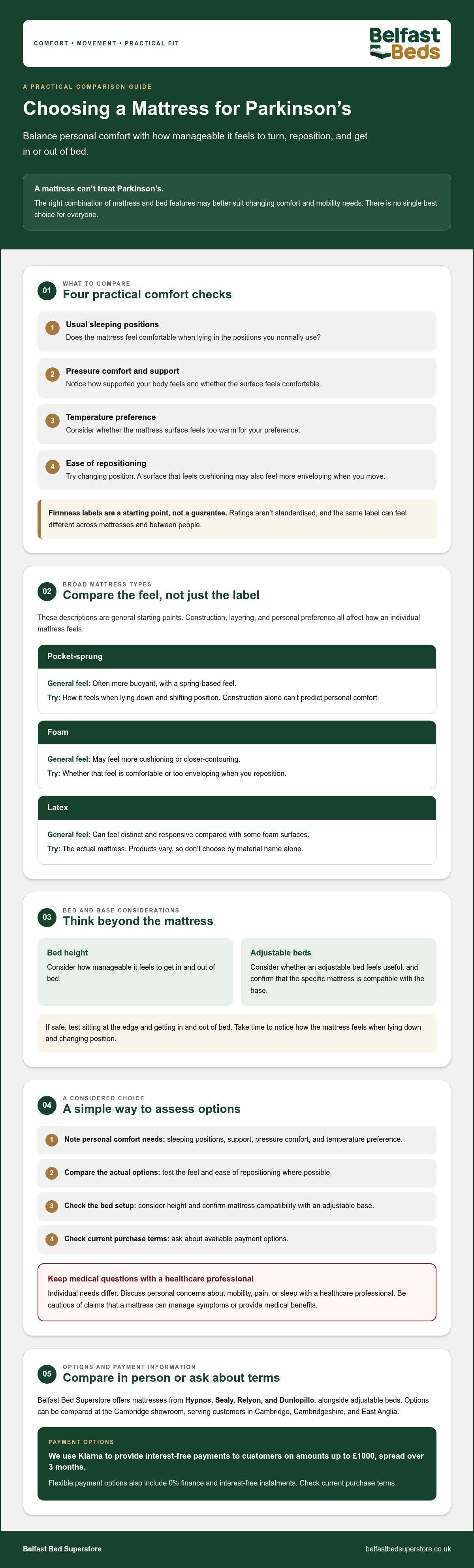
Once you know that preferences differ from person to person, compare the feel of a mattress in practical terms. Ask whether it feels comfortable in usual sleeping positions, how supported the body feels, whether the surface feels too warm, and how easy it is to change position. These observations are more useful than choosing a mattress for parkinson's patients based on a diagnosis alone.
Firmness ratings can help narrow the options, but labels aren’t standardised guarantees of comfort or clinical suitability. A “medium” mattress may feel different across products and to different people. If possible, lie on a mattress in your usual positions, then try changing position or sitting at the edge. The symptoms and treatment of Parkinson's are individual health matters, so use a healthcare professional for medical guidance rather than relying on a mattress description.
| Mattress type | General feel to consider | Practical trade-off |
|---|---|---|
| Pocket-sprung | Often has a more buoyant, spring-based feel. | Try how the surface feels when lying down and shifting position; construction alone can’t predict personal comfort. |
| Foam | May feel more cushioning or closer-contouring. | Notice whether that feel is comfortable or too enveloping when you reposition. |
| Latex | Can have a distinct, responsive feel compared with some foam surfaces. | Individual products vary, so test the actual mattress rather than choosing by material name alone. |
Pocket-sprung, foam, and latex mattresses: what feels different?
These broad descriptions are starting points, not promises about a particular mattress. Layering, construction, and personal preference all affect the feel. Browse the Hypnos mattress range as one option to compare. When testing, notice how each mattress feels when you lie down, shift position, and settle into your usual sleeping posture.
Does mattress firmness affect comfort or movement?
Firmness influences how the surface feels, but neither a firm nor a softer option is universally right. Consider comfort first, then whether the mattress feels easy enough to move across and sit on. If shopping with someone else, invite them to test the options at their own pace and only in a way that feels safe and comfortable. A mattress choice shouldn’t be treated as a way to prevent falls, ease symptoms, or treat pain.
Mattress types and adjustable beds: how do the options compare?
A standard bed and an adjustable bed offer different practical choices. A conventional bed keeps the mattress in a fixed position, so the main decision is how the mattress feels and how the complete bed setup suits the room. An adjustable bed can change the position of the base, which some people may prefer to try. That flexibility isn’t automatically right for everyone, and it doesn’t treat Parkinson’s.
| Option | What you can compare | What to check |
|---|---|---|
| Conventional bed | A fixed sleeping surface and the feel of the mattress in your usual positions. | Whether the complete bed feels comfortable and accessible for getting in and out. |
| Adjustable bed | Whether changing the bed’s position feels useful and comfortable for you. | Whether the specific mattress is compatible with the base, and whether the setup suits your needs. |
Mattress compatibility matters. Don’t assume that a mattress will work with every adjustable base; check the requirements for the specific mattress and base with the retailer before buying. You can also browse our Sealy mattress range as one option to compare alongside other mattress choices.
When might an adjustable bed be worth considering?
Think of adjustable positioning as something to discuss and test, not a medical recommendation. Consider whether changing the bed’s position feels comfortable and useful in practice. If positioning or transfers raise health concerns, ask a healthcare professional or occupational therapist for individual advice before choosing equipment. A bed’s features alone can’t determine what’s appropriate for a person’s health or mobility.
How should bed height and access factor into the choice?
Look beyond the mattress. The frame affects the finished bed height, while bedside furniture and available space can affect how easily someone approaches the bed. If possible, try sitting on the edge, standing up, and getting back into bed using the support they would normally rely on. Avoid testing a transfer without appropriate help if there’s any concern about safety.
For a mattress for parkinson's patients, compare the whole setup: mattress, base, frame height, and room access. If getting in or out of bed feels unsafe, seek advice from a healthcare professional rather than relying on a product description to resolve the concern.
How can you assess a mattress before choosing one?
A simple, unhurried process can make comparing a mattress for parkinson's patients feel more manageable. Focus on the person’s own comfort and practical needs, and let them take part in testing as comfortably and safely as possible. A caregiver can help explain preferences or keep notes, but the patient’s experience should guide the choice wherever possible.
Work through these steps:
- Note comfort needs: Write down preferred sleeping positions, areas that feel uncomfortable, and any concerns about changing position.
- Compare options: Try a few mattress feels and note which provide a comfortable sense of support.
- Test access: If it feels safe, check how manageable it is to get onto and off the bed.
- Check practical terms: Confirm mattress and bed-base compatibility, delivery or assembly details, and any trial conditions before committing.
What should you test in person?
Where in-person testing is available, lie in usual sleeping positions and notice pressure, support, and whether repositioning feels comfortable. Don’t rush. Getting on or off the bed is optional; only try it if the person feels safe and comfortable, with appropriate support. A caregiver may help record what feels different between options.
Ask staff to explain the mattress feel and which bed bases it’s compatible with. Keep questions focused on product features rather than medical outcomes. A retailer can describe the products, but can’t determine whether a bed is clinically suitable for an individual.
When should a clinician or occupational therapist be involved?
Ask a healthcare professional or occupational therapist for individual advice if transfers, positioning, or safety are concerns. They can help assess needs that product descriptions and a brief mattress test can’t address. Retailer guidance helps you compare comfort and product details; healthcare advice is for personal clinical and mobility concerns.
Belfast Bed Superstore lists a 30-night sleep trial guarantee. Before ordering, ask the retailer to confirm whether the trial applies to the mattress you’re considering and check its current terms. That way, you’ll understand how the trial works before making your decision.
Ready to compare options and ask about current trial terms? Explore mattress choices with Belfast Bed Superstore.
Choosing and buying a mattress for Parkinson's patients with confidence
A clear checklist can keep the buying process focused on what matters to the person who’ll use the bed. A mattress for parkinson's patients should be chosen for individual comfort and practical fit, not because it promises to treat Parkinson’s or change symptoms.
- Comfort: Does the mattress feel comfortable in the positions the person usually sleeps in?
- Movement: Does the surface feel manageable when changing position?
- Bed access: Does the complete bed setup suit the person’s needs getting in and out?
- Compatibility: If considering an adjustable bed, has the retailer confirmed that the specific mattress and base work together?
- Purchase terms: Are delivery, assembly, removal, and any trial conditions clear before ordering?
Take time to compare. A partner or caregiver can join the discussion if the patient wishes, helping to note preferences or ask questions while keeping the patient’s comfort central.
What to ask a mattress retailer
Ask how the mattress feels, which bed bases it’s compatible with, and what delivery options are available. If assembly or old bed removal would be helpful, ask whether those services apply to the chosen purchase and confirm the details. Belfast Bed Superstore offers professional assembly and old bed removal; check the current arrangements before ordering.
The retailer also lists a 30-night sleep trial guarantee. Confirm whether the specific mattress qualifies and ask about the current terms and conditions; don’t assume every product is included. Ask about available payment options too, so you understand the arrangements before deciding.
A low-pressure next step for comparing options
Belfast Bed Superstore’s mattress range includes options from Hypnos, Sealy, Relyon, and Dunlopillo, as well as adjustable beds. These are products to compare for their feel and practical features, not Parkinson’s-specific treatments. Customers in Cambridge and across Cambridgeshire and East Anglia can visit the showroom to compare products. Ask about product details and purchase arrangements, and seek healthcare advice separately for medical or mobility concerns.
There’s no need to rush. Explore mattresses and speak with our friendly team when you’re ready to ask questions and compare options at your own pace.
Choose comfort and confidence, one step at a time
The right mattress is a personal choice, shaped by comfort, ease of movement, and how the whole bed fits the person’s needs. Compare how different options feel, check compatibility if considering an adjustable base, and ask a healthcare professional about individual mobility or safety concerns. A mattress for parkinson's patients may suit someone’s comfort preferences, but it isn’t a treatment for Parkinson’s.
Belfast Bed Superstore has been established since 1990, with mattresses from Hypnos, Sealy, Relyon, and Dunlopillo to compare. Professional assembly and old bed removal are available. The store also lists a 30-night sleep trial guarantee, so check current eligibility and terms for the mattress you’re considering before ordering. Flexible payment options include 0% finance and interest-free instalments.
There’s no need to rush a decision. Explore our mattress range and speak with our friendly team about practical product questions and purchase details. Visit the Cambridge showroom to compare options in person. With clear information and the person’s comfort leading the way, you can take the next step with greater confidence.
Frequently Asked Questions
Is there a best mattress for someone with Parkinson's?
No single mattress is best for everyone with Parkinson’s. A mattress for parkinson's patients should be chosen around the individual’s comfort, usual sleeping position, and preferences for changing position or accessing the bed. Compare how different options feel rather than relying on a diagnosis or firmness label to decide. Belfast Bed Superstore offers mattresses from Hypnos, Sealy, Relyon, and Dunlopillo to compare.
Can a mattress help with Parkinson's symptoms?
A mattress can’t treat Parkinson’s or promise to ease its symptoms. It may suit someone’s personal preferences for comfort and support, but that’s different from providing a medical benefit. Be cautious of product claims that suggest a mattress will manage symptoms or improve a health condition. For questions about sleep changes or symptoms, speak with a healthcare professional who can offer advice based on the person’s circumstances.
Is a firm mattress better for Parkinson's patients?
Not necessarily. A firm mattress may feel comfortable to one person, while another may prefer a softer or more cushioning feel. Firmness labels can be useful for comparing products, but they don’t guarantee how a mattress will feel or whether it’s suitable for a particular person. If possible, try options in usual sleeping positions and notice comfort and how manageable it feels to change position.
Can an adjustable bed help someone with Parkinson's?
An adjustable bed lets the user change the bed’s position, which some people may prefer to try for comfort. It isn’t automatically suitable for everyone and doesn’t treat Parkinson’s. Check with the retailer that the particular mattress is compatible with the adjustable base. If positioning or getting in and out of bed raises safety or health concerns, ask a healthcare professional or occupational therapist for individual guidance.
How do I choose mattress firmness for a person with Parkinson's?
Start with the person’s comfort, not their diagnosis. If possible, compare mattresses by lying in familiar sleeping positions and noticing pressure, support, and how easy it feels to shift position. Firmness terms aren’t standardised guarantees, so don’t assume the same label will feel identical across products. A partner or caregiver can help take notes, while the person using the mattress guides the decision.
Should I ask a doctor before buying a mattress for Parkinson's?
Ask a healthcare professional if there are individual concerns about transfers, positioning, safety, or disrupted sleep. They can advise on health and mobility questions that a mattress retailer can’t assess. Retailer guidance is useful for comparing product feel, bed-base compatibility, and purchase details, but it isn’t clinical advice. If there are no specific health concerns, you can compare comfort and practical features as part of your buying decision.
Can a person with Parkinson's try a mattress in a showroom?
Yes, Belfast Bed Superstore has an in-store showroom in Cambridge, serving customers in Cambridgeshire and East Anglia, where customers can explore mattress options. If the person wishes and it feels safe, they can lie in their usual sleeping positions and assess comfort and repositioning. A partner or caregiver may come along to help note preferences. Ask the retailer about the current terms of its 30-night sleep trial guarantee, including whether the mattress being considered is eligible.


