

Looking for the best mattress for restless leg syndrome UK shoppers can choose? Focus on personal comfort, not treatment. When restless sensations make it hard to settle or stay comfortable, it’s understandable to wonder whether a different mattress might help. A mattress can affect how supported, cool and free to move you feel, but it can’t treat restless legs syndrome.
This guide explains how to compare mattress features that may suit your comfort preferences, without confusing bedding advice with medical care. We’ll look at firmness, pressure comfort and how different mattress types can feel, with practical checks to use when shopping online or in person.
You’ll also find guidance on assessing your options and when to speak to your GP about symptoms. If you’re considering how to spread the cost of a purchase, Belfast Bed Superstore offers 0% finance and interest-free instalments.
Key Takeaways
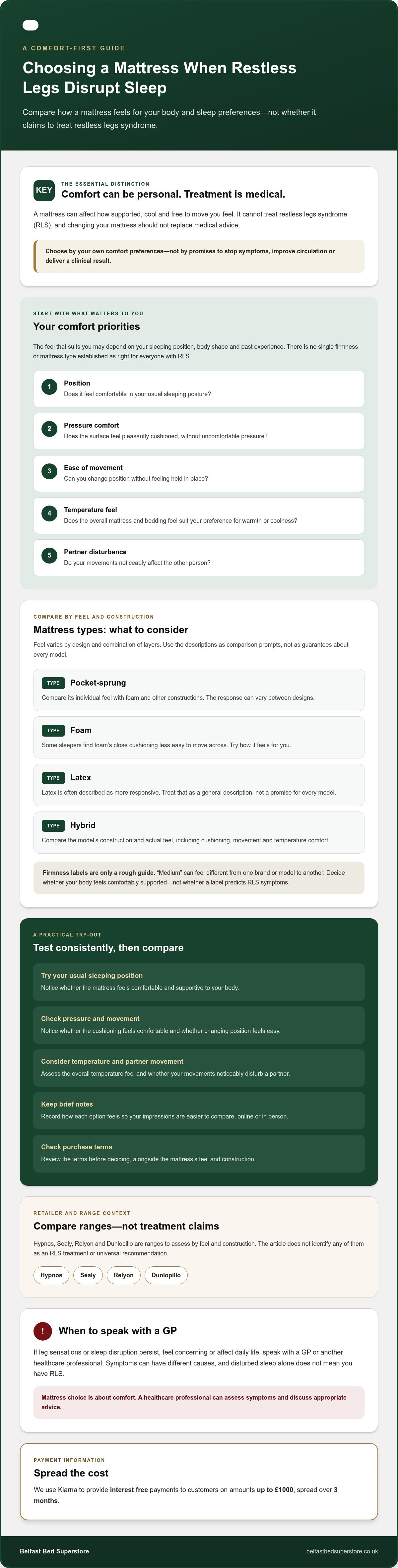
- Use your sleeping position, body shape and preferred feel to identify your comfort priorities.
- Compare pocket-sprung, foam, latex and hybrid mattresses for pressure comfort, ease of movement and temperature feel.
- Use a simple testing checklist and check purchase terms before deciding.
- Compare Hypnos, Sealy, Relyon and Dunlopillo ranges by feel and construction, not as treatments for restless legs syndrome.
- Belfast Bed Superstore offers 0% finance and interest-free instalments.
Can the Best Mattress for Restless Leg Syndrome UK Shoppers Find Improve Comfort?
When restless nights leave you tired, finding a comfortable mattress can feel especially important. The best mattress for restless leg syndrome UK shoppers choose should be judged by how it feels to them, not by promises to stop symptoms. A mattress can provide a comfortable sleeping surface, but it doesn’t treat restless legs syndrome (RLS).
What restless legs syndrome can mean for sleep
RLS is associated with an urge to move the legs, often alongside uncomfortable sensations. NHS guidance describes symptoms that tend to occur or worsen during rest, are often more noticeable in the evening or at night, and may ease temporarily with movement. This can make settling down or staying asleep difficult. For a broader overview of symptoms and diagnostic context, see Restless legs syndrome.
These symptoms can have different causes, and disturbed sleep alone doesn’t mean you have RLS. If leg sensations or sleep disruption persist, feel concerning, or affect daily life, speak with a GP or another healthcare professional. They can assess your symptoms and discuss appropriate advice. Changing your mattress shouldn’t replace that conversation.
What a mattress can and cannot do
Mattress choice is a personal comfort decision. Your preferred firmness and feel may depend on factors such as sleeping position, body shape and past experience. There isn’t one mattress type or firmness established as the answer for everyone with RLS. Instead, consider whether a mattress feels comfortable for your body and makes it easy to settle and change position.
A mattress may support personal comfort, but it does not treat restless legs syndrome or replace medical assessment and care.
Keep your search grounded by comparing how different surfaces feel, rather than relying on claims that a particular material or firmness will relieve RLS, improve circulation or deliver a clinical result. If symptoms continue, seek medical advice while choosing bedding for comfort on its own merits.
Belfast Bed Superstore offers 0% finance and interest-free instalments for customers looking to spread the cost of a mattress purchase.
Which Mattress Features Matter Most When Restless Legs Disrupt Sleep?
There’s no single firmness or material that suits everyone. Your preferred feel can depend on your sleeping position, body shape and past experience. Rather than looking for a mattress that claims to help RLS, consider what makes it easier for you to feel settled: comfortable cushioning, room to change position, a temperature you enjoy and less disturbance from a partner.
How firmness and support affect personal comfort
Firmness labels are a rough guide, not a universal scale shared by every brand or model. A “medium” mattress in one range may feel different from a “medium” in another. Assess whether your body feels comfortably supported in your usual sleeping position, and whether the surface feels too firm, too yielding or about right. These are comfort judgements, not predictions about RLS symptoms.
Pocket springs, foam and latex: compare the feel
Construction can influence how a mattress responds as you move, but the feel varies by design and combination of layers. Pocket-sprung models may feel different from foam. Some sleepers find foam’s close cushioning less easy to move across, while latex is often described as more responsive. Neither description applies to every model. Temperature comfort is personal, too, and can depend on the full mattress construction and your bedding.
For background on RLS as a neurological condition, the National Institute of Neurological Disorders and Stroke provides information on symptoms and possible causes. That medical context is separate from choosing a comfortable sleeping surface. Hypnos and Sealy mattresses are ranges to compare by feel and construction, not RLS-specific recommendations. You can browse the Hypnos mattress range as one starting point.
Use the same checks for each mattress, whether you’re comparing online descriptions or trying options in person:
- Position: Does it feel comfortable in your usual sleeping posture?
- Pressure: Does the surface feel pleasantly cushioned, without uncomfortable pressure?
- Movement: Can you change position without feeling held in place?
- Temperature: Does the overall feel suit your preference for warmth or coolness?
- Partner disturbance: Do your movements noticeably affect the other person?
Keep brief notes so your impressions don’t blur together. A shortlist based on your own comfort is more useful than seeking a universal mattress recommendation for RLS.
How Do Mattress Types Compare for Comfort with Restless Leg Syndrome?
Different constructions can create different sensations, but the label alone won’t tell you whether a mattress feels right. The best mattress for restless leg syndrome UK shoppers choose is a personal comfort decision, not a material-based treatment. Use the comparisons below as a starting point, then check the construction details for each specific model.
Mattress type is a matter of comfort preference, not an RLS treatment. For information about symptoms and practical self-help, read the NHS guidance on restless legs syndrome.
| Construction | Possible feel | Movement and pressure comfort | Temperature and testing |
|---|---|---|---|
| Pocket-sprung | May feel buoyant, with a spring-supported surface. | Response and pressure cushioning depend on the model’s layers and design. | Check the materials and covers. Try lying in your usual position and changing sides. |
| Foam | May feel more cushioned or closer around the body. | Some sleepers find it less springy under movement; the level of cushioning varies. | Foam types and construction differ, so check product details and assess whether the feel suits you. |
| Latex | Often described as responsive or buoyant, though the overall feel depends on the mattress. | Notice whether it feels easy to move on and comfortable where your body meets the surface. | Check the specific model’s layers and try it if possible, rather than assuming all latex feels alike. |
| Hybrid | Combines different materials, often springs with comfort layers. | Feel and movement depend on the combination, not simply the word “hybrid”. | Review the stated construction and test the whole mattress for warmth and comfort. |
Which construction might suit your comfort preferences?
Think about whether you prefer a buoyant surface, a cushioned feel or a responsive mattress that doesn’t feel slow to move across. Then look beyond the category name: comfort layers, covers and other design details can change the result. For a closer look at one available brand, browse the Relyon mattress range.
Why the same mattress can feel different to different people
Your sleeping position, body shape and personal experience all influence how a mattress feels. The existing bed base can also affect the overall feel, so check product guidance on compatibility. If possible, compare options in person: lie in your normal sleeping position and notice pressure, ease of movement and temperature. No construction or brand can be ranked as best for treating or preventing RLS.
How to Choose and Test a Mattress When Sleep Is Already Difficult
A simple process can make a mattress decision feel more manageable, especially when you’re already short on rest. Start with the feel you know you prefer, compare construction and product details, test options if possible, then read the purchase terms before deciding. The best mattress for restless leg syndrome UK shoppers select is the one that feels comfortable to them, not one promising to treat symptoms.
- Note your preferences: Think about your usual sleeping position and whether you like a buoyant, cushioned or more responsive feel.
- Compare construction: Check the materials and layers listed for each specific mattress rather than relying on a broad category or firmness label.
- Test the feel: Lie in your normal sleeping position long enough to assess initial comfort, and try more than one option if you can.
- Check the terms: Ask about firmness descriptions, delivery arrangements, trial conditions and any return limitations before ordering.
What to notice when testing mattresses
Give yourself time to settle on the surface. Notice whether you feel comfortable and supported, whether any areas feel under pressure, how easily you can change position and whether the temperature feels pleasant. Try different feels and jot down a few notes straight afterwards; it’s easy to confuse one mattress with another after several tests. If you’re considering a visit to a showroom in Cambridge, check current access and mattress availability before travelling.
For a closer look at Sealy options while comparing brands, explore the Sealy mattress range. Product details can help you prepare questions, but they can’t replace your own comfort assessment.
How to assess a mattress trial and retailer support
A home trial can give you an opportunity to assess personal comfort in your own bed, subject to the retailer’s stated terms. Belfast Bed Superstore offers a 30-night sleep trial guarantee, but check which mattresses are eligible and confirm the current conditions before purchase. Ask what the process covers and whether any limits apply. A trial is a way to judge comfort, not a promise of symptom improvement or a return outside its terms.
Before you commit, make sure delivery arrangements and any applicable trial or return conditions are clear. If you’re replacing an existing bed, ask whether old bed removal is available and what conditions apply.
Choosing a Mattress and Getting Help from a UK Retailer
A considered choice starts with your own comfort, then checks whether the mattress construction and purchase terms fit your needs. Compare how a mattress feels in your usual sleeping position, what materials and layers it uses, and whether it’s compatible with your existing bed base. Hypnos, Sealy, Relyon and Dunlopillo are ranges to compare for feel and construction, not recommendations for treating restless legs syndrome.
Questions to ask before choosing
Clear answers make it easier to compare options without relying on broad labels. Ask a retailer:
- How would you describe this mattress’s feel, and what is its construction?
- Is it suitable for my existing bed base?
- Is the mattress currently available, and what delivery arrangements apply?
- Are old-mattress removal or assembly options available, and what conditions apply?
- Which mattresses are eligible for a trial, and what are the return terms or limitations?
Check current details before committing, as availability and terms can vary. Belfast Bed Superstore is based in Cambridge and serves customers across Cambridgeshire and East Anglia. If you’re considering an in-person comparison, confirm showroom access and mattress availability before travelling. Persistent or concerning leg symptoms are a matter for a GP or other healthcare professional, not a mattress retailer.
Compare mattress ranges without expecting a cure
Brand names alone don’t establish how a particular mattress will feel. Look at the model’s stated construction and compare it against your comfort preferences. For example, you can explore the Hypnos mattress range alongside Sealy, Relyon and Dunlopillo options, then ask for product guidance on the specific models you’re considering. No brand or mattress type should be treated as an RLS treatment.
The best mattress for restless leg syndrome UK shoppers can choose is therefore a personal comfort match, supported by clear information about construction, testing and retailer terms. Belfast Bed Superstore offers a 30-night sleep trial guarantee; confirm current eligibility and conditions before purchase. A trial can help you assess comfort at home, but it doesn’t promise symptom improvement or override its terms.
Take your time, compare the details and ask questions if anything is unclear. If you’d like help comparing mattress options, ask Belfast Bed Superstore about the ranges and models available.
Choose Comfort with Confidence
The best mattress for restless leg syndrome UK shoppers find will come down to personal comfort, not a promise to treat symptoms. Compare how different constructions feel, check support in your usual sleeping position, and review delivery, trial and return terms before choosing. A mattress may make your sleep environment more comfortable, but persistent or concerning symptoms are best discussed with a healthcare professional.
Belfast Bed Superstore is an independent, family-run retailer based in Cambridge, with Hypnos, Sealy, Relyon and Dunlopillo mattress ranges to compare. A 30-night sleep trial guarantee is offered, but check current eligibility and terms so you know what applies to your choice. Flexible payment options, including 0% finance and interest-free instalments, are also available.
Compare the available mattress ranges and ask Belfast Bed Superstore for guidance on the models that match your comfort preferences: explore our mattress ranges.
Frequently Asked Questions
Is there a best mattress for restless leg syndrome?
No single mattress has been established as best for everyone with restless legs syndrome (RLS). The best mattress for restless leg syndrome UK shoppers choose is the one that feels comfortable and supportive for their own body and sleeping position. Compare construction, pressure comfort and ease of movement, but treat these as personal comfort factors, not ways to treat RLS. If symptoms persist or concern you, speak with a healthcare professional.
Can a mattress make restless legs syndrome worse?
A mattress isn’t known to cause or treat RLS, but an uncomfortable sleeping surface may make it harder to settle or stay comfortable. You might find a mattress too firm, too warm or difficult to move on. That’s a comfort issue, not proof that the mattress has worsened the condition itself. If leg sensations or disrupted sleep continue, discuss them with your GP rather than relying on a mattress change alone.
What mattress firmness is best for restless legs?
There’s no firmness level recommended as best for RLS. Firmness labels can vary between brands and models, so use them as a starting point rather than a reliable comparison on their own. Assess how supported and comfortable you feel in your usual sleeping position. Your body shape, sleeping habits and personal preference all influence the feel that suits you. A comfortable firmness may support rest, but it won’t treat RLS.
Are memory foam mattresses good for restless leg syndrome?
A memory foam mattress may suit you if you like a more cushioned feel, but it isn’t a specific treatment for RLS. Foam models differ, so check the product’s construction and, if possible, test how easily you can change position and whether the surface feels comfortable in temperature. Some people prefer a more responsive or buoyant feel instead. Choose based on your own comfort, not a claim that foam relieves restless legs.
Can changing my mattress stop restless legs at night?
No, changing your mattress shouldn’t be expected to stop RLS symptoms. A different surface may feel more comfortable, but RLS is a health condition that may need clinical assessment and advice. If symptoms persist, disrupt your sleep or cause concern, contact your GP. They can discuss what might be causing them and appropriate next steps. Don’t delay seeking medical advice while trying different mattresses or other bedroom changes.
How can I choose a mattress if restless legs keep me awake?
Write down what feels comfortable, compare mattress construction, and test options in your usual sleeping position if you can. Ask about base compatibility, delivery arrangements and trial terms before you buy. Belfast Bed Superstore serves Cambridgeshire and East Anglia and offers a 30-night sleep trial guarantee, subject to current eligibility and conditions. For persistent symptoms, seek medical advice too.
For help comparing mattress ranges in Cambridgeshire and East Anglia, browse Belfast Bed Superstore’s mattress selection.


