

What if the secret to a bedroom that feels like a five-star retreat isn't a new mattress, but simply knowing the professional tricks to reviving the one you already have? We understand that sinking feeling when you spot a smudge on your beautiful fabric frame or realize how much dust those soft textures can hold. It's completely natural to worry that a heavy-handed scrub might do more harm than good. Learning how to clean an upholstered bed doesn't have to be a stressful weekend project filled with uncertainty about which chemicals are safe for your home.
We're here to help you protect your investment and maintain that cozy, fresh-smelling sanctuary you deserve. In this 2026 guide, we'll share the gentle, effective secrets our team uses to keep even the most delicate fabrics looking brand new. You'll discover how to handle routine dusting to keep allergies at bay, navigate the standard cleaning codes like a pro, and master emergency stain removal without leaving a single water mark. From simple vacuuming tips to deep-cleaning methods, we've got the expert advice you need to extend the life of your bed frame and wake up in a space that feels truly revitalized.
Key Takeaways
- Identify your fabric's unique cleaning code (S, W, WS, or X) so you can choose the right care method without the fear of causing permanent marks.
- Discover how to clean an upholstered bed with a simple five-minute weekly routine that prevents dust buildup and keeps your bedroom feeling fresh.
- Master the "Emergency Blot" technique to handle unexpected spills safely and learn why common habits like using a hair dryer can actually damage your fabric.
- Use the "white cloth test" to know exactly when it is time for professional attention versus a quick routine refresh.
- Explore the latest 2026 performance fabrics that offer a luxury feel while being incredibly forgiving for busy homes and families.
The Fundamentals of Upholstered Bed Care
Upholstered beds add a layer of luxury and warmth that solid wooden or metal bedsteads can't quite replicate. However, that beautiful texture comes with a different set of hygiene needs. Unlike a metal frame that you can simply wipe down, fabric is porous. It naturally holds onto dust, pet dander, and allergens over time. We believe a clean bed is the foundation of a restful night, and understanding the unique nature of upholstery materials is the first step toward a healthier bedroom.
When you're figuring out how to clean an upholstered bed, the golden rule is that less is always more. Applying too much moisture can lead to internal dampness, which is a breeding ground for mould. By sticking to a light, routine touch, you prevent dirt from becoming "set" in the fibres. This proactive approach keeps your sleep environment fresh and extends the life of your furniture.
Decoding Your Fabric Care Label
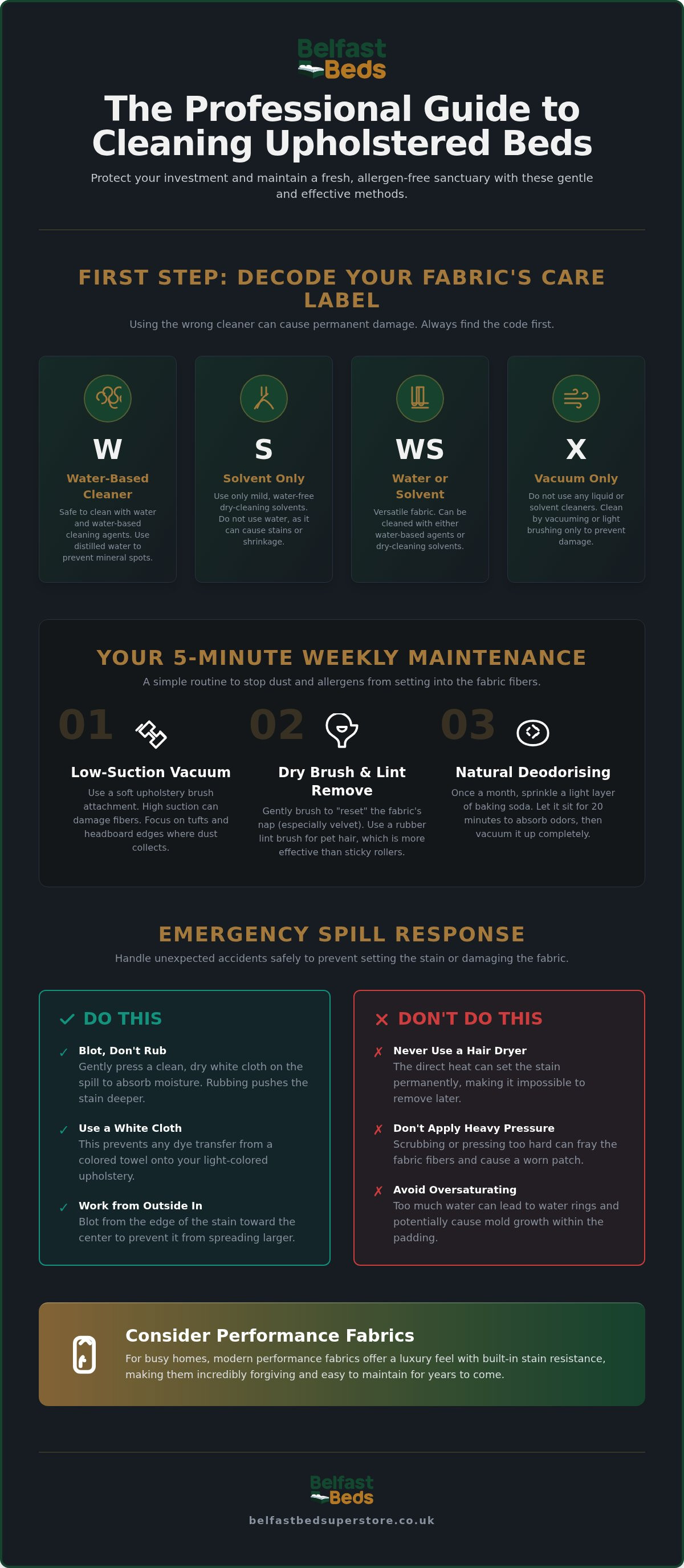
Before you reach for any cleaning solution, you must find the care label. It's usually tucked away near the headboard or the base. You'll see one of four codes: "W" for water-based cleaners, "S" for solvents, "W/S" for both, and "X" which means you should only use a vacuum or brush. If your label is missing, don't panic. We recommend testing any cleaning method on a tiny, hidden area first. We often see high-quality pieces from brands like Birlea Furniture or Flintshire Furniture that feature impressive Martindale rub test results. A higher rub count means the fabric is more resilient, allowing for more frequent maintenance without the risk of the material thinning or pilling.
The Essential Cleaning Toolkit
Having the right tools makes the job effortless. We suggest swapping your standard vacuum attachment for a dedicated soft-bristle upholstery brush. This prevents the powerful suction from stretching the fabric or snagging the weave. You'll also want a stack of clean microfibre cloths. These are superior to paper towels because they don't leave lint behind. One local tip for our Cambridge neighbors: keep a bottle of distilled water handy. Our regional tap water is quite hard, and the minerals can leave faint white rings on dark fabrics as they dry. Distilled water eliminates this risk entirely, keeping your headboard looking pristine.
Your 3-Step Weekly Maintenance Routine
Most people only think about how to clean an upholstered bed when a disaster happens, like a spilled morning coffee or a muddy paw print. However, the real secret to a bed that looks brand new for a decade is a simple, five-minute weekly habit. By removing surface debris before it has a chance to be ground into the weave by your pillows or head, you're effectively stopping wear and tear before it begins. It's a small investment of time that can easily double the lifespan of your bed frame.
Step 1: The Low-Suction Vacuum
Dust is the enemy of fabric. It acts like tiny sandpaper, slowly wearing down the fibres every time you lean back to read. When vacuuming, always use the upholstery tool and turn your machine to its lowest suction setting. High suction is counterproductive; it can actually pull internal padding fibres through the fabric backing, leading to a fuzzy, worn appearance. Focus your attention on the "dust traps," particularly the top edge of the headboard and any deep tufts or buttoning where allergens love to hide. This keeps your sleeping area fresh and significantly reduces dust mite accumulation.
Step 2: Dry Brushing and Lint Removal
After vacuuming, use a soft-bristle brush to gently "reset" the nap of fabrics like velvet or chenille. This prevents the material from looking flat or shaded in high-contact areas. If you share your home with pets, a dedicated rubber lint brush is far more effective than a sticky roller for pulling hair out of woven textures. While you brush, keep an eye out for "pilling," those tiny bobbles of fabric that can appear over time. Using a manual fabric shaver can safely remove these before they become a major eyesore. If you're considering an upgrade to a high-quality frame that's built to last, our collection of Birlea upholstered beds offers beautiful textures that respond wonderfully to this routine.
Step 3: Natural Deodorising
You don't need harsh aerosol sprays to keep your bedroom smelling like a Cambridge spring morning. Once a month, or whenever you change your sheets, lightly sprinkle a thin layer of baking soda over the upholstered surfaces. Let it sit for about 20 minutes to neutralise any trapped odours, then vacuum it away using that same low-suction setting. For a final touch, a very light mist of distilled water mixed with a drop of lavender or eucalyptus essential oil can provide a calming scent without the risk of chemical residue. Just ensure the mist is fine enough that the fabric doesn't feel damp to the touch.
How to Handle Spills and Stains Safely
Accidents are a part of life, but they don't have to be a permanent part of your bedroom furniture. Whether it's a dropped morning tea or a splash of lotion, the way you react in the first sixty seconds determines if the mark disappears or becomes a lifelong souvenir. When you're learning how to clean an upholstered bed, your best tool isn't a chemical spray; it's a calm head and a clean, white cloth. We always tell our customers in Cambridge that heat is the enemy of fabric. Never use a hair dryer to speed up the process. Excessive heat can set a stain permanently or even melt delicate synthetic fibres in velvet and chenille blends.
The Blotting Method: Step-by-Step
The secret to successful stain removal is the "Emergency Blot" technique. Always work from the outside of the spill toward the centre. This simple movement prevents the liquid from spreading further into the clean areas of the headboard. Use a white microfibre cloth or a plain white towel; dyed fabrics can bleed their own colour onto your bed frame when wet, creating a second, much harder problem to solve. Apply firm, steady pressure to pull the moisture out, but avoid pushing so hard that you crush the internal foam or padding. If you rub the fabric, you'll likely distort the weave or push the stain deeper into the fibres, making professional removal nearly impossible later.
Stain-Specific Solutions
Different marks require different strategies. For water-based spills like coffee or tea, a tiny drop of clear, mild detergent mixed with distilled water is usually enough. If you're dealing with an oil-based mark, such as from hair products or late-night snacks, reach for cornstarch. Sprinkle it on the area and let it sit for at least 15 minutes to draw the oil out before vacuuming it away. However, for stubborn ink or heavy makeup, we recommend putting the cleaning supplies down. These substances often require professional solvents, and DIY attempts usually just result in a larger, permanent smudge.
The Distilled Water Hack for Cambridge
Living in the East of England means dealing with some of the hardest water in the country. If you use Cambridge tap water to spot-clean a dark navy or grey headboard, you'll likely be left with a white, chalky mineral ring once it dries. To avoid this, always use distilled water for the final "feathering" of the edges. Capillary action is the physical process where liquid moves through the narrow spaces of fabric fibres, often carrying dirt or minerals to the outer edge of a damp patch and forming a visible ring. By lightly dampening the area around the stain with distilled water and blending it outward, you break this cycle and ensure a seamless, mark-free finish.
Deep Cleaning: Steam, Solvents, and Professionals
Even with a perfect weekly routine, there comes a time when your bed needs more than just a surface refresh. How do you know when vacuuming isn't enough? We recommend the "white cloth test." Take a clean, damp white microfibre cloth and gently wipe a small section of your headboard. If the cloth comes away with a greyish tint, it's a sign that microscopic dust and skin oils have settled deep into the fibres. In our local Cambridgeshire climate, where winter humidity can be higher, we suggest a deep clean every 12 to 18 months to prevent musty odours and allergens from becoming a permanent part of your sleep environment.
The Pros and Cons of Steam Cleaning
Many online guides claim steam is safe for every fabric, but we've seen the damage a DIY steam cleaner can do. High heat can actually shrink natural fibres like linen or weaken the synthetic glues used in some modern frame constructions. The biggest danger is "over-wetting." If you saturate the upholstery, moisture seeps into the internal foam and padding where it can't easily evaporate. This creates a breeding ground for mould. If you decide to use a home steamer, keep it on a low setting and ensure the room is well-ventilated to help the fabric dry as quickly as possible. Knowing how to clean an upholstered bed safely means respecting the balance between heat and moisture.
Finding a Local Cambridge Professional
If you've invested in a luxury piece, such as a Hypnos mattress and matching upholstered base or a high-quality Relyon bed, you might feel more comfortable calling in an expert. When searching for a local Cambridge professional, ask if they offer "low-moisture" or "dry cleaning" methods for delicate boutique fabrics. These techniques use specialized solvents rather than gallons of water, which is much safer for high-end textiles. A professional will also have commercial-grade extraction tools that pull moisture out of the padding instantly, something a standard rental machine can't replicate. While costs vary based on the bed size, the investment protects the longevity of your furniture.
If you're ever unsure about the specific fabric on your frame or need advice on which cleaning methods are safest for your model, our team is always happy to help. You can visit our Cambridge showroom for face-to-face guidance from a family-run business that knows the industry inside and out.
Choosing the Right Upholstered Bed for Easy Maintenance
If you're in the market for a new bed, the easiest way to master how to clean an upholstered bed is to choose a frame designed with your specific lifestyle in mind. While we all love the look of a deep-tufted headboard, those elegant buttons create extra "dust traps" that require more frequent attention with a vacuum. For busy households with young children or pets, a smoother headboard design allows for a much quicker wipe-down. In 2026, we've seen a massive shift toward "Performance Fabrics" that are specifically engineered to repel liquids and resist staining, making them the perfect choice for a family home that values both style and practicality.
The physical construction of your bed also plays a role in how accessible it is for maintenance. For instance, some designs from brands like Flintshire Furniture feature sleek, low-profile frames that are much easier to vacuum around than more ornate, floor-length styles. When you choose a bed with a simpler silhouette, you're essentially reducing the number of places where dust can hide. This makes the overall process of keeping your bedroom fresh much faster and less labor-intensive during your weekly routine.
Materials for Busy Cambridge Households
We often find that our local customers are surprised to learn that micro-velvets are significantly easier to maintain than traditional silk-based velvets. These modern synthetic blends offer the same luxurious texture but are far more resilient against the hard water marks we frequently deal with in the East of England. Choosing a darker weave or a multi-tonal fabric can also be a clever strategy for hiding the subtle signs of daily wear between deep cleans. For more detailed advice on matching a material to your specific room, you can read our guide on Choosing Upholstered Fabrics for Cambridge Homes.
Protecting Your New Bed from Day One
Setting your bed up for success starts the moment it arrives at your door. While aftermarket fabric protectors can provide an extra layer of security, they aren't always suitable for every material. We suggest checking with our team in the showroom first to ensure a spray won't void your warranty or alter the fabric's breathability. One of the biggest benefits of choosing professional assembly from us is the peace of mind it provides. Our experienced team ensures that the frame is put together without snagging the fabric or causing initial scuffs that can happen during a tricky DIY setup. If you're looking for a combination of durability and contemporary style, we highly recommend browsing our range of Birlea Furniture, which features some of the most forgiving and hard-wearing upholstery options available today.
Enjoying a Fresher, More Comfortable Bedroom
Maintaining a beautiful sleep environment shouldn't feel like a chore. By adopting a gentle, consistent approach to how to clean an upholstered bed, you're not just protecting a piece of furniture; you're investing in your own well-being and rest. Remember to check your care labels, reach for the distilled water to avoid those Cambridge mineral rings, and never underestimate the power of a quick, low-suction vacuum. These small habits ensure your bedroom remains the fresh, inviting sanctuary it was meant to be for years to come.
If you're ready to upgrade to a frame that combines luxury with longevity, we're here to guide you every step of the way. As a family-run business with decades of local expertise, we pride ourselves on helping our neighbors find the perfect fit for their homes. We offer professional assembly to ensure your new fabric stays pristine from day one, and we can even take the stress out of the transition with our old bed removal service. With interest-free finance available, your dream bedroom is closer than you think.
Browse our range of durable, easy-clean Upholstered Beds in Cambridge
We look forward to helping you create a space where you can truly relax and wake up feeling revitalized every single morning.
Frequently Asked Questions
Can I use a steam cleaner on my upholstered bed?
You can use a steam cleaner if your fabric care label features a "W" or "WS" code, but you must proceed with caution. High heat can shrink natural fibres like linen or weaken the synthetic glues used in modern frame constructions. Always use the lowest heat setting and keep the nozzle moving to avoid over-wetting the internal padding, which can lead to mould growth during damp East Anglian winters.
How do I get a smell out of my fabric headboard?
Baking soda is the most effective natural way to neutralise bedroom odours without using harsh chemicals. Sprinkle a thin, even layer over the fabric, let it sit for at least 20 minutes to absorb oils and scents, then vacuum it away using a low-suction setting. For a lasting, fresh scent, a light mist of distilled water mixed with a drop of lavender oil works wonders without leaving a residue.
What is the best way to remove pet hair from a fabric bed?
A dedicated rubber lint brush or a slightly damp rubber glove is the most effective tool for pulling stubborn pet hair from woven fabrics. These tools create static tension that lifts hair out of the weave rather than just sliding over it. It's a much more thorough method than using a sticky roller, which often leaves a tacky residue that eventually attracts even more dust and debris.
Will sunlight fade my upholstered bed frame?
Direct sunlight will cause almost any fabric to fade over time, especially darker or more vibrant tones. If your bed is positioned near a large window in a bright Cambridge room, we recommend using UV-filtering blinds or curtains during the day. This simple step protects the integrity of the fabric dyes and keeps your headboard looking rich and colourful for many years longer than unprotected furniture.
How do I remove water marks from fabric upholstery?
Water marks often occur when minerals in hard water dry at the edge of a damp patch, creating a visible ring. To fix this, lightly dampen a white microfibre cloth with distilled water and gently wipe from the centre of the mark outward toward the seams. By wetting the entire panel evenly and letting it air dry naturally, you eliminate the "ring" effect that is so common with our local tap water.
Is it worth getting a professional to clean my bed?
Professional cleaning is a worthwhile investment every 12 to 18 months to maintain hygiene and fabric health. Experts use low-moisture extraction tools that remove deep-seated allergens without saturating the internal frame. If you've invested in a luxury piece from brands like Birlea or Flintshire, professional care ensures you don't accidentally damage the material while trying to figure out how to clean an upholstered bed yourself.
Can I use Vanish or bleach on a fabric bed?
Bleach will permanently ruin the colour and integrity of your upholstery, so you should never use it. While some upholstery-specific spot cleaners are available, many general household brands are far too aggressive for delicate bed frames. We always suggest sticking to mild, clear detergents and distilled water. If you must use a commercial cleaner, test it on a tiny, hidden area first to ensure it won't cause pilling.
How often should I vacuum my upholstered bed?
We recommend a quick vacuum once a week when you change your bed sheets. A weekly routine prevents dust and skin cells from settling deep into the fabric fibres where they can trigger allergies. Use your vacuum's lowest suction setting and a soft-bristle upholstery attachment to gently clear the headboard and side rails. This simple habit keeps your sleeping area fresh and prevents the fabric from looking dull or grey over time.


