
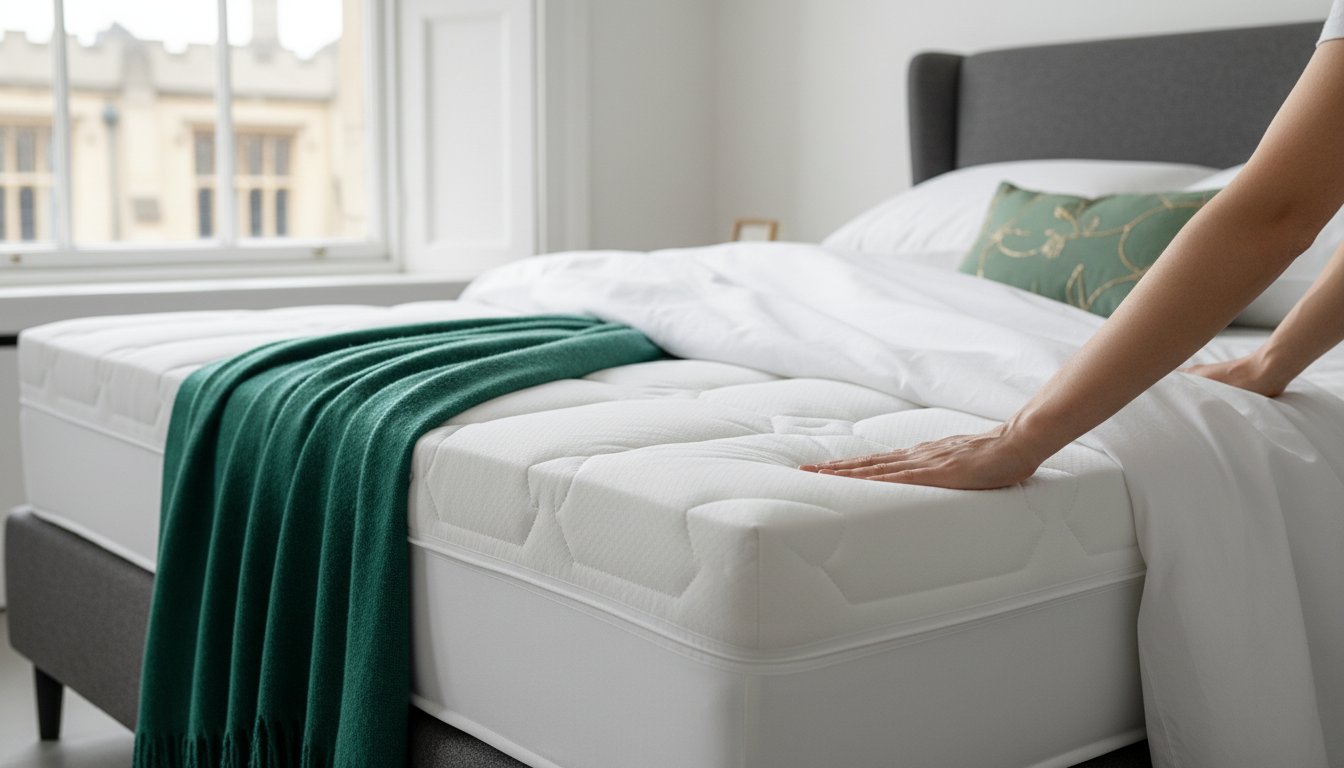
What if the secret to waking up without that nagging hip pain isn't a brand new bed, but a simple 5cm layer of extra comfort? Research from 2024 indicates that 35% of UK adults struggle with back pain that directly impacts their sleep quality. Many of our neighbors here in Belfast feel they must spend upwards of £800 on a new mattress the moment their current one starts to feel "tired" or saggy. Choosing a high-quality mattress topper is often the smartest way to fix these issues while saving money and staying cozy.
You probably agree that nothing beats the feeling of sinking into a supportive bed after a long day, yet achieving that comfort shouldn't feel like a chore. This guide will show you how to revitalise your existing bed, improve your spinal alignment, and finally regulate your sleeping temperature. We will break down the best options for 2026, comparing memory foam and natural fillings, to ensure you get the local expertise you need for a deeper night's rest.
Key Takeaways
- Understand how a 5cm to 10cm layer can revitalise your bed, offering the deep comfort and support that a simple protector just cannot match.
- Compare the body-moulding support of memory foam with the resilient, eco-friendly bounce of latex to find your perfect comfort match.
- Discover why density is the secret to spinal alignment and why a 5cm mattress topper is often the "sweet spot" for a great night’s rest.
- Master the setup process, from managing off-gassing to securing your layer, so you can wake up feeling refreshed and ache-free from day one.
- Learn how a quality topper serves as a helpful bridge, providing luxury comfort while you plan for your next premium mattress investment.
What is a Mattress Topper and Do You Really Need One?
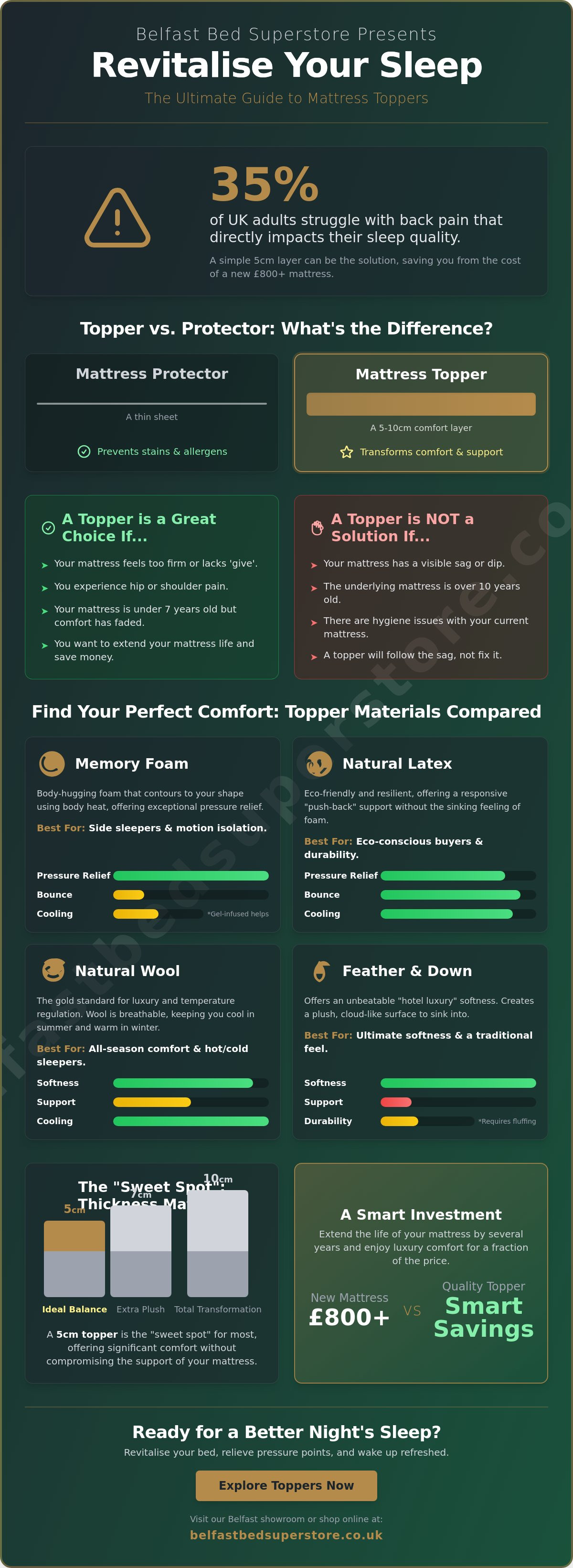
Waking up with a stiff back or sore shoulders often means your bed isn't providing the right level of support anymore. A mattress topper is a substantial layer of cushioning, typically between 5cm and 10cm thick, designed to sit directly on top of your current mattress. It's a common mistake to confuse these with mattress protectors. While a protector is a thin sheet used to prevent stains and allergens, a topper is a functional piece of bedding intended to fundamentally change your sleeping surface's feel.
You might need a mattress topper if your mattress is still structurally sound but feels too firm for your liking. It acts as a buffer, reducing the direct pressure on the base layers of your bed. This simple addition can extend the life of your mattress by several years, as the extra layer absorbs the daily wear and tear that would otherwise degrade the internal springs or foam layers. Common signs that your bed is a candidate for an upgrade include:
- Persistent pressure point pain in your hips or shoulders.
- A noticeable lack of "give" in a new or guest mattress.
- Waking up feeling restless despite the mattress being less than 7 years old.
It's a smart way to get that "new bed" feeling without the £500 to £1,000 price tag of a mid-range replacement. By adding this comfort layer, you're investing in your physical well-being and the longevity of your furniture.
The Benefits of Adding a Comfort Layer
Adding a topper provides instant pressure relief for your hips and shoulders. If you have a guest room with a firm bed, it's a quick way to ensure visitors stay cozy. Many find that the technology behind memory foam offers the best support for side sleepers. It's a cost-effective alternative to a full replacement when you're on a budget. Brands like Sealy or Relyon provide excellent bases for these layers.
When a Topper Won’t Help
A topper isn't a miracle cure for a sagging bed. If you see a visible "dip", a topper will simply sink into that hole. Toppers follow the contour of the mattress beneath them. If your mattress is over 10 years old or has hygiene issues, a topper won't fix the problem. In these cases, visit our Belfast showroom for a fresh start. We value your long-term comfort over a quick sale.
Comparing Topper Materials: From Memory Foam to Natural Wool
Choosing the right mattress topper is the quickest way to upgrade your sleep without the cost of a brand-new bed. Memory foam is the industry standard for a reason. It uses your body heat to mould to your unique shape, providing deep contouring that relieves pressure on your hips and shoulders. It's also the best choice for motion isolation. If your partner moves around a lot at night, memory foam absorbs that energy so you stay undisturbed.
Natural latex is a resilient, eco-friendly alternative for people who dislike the "sinking" feeling of foam. It offers a faster response time, meaning it pushes back against your weight rather than just letting you sink in. For a touch of traditional "hotel luxury," feather and down toppers are unbeatable for softness. However, if you really want to invest in your comfort, wool and natural fibres are the gold standard. Wool is naturally breathable and helps regulate your temperature. It keeps you cool during a humid summer and cozy during a cold Belfast winter. If you appreciate these high-quality, sustainable materials, our range of Hypnos products demonstrates how natural fibres can truly elevate your sleep experience.
Synthetic vs. Natural Fillings
Synthetic options have come a long way. Gel-infused memory foams are now a top choice for hot sleepers because the gel beads help dissipate body heat. This prevents the "overheating" issue that older foams sometimes had. For allergy sufferers, synthetic fillings are often treated to be anti-microbial, which helps keep dust mites away. While natural materials like latex or wool often have a higher price tag, they offer superior longevity. A high-quality latex topper can last up to 15 years, whereas standard polyurethane foams might start to lose their shape after 5 years. You can find expert advice on how to pick a mattress topper to help you weigh up these material benefits against your specific budget.
The Rise of Hybrid Toppers
Hybrid toppers are a modern solution for those who want the best of both worlds. These designs typically feature a layer of micro-springs encased in foam or wool. They combine the familiar bounce of a traditional mattress with the plush comfort of a topper. Dual-layer designs are also popular, featuring a supportive base core with a softer top layer for immediate comfort. Side sleepers and people with back pain often benefit most from hybrid constructions. The micro-springs provide active support for the spine, while the top layer cushions sensitive pressure points. We've found that these hybrids are perfect for refreshing an older mattress that has started to lose its support. If you're ready to see how a new layer can change your morning, you can browse our full collection to find your perfect match.
The Technical Selection: Thickness, Density, and Sleep Position
Choosing the right mattress topper isn't just about picking the softest one in the shop. For most of our customers here in Belfast, a 5cm thickness is the ideal starting point. It provides enough cushioning to mask a tired mattress without making you feel like you're sinking into quicksand. While thickness gives you that initial cloud-like feel, the true support comes from density. Experts reviewing The Best Mattress Toppers point out that a heavy, dense topper offers superior pressure relief compared to a thick but flimsy one.
We define density in kg/m3, which measures how much material is packed into the foam; this figure is the best indicator of how many years of comfort you'll get before the material starts to dip. A high-density topper usually lasts between 5 to 7 years, whereas low-density alternatives often lose their shape after just 12 to 18 months. Investing in a denser material means you won't be back in our showroom looking for a replacement next season.
Thickness Recommendations by Sleeper Type
Your sleeping position dictates how much depth you really need. Side sleepers usually require a deeper 7cm topper. This extra room allows the shoulder and hip to sink in deeply, which keeps your spine straight and prevents that morning ache. If you sleep on your back or stomach, a thinner 3cm to 5cm layer is a safer bet. This prevents your hips from dipping too low, which is a common cause of lower back pain. We often suggest pairing these layers with supportive brands like Sealy to create a balanced sleep surface that won't buckle under your weight.
Breathability and Cooling Technologies
Heat retention is a common worry, but modern designs have solved most of these issues. Many manufacturers now use open-cell structures that act like tiny windows, allowing air to circulate through the foam. You'll also see "cool-touch" covers and graphite-infused layers designed to pull heat away from your skin. These aren't just gimmicks; graphite is highly conductive and helps regulate your temperature throughout the night.
- Natural materials like wool and cotton are naturally breathable and excel at moisture-wicking.
- Graphite-infused foams can lower surface temperatures by up to 2 degrees during the first few hours of sleep.
- Open-cell foam allows for 50% more airflow than traditional solid blocks.
To keep things cool, pay attention to your bedding. If you choose a premium foam topper but cover it with synthetic polyester sheets, you'll trap heat against your body. Stick to cotton or linen to ensure the cooling technology in your mattress topper can actually do its job. For those looking to replicate a five-star experience at home, you can discover King of Cotton and learn how premium linens contribute to that luxury feel. We want you waking up refreshed, not overheated, every single morning.
Practical Care: Fitting, Cleaning, and Longevity
Getting your new mattress topper home is just the start of your journey to better rest. Most toppers arrive vacuum-packed to make delivery to your Belfast home easier, but they need a little patience. Give your topper between 24 and 48 hours to fully expand before you sleep on it. You might notice a slight "new" scent, known as off-gassing, but this usually fades within a few hours if you leave a window open. It's a natural part of the manufacturing process for foam products and isn't something to worry about.
To keep that "cloud-like" feel, we recommend rotating your topper 180 degrees every 90 days. This simple habit prevents permanent indentations from forming where you sleep most often. If your topper isn't dual-sided, don't flip it; just a quick spin will do the trick. We always suggest choosing a model with a removable, zip-off cover. Keeping your sleep surface fresh is much easier when you can pop the cover in a 40-degree wash every month to remove allergens and dust mites.
Ensuring a Secure Fit
Nothing ruins a good night like a sliding topper. Look for designs with thick elasticated corner straps or a high-grip base to keep everything in place. Since a mattress topper adds between 5cm and 10cm of height, your standard bedding might feel a bit tight. We recommend switching to "deep-pocket" fitted sheets, typically 30cm to 40cm deep, to ensure they tuck securely under the mattress. If you use an electric blanket, place it underneath the topper. This protects the foam from direct heat and ensures you feel the full benefit of the topper's pressure relief.
How Long Should a Topper Last?
Even the best sleep accessories eventually lose their bounce. A standard memory foam mattress topper usually provides peak comfort for 3 to 5 years before the internal structure begins to soften. If you've invested in a natural latex topper, you can expect it to stay resilient for 7 years or more. Watch out for clear signs of wear like yellowing, a lingering "stuffy" odour, or indentations deeper than 2cm that don't spring back when you roll over.
When it's time for a change, check with your local council in Northern Ireland for bulky waste recycling options. Many modern toppers are now 85% to 90% recyclable, keeping them out of landfill and helping the environment. Natural wool or latex options are often biodegradable, making them a fantastic choice for the eco-conscious sleeper.
Investing in Long-Term Sleep: When to Upgrade Your Mattress
Think of a mattress topper as a helpful bridge. It’s a fantastic way to buy yourself an extra 12 to 24 months of comfort while you save for a more permanent sleep solution. However, even the thickest foam or wool layer cannot fix a mattress with a collapsed internal structure. If you find yourself constantly adjusting your position or waking up with a stiff lower back, your current bed has likely reached the end of its functional life. We believe in a "total sleep system" approach where your base, mattress, and bedding work together to protect your physical health.
Transitioning from a temporary fix to a bespoke mattress changes how you feel every morning. A high-quality topper can complement a luxury pocket-sprung mattress by adding a cloud-like surface, but the real support comes from the springs underneath. When those springs lose their tension, the alignment of your spine is compromised. Investing in a premium mattress ensures that your body receives targeted pressure relief without the need for additional layers to mask underlying flaws.
The Luxury Difference: Hypnos and Relyon
Hypnos mattresses are designed with a focus on natural comfort, often incorporating generous layers of British wool, cotton, and silk directly into the core design. These materials regulate temperature far better than synthetic alternatives, often making a separate mattress topper unnecessary. Similarly, the hand-crafted heritage of Relyon mattresses provides superior spinal support through hand-nested pocket springs and genuine side-stitching. These brands create a "built-in" luxury feel that provides consistent support from edge to edge, ensuring you don't roll together or feel the springs through the fabric.
Making the Right Choice for Your Budget
It’s helpful to look at the cost-per-night rather than the initial price tag. A budget topper might cost £60 but lose its loft within a year, while a quality mattress can last over a decade. In the UK, the Sleep Council suggests replacing your mattress every 7 to 8 years to maintain optimal hygiene and support. To make the transition easier, look for brands offering 30-night sleep guarantees or comfort trials. This allows you to test the support levels in your own home, ensuring your investment truly improves your quality of life.
- Check if your current mattress shows visible sagging or permanent body impressions deeper than 3cm.
- Assess if a topper is still providing relief or if you can feel the mattress structure beneath it.
- Verify the age of your base; an old divan can ruin a brand-new mattress.
- Compare the long-term value of a premium mattress versus replacing cheap toppers every 18 months.
- Visit us in Belfast to experience the difference between tension levels in person.
Wake Up Refreshed in Belfast
Finding the perfect balance for your bed is the secret to waking up revitalised every single morning. You now know that selecting the correct material and density is essential for proper spinal alignment and long-term comfort. A quality mattress topper acts as a vital bridge, providing that extra layer of luxury while protecting your underlying mattress from premature wear. It's an affordable way to breathe new life into your bedroom without the need for a total overhaul.
At Belfast Beds, we've been your local sleep experts since 1990. Our family-run team understands that every sleeper is unique, which is why we provide a 30-night sleep trial guarantee on our products. With 0% finance and flexible payment options available, premium comfort is more accessible than ever for every home in Northern Ireland. It's time to stop settling for restless nights and start enjoying the deep, restorative sleep you deserve. Explore our full range of premium mattresses and sleep accessories to find your ideal comfort level today. We look forward to helping you achieve the best night's sleep of your life.
Frequently Asked Questions
Do mattress toppers help with back pain?
Yes, a 5cm orthopaedic mattress topper can significantly reduce pressure on your spine. Research by the Journal of Applied Ergonomics showed that 63% of participants reported improved sleep quality after switching to a medium-firm surface. Our customers in Belfast often find that adding a supportive layer helps them wake up without those morning aches. It's a cost-effective way to improve your bed while prioritising your physical health.
Can I put a mattress topper on a memory foam mattress?
You can certainly place a mattress topper on a memory foam mattress to change the feel of your bed. If your current foam bed feels too firm, a 7cm soft latex layer can provide that cozy sensation you're looking for. We've helped many local families in Northern Ireland revive their older mattresses this way. Just ensure the base mattress isn't sagging, as a topper follows the shape of the bed beneath it.
How thick should a mattress topper be for a side sleeper?
Side sleepers generally need a mattress topper that is between 5cm and 10cm thick. This depth allows your shoulders and hips to sink in properly, which keeps your spine in a neutral alignment. If the layer is thinner than 5cm, you won't get enough pressure relief for your joints. Choosing a 7.5cm memory foam option often provides the best balance of plush comfort and essential support for a restful night.
Is a mattress topper better than a mattress protector?
A mattress topper is designed for comfort, while a protector is strictly for hygiene and keeping your warranty valid. Toppers add a thick layer of cushioning to change how the bed feels. In contrast, a protector is a thin, waterproof cover that stops spills and allergens from reaching the fabric. For the best sleep experience in Belfast, we recommend using both to keep your bed feeling premium and staying clean.
Why does my mattress topper smell when I first open it?
That "new bed" scent is called off-gassing and it's a normal part of the manufacturing process for foam products. Most of these smells disappear within 48 hours if you leave the topper in a well-ventilated room. While it might be a bit strong at first, it's not harmful and signifies that your product is fresh from the factory. We suggest opening your windows for a few hours to speed up the refreshing process.
Can you wash a mattress topper in a standard washing machine?
Most mattress toppers are too bulky for a standard 7kg UK washing machine and shouldn't be submerged in water. Memory foam specifically acts like a giant sponge, which can lead to mould if it doesn't dry perfectly. Instead, use a removable cover that you can wash at 40 degrees. For the topper itself, spot cleaning with a damp cloth and mild detergent is the safest way to keep your bedding fresh.
Will a topper make my bed feel hotter at night?
Some traditional foam toppers can trap body heat, but modern designs use open-cell technology to keep you cool. If you're a hot sleeper, you might notice a temperature rise of 1 or 2 degrees with basic foam. However, choosing a topper with cooling gel beads or a breathable wool cover prevents this. We want you to wake up refreshed, so picking the right material is vital for your comfort and sleep quality.
What is the best material for a cooling mattress topper?
Gel-infused memory foam and natural latex are the top choices for staying cool throughout the night. Gel beads work by absorbing excess heat and moving it away from your body while you sleep. Natural latex is also excellent because its open structure allows air to circulate freely. These materials help maintain a steady skin temperature, which is a key factor in reaching deep REM sleep cycles for a better morning.


