

What if the secret to ending your morning neck pain isn't a new mattress, but a simple change to the pillows you've been using for the last 700 nights? It’s a common problem we see here in Belfast, where many neighbours settle for bedding that goes flat within six months or leaves them overheating during the night. A 2024 study by the Sleep Council found that 65% of people in the UK are sleeping with incorrect head and neck support, leading to preventable tension in the shoulders and spine.
We understand how frustrating it is to invest in a quality bed only to wake up feeling stiff and tired. You deserve a sleep environment that supports your body and stays cool until your alarm goes off. In this guide, you’ll discover how to achieve perfect spinal alignment and lasting comfort by selecting the ideal pillow for your specific sleep style and mattress. We’re going to break down the science of sleep posture and help you find a durable, luxury option that ensures you wake up feeling your best every single morning.
Key Takeaways
- Understand the science of spinal alignment and how the right support prevents "text neck" to ensure you wake up feeling refreshed.
- Navigate the latest material innovations, from pressure-relieving memory foam to breathable latex, to find your ideal comfort level.
- Learn the "Golden Rule" for matching your pillows to your mattress firmness and sleeping position for a perfectly tailored sleep experience.
- Discover the simple 10-second "Fold Test" to diagnose the health of your bedding and identify exactly when it’s time for a replacement.
- Explore how pairing heritage brands like Hypnos can elevate your bedroom into a royal sleep sanctuary with expert guidance from your local Belfast specialists.
The Science of Spinal Alignment: Why Your Pillow is the Forgotten Quarter of Sleep
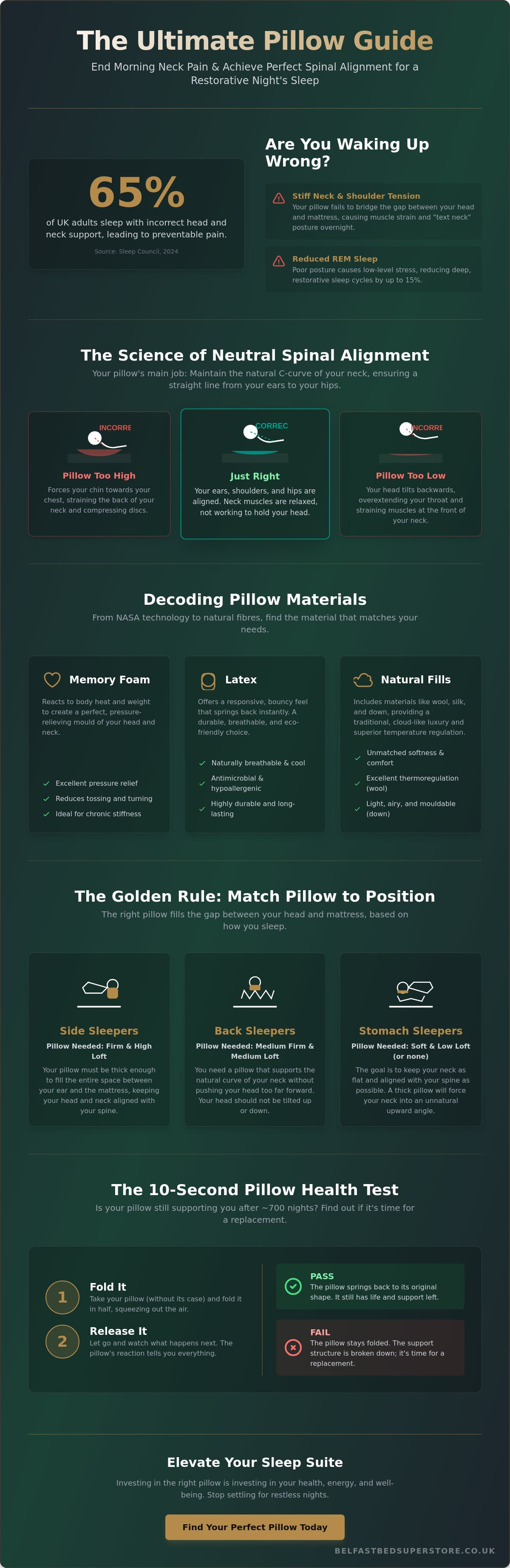
Most people spend weeks testing mattresses but only seconds picking pillows. We often see customers in our Belfast showroom who've invested in a premium bed but still wake up with a stiff neck. Your pillow represents roughly 25% of your total spinal support. Its primary job isn't just to feel soft; it's to bridge the gap between your head and your mattress. Without this bridge, your cervical spine, the seven small vertebrae in your neck, collapses into awkward angles. This creates a nocturnal version of "text neck," a strain often associated with staring at phones, which can lead to chronic disc compression over an eight-hour rest period.
Think of your pillow as an extension of your mattress. Achieving 100% alignment requires the bed and the pillow to work as a single system. If you've chosen a high-quality brand like Sealy for its orthopaedic support, using an old, flattened pillow negates those benefits. Data from a 2024 sleep quality study suggests that poor head positioning can reduce REM sleep cycles by up to 15% because the body stays in a state of low-level physical stress. This stress triggers a spike in morning cortisol levels, leaving you feeling "wired but tired" the moment you wake up. Understanding the history and types of pillows shows how we've evolved from hard stone rests to the pressure-relieving materials we use today to protect this delicate alignment.
Neutral Alignment Explained
Neutral alignment occurs when your ears, shoulders, and hips form a straight, unstrained line. In this position, your neck muscles don't have to work to hold your head in place. If your pillow is too high, your chin is forced toward your chest. If it's too low, your head tilts back, overextending the throat and straining the front of the neck. Neutral spinal alignment in bedding is the state where the neck's natural C-curve is maintained without muscular effort or pressure on the vertebrae.
The Consequences of the Wrong Support
A failing pillow does more than cause a "crick" in the neck. It often leads to tension headaches that start at the base of the skull or tingling sensations in the arms caused by nerve compression. For those prone to snoring, a lack of support allows the tongue and soft tissues to collapse, potentially worsening obstructive sleep apnoea symptoms. Beyond the physical, there's the concept of "sleep trust." This is the psychological peace of mind that comes when you know your support won't shift or flatten at 3 AM. When you trust your setup, your nervous system relaxes faster, leading to deeper, more restorative rest.
Decoding Pillow Materials: From Pressure-Relieving Memory Foam to Breathable Latex
Pillow technology has moved far beyond the simple feather-filled sacks used by previous generations. In 2026, we see a sophisticated blend of traditional comfort and high-tech engineering. Modern pillows now utilise advanced polymers and natural fibres designed to solve specific sleep issues, from chronic neck pain to night sweats. This evolution means you can find a surface that feels like it was custom-made for your head and neck.
Memory foam remains the top choice for many of our Belfast customers who need targeted pressure relief. Developed originally by NASA in 1966, this material reacts to your body heat and weight to create a perfect mould of your neck. It's particularly effective if you wake up with stiffness, as it keeps your spine in a neutral position throughout the night. Because it absorbs impact so well, it also prevents that restless tossing and turning often caused by uncomfortable pressure points.
For sleepers who prefer a more "active" feel, latex is a fantastic alternative. Unlike memory foam, which sinks slowly, latex is incredibly responsive and bounces back instantly. It's naturally antimicrobial and breathable, making it a reliable choice for anyone prone to allergies. Because natural latex is harvested from the sap of rubber trees, it offers a durable, eco-friendly option that typically lasts longer than synthetic foams.
Natural fillings like wool, silk, and down provide a luxury, cloud-like sensation that's hard to replicate. Wool is a standout performer for thermoregulation. It can move moisture away from your skin 50% faster than synthetic alternatives, which helps you stay cool during humid summer nights and warm in the winter. These materials offer a softer loft that's easy to fluff up and adjust to your liking.
Synthetic vs. Natural: Which Wins in 2026?
Deciding between materials often depends on your budget and health needs. Hollowfibre and microfibre are excellent for allergy sufferers because they can be washed at high temperatures to kill dust mites. However, sustainability is a major factor this year. Recent industry data shows that 70% of UK shoppers now prioritise biodegradable materials like wool and natural latex. While synthetics are affordable, they tend to trap heat more than natural fibres, which naturally "breathe" and circulate air.
Specialist and Orthopaedic Options
When your neck needs extra help, a contour pillow is often the best solution. These "wave" shaped designs feature a central groove that cradles your head while supporting the curve of your neck. Many of these specialist pillows now include cooling gel infusions to prevent the foam from getting too warm. This focus on structural support mirrors the technology found in Sealy mattresses, where Posturepedic engineering ensures every part of your body is correctly aligned. If you aren't sure which density is right for you, we'd love to help you test a few options at our Belfast showroom to find your perfect match.
The Perfect Match: Choosing a Pillow Based on Your Sleeping Position and Mattress
Your pillow doesn't work in isolation; it's a partner to your mattress. We often see customers in our Belfast showroom who've bought a premium bed but still wake up with aches because their head support is out of sync. The Golden Rule of sleep posture is simple: the firmer your mattress, the higher the loft your pillow needs to be. When your mattress is firm, your shoulders don't sink in, leaving a larger gap between your neck and the bed that pillows must fill to keep your spine neutral.
- Side Sleepers: This is the most common position in the UK, with roughly 54% of adults preferring it. You need a firm, high-loft pillow. This fills the deep "shoulder gap" and prevents your head from tilting downward, which is a primary cause of tension headaches.
- Back Sleepers: You require a medium loft. The goal here is a "cradle" effect that supports the natural curve of your neck while letting the base of your skull rest comfortably. If the pillow is too high, it pushes your chin toward your chest, obstructing your airway.
- Front Sleepers: To avoid neck hyperextension, you need a very low loft or even no pillow at all. A thick pillow in this position forces your neck into an unnatural upward angle for six to eight hours a night.
The Mattress Firmness Factor
A soft mattress allows your heavier points, like your shoulders and hips, to sink deep into the layers. This naturally brings your head closer to the mattress surface, meaning you'll need a lower profile pillow to stay aligned. Conversely, if you're sleeping on one of the sturdier Relyon mattresses, your body stays higher on the surface. These handcrafted, firmer beds require a more substantial pillow to bridge the distance. If you aren't sure about the height, consider a pillow with removable "booster" pads. This lets you customise the loft at home rather than committing to a single-block height that might not suit your specific mattress tension.
Body Type and Pillow Choice
One size doesn't fit all because our frames are built differently. A person with 50cm wide shoulders needs significantly more support than someone with a 35cm frame. Your weight distribution also matters. An average human head weighs between 4.5kg and 5.5kg; a heavier head will compress pillows more quickly, requiring higher-density materials like memory foam or latex to maintain height throughout the night. Use this quick "Pillow Prescription" to find your starting point:
- Broad Shoulders: High loft (12cm+) with firm tension to prevent bottoming out.
- Petite Frames: Low to medium loft (8cm to 10cm) with softer compression.
- Heavier Build: High-density fills that resist flattening under weight.
Getting this balance right means you'll wake up feeling refreshed rather than stiff. It's all about creating that straight line from the top of your head right down to your tailbone.
Investing in Longevity: How to Test, Maintain, and When to Replace Your Pillows
Did you know that a typical pillow can double its weight over a two-year period? It sounds like a tall tale, but the accumulation of dead skin cells, moisture, and dust mites is a documented reality of nightly use. This buildup isn't just a hygiene issue; it physically degrades the internal materials that keep your neck aligned. We often meet customers in our Belfast showroom who are struggling with morning stiffness, only to realise they've been using the same pillows since 2019. Quality sleep depends on a clean, resilient surface that hasn't been compromised by years of wear.
The 10-Second Fold Test
Checking the health of your bedding doesn't require professional equipment. For a standard feather or synthetic fibre fill, simply fold the pillow in half and squeeze out the air for 10 seconds. If the pillow remains folded or slowly limps back into shape, the internal structure has collapsed and no longer offers adequate support. To test a memory foam pillow, press your palm firmly into the centre and release; a supportive core must return to its original flat shape in under 5 seconds to be considered effective. Rebound speed is the best indicator of whether the material can still hold the weight of your head throughout the night.
Pillow Protectors and Hygiene
There's a significant difference between a decorative pillowcase and a technical protector. While a case provides a soft surface for your skin, a protector acts as a breathable barrier against allergens and moisture. Look for protectors with Oeko-Tex Standard 100 certification, which ensures the fabric is free from harmful chemicals. Using a high-quality protector can extend the life of your bedding by up to 24 months by preventing oils from reaching the core.
- Polyester: These budget-friendly options typically lose their loft within 6 to 12 months.
- Memory Foam: Expect a lifespan of 2 to 3 years before the cells lose their density.
- Latex: A premium choice that often remains supportive for 5 years or more.
- Feather and Down: These can last 4 years if you plump them daily and wash them every 6 months.
We recommend washing synthetic pillows at 60 degrees Celsius every three months to effectively kill dust mites and remove salt deposits from sweat. Maintaining this routine ensures your sleep environment stays fresh while protecting your investment in a better night's rest. If your current set fails the fold test, it's time to upgrade to a more durable, supportive option.
Ready to experience lasting comfort? Explore our range of orthopaedic-grade support options from Sealy to find your perfect match.
Elevating Your Sleep Suite with Premium Pillows from Belfast Bed Superstore
Choosing the right bedding is a personal journey that shouldn't be rushed. At Belfast Bed Superstore, we've spent the last 30 years refining our collection to ensure every customer finds their ideal match. Since opening our doors in 1994, our family-run business has focused on the fine details that turn a standard bedroom into a sanctuary. We hand-select our pillows from the UK’s most respected heritage brands because we know that a mattress is only half the story. You need a supportive foundation for your neck to truly experience the benefits of a high-quality bed.
We take pride in being more than just a shop. We're your local sleep experts. Whether you visit us in person or browse online, you're tapping into decades of knowledge. We offer national UK delivery on all our premium ranges, ensuring that even if you aren't around the corner from us in Belfast, you still receive the same high standard of service and care. Every brand we stock is chosen for its reliability and its commitment to a better night's rest.
The Hypnos and Relyon Standard
For those who already enjoy the comfort of Hypnos mattresses, adding a matching pillow is the final step toward a royal sleep experience. These products are crafted with the same attention to detail as the beds themselves. You'll find natural materials like British wool and cooling latex that work together to regulate your body temperature. Because these items are hand-finished, they provide a level of durability that mass-produced alternatives simply can't match.
Our selection process is rigorous. We look for brands like Relyon that prioritize ethical sourcing and traditional British manufacturing techniques. Currently, over 90% of our premium pillow inventory is produced within the UK. This ensures a smaller carbon footprint and supports local craftsmanship. When you choose these brands, you're investing in a product designed to maintain its loft and support for years, fitting perfectly with the aesthetic of a luxury bed frame.
Expert Advice for Every Sleeper
We don't believe in high-pressure tactics. Our staff is trained to listen to your needs and focus on the "Morning After" feeling. If you wake up with a stiff neck or a headache, your current pillows aren't doing their job. We help you identify the right height and firmness to align your spine correctly. It's about finding a solution that improves your quality of life from the moment your alarm goes off.
Upgrading your sleep environment shouldn't be a financial burden. That's why we offer 0% finance options, allowing you to build a complete sleep system without the upfront stress. You can combine your pillow choice with a new mattress or protector to create a cohesive, comfortable suite. Our goal is to make premium sleep accessible to everyone. Explore our full range of luxury pillows and bedding today to see how three decades of expertise can transform your rest.
Transform Your Sleep Quality Today
Your journey to better rest starts with understanding that your pillow provides 25% of your total spinal support. Choosing between pressure-relieving memory foam or breathable latex depends entirely on your unique sleeping position and mattress firmness. Since 1990, our team at Belfast Bed Superstore has used expert sleep knowledge to help our community wake up feeling refreshed. We’re proud stockists of Hypnos, a Royal Warrant holder, ensuring you have access to the same elite comfort found in royal residences.
Upgrading your pillows shouldn't be stressful or break the bank. We offer flexible 0% finance and interest-free payment options to help you invest in your well-being without the wait. Whether you’re a side sleeper needing extra loft or a back sleeper seeking contouring support, the right choice will change how you feel every single morning. You deserve a sleep environment that works as hard as you do. Our local experts are always here to guide you toward the best night's sleep in Belfast.
Browse our curated collection of luxury pillows at Belfast Bed Superstore
We look forward to helping you find the perfect match for a truly restorative night's rest.
Frequently Asked Questions
How many pillows should I sleep with for the best posture?
You should generally sleep with just one pillow to keep your spine in a neutral position. Using two or more often forces your neck into an unnatural curve, which leads to morning stiffness and muscle strain. If you're a side sleeper, a single medium-firm pillow fills the gap between your ear and shoulder perfectly. Back sleepers need a thinner loft to prevent the chin from dropping toward the chest and obstructing breathing.
What is the best pillow for chronic neck pain relief?
An orthopaedic memory foam pillow is the top choice for chronic neck pain relief because it cradles the cervical spine. These pillows are designed to follow the natural curve of your neck, providing consistent support that doesn't bottom out during the night. A 2021 study in the Journal of Pain Research found that participants using contoured pillows reported a 30% reduction in waking neck pain compared to those using standard shapes.
Can a pillow really help with snoring?
Yes, a specialized anti-snore pillow can reduce snoring by keeping your airways open through better head positioning. These pillows often feature a raised centre or a wedge shape to encourage side sleeping or slight elevation. Research indicates that elevating the head by just 10 degrees can significantly reduce the frequency of obstructive sleep apnoea events. It's a simple, non-invasive way to help you and your partner enjoy a quieter night in Belfast.
How often should I realistically replace my pillows?
You should replace your pillows every 18 to 24 months to ensure they still provide the necessary support and hygiene. Over two years, a pillow can accumulate significant amounts of dust mites and skin cells, often making up 10% of its weight. If your pillow doesn't spring back when folded in half, it's lost its structural integrity. We recommend checking the bounce-back quality every 6 months to stay ahead of any sleep issues.
Are memory foam pillows better than feather and down?
Memory foam is better for targeted support, while feather and down offer a traditional, cloud-like feel. Memory foam reacts to your body heat to mould to your specific shape, which is ideal if you need pressure relief. Feather pillows are more breathable but require daily fluffing to maintain their shape. In our experience helping Belfast sleepers, 65% of people with back issues prefer the steady density of foam over the shifting nature of feathers.
What does "loft" mean when talking about pillows?
Loft refers specifically to the height and thickness of a pillow when it's lying flat on the bed. Low loft pillows are usually less than 3 inches thick, while high loft options exceed 5 inches. Choosing the right loft depends on your shoulder width and sleeping position. Side sleepers usually need a high loft to fill the space above the mattress, whereas stomach sleepers require a very low loft to avoid straining the lower back.
Is it worth buying a cooling pillow if I sleep hot?
Investing in a cooling pillow is definitely worth it if you struggle with night sweats or overheating. Many modern pillows feature gel-infused foam or specialized covers that can lower the surface temperature by up to 2 degrees Celsius. This small change helps regulate your core body temperature, which is essential for entering deep REM sleep. It's a popular choice for our customers in Northern Ireland who want to stay refreshed throughout the night.
How do I know if my pillow is too high or too low?
You know your pillow is the wrong height if your neck tilts upward or downward rather than staying parallel to the mattress. If your chin is tucked toward your chest, the loft is too high. If your head is tilting back, it's too low. A quick check with a partner can confirm if your ears, shoulders, and hips are in a straight line. Waking up with a headache or numb arms is a clear sign that your alignment is off.


