
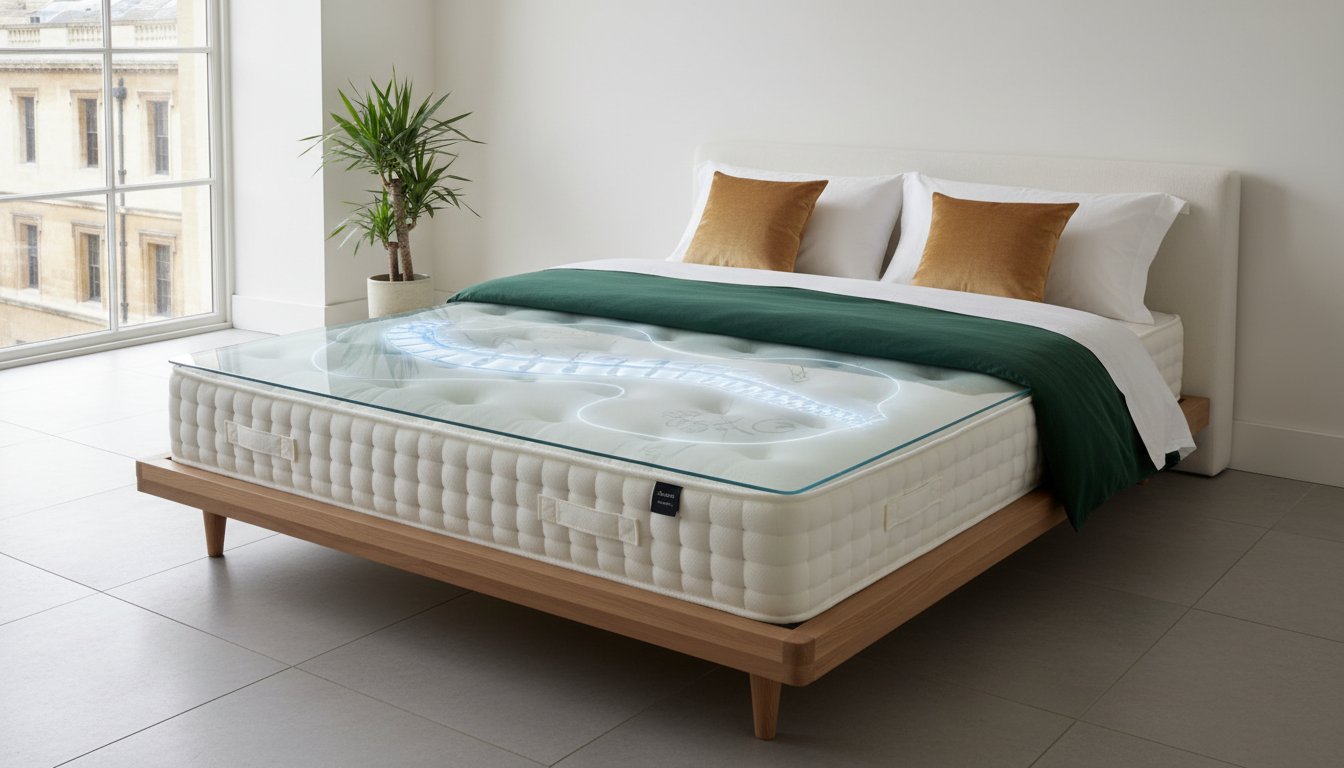
What if the extra-firm mattress you bought to fix your back is actually the reason you're waking up in pain? It is a common trap, especially since "orthopaedic" isn't a legally regulated term in the UK. This means any manufacturer can use the label, often just to describe a bed that feels like a wooden board. We know how frustrating it is to spend up to £1,700 on a new bed only to wake up with that same nagging lower back stiffness. If you are searching for an orthopaedic mattress Cambridge stores offer, you deserve to know what actually happens under the covers.
We understand that 55% of UK adults reported in a 2025 Which? survey that back pain ruins their sleep, and you just want to wake up feeling refreshed. We promise to show you how to choose a mattress with genuine zoned engineering that supports your spine rather than just resisting it. In this guide, we will look at the latest 2026 support trends, explain why 70% of side sleepers actually need medium-firm support, and help you find a quality mattress from trusted brands like Sealy or Hypnos that will keep you comfortable for the next 10 years.
Key Takeaways
- Learn why a true orthopaedic mattress isn't just "rock hard" but is specifically engineered to support your body's musculoskeletal structure.
- Discover why pocket springs are the gold standard for spinal alignment compared to budget open-coil springs found in entry-level models.
- Compare the entry-level open-coil orthopaedic mattress Cambridge retailers often stock against premium, hand-tufted options from heritage brands like Relyon.
- Use our buyer’s checklist to match your sleeping position with the right tension and look for hand-tufting to ensure your fillings stay in place for years.
- Understand how professional assembly and old bed removal services can take the stress out of your investment in a healthier night's sleep.
What defines a true orthopaedic mattress?
Walking into a showroom can be overwhelming when every label claims to be the best for your back. In the UK, the term "orthopaedic" is not a legally defined medical standard. Instead, it refers to a design philosophy influenced by the study of the musculoskeletal system. The primary goal is to provide a sleep surface that supports the body's joints, bones, and muscles while you rest.
What defines a true orthopaedic mattress is its ability to maintain the natural "S" curve of your spine. When you lie down, your mattress should contour to your body's shape without allowing your midsection to sag. This alignment is vital for long-term health, as it prevents the spinal discs from being compressed or twisted during the night. Brands like Sealy and Hypnos focus heavily on this structural integrity to ensure you wake up without that familiar morning stiffness.
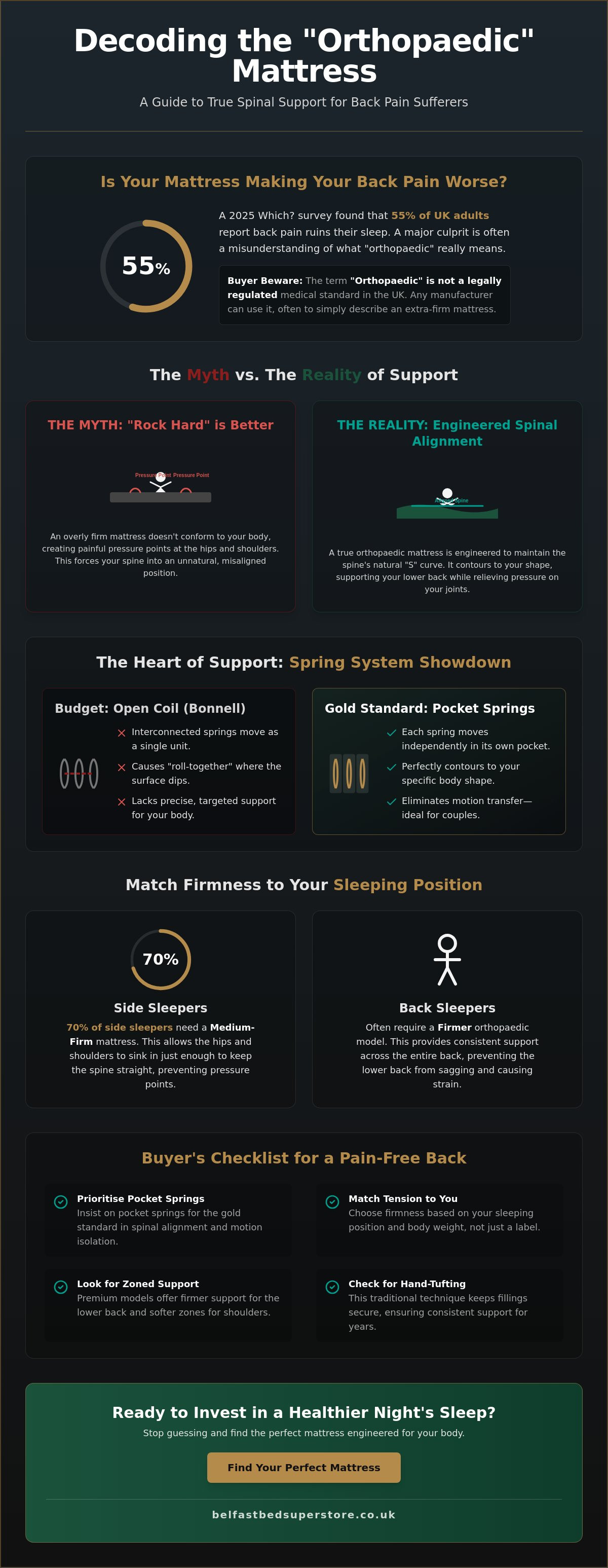
A common myth suggests that a mattress must be "rock hard" to be orthopaedic. This is simply not true. While extra-firm models exist, the most effective support often comes from materials that offer pressure relief for your hips and shoulders. If a bed is too hard, it can actually push against your joints, causing more pain rather than less. True support is about finding a balance between a sturdy core and a comfortable surface.
The difference between firmness and support
We often see customers confuse firmness with support. Firmness describes the initial "hug" or resistance you feel in the top layers of the mattress. Support refers to the deeper spring system or core that keeps your spine aligned. If a mattress is too firm for a side sleeper, it creates pressure points at the shoulders and hips, which can lead to pins and needles. Zoned support systems, like those found in Relyon mattresses, solve this by using different spring tensions. They provide softer support for your shoulders and firmer resistance for your lower back, ensuring every part of your body is cradled correctly.
Who should consider an orthopaedic mattress?
If you are searching for an orthopaedic mattress Cambridge experts recommend, you likely fall into one of the key groups that benefit most from this technology. With over 10 million adults in the UK suffering from chronic back pain, these mattresses are a popular choice for those needing extra spinal care. Heavier sleepers also benefit from the reinforced edges and high-density cores that prevent the "roll-together" effect. Your sleeping position also matters. While 70% of side sleepers prefer a medium-firm feel, back sleepers often require the extra stability of a firmer orthopaedic model. By distributing your body weight evenly across the surface, orthopaedic support eliminates the pressure points that trigger tossing and turning.
The mechanics of support: Pocket springs vs. open coils
When you strip away the beautiful fabric, the heart of a mattress is its spring system. Most budget models use the traditional Bonnell or open-coil system. These are hourglass-shaped springs wired together in a single unit. While they offer a firm feel initially, they often lack the precision needed for back relief. If you are browsing for an orthopaedic mattress Cambridge stores have on display, you will likely notice that open coils can lead to "roll-together," where the surface dips toward the heaviest sleeper. This happens because the springs are interconnected; when one moves, they all move.
Pocket springs are widely considered the gold standard for genuine spinal alignment. Each spring is wrapped in its own fabric pocket, allowing it to move independently. This means the mattress contours to your specific shape rather than forcing your body to adapt to the bed. There is strong scientific evidence for mattress firmness suggesting that medium-firm pocket sprung systems provide the best balance of comfort and support for the 10 million UK adults living with chronic back pain. These systems respond to the pressure of your body, sinking only where needed and staying firm where you require lift.
For couples, the independent movement of pocket springs is a game changer. It virtually eliminates motion transfer. If your partner tosses and turns at 3:00 AM, you won't feel the vibration across the bed. This localized support ensures that your spine remains neutral regardless of how much the person next to you moves. It is a simple way to ensure both of you wake up without the morning aches caused by an unstable sleep surface.
Sealy and the Posturepedic advantage
Not all support systems are created equal. Sealy took a different path by collaborating with orthopaedic surgeons to develop their Posturepedic technology. This system features a reinforced "centre third" section. Since roughly 50% of your body weight is concentrated in your hips and lower back, this zone provides extra resistance where you need it most. You can explore our full range of Sealy mattresses to see how this reactive support helps maintain a healthy posture throughout the night. It is a targeted approach that addresses the specific area where most back pain originates.
Natural fillings and their role in comfort
Support comes from the springs, but comfort comes from the layers on top. Many budget mattresses use synthetic polyester fillings that trap body heat, often leading to a restless, sweaty night. Premium orthopaedic models use natural materials like wool, cotton, and silk. These fibres are naturally breathable and help regulate your temperature. When these layers are combined with a high-quality spring system, they create a "luxury firm" feel that stays cozy in the winter and cool in the summer. If you want to see how these materials feel in person, you might want to view our latest supportive collection and find your perfect match.
Analysing the Cambridge orthopaedic mattress vs. premium brands
If you have spent time browsing for an orthopaedic mattress Cambridge shoppers often see the "Cambridge" model appearing in search results. This is typically an entry-level bed featuring a traditional open-coil spring system. While it provides a very firm initial feel that many associate with back care, it often lacks the refined engineering found in heritage brands. These budget models are often a "false economy" because the compressed fillings and basic springs tend to lose their structural integrity after just 2 or 3 years, leaving you back where you started with morning aches.
Choosing a bed is about more than just the price tag; it's about the quality of your life the next morning. Many people opt for budget models thinking "firmer is better" for chronic pain. However, a landmark study in The Lancet revealed that patients using medium-firm mattresses were twice as likely to report improved pain levels compared to those on extra-firm beds. This is why we often point our customers toward Hypnos mattresses. As a brand that holds a Royal Warrant, which is only granted to companies providing the highest standards of quality and service to the Royal Household, Hypnos focuses on sustainable materials that provide genuine pressure relief and a lifespan that often exceeds 10 years.
Relyon: The heritage of firm support
Relyon has earned a reputation for making "The Best Beds in the World" for back care. This isn't just a marketing slogan; it's a reflection of their traditional construction methods. Unlike entry-level models, Relyon mattresses feature genuine hand-side stitching. This labour-intensive process involves sewing the outer fabric directly into the outer row of pocket springs. It creates a robust border that prevents edge-to-edge sag, ensuring you stay supported even if you sleep right up to the side of the bed.
Investment vs. Price: Calculating cost per sleep
Think of your bed as an investment in your physical health and daily productivity. A £200 budget mattress might seem like a bargain, but if it needs replacing every 3 years, you're trapped in a cycle of poor sleep and frequent spending. An £800 premium mattress that lasts 10 years actually costs less over time and provides significantly better spinal alignment. At Belfast Bed Superstore, we want to make sure you get the support you need without the stress. Our 0% finance options make premium orthopaedic support accessible for every budget, allowing you to spread the cost and invest in your long-term health today.
A buyer’s checklist for chronic back pain relief
Finding the right bed shouldn't be a guessing game. If you've been looking at an orthopaedic mattress Cambridge retailers offer, keep this checklist handy to ensure you're getting genuine value rather than just a "firm" label. We want you to feel confident that your investment will actually lead to those refreshed, pain-free mornings you've been dreaming of.
- Step 1: Identify your sleeping position. Your tension needs are dictated by how you lie. While back sleepers often thrive on firm support, side sleepers generally require a medium-firm feel to allow the shoulders to sink in without twisting the spine.
- Step 2: Look for hand-tufting. These are the small fabric "buttons" you see on the mattress surface. They aren't just for decoration; they pass through the entire mattress to keep the internal fillings from shifting or bunching over time.
- Step 3: Check the spring count. For a standard double mattress, aim for at least 1,000 pocket springs. This ensures the support is granular enough to respond to your body's individual pressure points.
- Step 4: Verify the guarantee. A quality orthopaedic mattress should come with at least a 5-year guarantee. Check if it covers "dipping" or just manufacturing defects.
- Step 5: Demand a sleep trial. You cannot judge a mattress in five minutes. A trial period is essential to see how your back responds over several weeks.
How to test a mattress for spinal alignment
When you visit a showroom, don't be shy about getting comfortable. You should spend at least 20 minutes lying in your natural sleeping position. While lying on your back, try the "hand test." Slide your hand under the small of your back. If it slides through too easily, the mattress is too firm. If you can't get your hand in at all, it's likely too soft. Don't forget your pillow during this test. A pillow that is too high or too low can ruin the alignment provided by even the best mattress, so treat them as a single sleep system.
The importance of a 30-night sleep trial
Your body often takes up to 4 weeks to adjust to a new level of support. This is especially true if you've been sleeping on a sagging mattress for years. Initially, a new orthopaedic bed might feel "too firm" because your muscles are finally being held in the correct position. Our commitment to your sleep includes guidance through this adjustment period. We always recommend giving a new bed at least 30 nights before making a final decision. Ready to find your perfect match? Explore our supportive mattress range today and start your journey to better health.
Why the right support is a long-term investment
Choosing a new bed is one of the most important health decisions you'll make this decade. Since 55% of UK adults report that back pain directly ruins their sleep, the structural integrity of your mattress isn't just a luxury; it's a tool for physical recovery. When you're searching for an orthopaedic mattress Cambridge residents can trust, it pays to choose a specialist retailer over a general furniture shop. General retailers often sell a "firm" feel, but specialists understand the complex mechanics of spinal alignment and musculoskeletal health. We pride ourselves on being that local expert, guiding you toward a solution that values your long-term comfort over a quick transaction.
The link between a high-quality sleep surface and your daily productivity is undeniable. Over 10 million adults in the UK live with chronic back pain, and many don't realize their mattress is a primary contributor. By investing in a bed designed for spinal health, you're reducing the cumulative strain on your joints. This isn't just about avoiding a sore back tomorrow morning; it's about protecting your mobility and posture for the next 10 years. A specialist will ensure you're matched with a system that suits your weight and height, rather than a one-size-fits-all "firm" model that might actually cause more harm than good.
Hypnos: The ultimate in orthopaedic luxury
For those who want the gold standard in sleep technology, Hypnos mattresses offer a level of engineering that is hard to match. Their signature ReActive™ pocket spring system is designed to sense your body's weight and shape, providing deep, progressive support. Each spring has a specific number of "turns"—the more turns, the more responsive the support becomes. Beyond the incredible comfort, there's a strong commitment to the planet. Every Hypnos model is 100% recyclable and crafted from sustainable, natural materials. It's a royal-approved sleep experience that doesn't cost the earth.
Complete your bedroom with expert service
A premium mattress is a precision instrument, and it needs to be handled correctly from our warehouse to your bedroom. Our professional delivery and assembly team ensures that your new bed is set up perfectly to maintain its structural integrity. We don't just drop a box at your door; we make sure your investment is ready to provide a decade of support. We also take the hassle out of the "old bed problem" with our responsible recycling service. We'll take your old mattress away and ensure it's handled in an eco-friendly manner, leaving you with a clean room and total peace of mind. Starting every day refreshed and pain-free is possible when you make the right orthopaedic choice. Visit our showroom today or browse our curated collection online to find the support your body deserves.
Take the first step toward a pain-free morning
You now have the tools to distinguish between a basic firm bed and a genuine orthopaedic system. Real support is about zoned engineering that cradles your spine rather than just a "rock hard" surface. Whether you choose a pocket-sprung Relyon or a reactive Sealy Posturepedic, the goal is always to maintain your natural alignment. Finding the right orthopaedic mattress Cambridge specialists recommend means investing in your physical recovery every single night.
We've been helping our neighbors sleep better since 1990, and we take that responsibility seriously. As specialists in Hypnos and Sealy, we're here to help you find a bed that matches your specific body weight and sleeping position. You can even take advantage of our 0% finance options to make your musculoskeletal health a priority today. Every premium mattress comes with our 30-night sleep trial guarantee, so you can be certain the support is perfect for your needs.
Find your perfect orthopaedic mattress at Belfast Bed Superstore and start waking up refreshed. You deserve a night of rest that leaves you ready for the day ahead.
Frequently Asked Questions
Is an orthopaedic mattress better for back pain?
An orthopaedic mattress is often better for back pain because it is specifically engineered to distribute weight and maintain spinal alignment. However, success depends on choosing the correct tension for your body size. A 2025 Which? survey found that 55% of UK adults suffer from sleep-disrupting back pain, and many find relief by switching to a medium-firm orthopaedic model that prevents the spine from sagging during the night.
What is the difference between a firm mattress and an orthopaedic one?
Firmness refers only to the initial feel of the surface, while "orthopaedic" describes a mattress designed to support the musculoskeletal system. A firm mattress might simply use high-density foam, but a true orthopaedic model uses zoned spring systems to provide different levels of resistance for your shoulders and hips. This ensures your spine stays in a neutral "S" curve rather than being forced into an uncomfortable position.
How long should an orthopaedic mattress last?
A high-quality orthopaedic mattress should provide consistent support for 7 to 10 years. While budget models may lose their shape after just 3 years, premium brands like Sealy or Hypnos use tempered steel springs and hand-tufted fillings to prevent dipping. We recommend replacing your mattress every 8 years to ensure the internal components continue to provide the level of support your back requires for healthy sleep.
Can an orthopaedic mattress be used on any bed frame?
You can use an orthopaedic mattress on most frames, but the base will change the overall feel. A solid platform top divan will make the mattress feel slightly firmer, while a sprung slatted base offers a bit more "give." If you are using a slatted frame, ensure the gaps between slats are no wider than 7.5 centimetres to prevent the springs from bulging and losing their structural integrity over time.
Do I need a special pillow for an orthopaedic mattress?
You should choose a pillow that complements your mattress to keep your neck aligned with the rest of your spine. If you have invested in a supportive orthopaedic mattress Cambridge experts recommend, a low-quality pillow can undo that work. Side sleepers usually need a deeper latex or memory foam pillow to fill the gap between the shoulder and the ear, preventing the neck strain that causes morning headaches.
What is the "Cambridge" model mattress seen in search results?
The "Cambridge" model is a popular entry-level orthopaedic mattress that typically uses a traditional open-coil spring system. While it offers a very firm feel at a lower price point, it lacks the individualised support and motion isolation of pocket springs. If you are searching for an orthopaedic mattress Cambridge retailers list online, be aware that these budget models often have a shorter lifespan compared to heritage brands like Relyon.
How do I know if my mattress is too firm for my back?
You will likely feel excessive pressure in your shoulders and hips or wake up with "pins and needles" if your mattress is too firm. If you lie on your back and cannot slide your hand comfortably under the small of your spine, the bed is likely too hard. This causes your spine to curve upward, contributing to the 10 million chronic back pain cases reported across the UK annually.
Does a higher pocket spring count mean better orthopaedic support?
A higher spring count provides more points of support, but anything above 1,000 to 2,000 springs in a double mattress often offers diminishing returns. The gauge of the wire and the quality of the internal fillings are more important for long-term back health. A mattress with 1,500 high-quality pocket springs will usually outperform a model with 4,000 low-grade micro-springs that lack deep structural support.


