
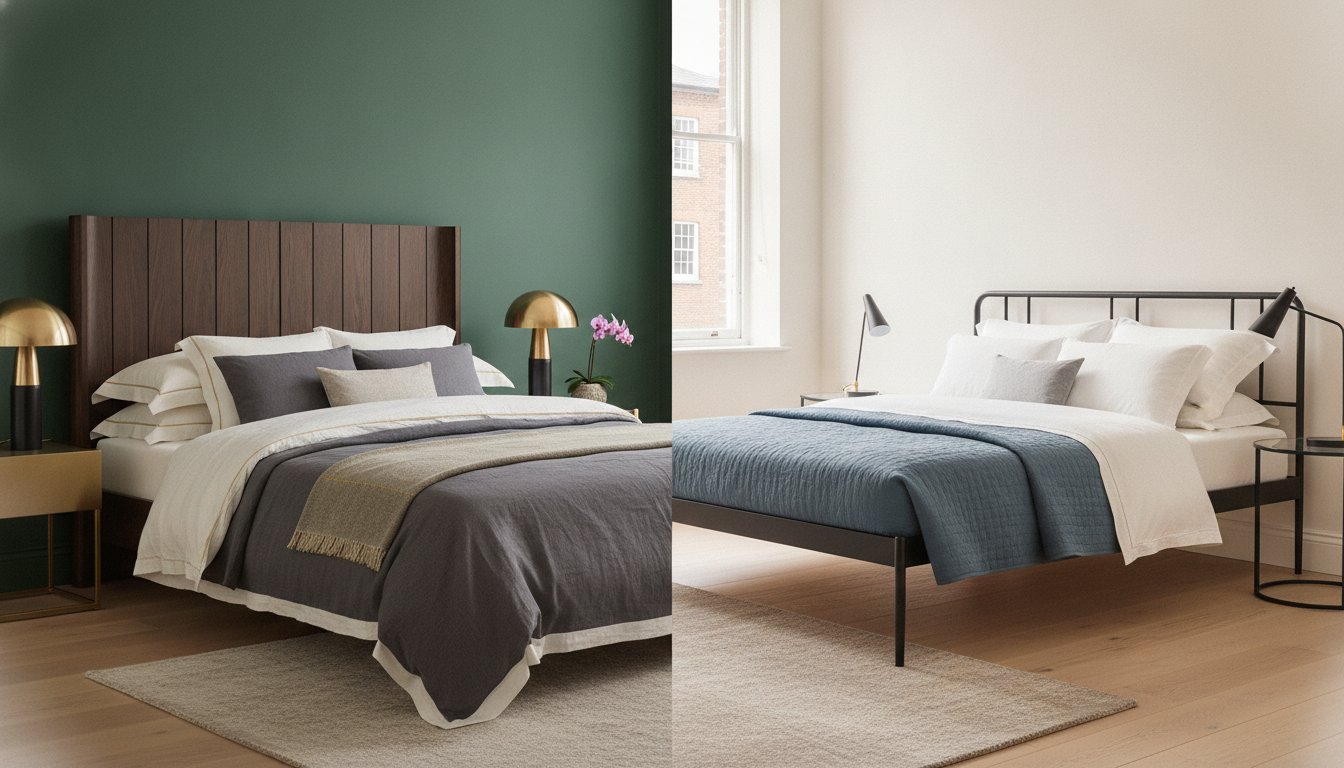
If you have ever spent a restless night listening to a rhythmic squeak every time you turn over, you know that the wrong base can turn even the finest mattress into a source of frustration. It's a common worry for many of our neighbors here in Cambridge. You want a bed that looks stunning in your room, but you also need to know it can handle a heavy luxury mattress without complaining. The choice between metal vs wooden bed frames often comes down to more than just aesthetics; it's about finding a silent, sturdy partner for your sleep.
We know how overwhelming the options can feel, especially when you're trying to figure out if that beautiful wooden headboard will actually fit through a narrow terraced house hallway. This 2026 guide is designed to give you total peace of mind. We'll compare everything from the 25-year lifespan of solid timber to the modern, space-saving benefits of powder-coated steel. We'll also look at how professional assembly can solve those annoying noise issues for good, ensuring your bedroom remains a peaceful sanctuary for years to come.
Key Takeaways
- Choose between the organic warmth of solid timber or the space-saving, airy lines of a modern metal frame to perfectly balance your bedroom's visual weight.
- Compare the long-term durability of metal vs wooden bed frames, including why solid oak can last over 25 years while reinforced steel offers a sleek, modern alternative.
- Protect your mattress investment by learning the critical slat requirements for premium brands like Hypnos, ensuring your frame provides the right ventilation and support.
- Eliminate the fear of squeaky beds by discovering how professional assembly in your Cambridge home can ensure a silent, restful night for years to come.
- Solve the "delivery dilemma" with expert tips on choosing frames that navigate narrow staircases and tight terraced hallways with ease.
Metal vs Wooden Bed Frames: Aesthetic and Atmosphere
Choosing between metal vs wooden bed frames often starts with a gut feeling about how you want your room to feel when you walk in at the end of a long day. While the foundational Bed frame serves as the structural heart of your bedroom, the material you choose dictates the visual energy of the entire space. Wood brings an organic, grounded warmth to a room through its natural textures and grains. In contrast, metal offers sleek, space-saving lines that appeal to a more structured or modern sensibility. It's the difference between the solid, comforting "presence" of a timber headboard and the airy, light-touch feel of a steel frame that lets the rest of your decor breathe.
We often talk to customers who are worried about their bedroom feeling too "busy" or cramped. Reducing visual clutter through streamlined furniture choices helps lower cognitive load before sleep, which directly improves your overall sleep hygiene. A heavy wooden frame can dominate a small room, making it feel cozy to some but claustrophobic to others. Metal frames, with their thinner profiles, create an open atmosphere by showing more of the floor and walls. Looking ahead to 2026, we're seeing a beautiful merge of these worlds in hybrid industrial-chic designs. These pieces often pair the strength of powder-coated steel with the tactile comfort of solid wood accents, giving you the best of both styles without compromise.
The Warmth of Wood in Traditional Cambridge Homes
Many of our neighbors living in period properties across East Anglia lean toward the timeless appeal of solid timber. High-quality wooden bedsteads, such as those from Julian Bowen, suit the character of high ceilings and original floorboards perfectly. There is a psychological benefit here, too; biophilic design, which incorporates natural materials like wood, is known to create a sense of tranquility and well-being. In a large, airy bedroom, a substantial wooden frame acts as a confident focal point, providing a sense of permanence and security that metal sometimes struggles to match.
Modern Metal: Beyond the Industrial Look
If you're furnishing a modern Cambridge apartment or a compact terraced house, metal frames offer incredible versatility. We've moved far beyond the basic silver tubes of the past. Today's trends favor sophisticated finishes like matte black, brushed copper, and warm brass that add a touch of luxury without the bulk. These frames are the go-to choice for the "Scandi-industrial" look that's so popular right now. Because they have a much thinner profile than their wooden counterparts, they're excellent for maximizing floor space in tighter hallways and bedrooms, ensuring your home feels spacious rather than cluttered.
Durability and Material Science: Which Lasts Longer?
When you're comparing metal vs wooden bed frames, the real question is how they'll stand up to a decade or more of nightly use. Solid wood, particularly oak or pine, is often seen as the gold standard for longevity. A high-quality solid wood frame can easily last 15 to 25 years. In contrast, engineered woods like MDF or veneer typically have a shorter lifespan of around 8 to 12 years. Modern metal frames aren't the flimsy things they used to be. While basic versions might last 10 to 12 years, those built from powder-coated carbon steel are estimated to last 12 to 15 years, offering a fantastic balance of strength and value.
The way a bed is put together matters just as much as what it's made of. Traditional wooden frames often use mortise-and-tenon joints, which are incredibly stable and silent. Metal frames usually rely on bolt-and-bracket systems. While some worry these might loosen, brands like Flintshire Furniture use reinforced brackets to maintain frame rigidity over time. This prevents the swaying or "give" that can lead to noise. We've found that customers often prefer the reassuring weight of a frame that feels permanent. If you're looking for something that won't budge, you can browse our range of heavy-duty frames to find your perfect match.
Wooden Bed Longevity: The Role of Wood Species
Investing in oak or pine isn't just about looks; it's about stability. Hardwoods are denser and less prone to the dings and scratches of daily life. In older Cambridgeshire buildings, humidity changes can be a real concern. Solid wood handles these shifts better than cheaper alternatives, preventing the warping that ruins a frame's alignment. If your wooden frame does get a bit scuffed over the years, you can simply sand and refinish it. This repairability means a wooden bed can truly stay in the family for decades.
Metal Bed Strength: Welds, Alloys, and Weight Limits
Understanding the "gauge" or thickness of the metal is the secret to finding a quality frame. A heavier gauge steel won't flex under the weight of a premium, high-profile mattress. The 2026 models we stock feature advanced powder coating. This technology creates a tough, protective skin that prevents rust and chipping, even in damp environments. For those who want a frame that can support a significant weight limit without ever sagging, reinforced steel is often the superior choice.
The Performance Clash: Noise, Maintenance, and Sleep Quality
Nobody wants to be woken up by a bed that protests every time you shift your weight. A common myth suggests that choosing between metal vs wooden bed frames means deciding between a quiet night and a squeaky one. In reality, modern manufacturing has practically eliminated the clatter associated with old-fashioned metal beds. Most noise actually comes from loose fixings or material friction rather than the frame itself. While wooden frames stay beautiful with a bit of wax or polish, metal frames simply need a quick check of the bolts once or twice a year to stay silent. A rigid bed frame ensures the mattress provides consistent support to maintain neutral spinal alignment throughout the night.
We often see that the quality of your rest is tied to how much work your bed requires. If you're looking for a low-maintenance option, metal usually wins. It doesn't warp or expand with the changing seasons in East Anglia, whereas wood can be slightly more sensitive to the damp winter air. However, wood offers a tactile softness that many of our Cambridge customers find worth the occasional dusting and polishing. Both materials can provide a silent, supportive base if they're assembled with care and attention to detail.
Silencing the Squeak: Maintenance Tips
If you do hear a peep from your bed, it's usually an easy fix. Adding nylon washers or a tiny bit of lubricant to the joints of a metal frame can keep it silent for years. Wooden frames aren't immune to noise either; if the slats aren't secured tightly, they can rub against the side rails and creak. We also find that the historic, uneven floors in many Cambridge properties can put uneven stress on a bed's joints. Using felt pads to level the legs can prevent this tension and keep your sleep environment peaceful.
Hygiene and Hypoallergenic Benefits
For our neighbors who struggle with asthma or hay fever, the material of your bed can make a surprising difference. Metal frames are non-porous and incredibly easy to deep-clean with a simple damp cloth. They don't provide the tiny nooks where dust mites love to hide. Some wooden frames are finished with waxes or oils that might impact indoor air quality for sensitive sleepers. If allergy management is your priority, a sleek metal frame is often the most hygienic choice for a fresh, healthy bedroom.

Mattress Synergy: Supporting Your Investment
Buying a high-quality mattress is a significant investment in your well-being, but even the most advanced sleep surface will fail if it's paired with the wrong base. The technical side of the metal vs wooden bed frames debate focuses on how the slats interact with your mattress's internal structure. For instance, if you've chosen a premium Hypnos mattress, you must ensure the slat gaps don't exceed 7cm. Gaps wider than this allow the pocket springs to bulge through the spaces, leading to uneven wear and potentially ruining the comfort layers over time.
Ventilation is another critical factor where both materials perform well. Airflow through the slats prevents moisture buildup and helps regulate your body temperature, which is essential for a deep, uninterrupted sleep. When you're pairing a frame with a heavy, feature-rich model like a Sealy Posturepedic, frame rigidity becomes the priority. These mattresses require a sturdy foundation to deliver their intended back support, making reinforced metal or solid hardwood bedsteads the best choices to prevent the mattress from bowing in the middle. You can view our full collection of mattress-compatible frames to ensure your warranty remains protected.
Sprung vs. Solid Slats: The Comfort Factor
The type of slats you choose will noticeably change how your bed feels. Wooden sprung slats are curved upwards, acting like a second shock absorber that works in tandem with your mattress to provide better pressure relief. If you prefer a very firm and rigid sleep surface, you might lean toward the static slats or mesh bases often found in metal frames. For a deeper look at how different bases affect specific brands, see our Sealy Mattresses: The 2026 Buying Guide.
Protecting Your Warranty
It's a detail many people miss, but using an unsuitable frame can actually void your mattress warranty. Many luxury brands require specific slat spacing or a certain level of structural integrity to uphold their guarantee. Cheap metal frames are particularly prone to "slat sag" if the central support bar isn't reinforced, which can lead to permanent dips in your mattress. To provide the best possible foundation for a Relyon hand-stitched mattress, ensure your slats are at least 3 inches wide and spaced closely together to support the intricate internal hand-tufting.
Practical Guidance: Logistics, Assembly, and Local Expertise
Deciding between metal vs wooden bed frames is a big step toward a better night's sleep, but the final hurdle is getting that bed into your room and set up correctly. Saving time and effort is a major priority for our customers, and the assembly process varies significantly between materials. Metal frames generally arrive in more compact, flat-pack boxes with fewer components, which often makes them faster to put together. Wooden frames, while sometimes more intuitive because the parts are larger and more distinct, can be heavy and usually require two people to align the side rails with the headboard safely.
We've found that the biggest cause of a "noisy" bed isn't the material itself, but how it was put together. Opting for professional assembly ensures that every bolt is tightened to the correct tension and every slat is perfectly seated. This service is especially valuable for busy East Anglian families who want to skip the frustration of a DIY project. To make the transition even smoother, we also offer old bed removal and recycling, so you don't have to worry about a trip to the local tip or leaving a bulky frame in your hallway. Our goal is to make sure your only job is to enjoy your new, silent sleep system.
Navigating Cambridge’s Unique Architecture
Cambridge is famous for its beautiful but occasionally awkward architecture, from narrow Victorian terraces to modern attic conversions. Bolt-together metal frames are often the smarter choice for rooms with restricted access, as their smaller individual parts can navigate tight staircase turns that a solid wood headboard simply cannot. Before you buy, always measure your floor space to ensure a large wooden sleigh bed won't block your wardrobe doors or heater. For more tips on making the most of your space, check out our Bedroom Furniture Cambridge: The 2026 Guide.
The Belfast Bed Superstore Advantage
We invite you to visit our local Cambridge showroom to test the sturdiness of both metal and wooden frames in person. Feeling the weight of the timber or the rigidity of the steel gives you a level of confidence that an online description can't match. We take great pride in our service, which is why our 30-night sleep trial applies to the full sleep system, including the frame and mattress. This gives you the peace of mind that your new bed will truly provide the relaxation and support you deserve for years to come.
Ready for a Silent Night in Your Perfect Bed?
Choosing between metal vs wooden bed frames is about matching your home's character with your personal comfort needs. Whether you prefer the organic warmth of solid oak or the space-saving efficiency of powder-coated steel, the right frame protects your mattress investment and ensures your bedroom remains a sanctuary. Remember to check your slat spacing and consider the logistical turns of your property before making that final decision.
We've been a family-run business since 1990, helping our neighbors across East Anglia find the perfect balance of style and support. To make your upgrade even easier, we offer free professional assembly on selected frames and interest-free finance options to suit your budget. We're proud to be your friendly local experts, and we're here to help you wake up feeling refreshed every single morning.
Browse our extensive range of Metal and Wooden Bedsteads at our Cambridge Showroom and find the base that supports your lifestyle as well as your sleep.
Frequently Asked Questions
Do metal bed frames squeak more than wooden ones?
Modern metal frames are designed with advanced welding and powder coating to be virtually silent. If you hear a squeak, it's almost always because a bolt has loosened or the frame is sitting on an uneven floor. We've found that our professional home assembly service eliminates these issues from day one. Proper setup ensures your bed remains a quiet sanctuary for years without the annoying protests of metal-on-metal friction.
Which is more durable, a metal or a wooden bed frame?
Solid wood frames offer the longest lifespan, often lasting over 25 years if well-maintained. High-quality metal frames, particularly those made from powder-coated carbon steel, typically last between 12 and 15 years. When weighing up metal vs wooden bed frames, consider your long-term plans. Wood is a fantastic heirloom investment for a stable home, while metal provides excellent durability and value for those who might move more frequently.
Are wooden bed frames better for heavy people or heavy mattresses?
Both materials provide excellent support, provided they are built to a high standard. For heavy luxury mattresses like those from Sealy, we recommend either a solid hardwood frame or a reinforced steel bedstead with a central support bar. These robust designs prevent the "bowing" effect that can occur over time. A sturdy base ensures your mattress performs exactly as intended, keeping your spine aligned and your body fully supported.
Is a metal bed frame cheaper than a wooden one in 2026?
Metal bed frames remain the more budget-friendly option in 2026, usually costing 30% to 50% less than solid timber models. This price difference makes metal an attractive choice for guest rooms or first-time buyers. While solid wood carries a higher initial cost, its extended lifespan often provides better financial value over several decades. We offer interest-free finance options to help you choose the frame that best fits your bedroom's needs.
Can I use any mattress on a metal bed frame?
You can use almost any mattress type, but the slat spacing is the most important factor to check. Premium pocket-sprung brands like Hypnos require slats to be no more than 7cm apart to prevent spring damage. Some metal frames use wider mesh or static slats, so it's vital to ensure the base provides a flat, even surface. This protects your mattress warranty and ensures you get the full benefit of the internal spring system.
How do I stop my wooden bed frame from creaking?
Creaking in wooden frames is usually caused by friction between the slats and the side rails. You can often solve this by ensuring all joints are tight and adding small felt pads where the slats meet the frame. If your Cambridge home has slightly uneven floorboards, check that all legs are making solid contact with the ground. Leveling the bed with floor protectors can stop the frame from twisting and causing those unwanted nocturnal noises.
Are metal beds too cold for a bedroom?
Metal beds don't actually lower the temperature of your mattress or impact your physical warmth during the night. While they can feel cool to the touch, they won't make your sleep environment any colder than a wooden frame would. The "cold" reputation is mostly about the visual aesthetic. Choosing a warm finish like brushed copper or brass can add a cozy, inviting feel to your room while maintaining the sleek lines of metal.
Which is easier to assemble, wood or metal?
Metal frames are generally faster to assemble because they have fewer components and use simple bolt-together systems. However, wooden bedsteads are often more intuitive to put together as the parts are larger and easier to identify. Because solid wood is much heavier, you'll likely need a second pair of hands to help with the lifting. If you'd rather skip the instruction manual entirely, our team can handle the professional assembly for you.


