
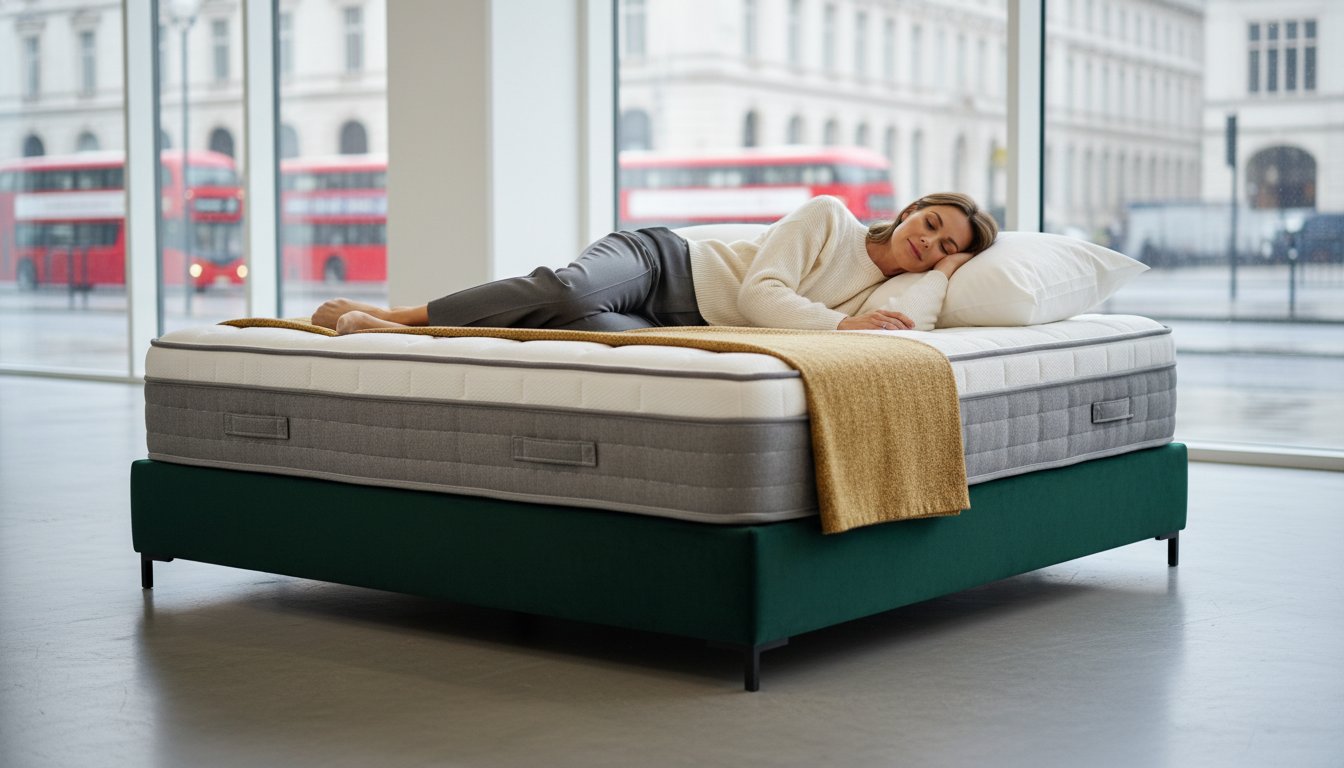
The rock-hard mattress you bought to save your spine might actually be the reason you're waking up in agony. For years, the common wisdom suggested that a stiff surface was the only way to find relief, but you've likely wondered: is a firm mattress better for back pain or just an uncomfortable myth? We know how exhausting it is to start your day with a stiff lower back while feeling completely unsupported during the night. It's even more frustrating when you're caught between conflicting advice from doctors and high-pressure retailers.
At our local showroom, we believe you deserve a sleep surface that actually works for your body. This guide will help you discover the truth about mattress firmness and back pain relief so you can choose the perfect sleep surface for your health. Research, including a systematic review of studies up to 2019, shows that a medium-firm mattress often provides better spinal alignment and comfort than a very firm one. We'll explore how to identify the specific support level you need for your sleeping position, helping you invest in a quality Hypnos or Sealy mattress with total confidence. You'll learn why the term "orthopedic" isn't a medical certification and how to wake up feeling refreshed and pain-free every single morning.
Key Takeaways
- Discover why the old advice about sleeping on a "board" is outdated and see if a firm mattress is better for back pain according to the latest research.
- Learn how to achieve a neutral spinal alignment to prevent the "hammock effect" that often leads to morning stiffness and lower back strain.
- Identify the best support level for your unique sleeping position, especially if you're a side sleeper who needs extra pressure relief for your hips and shoulders.
- Use our practical 15-minute showroom rule to test a mattress properly, so you're making a confident investment rather than a rushed decision.
- Explore how leading brands like Sealy and Hypnos use natural materials and zoned support to provide the perfect balance of comfort and spinal care.
Is a Firm Mattress Better for Back Pain? Debunking the Common Myth
Decades ago, if you mentioned a bad back to your GP, the advice was almost universal: get the firmest mattress you can find. Some people even went as far as putting plywood boards under their beds to create a completely unyielding surface. This "board-like" approach was based on the simple idea that a flat, hard surface would keep the spine from sagging. However, we now know that your spine isn't a straight line. It is a natural S-curve that requires gentle cradling rather than blunt resistance. When a bed is too hard, it fights against your body's natural shape instead of working with it.
Many of our customers visit us at the showroom asking, is a firm mattress better for back pain, because they've equated "hard" with "healthy" for years. It's a common psychological trap. We often assume that if a surface feels tough and sturdy, it must be doing more work to support our skeletal structure. In reality, studies on mattress firmness suggest that very hard surfaces often lead to the poorest sleep quality. Instead of fixing the problem, an overly stiff bed can actually increase pressure on your hips and shoulders, leading to new aches by morning. True orthopaedic support isn't about how hard the top layer feels; it's about how the internal structure reacts to your weight.
The 'Board-Like' Fallacy: Why Harder Isn't Always Healthier
When a mattress is too firm, it doesn't allow your heavier areas, such as your hips and shoulders, to sink in. This creates physical gaps between your body and the sleep surface, leaving your lower back suspended without any support. Your muscles end up staying tense all night just to hold your spine in place, which leads to that familiar morning stiffness. This lack of contouring also restricts blood circulation. If you find yourself tossing and turning to get comfortable, your mattress is likely too firm for your body weight. A "firm" feel is subjective; it feels very different to someone weighing 10 stone compared to someone weighing 18 stone.
The Evolution of Orthopaedic Sleep Advice
Sleep technology has evolved significantly from the basic foam slabs of the past. Today, heritage brands like Sealy and Hypnos focus on reactive support rather than raw hardness. The industry has largely shifted toward "medium-firm" as the gold standard for general back health. Modern designs use multi-zoned pocket spring systems that provide firmer support under your lumbar region while remaining gentler at the shoulders. This allows for a plush, luxurious feel that doesn't sacrifice the deep-seated structural support your spine needs to stay aligned throughout the night.
The Science of Spinal Support: Why Alignment Trumps Hardness
When people ask is a firm mattress better for back pain, they are usually looking for stability. However, the real goal of any quality sleep surface is achieving a "neutral spine." This means that whether you lie on your side, back, or stomach, your head, shoulders, and hips should remain in a relatively straight line. A neutral position prevents your muscles from working overtime to protect your spine while you sleep. Without this alignment, you're likely to wake up with the same nagging aches you went to bed with.
The problem with a mattress that is too soft is often called the "hammock effect." This happens when your heaviest parts, specifically your hips and pelvis, sink too deep into the bed. This bowing effect puts immense strain on the ligaments and muscles of your lower back. On the other hand, your body type and height change the definition of support. A taller person distributes weight differently than someone shorter, meaning the question shouldn't just be is a firm mattress better for back pain, but rather which mattress provides the reactive support your specific frame needs to stay level.
Pressure Point Relief vs. Core Support
A great mattress is built in layers. The "comfort layer" on top, often made of natural latex or high-density memory foam, is designed to distribute your weight away from your spine. This prevents pressure from building up on your joints. Below this sits the "support core," which provides the structural integrity needed to keep you from sinking. According to a recent scientific literature review, the consensus is that medium-firm surfaces offer the best balance for most sleepers. Spinal decompression during nocturnal rest is the process where the vertebral discs rehydrate and expand as the spine is held in a neutral position, allowing the body to recover from daily physical stress.
The Role of Pocket Springs in Back Health
Individual pocket springs are a game-changer for spinal health because they move independently. Unlike old-fashioned open-coil systems where the whole bed moves together, pocket springs contour to your body's specific shape. Heritage brands like Relyon use specific spring counts and "zoning" to provide firmer support under your lumbar region while remaining softer at the head and feet. This targeted engineering ensures that your heaviest areas are pushed back against, keeping your spine perfectly straight. If you're ready to feel the difference that proper engineering makes, you can explore our range of supportive mattresses to find your perfect match.
Firmness vs. Sleeping Position: Finding Your Ideal Support Level
Your sleeping position is the compass that should guide your mattress choice. While we've already explored how "hard" doesn't necessarily mean "better," the truth is that your body's orientation on the bed changes how you experience support. If you're still wondering is a firm mattress better for back pain, the answer depends entirely on whether you spend your night on your side, back, or stomach. Each position places different demands on your spine, and your mattress needs to react accordingly to keep you pain-free.
Most people fall into the category of side sleepers, yet this group often makes the mistake of choosing a surface that's too rigid. When you lie on your side, your shoulders and hips are the primary contact points. A mattress that lacks "give" forces these joints to absorb all the pressure, which can lead to shoulder impingement and hip misalignment. According to WebMD's guide to mattresses for back pain, a surface that is too firm can actually push your spine out of its natural alignment if you're a side sleeper. You need enough sinkage to allow your spine to remain straight from your neck down to your tailbone.
The Side Sleeper’s Dilemma
If you wake up with a dull ache in your shoulder or a tingling sensation in your arm, your mattress is likely too firm. Side sleepers need a comfort layer that allows the shoulder and hip to dip in just enough to keep the spine level. A medium-rated mattress often provides the best relief for side-sleeping back sufferers. We often recommend exploring the Sealy collection for these sleepers, as their zoned support systems are designed to cradle the joints while keeping the core of the body stable. This balance prevents the joints from twisting and reduces the need to toss and turn throughout the night.
Guidelines for Back and Stomach Sleepers
Back sleepers require a surface that fills the natural gap in the small of the back. You can test this using the "hand test" method. While lying on your back, try to slide your hand under the lumbar region of your spine. If your hand slides through with too much ease, the mattress is too firm and isn't filling that critical gap. If you can't get your hand under at all, the bed is too soft and your hips are likely sinking. Stomach sleepers are the only group where the answer to is a firm mattress better for back pain is often a "yes." A firmer surface prevents the pelvis from sinking, which protects the lower back from over-arching and causing painful strain on the vertebral discs.

How to Test a Mattress for Back Pain: A Practical Evaluation Guide
Buying a new bed is a significant investment in your health, so we always encourage our customers to take their time. A common mistake is the "30-second sit-test," where a shopper sits on the edge of a few beds and makes a snap decision. This is a recipe for a bad purchase. Your body needs time to settle into the materials to reveal how they truly support your spine. When you're standing in our showroom, you might still be asking yourself, is a firm mattress better for back pain, or should I go with something softer? The only way to know for sure is through a dedicated trial.
Conducting the Showroom Evaluation
We recommend wearing loose, comfortable clothing when you visit us. You won't be able to feel the subtle response of the pocket springs or the contouring of the comfort layers through a heavy winter coat or stiff denim. Once you find a mattress that feels promising, lie on it in your primary sleeping position for at least 15 minutes. This allows your body heat to interact with the materials and gives your muscles time to relax. During this time, consider these factors:
- Spine Alignment: If you're shopping with a partner, ask them to look at your spine from the side. It should appear as a straight, horizontal line from your neck to your tailbone.
- Edge Support: Sit on the very edge of the mattress. A strong perimeter is essential if you struggle with mobility, as it provides a stable base to help you get out of bed without straining your back.
- Initial Feel vs. Settled Support: The first minute tells you about the "plushness," but the tenth minute tells you about the structural support.
Utilising the 30-Night Sleep Trial
It's important to understand the "adjustment period." Your body has muscle memory, and if you've spent years sleeping on a sagging or unsupportive surface, your muscles have adapted to that poor posture. When you move to a high-quality surface, your back might actually feel slightly worse for the first 14 days. This isn't a sign of a bad mattress; it's your body recalibrating to a healthy alignment. We always suggest giving a new bed at least three weeks before making a final judgment.
Deciding if is a firm mattress better for back pain is much easier when you have a risk-free trial to fall back on. To keep your options open, always use a high-quality mattress protector from day one. Most sleep trials require the mattress to be returned in pristine condition to qualify for an exchange. If the "firm" feel you initially loved still feels like sleeping on a brick after 20 nights, you'll have the peace of mind knowing you can swap it for something with more "give." If you want to experience this level of tailored support, you can view our range of Sealy mattresses, which are specifically engineered for spinal health.
Investing in Quality: Why Leading Brands Prioritise Orthopaedic Support
Quality is the bridge between simple comfort and long-term health. When we look at high-end brands, we see that the question is a firm mattress better for back pain is actually answered by superior craftsmanship. It isn't just about the tension of the springs; it's about the materials surrounding them. Heritage brands like Relyon use natural fillings such as wool, cotton, and horsehair. These materials don't just feel luxurious. They regulate temperature and provide a resilient layer of comfort that synthetic foams often struggle to match. A higher initial investment in these quality materials leads to better spinal health because natural fibres maintain their shape and support for much longer than budget alternatives.
We often tell our customers that a mattress is the most important piece of furniture in the home. Choosing a recognised name means you're benefiting from decades of sleep science and refinement. These brands don't just guess what feels good. They engineer surfaces that respond to the human frame. By focusing on the structural integrity of the bed, they ensure that the support you feel on day one is the same support you'll feel years down the line.
Hypnos and the Royal Standard of Support
A Hypnos mattress represents the pinnacle of British bed-making. They use reactive pocket springs that sense your body weight and adjust their resistance automatically. This means the bed provides more support where you're heavy and remains gentle where you're light. A key feature of these beds is hand-tufting. This traditional technique involves long needles being passed through the mattress to secure the fillings in place. It prevents the materials from shifting or sagging, ensuring the structural integrity and firmness of your mattress remains consistent. When you choose a brand with a Royal Warrant, you're investing in a global benchmark for durability and back support.
Sealy Posturepedic: Engineered for Alignment
The Sealy Posturepedic range was born from a direct partnership with orthopaedic surgeons. Their goal was to move beyond the simple "hard or soft" debate and look at the science of alignment. The unique Posturepedic core specifically targets the heaviest part of your body, the middle third, where you need the most reinforcement. By using unique spring technology that provides more push-back as weight increases, Sealy offers a level of stability that standard industry alternatives can't replicate. It ensures your spine stays in that neutral position regardless of how much you move during the night.
Upgrading your sleep shouldn't be a physical chore. We believe in making the process as smooth as possible, and choosing a quality bed often means you can arrange for professional assembly and the removal of your old equipment. This reduces the physical strain of moving heavy furniture, which is the last thing you need when you're already dealing with back issues. By focusing on quality, you aren't just buying a product. You're securing a better quality of life through restorative, pain-free rest. If you're still wondering is a firm mattress better for back pain, come and speak with us to find the specific level of support that will change the way you wake up.
Your Journey to a Pain-Free Morning Starts Here
Finding the right sleep surface is about more than just picking a number on a firmness scale. We've seen that the old belief of "the harder, the better" is a myth that often leads to more discomfort. Instead, the goal is achieving a neutral spine through reactive support that contours to your specific body type and sleeping position. If you've been wondering is a firm mattress better for back pain, the true solution is a surface that balances pressure relief with deep structural integrity.
We're dedicated to helping our neighbours find lasting comfort without the stress. To make your choice easier, we provide a 30-night sleep trial guarantee and flexible 0% finance with interest-free instalments. Our team even takes care of the heavy lifting with professional assembly and old bed removal services. You deserve to wake up feeling restored rather than restricted. Find your perfect night’s sleep with our expert-approved mattress range and start enjoying the restful, pain-free life you deserve. We can't wait to help you find your dream bed.
Common Questions About Mattress Firmness and Spinal Health
Is a firm mattress better for lower back pain?
Medium-firm mattresses are typically more effective for lower back pain than extra-firm ones. While people once thought the harder the better, modern research shows that a bit of give allows the mattress to fill the gap at your lumbar spine. This prevents your muscles from staying tense all night. If you're still asking is a firm mattress better for back pain, remember that support and firmness are two different things.
Can a mattress be too firm for your back?
Yes, a mattress can definitely be too firm, which often leads to painful pressure points on your hips and shoulders. If the surface is unyielding, it won't contour to your body's natural curves. This leaves your lower back suspended in mid-air without any support. You'll likely find yourself tossing and turning as your body tries to find a position that doesn't restrict your blood circulation.
How do I know if my current mattress is causing my back pain?
You can usually tell your mattress is the culprit if your back pain is worst right when you wake up but improves after thirty minutes of moving around. Look for visible signs of wear like dipping in the middle or edges that feel soft when you sit on them. If you're sleeping better in hotels or on a spare bed than you do in your own room, it's a clear signal your current surface has failed.
What is the best mattress firmness for side sleepers with back pain?
Side sleepers with back pain usually find the most relief on a medium or medium-soft mattress. Because your shoulders and hips are narrower than your waist, you need a surface that allows these points to sink in. This keeps your spine perfectly level from your neck to your tailbone. A surface that is too rigid will push your spine out of alignment, causing significant discomfort in your mid-back and neck.
Should I get a firm mattress if I have a herniated disc?
There isn't a one-size-fits-all answer for a herniated disc, so you should always check with your specialist first. Generally, a medium-firm mattress provides the necessary stability to keep the spine neutral while offering enough cushioning to prevent aggravating the sensitive area. Finding the right balance ensures you don't sink too deep, which could put unwanted pressure on the spinal nerves and cause more pain.
How long does it take for a new firm mattress to help back pain?
It typically takes between two and four weeks for your body to fully adjust to a new sleep surface. During the first fortnight, you might even feel a slight increase in stiffness as your muscles unlearn the bad habits from your old, sagging bed. This is why we recommend using the full duration of a sleep trial before deciding if is a firm mattress better for back pain in your specific case.
Will a mattress topper help if my bed is too firm for my back?
A high-quality mattress topper is an excellent way to add comfort if your current bed feels too hard. By adding a layer of memory foam or latex, you can improve pressure relief without sacrificing the structural support of the mattress underneath. It's a cost-effective solution that can help you decide if a softer feel is what you've been missing before you commit to a full mattress replacement.
Is an orthopaedic mattress always firm?
An orthopaedic mattress is not always firm, despite the common marketing myth. The term actually refers to a design that supports the joints and the back, which can be achieved through different tension levels. Whether a mattress is labelled as orthopaedic or not, the most important factor is how it aligns your specific frame. At our local showroom, we've found that a medium-firm Sealy can provide better support than a standard extra-firm model.


