

More cleaning can do more harm than good when a fabric bed gets dusty or marked. The safest approach to cleaning and maintaining a fabric bed is usually gentle, label-led care, not stronger products or extra water. Before reaching for a spray or scrubbing at a stain, check what the upholstery instructions allow.
A simple routine can keep dust and everyday marks under control while helping protect the fabric, padding and frame from excess moisture. This guide explains how to check the care label, remove dust, respond to spills gently and decide when to stop a home treatment. Testing a permitted product in a hidden spot and letting the fabric dry fully can help you avoid further marks or damage.
At Belfast Bed Superstore, based in Cambridge, we offer upholstered bedsteads for bedrooms across Cambridgeshire and East Anglia. With the right care, your bed can remain a comfortable, welcoming part of your home. If you’re ready for a replacement, we use Klarna to provide interest free payments for amounts up to £1000, spread over 3 months.
Key Takeaways
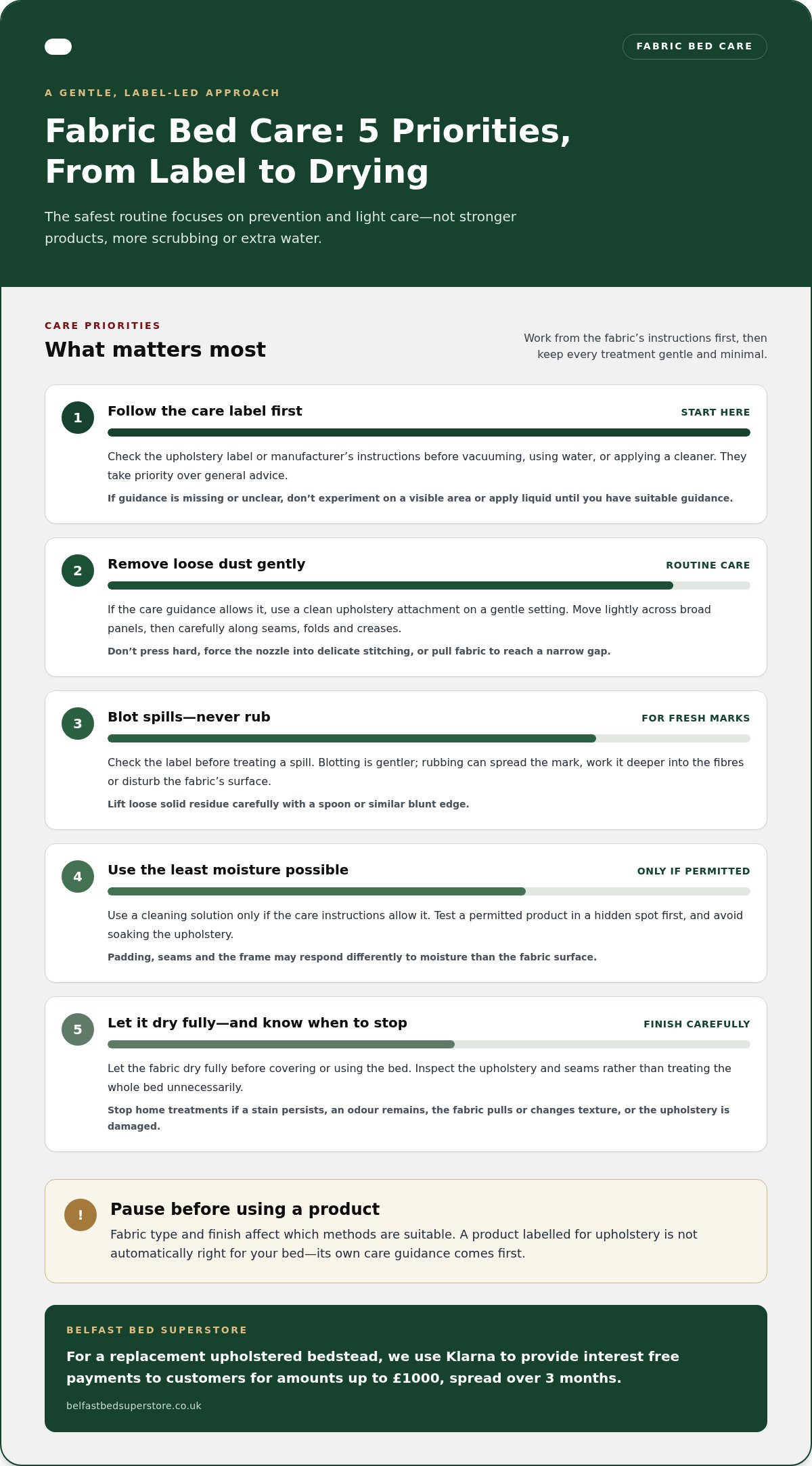
- Start with the care label or manufacturer’s instructions, as they take priority over general cleaning advice.
- Remove loose dust gently and inspect seams and upholstery regularly, so you notice marks before they become harder to address.
- For spills, blot rather than rub. Use a cleaning solution only if the care instructions permit it, and patch-test it in a hidden area first.
- Keep moisture to a minimum and let the fabric dry fully before covering or using the bed. Stop home treatments if a stain persists, an odour remains or the upholstery is damaged.
- For a replacement upholstered bedstead, we use Klarna to provide interest free payments for amounts up to £1000, spread over 3 months.
Why fabric bed care starts with prevention, not deep cleaning
A fabric bed is easier to care for when you remove loose dust and deal with small spills gently, before they build up or become harder to remove. Maintenance is less about frequent deep cleaning and more about prevention: keep the upholstery free of loose dust, notice marks early and follow the care instructions. Fabric type and finish affect which products and methods are suitable, so a technique that works on one bed may not suit another.
Careful routine maintenance is safer than aggressive stain treatment because it limits friction, cleaning products and moisture before they can affect the upholstery. For cleaning and maintaining a fabric bed, let its label and the manufacturer’s guidance lead. Upholstery cleaning can involve different approaches, as described in this overview of upholstery cleaning methods, but not every method is appropriate for every bed.
What makes fabric-bed upholstery different from washable bedding?
Sheets and duvet covers are loose bedding that can usually be removed and laundered according to their care labels. A bed’s upholstery is often fixed in place over padding and attached to the frame. Seams, padding and the frame may respond differently to moisture, so soaking the surface can cause problems beyond the fabric itself.
If your bed has a cover that appears removable, check the manufacturer’s instructions before taking it off or washing it. A zip or loose edge doesn’t necessarily mean the cover is designed to be laundered. Treat it as fixed upholstery unless its care guidance says otherwise.
Which care instructions should you check first?
Before using water, a stain remover or a vacuum attachment, look for the bed’s upholstery label or fabric-care instructions. Follow the manufacturer’s advice on vacuuming, spot cleaning and whether professional care is recommended. The fabric’s fibre and finish can affect how it reacts to cleaning, so these details matter.
If the instructions are missing or unclear, don’t experiment on a visible area or assume a product is safe because it’s labelled for upholstery. Avoid applying liquid until you have suitable guidance. Caution can help prevent a minor mark turning into a larger problem.
If gentle upkeep can’t restore the appearance and you’re considering a replacement, an upholstered bedstead can bring fabric into your bedroom without changing your care routine. Belfast Bed Superstore offers upholstered bedsteads as part of its bed selection.
How to remove dust and keep a fabric bed fresh
Regular, gentle vacuuming helps stop loose dust settling into the upholstery and seams. Before you begin, clear the space around the bed, remove the bedding and check the care instructions. Use a clean upholstery attachment and a gentle setting only if the fabric guidance allows it.
Gentle vacuuming removes loose surface dust without saturating upholstery. It’s a useful first step in cleaning and maintaining a fabric bed because it avoids introducing the moisture that can come with spot cleaning.
How should you vacuum a fabric bed frame and headboard?
Start with the broad, accessible panels. Move the attachment lightly over the fabric rather than pressing hard, then work carefully along seams, folds and creases where dust can collect. Don’t force the nozzle into delicate stitching or pull at the fabric to reach a narrow gap. If the upholstery snags, shifts or is difficult to access, leave that area alone.
Stop if the fabric pulls, changes texture or shows any sign of damage. A little dust left in a delicate spot is preferable to disturbing the upholstery. After vacuuming, inspect the panels and seams for marks so you can follow the appropriate care guidance rather than treating the whole bed unnecessarily.
How can you keep everyday dust and marks under control?
Small habits make the routine easier. Where practical, keep food and drinks away from the upholstered headboard and frame, and avoid placing the bed where it’s regularly exposed to dirt or damp. If a fresh mark appears, respond promptly using the fabric’s care instructions. Avoid vigorous rubbing, which can disturb the fabric or spread the mark.
Before using any cleaner, check the care label. Some labels use codes to indicate suitable cleaning approaches; this guide to understanding upholstery cleaning codes offers a further reference. The bed’s own label and the manufacturer’s guidance should still take priority.
Keep the routine simple: prepare the area, vacuum suitable surfaces gently, check seams, then inspect for marks. Repeat as needed, following the fabric instructions and taking account of how the bed is used. Consistent, light care helps the upholstery stay fresh without turning dust removal into an unnecessary deep clean.
How to treat fabric-bed spills and stains without over-wetting
A quick, careful response can help keep a fresh spill from settling deeper into the upholstery. First check the care label, since water, detergents and stain removers aren’t suitable for every fabric or finish. A product described as fabric-safe still needs to be compatible with your bed’s instructions.
Blotting is gentler than rubbing. Friction can spread a spill, work it further into the fibres or disturb the fabric’s surface. Use as little moisture as possible, and don’t expect one treatment to remove every mark. A recent spill may respond differently from a stain that has dried or set in.
What should you do immediately after a spill?
Lift any loose solid residue carefully with a spoon or similar blunt edge, taking care not to press it into the fabric. Then use a clean, absorbent cloth to blot liquid. Press lightly, lift the cloth and repeat with a clean section as needed. Don’t scrub, pour water onto the spot or wet the upholstery through.
Before adding a cleaning solution, follow the bed’s care label and manufacturer instructions. If those allow a product, test it on a small, hidden area first and let the test area dry. Check for any change in colour or texture before considering treatment of the mark. If the test is successful, use a small amount and blot gently.
When should you avoid home stain treatments?
Skip bleach, unapproved solvents and harsh household products. They may alter the fabric’s colour or texture, even if they seem effective on another material. Don’t steam clean or use a wet-cleaning machine unless the bed’s instructions specifically allow that method. Too much moisture can reach the padding or frame and make the area difficult to dry evenly.
If the fabric is delicate, the instructions don’t support a treatment, or a stain remains after a cautious attempt, stop rather than layering on more products. Leave persistent marks to professional upholstery care. This is safer than risking a larger patch of discolouration while cleaning and maintaining a fabric bed.
How to dry and protect a fabric bed after cleaning
After treating a mark, drying the upholstery properly is part of cleaning, not an optional finishing touch. Don’t cover the area with bedding or use the bed until the fabric is fully dry. Covering damp upholstery can trap moisture, while uneven drying may leave the cleaned patch looking different from the surrounding fabric.
Clean lightly, ventilate and let the fabric dry fully. This simple sequence helps limit lingering dampness and gives you a chance to check the result before using the bed again. Drying time depends on the fabric, the amount of moisture used and the room, so judge by the upholstery itself rather than rushing to meet a fixed timetable.
How can you dry upholstery without leaving another mark?
If the area feels wet after spot cleaning, gently blot it with a clean, dry cloth to lift excess moisture. Don’t rub or press so hard that the fabric is distorted. Then allow air to circulate around the bed and keep bedding, throws and other covers away from the cleaned section until it’s dry.
Be patient. Avoid direct heat, such as a hairdryer or heater, unless the manufacturer explicitly recommends it. Strong or uneven heat may affect the fabric or finish, and forceful drying won’t necessarily dry the padding beneath the surface. If the area remains damp, continue allowing airflow rather than adding heat or another cleaning product.
Are fabric protectors suitable for every upholstered bed?
No single protector should be assumed suitable for every upholstery fabric. Treat it as an optional extra, and check both the bed’s care guidance and the protector’s instructions before applying anything. If both permit its use, test it first on an inconspicuous area and let that patch dry so you can look for changes in colour or texture.
A protector doesn’t replace routine care or a careful response to spills. Keep following the fabric’s cleaning instructions, and don’t apply another product over a damp or recently treated patch. A cautious approach is especially helpful when cleaning and maintaining a fabric bed with an unfamiliar finish.
If you’re considering a fresh look for your bedroom, explore our upholstered bedsteads and choose a bed that suits your home.
Build a simple fabric-bed care routine and know when to seek help
A manageable routine is easier to keep up than occasional, intensive cleaning. Let the manufacturer’s care instructions guide what you do and how often. Household use matters too: a bed in a busy room may need dust checks more often than one used less frequently. Keep the routine light, and don’t clean simply for the sake of it if the upholstery looks fresh.
What should a practical fabric-bed maintenance routine include?
Use this simple pattern, adjusting it to the fabric guidance and your home:
- Remove loose dust gently from suitable fabric panels and accessible seams.
- Respond to spills promptly, following the care instructions instead of scrubbing or applying an untested product.
- Look over the upholstery occasionally for new marks, lingering odours, loose seams or changes in texture.
Save or photograph the care label and keep the details somewhere easy to find. That way, if a spill happens, you won’t have to guess which cleaning methods are appropriate. Consistent, gentle care is the practical heart of cleaning and maintaining a fabric bed.
When is professional upholstery care or replacement worth considering?
If a mark persists, an odour remains or the material is particularly delicate, stop home treatments and leave the upholstery to professional care. Repeated attempts with different products can make a small problem harder to address. A cosmetic stain doesn’t automatically mean the bed needs replacing, especially if the frame and upholstery remain in good condition.
Look separately for visible damage, such as torn fabric, a seam coming apart or a frame that appears damaged. Cleaning may improve appearance, but it won’t fix structural problems. If the bed is sound and the issue is a mark, appropriate care may be all that’s needed. Consider replacement if the condition can’t be addressed through suitable care or you simply want a different bed.
If a new bed feels right for your needs, upholstered bedsteads are one option to explore. Belfast Bed Superstore offers beds and bedroom furniture from its Cambridge base, serving customers looking across Cambridgeshire and East Anglia.
Explore our upholstered bedsteads if you’re ready to consider a change, but there’s no need to replace a bed that can be cared for and still suits your home. We use Klarna to provide interest free payments for amounts up to £1000, spread over 3 months.
Keep your fabric bed looking its best with gentle care
Good fabric-bed care doesn’t need to mean frequent deep cleaning. Follow the manufacturer’s instructions, remove dust gently and deal with spills promptly by blotting rather than rubbing. Use cleaning products only when the care guidance allows, and let upholstery dry fully before covering or using the bed.
These simple habits make cleaning and maintaining a fabric bed more manageable, while helping you avoid unnecessary moisture or harsh treatments. If a stain persists or the fabric is damaged, stop home treatments and leave the upholstery to professional care rather than risking further harm.
For a replacement, Belfast Bed Superstore offers upholstered bedsteads from its Cambridge base for customers in Cambridgeshire and East Anglia. Explore our upholstered bedsteads and find a style that suits your bedroom. We use Klarna to provide interest free payments for amounts up to £1000, spread over 3 months.
With a little care and the right guidance, your bedroom can remain a comfortable place to unwind.
Frequently Asked Questions
How often should you clean a fabric bed?
Follow the care label and clean gently when dust or marks call for attention, rather than scheduling frequent deep cleans. A light vacuum and occasional inspection can help keep the upholstery fresh; how often depends on room use and household activity. For homes in Cambridgeshire and East Anglia, the same principle applies: let the fabric instructions and the bed’s condition guide your routine, and deal with spills promptly.
Can you use a steam cleaner on a fabric bed?
Only use a steam cleaner if the bed’s manufacturer instructions explicitly allow it. Steam introduces heat and moisture, which may affect some fabrics, finishes, padding or the frame. Don’t assume that a method suitable for another upholstered item is safe for your bed. If the care guidance is unclear, avoid steaming and leave the upholstery to professional care rather than testing the method on a visible area.
How do you remove a stain from a fabric headboard?
Check the care instructions first, then carefully lift any loose residue and blot liquid with a clean, absorbent cloth. Avoid rubbing, which can spread the mark or disturb the fabric. Only use a cleaning solution if the instructions permit it, and patch-test it in a hidden area before treating the stain. Fresh spills and set-in marks can respond differently, so don’t assume one method will remove every stain.
Can you clean a fabric bed with washing-up liquid?
Don’t assume washing-up liquid is suitable for fabric-bed upholstery. It may leave residue or affect the material, and water-based cleaning isn’t appropriate for every fabric. Check the bed’s care label and manufacturer guidance before using it. If they permit a suitable solution, test it on an inconspicuous patch first, use as little as possible and blot gently. Stop if the fabric’s colour or texture changes.
How do you get rid of dust on an upholstered bed?
Use a clean upholstery attachment on a gentle setting if the care instructions allow it. Move lightly across accessible panels, then carefully vacuum seams and creases without forcing the nozzle into delicate areas. Stop if the fabric pulls or changes texture. Gentle vacuuming is a practical part of cleaning and maintaining a fabric bed because it removes loose surface dust without adding moisture.
How long should a fabric bed take to dry after spot cleaning?
There’s no single drying time for every fabric bed. It depends on the material, how much moisture was used and the room’s airflow. Blot excess moisture with a clean, dry cloth, then leave the area uncovered so air can circulate. Wait until the fabric is fully dry before replacing bedding or using the bed. Avoid direct heat unless the manufacturer specifically recommends it.
Can you use baking soda on a fabric bed?
Use baking soda only if the bed’s care instructions and the product guidance permit it. Don’t assume a powder that seems suitable for one fabric will work safely on another, as residue or a change in appearance may result. If application is allowed, test an inconspicuous area first and follow the instructions carefully. If care can’t restore the bed and you’re considering a replacement, we use Klarna to provide interest free payments for amounts up to £1000, spread over 3 months.


