

The right first big bed for a toddler isn’t always the smallest bed available. Most children move from a cot to a bed between 18 months and 3 years, but your child’s readiness matters more than reaching a particular age.
It’s natural to want a clear age and an easy plan, especially when your child is outgrowing the cot or another change is on the way. Choosing a first big bed for a toddler means balancing comfort, room to grow and confidence in a new sleep space. This guide explains how to weigh up a toddler bed and a larger bed, decide when to make the move, and keep potty learning separate from the change. You’ll also find practical ways to make the new bed feel familiar and keep bedtime reassuringly steady. A thoughtful plan can make the transition manageable for the whole family, without expecting every child to adjust in the same way.
Key Takeaways
- Most children move from a cot to a bed between 18 months and 3 years, but readiness matters more than age alone.
- Make the bed change on its own rather than combining it with potty learning or another major transition.
- Keep familiar bedtime steps and the usual schedule to help your toddler feel secure in the new bed.
- Choose between a toddler bed and a larger bed by weighing room to grow against the space and setup that suit your family.
- Compare mattress dimensions carefully so the bed fits the room and gives your child a comfortable place to settle.
1. When to make the move to the toddler bed?
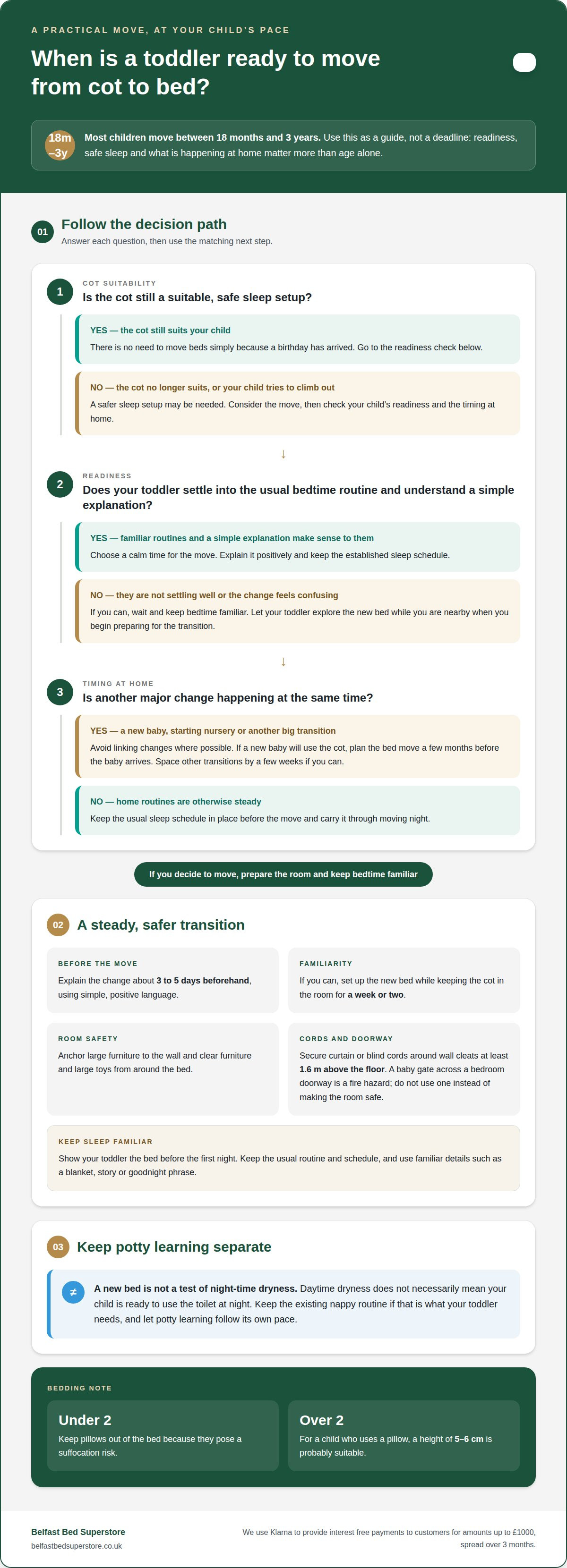
Most children move from a cot to a bed between 18 months and 3 years old. That range is a guide, not a deadline: readiness, safe sleep and what is happening at home all matter. A first big bed for a toddler may be a sensible next step when the cot no longer suits your child, but parents don’t need to change beds simply because a birthday has arrived.
Look for practical signs before deciding. A child trying to climb out of the cot may need a safer sleep setup, while a child who settles well into the usual bedtime routine may find a change easier. Readiness can also depend on whether your toddler understands a simple explanation, such as “your new bed is ready”. If a new baby will use the cot, plan the move a few months before the baby arrives, rather than linking it to the sibling’s arrival.
Timing matters as much as the bed. Keep an established sleep schedule before the move, and avoid adding another major change at the same time, such as starting nursery. If you can, space those transitions by a few weeks. You can set up the new bed while keeping the cot in the room for a week or two, giving your toddler time to become familiar with it. Explain the change about 3 to 5 days beforehand, using simple, positive language.
Make the bedroom safe before your child can get out of bed independently. Anchor large furniture to the wall, clear furniture and large toys from the area around the bed, and secure curtain or blind cords around wall cleats at least 1.6 m above the floor. A baby gate across a bedroom doorway is considered a fire hazard, so don’t use one as a substitute for making the room safe.
Keep bedding simple and suited to your child’s age. For children under 2 years old, keep pillows out of the bed because they pose a suffocation risk. For a child over 2 who uses a pillow, a height of 5-6 cm is probably suitable. A familiar blanket can make the new sleep space feel less unfamiliar.
Before the first night, show your toddler the bed and let them explore it while you’re nearby. If you’re using both beds, keep the cot available during the settling-in period, and stick to the usual sleep schedule on moving night. These steps help your child understand what’s changing while keeping familiar parts of bedtime in place.
2. Separating potty learning from the bed transition
A new bed and potty learning are separate changes to a toddler’s routine. Managing both at once can make it harder to tell what is disrupting sleep. Focus the bed move on getting comfortable with a new sleep space. Let potty learning follow its own pace, rather than making a dry night part of the transition.
Daytime dryness doesn’t necessarily mean a child is ready to use the toilet at night. Night-time potty learning typically takes longer, so your toddler may still need nappies or another familiar arrangement overnight after moving beds. That’s not a reason to delay the move if it’s otherwise appropriate. Treat night-time dryness as a separate milestone, not a test of readiness for a bigger bed.
The usual cot-to-bed window is 18 months to 3 years, but it doesn’t set a deadline for potty learning. Decide which change needs attention first. For example, if your child is moving beds because the cot is no longer suitable, keep the existing nappy routine steady. If there’s no need to change beds yet, avoid starting the transition simply because daytime toilet learning has begun.
Prepare your toddler with one clear explanation: “This is your new bed, and we’ll keep bedtime the same.” Let them look at the bed during the day, then repeat the same simple message at bedtime. If they ask to use the toilet, respond calmly and return to the familiar sleep routine afterwards. This keeps a bathroom visit as part of the night, not a new bedtime activity or a reason to change other routines.
Keep other surroundings steady while your toddler adjusts. For example, avoid changing the bed, moving bedroom furniture and stopping a pacifier all at once. A familiar blanket, story or goodnight phrase can mark the usual end to the day. If your child worries about falling from the new bed, address it as a bed-safety concern, not as part of toilet learning.
Make potty learning easier to manage by keeping daytime practice distinct from bedtime. Offer toilet opportunities as part of the daytime routine, and respond to overnight accidents without pressure. If your child wakes needing the toilet, guide them calmly and help them settle back into bed. Keeping these steps separate gives each new skill its own place while bedtime stays familiar during the move.
3. Bedtime routines and settling into a new bed
Keep the bedtime routine familiar on the first night in the new bed. Follow the same order of steps, such as pyjamas, brushing teeth, choosing two books, then a goodnight cuddle. Familiar details make bedtime predictable while the bed itself feels new. Avoid adding activities to make the change exciting, since a longer routine can create new reasons to delay sleep.
Set clear expectations before the lights go out. Tell your toddler what happens after the story, such as, “It’s time to lie down and rest.” Keep the instruction simple and consistent rather than introducing several new rules at once. If your child asks for another book after the agreed two, calmly remind them that story time is finished. Repeating the same response keeps boundaries clear.
Plan for your toddler to test those limits. Some parents report returning a child to bed 20-30 times on the first night. Keep each return calm and brief: guide them back, use the same goodnight phrase, and avoid turning the moment into conversation or play. A predictable response is easier for a child to understand than changing the rule after each attempt.
If your toddler repeatedly gets out of bed, consider whether bedtime is too early for their current sleep pattern. You can move bedtime later in 15-minute increments, then observe whether settling improves. Keep the rest of the routine unchanged while you adjust the timing. Changing one part at a time makes it easier to see whether the new bedtime helps or whether another boundary needs attention.
Some children settle into a bigger bed within a week or two, while others take longer. Keep the same sequence each evening during that adjustment period, even if the first nights are unsettled. A toddler clock may help children aged 2.5 years and up understand when to stay in bed and when it’s time to get up. Use it alongside a clear bedtime rule, not as a replacement for one.
Boundary-testing can also appear after the initial settling period. It may begin three to four weeks after the move, so respond consistently rather than assuming the routine has failed. For example, if your child gets up to ask for a drink, offer it before the story the next evening, then keep the agreed bedtime steps unchanged. A steady routine gives your toddler the same cues each night and makes it easier to adjust without adding new habits.
4. When are children ready to leave their toddler bed?
The move from a toddler bed to a larger bed often starts at around 5 years old. Look at your child’s height, comfort and the bed’s manufacturer limits, rather than using age alone. If your child has reached the height or weight limit, or looks cramped on the mattress, it may be time to change. A toddler bed can be a useful first step, but some families may need a single bed a year or two later.
A single bed offers more room to grow and can suit a child who’s ready for extra space. In the UK, a single bed is a familiar choice; “twin” and “full-sized” are terms used in other markets. When choosing between a toddler bed and a single, weigh the toddler bed’s familiar scale against the longer-term use of a single. Consider how much floor space will remain for play and safe movement around the room, too.
Low cabin beds may suit older toddlers closer to 3–4 years old, while mid and high sleepers are recommended for children aged 6 years and over. A cabin style can add a sense of independence, but assess the height and access against your child’s confidence. Avoid choosing a raised design simply for storage if your child is not ready to climb in and out comfortably.
A mattress on the floor keeps the sleeping surface low, which may help a child adjusting to more freedom. It also takes up floor space and may not offer the storage or structure of a bed frame. Keep boundaries clear: explain where bedtime happens, and keep the route from the mattress to the bedroom door free of obstacles. A low bed can still allow a child to get up and explore.
For safety, check the bed manufacturer’s height and weight limits, make sure the mattress fits the frame, and consider a detachable bed rail while your child adjusts. A young child’s mattress should be no more than three feet off the ground. These checks help you choose a suitable setup without relying on a particular age label.
There isn’t one price that applies to every toddler or single bed. The total depends on the style, materials, frame size, storage features and whether a mattress is included. A simple frame and a cabin bed with built-in storage are different purchases, so compare what each option includes before deciding.
Choose a style that suits your child’s room and daily routine. Drawers beneath a bed can make space for bedding, while a bedside table keeps a book or water within reach. A simple frame may leave more room for toys. Prioritise a comfortable mattress, clear bedtime boundaries and a design your child can use confidently in the morning.
5. Bed and mattress sizes by age
For a toddler in the UK, a 70 x 140 cm toddler mattress is a common size to consider. A single mattress measuring 90 x 190 cm gives more room to grow and is listed for children aged 5 years and over. Match the mattress to the bed frame, because a size mismatch can leave gaps or prevent a proper fit.
| Bed stage | Mattress size | Age guidance |
|---|---|---|
| Cot | 60 x 120 cm | Cot beds are recommended for ages 0–1 year |
| Toddler bed | 70 x 140 cm | Toddler beds are recommended for ages 1–5 years |
| Small single | 75 x 190 cm | Recommended from age 5 years |
| Single | 90 x 190 cm | Recommended from age 5 years |
| Euro single or twin | 90 x 200 cm | Recommended from age 5 years |
Use these ages as a starting point, then consider your child’s height and bedroom layout. A 70 x 140 cm mattress keeps the bed compact, while a 90 x 190 cm single can avoid an early switch to a larger size. Measure the available floor area, including space to walk around the frame and open bedroom doors.
There isn’t one firmness or thickness that suits every toddler mattress. Choose a supportive mattress designed for the child’s bed, and follow the bed maker’s guidance on fit and mattress depth. The frame, mattress dimensions and any fitted guard all affect the setup, so check them together rather than choosing thickness in isolation.
Mattress height also affects how easily a child can climb in and out. For a young child, the mattress should be no more than three feet off the ground. Include the mattress when considering the total sleeping height, especially with raised beds or frames that have side rails.
A mattress on the floor can be a low-level option during a change of bed. Keep it on a clean, dry surface and leave the route across the room clear. If the mattress sits inside a frame later, check that its dimensions match; a cot mattress of 60 x 120 cm won’t fit a toddler bed made for 70 x 140 cm.
Choose the mattress size before buying bedding, as fitted sheets need to match its dimensions. A mattress protector can help shield the surface from everyday spills, while a familiar blanket keeps the sleep space recognisable. For a comfortable fit, explore mattress options suited to your child’s bed size.
Belfast Bed Superstore
Belfast Bed Superstore can help you explore mattress choices as you plan your child’s move to a bigger bed. Its range includes Hypnos Mattresses, Sealy Mattresses, Relyon Mattresses and Dunlopillo Mattresses, giving you options to consider alongside the bed size and bedroom space.
We use Klarna to provide interest free payments on amounts up to £1000, spread over 3 months. This may be useful when you’re planning a purchase, while keeping the decision focused on a suitable mattress and a comfortable sleep setup.
If you’re ready to discuss your child’s bed and mattress needs, contact Belfast Bed Superstore in Cambridge.
Make the next step feel right for your family
A new bed can support your child’s growing independence, so involve them in small, reassuring ways. Let them choose a familiar blanket or help decide where a favourite bedtime book will go. These simple choices make the new sleep space feel personal without turning bedtime into a negotiation.
As you plan a first big bed for a toddler, think beyond the first night. The right setup should suit your child’s comfort, your bedroom layout and the routines that help your family rest. If you’re weighing up mattress options or need help finding a suitable fit, Belfast Bed Superstore can help you consider the choices in Cambridge and Cambridgeshire.
Contact Belfast Bed Superstore today to talk through your child’s bed and mattress needs. A considered choice can help make this next step feel comfortable and welcoming for everyone.
Frequently Asked Questions
What bed is best for your child?
The best bed is one your child can use comfortably and that fits the room. Consider how easily they can get in and out, whether the mattress fits the frame, and how much floor space remains for everyday movement. A compact toddler bed may suit a smaller bedroom, while a single bed can offer more room to grow. Choose based on your child’s needs, not appearance alone.
When Should You Make the Transition?
Most children move from a cot to a bed between 18 months and 3 years, but the right moment depends on the child and family circumstances. Choose a relatively settled period rather than combining the change with another major event. For instance, avoid planning the move just before starting nursery if you can separate those adjustments. A familiar routine can then remain steady while your child gets used to the new sleep space.
What else should I consider?
Think about how the bed will work during the day as well as at night. Measure the bedroom so drawers can open and the door can swing freely, then decide where bedding and clothes will be stored. Check that the mattress size matches the frame, and consider whether a bed rail would help your child feel settled. These practical details can make the new arrangement easier to use.
What type of bed?
A toddler bed offers a smaller sleep space, while a standard single can provide room to grow. A floor-level mattress is another simple arrangement, but consider how it will fit into the bedroom and your regular cleaning routine. Cabin beds are typically suited to older toddlers closer to 3–4 years, while mid and high sleepers are recommended for children aged 6 years and over.
When are children ready to leave their toddler bed?
The move to a larger bed often starts at around 5 years old, though age alone doesn’t determine whether a child has outgrown their current bed. Check the toddler bed manufacturer’s height and weight limits, and notice whether your child seems cramped when sleeping. If the bed remains comfortable and within its stated limits, there’s no need to switch solely because other children have moved on.
When to make the move to the toddler bed?
Consider the change when the cot no longer meets your child’s needs or your family’s sleeping arrangements need to change. The usual cot-to-bed window is 18 months to 3 years, but readiness varies. If the cot is still working well and there’s no practical reason to move, waiting can be reasonable. Plan the change for a time when you can keep the usual bedtime pattern consistent.
When should a toddler move from a cot to their first bed?
Most toddlers move from a cot to a bed between 18 months and 3 years. Use that range as a guide, then consider your child’s comfort and the cot’s suitability. For example, if your toddler is becoming unsettled in the cot, think about whether a bed would make the sleep arrangement more appropriate. Prepare the bedroom and explain the change simply before the first night.
Toddler bed vs single bed: which is better for a first big bed?
A toddler bed can suit families looking for a compact step from a cot, while a single bed offers more space and may last longer. Consider the room dimensions, your child’s confidence getting in and out, and whether you’d prefer to avoid buying another bed soon. A toddler bed may feel less imposing; a single can be practical when the bedroom has enough space.


