

The cheapest mattress can become the costliest choice in a rental property. The best mattress for rental properties is usually one that balances guest comfort, durable construction and the expected replacement cycle. A medium-firm pocket-sprung mattress can be a practical starting point.
Weigh the upfront cost against how well the mattress is likely to handle frequent use. Guests may have different sleeping positions and preferences, so a versatile feel can be a sensible choice. The right option also depends on the type of let, how often the bed is occupied and whether guests share it.
This guide explains how pocket springs can support sleepers and limit the feel of movement, what to look for in a contract mattress, and why medium-firm comfort can suit a range of guests. It also covers the factors that shape replacement costs, so you can make a practical choice for your property. We use Klarna to provide interest free payments on amounts up to £1000, spread over 3 months.
Key Takeaways
- Match mattress size to the room and the guests you expect, with flexible configurations worth considering for larger beds.
- Pocket springs respond individually to movement, which can help provide support while reducing disturbance between bed sharers.
- Choose a mattress built for regular use, and factor its condition and frequency of occupancy into replacement planning.
- A medium-firm feel can be a practical middle ground for guests who sleep in different positions.
- Weigh the upfront cost against durability and protection needs; a mattress protector can help guard against spills and stains.
1. What is the best mattress for a rental property?
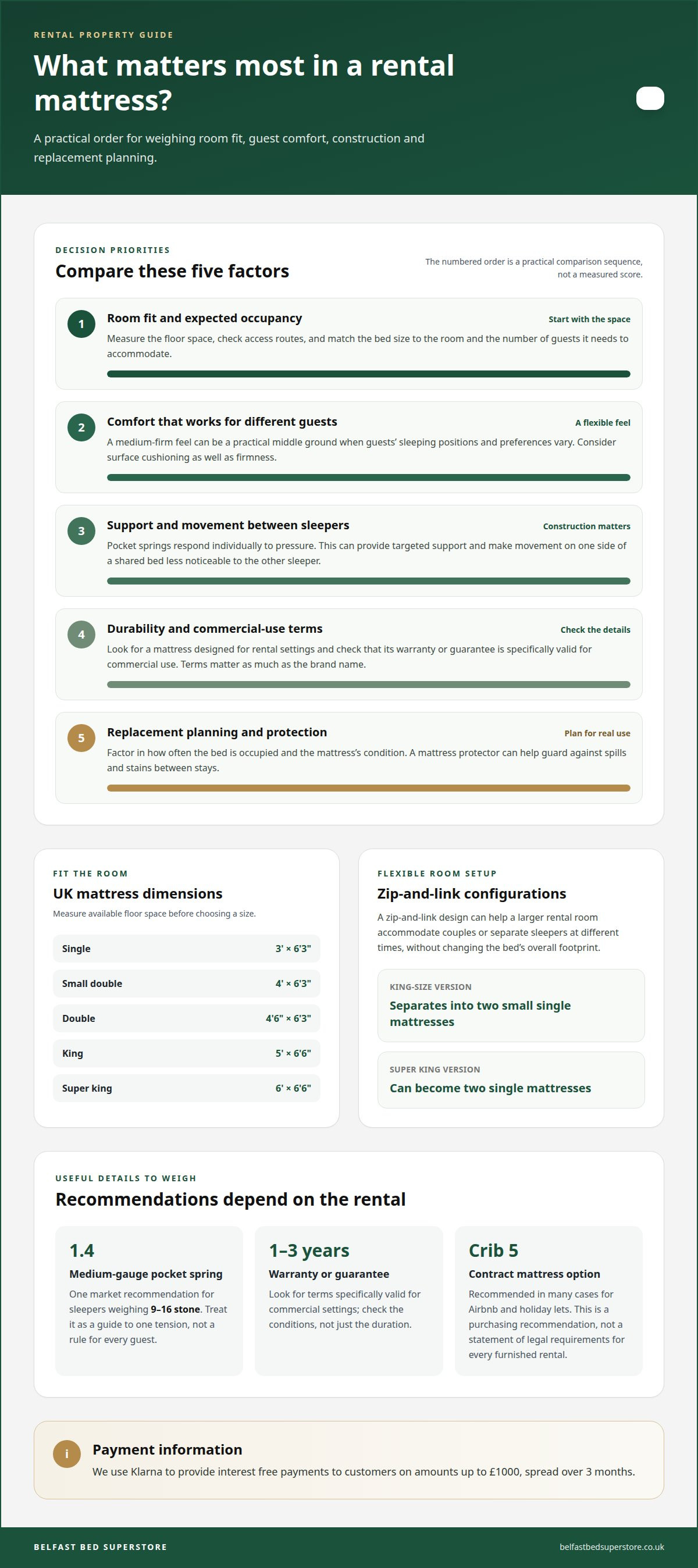
For many UK rental rooms, a medium-firm pocket-sprung mattress offers a practical balance of support and comfort. A double suits many rooms, but the best size depends on the available floor space and how many people the bed needs to accommodate.
For brand comparisons, consider Hypnos, Sealy and Relyon mattresses. Look for a warranty or guarantee of at least 1-3 years that is specifically valid for commercial settings; the terms matter as much as the brand name. Hypnos mattresses are one option to compare alongside the other brands.
Holiday lets often need to accommodate changing guest groups, so check the bed size against the room layout and intended occupancy. A host recommendation for holiday rentals is a 12-inch mattress, while memory foam options are available in 6, 8, 10 and 12 inches. For long-term rentals, consider expected use and replacement planning as well as the initial fit.
Measure the available floor space before choosing a size. In the UK, a small double is 4'0" wide, a double is 4'6" wide, and a king bed is 5'0" wide. Standard mattress dimensions are 3' x 6'3" for a single, 4' x 6'3" for a small double, and 4'6" x 6'3" for a double. A king mattress measures 5' x 6'6", while a superking measures 6' x 6'6".
A zip-and-link design can add flexibility to a larger rental room. A king-size version can separate into two small single mattresses, while a super king can become two single mattresses. This setup can suit properties that host couples and separate sleepers at different times, without changing the bed’s overall footprint.
In a compact room, a small double offers more sleeping width than a single while taking up less space than a standard double. Check the mattress dimensions against doorways and access routes to make delivery and room setup easier. A mattress protector can help guard against spills and stains between stays.
For fire-safety expectations, Crib 5 contract mattresses are recommended in many cases for Airbnb and holiday lets. This is a purchasing recommendation, not a specific statement of UK legal requirements for every furnished rental. Consider the property type and its use when selecting a mattress, then balance suitable size, spring support, thickness and commercial-use warranty terms.
2. Pocket-sprung support and reduced motion transfer
Pocket springs sit in separate fabric pockets, so each spring responds to nearby pressure. This independent movement can provide targeted support as sleepers change position. It can also limit motion transfer, making movement on one side of a shared bed less noticeable to the other sleeper. That can make pocket springs a comfortable option for couples staying in a rental.
A rental-mattress recommendation in the market uses a 1.4 medium-gauge pocket spring for sleepers weighing 9-16 stone. Treat that as a guide to one tension, not a rule for every guest. Guests vary in body weight, sleeping position and preferred feel. A medium-gauge spring is one option to assess against the range of sleepers likely to use the room.
Firmness and support are related, but they describe different qualities. Support is how the mattress holds the body; comfort also depends on the surface layers and sleeping position. Side sleepers may prefer a softer or medium surface that cushions the hips and shoulders. Firmer surfaces may suit front and back sleepers who prefer a more even feel. A medium mattress can offer a useful middle ground when guest preferences are unknown.
Memory foam responds to the body’s contours and creates a sink-in sensation that some sleepers enjoy. It may retain heat, making it less suitable for guests who sleep hot. Latex or gel foam may suit people seeking a cooler feel. An open-coil mattress can be a budget-friendly option that still provides support and comfort.
Motion isolation and edge support address different needs. Pocket springs can reduce the feel of movement across the bed, while a stable edge can make it easier to sit down or use more of the mattress surface. Edge performance depends on the overall construction, not just the spring type. Consider how guests will use the bed, including whether they sit on the edge while dressing.
Pressure relief depends on how a mattress responds to the shoulders, hips and other contact points. A very firm surface may feel uncomfortable to a side sleeper, while a very soft one may not feel supportive to someone sleeping on their front. For a rental, compare spring support, surface cushioning and motion control rather than relying on the firmness label alone.
Compare construction and comfort together when reviewing pocket-sprung mattress options. For a shared double, think about whether independent spring response could help limit disturbance; for a single, prioritise a feel that suits its expected sleeper. This practical comparison helps narrow the choice without assuming one mattress suits every guest.
3. Durable contract mattresses for rental properties and HMOs
Frequent occupancy puts repeated pressure on the same sleeping surface, so durability depends on construction, care and use. A contract mattress is designed for rental settings; assess its commercial-use warranty terms alongside its comfort and support. For an HMO, where rooms may be occupied continuously, condition checks help identify sagging before it becomes a guest complaint.
Which mattress materials are most durable for rental use? No single material guarantees the longest life in every property. A contract mattress can be a practical starting point, while some entry-level foam mattresses may settle faster because they are often one-sided. Excess stress can shorten a mattress’s lifespan.
Look beyond the word “firm” when assessing resistance to sagging. A firm surface alone doesn’t show how well a mattress will hold its shape with repeated use. Check whether it supports the sleeper evenly, and look for dips, loose upholstery or areas that feel different from the rest. These can signal wear even when the outer fabric looks presentable.
Use matters as much as the material. Replace a rental-room mattress when its condition or use shows it is no longer providing reliable support. Memory foam mattresses discussed in the market have an estimated end-of-life of around 8 years, but that figure isn’t a reason to keep a visibly worn mattress in service. Actual condition and occupancy should guide the decision.
Simple care can help distribute wear. Rotate rental mattresses monthly, following the care instructions for the specific design. Rotate a single-sided mattress; rotate and flip a double-sided one. This spreads pressure across different areas instead of repeatedly loading the same part of the surface. A mattress protector can also help guard the upholstery against spills and stains, making routine cleaning easier.
Cleanliness matters in shared accommodation and holiday lets. Deep-clean the mattress and bed frame every quarter, including seams and edges. These areas can collect dust and debris even when the sleeping surface looks clean. After cleaning or a change of tenancy, record the mattress’s condition, noting visible sagging, fabric damage or an uneven feel.
A luxury finish can make a room feel more polished, but it doesn’t replace robust construction or practical upkeep. Balance appearance with expected occupancy, mattress condition and ease of care. Treat the warranty as one part of the durability decision, alongside upholstery quality, construction and how the mattress will be used.
4. Medium-firm mattresses as a flexible rental-property option
For most guests, a UK double mattress with a medium-firm feel is a practical starting point. A standard double measures 4'6" x 6'3", and medium-firm comfort can suit sleepers in different positions. It offers cushioning for side sleepers while retaining a firmer feel for front and back sleepers.
Different constructions create different sleeping sensations. A hybrid combines a spring support unit with comfort layers, while an innerspring mattress relies on its coil system for support. Foam mattresses use cushioning layers to shape the feel, and latex is another option. Compare materials and construction instead of assuming every mattress in a category feels the same.
Memory foam adapts to the body’s contours and creates a sink-in sensation. This can suit guests who prefer a close, cushioned surface, but memory foam may retain heat. Latex or gel foam may be alternatives for sleepers seeking a cooler feel. For a short-term rental with varied occupancy, weigh surface comfort against the preferences guests may have.
A boxed memory foam mattress can simplify transport through narrow hallways or staircases. After opening, it takes about 24-48 hours to expand, so allow that time before guests arrive. This timing matters when preparing a room between bookings. Follow the mattress instructions for setup, and avoid dressing the bed before it has fully expanded.
Ease of care also matters. For a room exposed to spills, check the care instructions and choose a surface suited to routine cleaning. A mattress protector can help prevent stains from bodily fluids or spills. A waterproof protector is another layer to consider, but don’t assume the mattress itself is waterproof unless its product description says so.
Firmness labels are useful when considered alongside the mattress layers and support system. A medium-firm mattress can be a versatile choice when guests’ preferences are unknown, but it won’t suit everyone equally. Consider who uses the room, whether the bed is shared and whether a spring, foam or hybrid construction best matches the intended comfort.
For a holiday let, plan around changing guests and the time available between stays. A term rental may have a more consistent occupant, making their comfort preferences easier to consider. Use the room’s intended bed size, the mattress construction and its care requirements together when narrowing options. You can browse mattress options to compare different constructions.
5. Budgeting for rental-property mattress replacement
For a UK rental, set the mattress budget according to occupancy, size, construction and replacement needs, not purchase price alone. Costs depend on the room and expected use, so allow for the mattress, bedding, protection and the practical expense of replacing it.
Start with an inventory of every bed. Record its size, condition, room use and expected booking pattern. A single in a rarely used spare room may need a different specification from a double used throughout a busy holiday season. Group similar beds together, then plan replacements based on condition and frequency of use.
Choose by purpose, not just by price. A basic option may suit a low-occupancy room where replacement is straightforward. A mid-range mattress can balance comfort and regular use. A more substantial option may make sense in a premium let where guests expect a considered bedroom. At every price level, weigh construction and care needs against how often the room is occupied.
A replacement plan can make spending easier to manage. Record each mattress’s purchase and inspection dates, then note changes such as sagging, damaged upholstery or persistent stains. If several rooms need attention, prioritise mattresses with visible wear or heavier use. This spreads replacement decisions over time instead of leaving every bed until the last minute.
Budget for the full bed setup, too. A mattress protector can help guard against spills and stains, while clean, well-fitting bedding helps prepare the room for its next guests. Include the effort and timing needed to remove an old mattress and set up its replacement. A boxed mattress, for example, needs 24-48 hours to expand after opening, so plan around that wait before a booking.
Keep the replacement plan flexible as occupancy changes. A room used more often than expected may need attention sooner, while a lightly used bed can stay in service if its condition is sound. Review the inventory when bookings or tenancy patterns change, and adjust priorities before the next room refresh.
For a useful budget, list each bed, its condition, the expected use and the replacement priority. Then choose a mattress construction that fits each room, rather than applying one specification across the whole property. Explore mattress options as you plan a practical replacement for your rental.
Belfast Bed Superstore: Mattress Protectors
Belfast Bed Superstore offers mattress protectors to help guard rental beds against spills and stains. A protector is a practical addition between guest stays, alongside regular mattress care. For a new mattress, Hypnos, Sealy and Relyon are among the available brands, with options to consider according to each room’s needs.
Choose a protector that fits the mattress securely and suits the way the bed is used. Pairing protection with a suitable mattress can simplify routine room preparation, especially in a holiday let with changing guests. Match the choice to the bed and the property’s requirements.
Make your next bedroom update count
A rental bedroom is part of the stay, not just a place to sleep. Treat each mattress decision as an opportunity to make the room comfortable and considered for its guests. A clear plan for the room’s purpose can help you choose confidently rather than defaulting to the same option everywhere.
When choosing the best mattress for rental properties, consider how the bed fits each room and the experience you want guests to have. Belfast Bed Superstore offers Hypnos, Sealy and Relyon mattresses to consider as you plan an update. A mattress protector can also help care for the bed between stays.
Take the next step when you’re ready to explore suitable options for your property. Contact Belfast Bed Superstore to discuss your mattress needs and move towards a more welcoming rental bedroom.
Frequently Asked Questions
What is the best mattress for a rental property?
A medium-firm mattress is a useful starting point when guests’ preferences vary. To find the best mattress for rental properties, weigh comfort against how often the bed is used and how easily it can be cared for. A shared bed may benefit from pocket springs that reduce the feel of movement. A protector and clear care instructions can also help keep the mattress presentable between bookings.
What type of warranty should a mattress have?
Look for warranty or guarantee terms that explicitly cover commercial settings, and check the duration and exclusions. A market recommendation is at least 1-3 years of cover valid for commercial use. A domestic warranty may not apply to a rental mattress, so read the terms for permitted use, what faults are covered and how to make a claim. Keep purchase details and care records together for straightforward reference.
How often to replace rented room mattresses?
Plan to assess rental-room mattresses for replacement every 3-5 years, adjusting for condition and frequency of use. A room occupied continually may show wear sooner than an occasional-use guest room. Look for persistent dips, damaged upholstery or a noticeable change in support. These signs can matter more than the mattress’s age alone, so record inspections and respond to wear rather than waiting for a fixed date.
What else should I take into account?
Consider the bed base, room access, cleaning routine and type of tenancy. The mattress needs a compatible base, and stairways or doorways can affect how easily it reaches the room. In a shared house, plan cleaning between occupants and protect the sleeping surface from spills. For a holiday let, allow time to prepare the room between bookings, particularly if a boxed mattress needs to expand before use.
What is the Best Bed for Airbnb Vacation Rentals?
A double is a practical choice for many rental rooms, while a zip-and-link arrangement can add flexibility in a larger room. Choose based on the floor space and the guests the property is intended to accommodate. In a family-focused let, separate sleeping options may make the layout more adaptable. Leave enough space around the bed for guests to move comfortably and for housekeeping.
What is the Best Bedding for Airbnbs?
Choose bedding that fits the mattress closely and is easy to wash and change between stays. Keep a consistent set for each bed size, including fitted sheets, pillowcases and duvet covers, to simplify room preparation. A mattress protector adds a layer between the bedding and mattress, helping guard against spills and stains. Select fabrics that feel comfortable and suit the property’s laundry routine.
What size should you buy?
Measure the bed base and available room space before ordering, then match the mattress to the frame. UK sizes include a 3' x 6'3" single, a 4'6" x 6'3" double and a 5' x 6'6" king. A double suits many rental rooms, while a smaller room may call for a small double. Check access routes as well as floor space to make installation easier.
How often should landlords replace mattresses in rental properties?
Use the mattress’s condition and occupancy to guide replacement. A rental-room mattress may need replacing every 3-5 years depending on use, while a holiday-let guide suggests about every 7 years. These are different planning references, not a substitute for inspecting the bed. Replace sooner if sagging, damage or persistent cleanliness issues affect its condition, and keep a record of checks to help plan future spending.


