

Natural fillings are not automatically the best choice for every sleeper. Silk and cotton mattress fillings can create a breathable, comfortable feel, but their performance depends on how they are used in the mattress.
When comparing natural materials with memory foam or synthetic fillings, comfort is only part of the decision. Cotton’s airy fibres can encourage airflow, while silk feels soft and can absorb moisture without feeling damp. These qualities may appeal if you prefer a less enclosed sleep surface, but fibre length, layering and mattress construction also affect how it feels over time.
This guide compares silk and cotton with synthetic options for temperature regulation, durability, comfort and construction. It also explains how fillings usually shape the comfort layer, while the support system does much of the structural work, helping you choose with confidence.
Key Takeaways
- See how natural fibres can manage moisture and airflow, and what that may mean for a fresher-feeling sleep surface.
- Understand how filling materials influence warmth and comfort, so you can weigh them against your own sleep preferences.
- Learn why fibre length and mattress construction affect how fillings feel and how they may compress over time.
- Discover how comfort fillings work alongside spring systems, and why the filling alone doesn’t determine a mattress’s support.
- Compare natural fillings with memory foam and synthetics to identify the differences that matter when choosing a mattress.
Why choose a mattress with natural fillings?
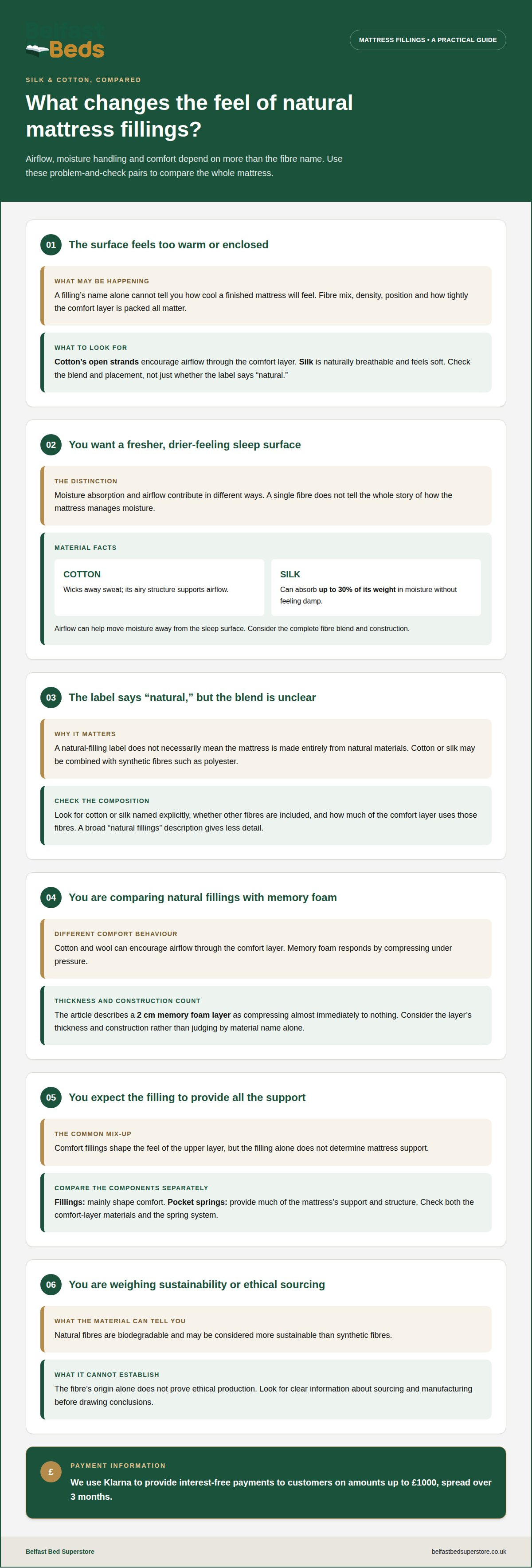
For hot sleepers, cotton’s airy fibres encourage airflow, while silk can absorb moisture without feeling damp. Natural fibres are biodegradable and may be considered more sustainable than synthetic fibres, but the material alone does not prove ethical sourcing.
Breathability and Temperature Regulation
Cotton is a plant-based fibre with open strands that encourage airflow through the comfort layer, potentially reducing heat build-up at the sleep surface. Silk, an animal-based fibre, feels soft and is naturally breathable. For hot sleepers, the blend and placement of these fibres matter as much as their names.
Natural fillings can be blended, so a mattress may combine cotton or silk with other fibres. Plant fibres can contribute airflow and moisture-wicking properties, while animal fibres can offer insulation and breathability. This combination may suit people who prefer a balanced feel rather than a uniformly warm or cool surface.
Consider how the mattress is made, not just whether its label mentions natural materials. A breathable filling in a tightly packed comfort layer may feel different from the same fibre arranged to allow more airflow. The fibre mix, density and position all influence temperature and comfort.
Moisture Absorption
Moisture management is another reason to consider natural fillings. Cotton wicks away sweat, helping the mattress surface feel fresher and drier. Silk can absorb up to 30% of its weight in moisture without feeling damp. These properties can help manage moisture during sleep, though the overall feel also depends on the mattress’s construction.
Absorbency and breathability work together. A filling can take in moisture, while airflow helps move it away from the sleep surface. Cotton’s airy structure supports this movement; silk’s absorbency contributes differently. Consider the complete fibre blend rather than treating one material as the sole answer.
A natural-filling label does not always mean a mattress is made entirely from natural materials. Cotton or silk may be combined with synthetic fibres such as polyester for comfort or durability. Check the stated composition to see what the mattress contains and how much of the comfort layer is made from cotton or silk.
Biodegradable natural fibres may be a more sustainable choice than synthetic fillings, but sourcing requires separate consideration. Cotton comes from cotton plants and silk from silkworms; those origins alone do not establish ethical production. Look for clear information about sourcing and manufacturing before drawing conclusions about a mattress’s environmental or ethical credentials.
Temperature regulation in natural mattress fillings
Natural fibres differ in how they handle warmth, airflow and moisture. A finished mattress also combines fillings with other materials and a spring system.
The fibre name alone cannot establish whether a finished mattress meets UK fire-safety requirements. Refer to the maker’s information for the complete mattress. Wool’s natural flame-retardant property does not establish the same property for silk or cotton.
Natural Fibre Properties
Wool’s natural crimp helps it retain shape, while its insulation and breathability can help regulate temperature. Cotton’s open structure encourages airflow and can reduce overheating. Silk is a soft animal fibre that absorbs moisture, while natural latex is dense foam made from tree sap. Each material contributes a different feel, so consider the stated filling blend.
Wool is described as dust-mite resistant and antibacterial. Cotton is described as naturally chemical-free and suitable for people with sensitivities or allergies. These properties do not establish how a particular sleeper will respond. Check the product’s full composition and the specific fibres used instead of relying on a broad “natural” description.
To identify silk or cotton fillings, read the mattress composition and look for each fibre named explicitly. Check whether the description explains the blend, since natural fibres can be combined with synthetic ones. A label that only says “natural fillings” gives less detail about the comfort layer.
Follow the maker’s care instructions for the specific mattress. For rotation or turning, use the manufacturer’s guidance for that model. Mattress construction varies, so a routine suitable for one design may not suit another. Follow the product instructions for cleaning too, rather than assuming every silk- or cotton-filled mattress can be washed in the same way.
Comparison with Memory Foam
Natural fibres and memory foam create different comfort experiences. Cotton and wool can encourage airflow through the comfort layer, while memory foam responds by compressing under pressure. A 2 cm memory foam layer is described as compressing almost immediately to nothing, so thickness and construction matter when judging its contribution.
Neither filling type alone determines the mattress’s temperature regulation. Consider how the upper comfort layer manages warmth, then look at the materials beneath it. Pocket springs provide much of a mattress’s support and structure, while fillings mainly shape comfort. This distinction explains why two mattresses with similar fibres may still feel different.
For a useful comparison, read the stated filling composition, identify the materials in the comfort layer, and consider the spring system separately. A mattress may combine natural fibres with synthetic ones such as polyester. This can affect its feel and construction, so the full description is more useful than a single material name.
Mattress filling durability and compression
A mattress can feel luxurious at first, but its comfort layers change under repeated sleeping pressure. Durability depends on construction, use and care, so a fibre name alone cannot tell you how long the surface will retain its feel. Silk, cotton, wool and latex each behave differently in a finished mattress.
Fibre length is one useful clue. Short fibres can create a softer, fluffier feel, but are generally more fragile and may compress more easily when used alone. Longer fibres tend to feel firmer and are more durable. Mattress makers often blend short and long fibres to balance a cushioned surface with a more resilient structure.
Silk illustrates this balance. While specialist merchants such as Trade80Silks UK supply premium silk and natural fibres to high-end textile and bedding manufacturers, raw material quality alone does not make a finished layer immune to compression. The amount of silk, its placement and the surrounding materials all affect how the comfort layer responds over time.
Imagine a soft surface gradually feeling flatter in the areas under the most pressure. That change may relate to fibre type and layer construction, rather than the mattress losing its spring support. Pocket springs provide much of that support, while fillings mainly affect comfort. Separating these functions helps you understand which part may be changing.
Natural fillings can include wool or cotton alongside shorter fibres. Wool’s natural crimp helps it retain shape and comfort over time. Cotton may be blended with softer fibres or horsehair to help those fibres retain their height. The blend matters: durability reflects the combination, not simply its softest or most luxurious ingredient.
Latex is a different option: dense foam made from tree sap, rather than a loose textile fibre. Its structure gives it a distinct feel from silk or cotton, while overall support still depends on mattress construction. Compare the filling description with the spring system instead of treating latex as a measure of whole-mattress durability.
To assess lasting comfort, look for clear descriptions of the filling blend and construction. Note whether the mattress combines shorter and longer fibres, and whether its comfort layer includes silk, cotton, wool or latex. Then consider how you will use the mattress and follow its care guidance. These details offer a more useful picture of performance than a single natural-fibre claim.
Mattress construction, fillings and spring systems
A mattress combines its spring unit, comfort fillings and outer construction. Natural mattresses are usually tufted, with tufts helping hold fillings in place and limit shifting over time. Even a well-described fibre blend needs to stay evenly positioned. Check the filling layers and how they are secured, not just the material named on the label.
Pocket springs and fillings play different roles. Pocket springs provide much of a mattress’s support and structure, while fillings mainly shape comfort. The comfort layer influences softness and cushioning; the spring system supports the mattress beneath it. This distinction is useful when choosing a particular feel: a soft surface does not automatically mean the underlying support is soft too.
Placement also affects the finished mattress’s feel. Longer fibres are often placed deeper in comfort layers, while shorter fibres can sit nearer the top. This arrangement may combine a more durable base with a softer surface. Cotton may be blended with softer fibres or horsehair to help those fibres retain their height.
Filling quantity offers another construction clue. A 1200 GSM filling is described as providing a thick comfort layer with more loft. By contrast, a 200 GSM polyester layer is described as wafer-thin and providing hardly any benefit on its own. GSM alone doesn’t describe the whole mattress, but it helps distinguish a substantial layer from a light surface addition.
Fibre blends can bring different textures into the same mattress. A 50/50 mixture combines two fibres in equal proportions, making the stated blend easier to understand. Pure cotton is categorised as natural, soft and high-end; silk is categorised as natural, soft and expensive. These descriptions relate to the filling, not the mattress’s spring support or overall construction.
Cashmere can be up to three times more insulating than standard wool, so its position in the comfort layers matters when assessing warmth. A mattress may combine cotton, silk, cashmere or British wool, with each fibre contributing to the complete construction. Read the composition alongside details about tufting, layer placement and pocket springs. This gives you a clearer picture of how softness and support work together, rather than treating one filling as the whole mattress.
Silk compared with memory foam and synthetic fillings
Silk, memory foam and polyester create different kinds of mattress comfort. Silk is a natural animal fibre with a soft, luxurious feel; memory foam compresses under pressure. Synthetic fibres such as polyester can also feature in comfort layers. The useful comparison is not simply natural versus synthetic, but what each material contributes to the complete mattress.
Silk can add softness and resilience, but it’s a short fibre and may compress more easily when used alone. Mattress makers often blend shorter fibres with longer ones to improve durability. Memory foam works differently: a 2 cm layer is described as compressing almost immediately to nothing. That example shows why the layer’s thickness and construction matter alongside its material.
Polyester is not automatically a sign of poor construction. Natural mattresses may combine natural and synthetic fibres to add durability or comfort. However, a mattress advertised as containing natural fibre can contain as little as 1% natural fibre blended with polyester. Read the stated composition to understand whether natural material is a substantial part of the comfort layer.
Compare the filling description with the mattress’s other components. Natural fillings mainly contribute comfort, while pocket springs provide much of the support and structure. A silk-rich surface and a memory foam layer may feel different, but neither description alone tells you how the whole mattress supports you. Consider the filling, its position and the spring system together.
For a practical comparison, look for three details: the named materials, their proportions and their position in the layers. A description naming silk and polyester is more useful than a broad claim about natural content. Blends matter too: silk may be combined with longer fibres, while synthetic fibres may be included for a stated comfort or durability purpose.
The best fit depends on the feel you want. Silk may suit someone seeking a soft, premium natural filling; memory foam offers a distinct pressure-responsive surface. Polyester’s role depends on how it is blended and used. Compare the full construction rather than assuming one category always lasts longer or feels cooler. For a clearer view of available mattress styles, browse mattress options and consider which filling and support combination suits your preferences.
Belfast Bed Superstore: Mattress Protectors
Belfast Bed Superstore offers mattress protectors as a practical addition to your mattress choice. A protector can help shield the surface from everyday marks while preserving the feel of its comfort layers. Consider one alongside filling composition, spring construction and care guidance.
If you’re comparing mattress options, Belfast Bed Superstore also offers Hypnos, Sealy and Relyon mattresses. Comparing their construction and materials can help you focus on the feel and support that suit your preferences, rather than choosing by filling name alone.
For help choosing a mattress protector or exploring these mattress options, contact Belfast Bed Superstore.
Choose the feel that suits your next night’s rest
Let your preferred sleep feel guide your next step. If you’re considering silk and cotton mattress fillings, focus on how the complete mattress fits your comfort preferences rather than choosing by fibre name alone. Exploring mattress options can help turn material details into a choice that suits your bedroom.
Belfast Bed Superstore offers Hypnos, Sealy and Relyon mattresses, giving you options to consider as you narrow down the feel and construction you prefer. We also use Klarna to provide interest free payments on amounts up to £1000, spread over 3 months.
For friendly guidance on your next step, contact Belfast Bed Superstore. A more comfortable night starts with a choice that feels right for you.
Frequently Asked Questions
Are Silk Mattresses Any Good?
Yes, a silk mattress can suit sleepers who value a soft, luxurious surface and moisture management. Silk alone does not determine the bed’s support; that depends on its full construction and spring system. Before choosing, compare the stated fibre blend with your preferred firmness. A silk-rich comfort layer may feel different from one that combines silk with longer fibres.
How much to spend on mattress fibres?
There is no single spend that guarantees the right mattress or filling quality. Compare the stated fibre composition, comfort-layer depth and spring system, then weigh these against the feel you want. A clear description helps you understand what the mattress contains. Do not judge value by a premium material name alone, since construction and the amount of each fibre matter too.
What’s the difference between long and short fibres?
Long fibres tend to feel firmer and are generally more durable, while short fibres can create a softer, fluffier surface. For example, a maker may place longer fibres deeper in the comfort layers and shorter fibres nearer the top. This arrangement can combine a more resilient base with a softer sleeping surface. The finished feel depends on the blend and placement.
What are silk and cotton mattress fillings made from?
Silk filling comes from silkworms, while cotton filling comes from cotton plants. They are different natural fibres, so their feel and role in a mattress vary. A mattress may use either fibre alone or combine it with other materials. Read the composition details to see what the comfort layer contains, rather than relying only on a broad natural-filling label.
How do these natural fillings compare for comfort and support?
Silk is associated with a soft, luxurious feel, while cotton can contribute to a comfortable sleep surface. Silk and cotton mattress fillings do not determine the complete mattress’s support on their own. Compare the stated filling with the spring system and firmness description. This helps you understand how the comfort layer works with the support beneath it and whether the overall feel suits your preferences.
How durable are these fillings, and how long do they last?
There is no single lifespan that applies to every silk- or cotton-filled mattress. Durability depends on construction, use and care, including how the filling is blended and positioned. Short fibres can compress more readily when used alone, while longer fibres tend to be more durable. Follow the maker’s care instructions and assess the complete construction, not just the fibre name.
Are silk and cotton suitable for people with allergies?
Cotton is described as naturally chemical-free and suitable for people with sensitivities or allergies, but neither silk nor cotton should automatically be treated as hypoallergenic. Wool is described as dust-mite resistant. These properties do not establish how an individual will respond to a complete mattress. If allergies shape your choice, review every material in the filling and cover, not just the named natural fibre.
What are the pros and cons of silk versus cotton mattress fillings?
Silk feels soft and luxurious and absorbs moisture; cotton is plant-based, airy and can wick away sweat. Silk and cotton mattress fillings each bring different qualities, but neither guarantees a particular level of support or durability. Silk may compress more easily when used alone, while cotton can be blended with softer fibres or horsehair. Compare the full blend and mattress construction before deciding.


