

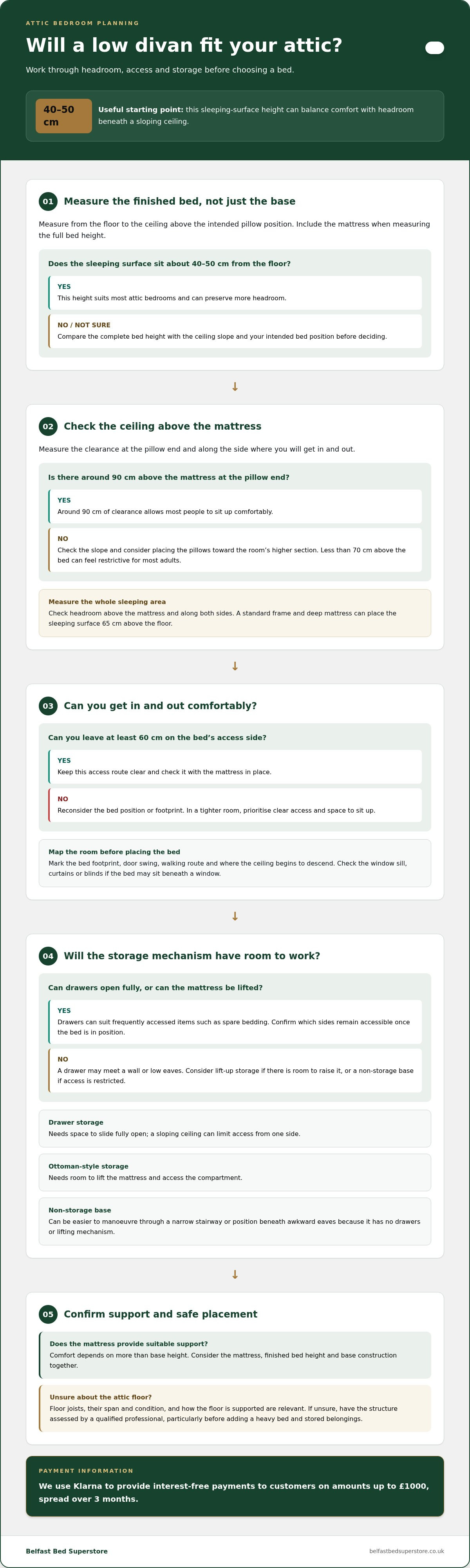
A lower bed can feel more comfortable in an attic, not less. A low profile divan base for attic rooms can help preserve headroom, and a sleeping surface 40 to 50 cm from the floor suits most attic bedrooms. Below 70 cm of space above the bed, the ceiling can start to feel restrictive for most adults.
It’s understandable to wonder whether a lower base will still feel supportive and restful. Comfort depends on more than base height: the mattress, finished bed height and construction all play a part. Storage matters too, especially when a sloping ceiling limits where drawers can open or where the bed can go.
This guide explains how to assess comfort and fit before choosing a low divan base. You’ll learn how to compare the finished bed height with the ceiling slope, weigh storage against usable space and identify construction details that affect everyday use.
Key Takeaways
- A sleeping surface 40 to 50 cm from the floor can help balance comfort with headroom beneath a sloping ceiling.
- Choose storage with the room layout in mind: drawers or lift-up mechanisms need space to operate and can affect where the bed fits.
- Measure the full bed height, including the mattress, against the ceiling slope to judge how the sleeping area will feel.
- Compare base construction and support with your mattress, since both contribute to the feel of the finished bed.
- Explore mattress options from Belfast Bed Superstore when you’re weighing comfort and fit for an attic bedroom.
1. Are low divan bases comfortable?
Yes, a low divan base can be comfortable when its mattress provides suitable support and the finished bed fits the room. A low profile divan base for attic rooms can preserve headroom, but base height alone doesn’t determine comfort. Consider the mattress, how easily you can sit up and whether there’s enough space to move around.
In the UK, cost depends on the bed’s size, base construction, upholstery and whether storage is included. Compare like-for-like options, such as a base alone with a complete divan set, because they include different components. These details affect the price, while the ceiling height and layout determine whether the bed will fit comfortably.
Start by measuring from the floor to the ceiling above the intended pillow position. A standard bed frame and deep mattress can put the sleeping surface 65 cm above the floor, which may feel too high beneath a steep slope. A sleeping surface between 40 and 50 cm suits most attic bedrooms while preserving more headroom. Less than 70 cm above the bed can feel restrictive for most adults.
Use your measurements to mark the bed’s position before choosing furniture. Check ceiling clearance at the pillow end and along the side where you’ll get in and out. If the roof slopes sharply near one wall, for example, placing the pillows towards the room’s higher section can make sitting up easier. Measure the bed frame and mattress together, not separately.
Low-profile furniture can make ceilings appear higher. A lower bed reduces the visual bulk beneath a slope, while a simple headboard helps keep the room from feeling crowded. Lighter colours, mirrors and regular decluttering can make a compact bedroom feel more open. In an awkward attic, map the usable floor area before choosing oversized furniture.
To make the most of the headroom beneath a sloping roof, sketch the room and mark where the ceiling begins to descend. Add the bed footprint, door swing and walking route, then compare these with the height above the mattress. A low bed with a wide profile can feel luxurious in a spacious attic. In a tighter room, prioritise clear access and a comfortable position for sitting up.
2. Beds with storage for attic guest rooms
Storage can make an attic guest room more useful, but the mechanism needs room to work. Divan bases may include drawers or an ottoman-style lift-up compartment. A non-storage base can be easier to manoeuvre through a narrow stairway or position beneath awkward eaves because it has no drawers or lifting mechanism.
Are low-profile divan bases available with drawers or ottoman storage? Yes, low divan designs can include drawers or a lift-up storage compartment. Before choosing one, map the bed footprint and the space needed to open drawers or raise the mattress. A sloping ceiling may restrict access from one side.
For a guest bed, drawers are useful for frequently accessed items such as spare bedding, provided they can slide fully open. Check which sides will remain accessible once the bed is in place. If a drawer would meet a wall or low eaves, storage beneath the mattress may be more practical, as long as there’s room to lift it.
Under-eaves storage is another way to keep the main floor area clear. Blanket boxes or low storage units can fit beneath a slope where a tall wardrobe won’t. Measure the usable height and depth, then make sure you can reach stored items without blocking the route around the bed.
What safety or building regulations apply to beds in UK attic conversions? Focus on the conversion’s structural safety, access and fire precautions rather than assuming the bed itself has a separate rule. Requirements relate to the room and its construction, so include the bed in your overall layout.
How can you check attic floor load capacity before placing a bed? Relevant factors include the floor joists, their span and condition, and how the floor is supported. If you’re unsure, have the structure assessed by a qualified professional, particularly before adding a heavy bed and stored belongings.
Keep access in mind as well as storage: attic bedrooms should have at least 60 cm of space on the bed’s access side. Measure this route with the mattress in place, and include room for drawers to open. That practical test can help preserve a sense of openness, even when a stylish storage bed is the room’s largest piece of furniture.
What delivery and assembly options do UK bed retailers offer for attic bedrooms? Options may include delivery, professional assembly and old-bed removal. For a tight staircase or turn, measure the bed in its packaging and assembled, and plan how each part will reach the room.
3. Benefits of low-profile divan bases in loft rooms
A low base can make an attic bedroom easier to use by keeping the mattress closer to the floor. This leaves more space beneath sloping ceilings and may let the bed sit below a window. It also makes the bed less visually dominant, helping a compact room feel calmer and more open.
Which UK retailers sell low-profile divan bases suitable for attic rooms? Look for bed retailers with divan bases in their ranges, then compare base height, size and storage design. These details determine whether the bed suits your ceiling line and room layout.
Measure before deciding where the bed will go. Check the floor-to-ceiling height at the pillow end, above the mattress and along both sides. Around 90 cm of clearance above the mattress at the pillow end allows most people to sit up comfortably. Also leave at least 60 cm on the bed’s access side. These measurements help show whether the bed will feel comfortable and remain practical to get into.
A low base may fit beneath a window, but check the window’s position and how you use the room. Measure from the floor to the sill and compare it with the finished bed height, including the mattress. Consider curtains, blinds and access to the window. A bed can fit below the sill yet still feel awkward if it blocks a route or makes the window hard to reach.
Ottoman designs add concealed storage, but their lift-up sections need room to open. Check the clearance above the mattress and the position of nearby roof slopes, lights and furniture. The mechanism also needs clear space during use. If a low ceiling restricts access, a simpler base may suit the room better than storage that’s difficult to reach.
Some divan bases are handmade in the UK. Upholstery and finishes vary, so consider how the fabric will work with the room’s colours and furniture. Choose the base and mattress dimensions together, especially if the attic has an unusual shape. A natural-fibre mattress paired with a low upholstered bed can help create a welcoming guest space.
To check headroom and clearance, measure the finished sleeping height, the ceiling above the pillow end and the access route beside the bed. Include the space needed to open an ottoman in your room plan. Keeping the measurements together makes it easier to compare designs and find a low base that fits without sacrificing comfort.
4. Low-profile bed frames and total bed height
Compare the complete bed height, not just the base. Add the base, legs or glides, mattress and any raised frame edges to understand where the sleeping surface will sit. A low platform frame can place a mattress surface around 40 cm above the floor. In an attic, that lower position can help the bed fit beneath sloping ceilings while keeping the room’s main route clear.
Divan bases and bed frames create different visual effects. A divan has a solid upholstered base, while a frame’s legs and open space beneath leave more floor visible. Either can suit an attic, but mattress height and frame profile determine the finished fit. Measure from the floor to the mattress top, then compare that height with the ceiling above the pillow end.
Under-bed drawers can change the bed’s proportions. They may require a taller base to provide usable storage, raising the mattress closer to the slope. Check drawer clearance on the side you’ll use and make sure opening them won’t block a walkway. If storage makes the bed too high, a non-storage design may preserve more headroom.
Size affects fit as well as height. UK bed dimensions include a double at 135 x 190 cm and a king at 150 x 200 cm. Measure the mattress footprint against the floor plan, including space to get in and out. A smaller mattress may leave more room beneath the eaves, while a larger one can occupy the area where ceiling height is most generous.
Headboards and footboards also contribute to the overall feel. Tall or oversized frames can make a compact attic seem crowded, even when the mattress sits low. A double bed with a 30 cm frame may feel more comfortable than a single with a tall padded headboard. Choose a headboard that doesn’t rise into the roofline, and let its shape and fabric reflect the room rather than dominate it.
Use the 1.5-metre head-height line as a practical planning guide: low areas can suit sleeping or storage, while taller space is better for circulation. Mark that line on a simple room sketch, then plot the bed, headboard and drawers. This makes it easier to compare bed-frame collections and spot conflicts before moving furniture into the attic.
5. Base construction and reinforcement
The structure beneath the mattress affects how evenly it feels supported. A divan base combines an upholstered exterior with an internal frame and platform surface. In a low-profile design, each part contributes to the overall height, so compare the base construction with the mattress rather than judging by the fabric alone.
Check how the base meets the floor. Legs or glides affect stability and finished height, while the internal frame supports the platform. Make sure the base sits evenly on the attic floor and doesn’t rock when pressure is applied at the corners. A level, stable position helps the bed feel even in use.
Reinforcement matters where weight is concentrated, such as around the edges or beneath a heavier mattress. Consider the frame, platform and joints as one structure. A suitable base should support the mattress across its surface, without leaving sections unsupported. Don’t assume a thicker-looking upholstered edge means stronger construction.
What mattress types and weights are compatible with a low-profile divan base? Pocket-sprung, open-coil, foam and latex mattresses may suit a divan platform, but compatibility depends on the base design and its stated weight capacity. Match the mattress size and weight to the base guidance, including the combined load of the mattress and sleepers.
In a smaller attic bedroom, compare the base dimensions with the mattress before arranging delivery. A base that’s wider or longer than the mattress can affect how it sits and how the room feels. Matching dimensions also keeps the finished bed looking tidy beneath sloping ceilings. Check whether the base arrives in one section or several, as this affects access through tight turns.
Construction details can help distinguish similar designs. Check the platform surface, corner joints, support points and floor contact, then compare them with your mattress type. Foam and pocket-sprung mattresses, for example, can differ in weight and feel, so the same base may not suit both equally. The base manufacturer’s guidance matters more than appearance alone.
Upholstery completes the look, but shouldn’t distract from the support structure. Choose a fabric that complements the bedroom, then assess the platform and frame separately. When comparing divan beds, consider the mattress and base as a pair. This makes it easier to balance comfort, suitable support and the low overall height an attic needs.
Belfast Bed Superstore: Hypnos Mattresses
Belfast Bed Superstore offers Hypnos Mattresses alongside Sealy, Relyon and Dunlopillo options. Once you’ve measured your attic and chosen a low divan base, comparing mattresses is a practical next step. Consider how each mattress feels and its height as part of the complete bed, so your choice suits both comfort and ceiling clearance.
We use Klarna to provide interest free payments on amounts up to £1000, spread over 3 months. This can help you manage payment for an eligible purchase while choosing a mattress that fits your room and bed setup.
Contact Belfast Bed Superstore to discuss your mattress choice.
Plan your next step towards a better-fitting attic bed
Before choosing, use your room measurements to narrow the options, then consider how the mattress and base will feel together in everyday use. A low profile divan base for attic rooms should suit the space without making comfort an afterthought. Compare mattress feel and the overall bed setup with the way you plan to use the room.
Belfast Bed Superstore offers Hypnos, Sealy and Relyon Mattresses, giving you options to consider alongside your bed measurements. If you’re ready to explore a mattress that could work with your attic layout, contact Belfast Bed Superstore. A thoughtful choice can help turn an awkward room into a comfortable place to rest.
Frequently Asked Questions
Are low divan bases comfortable?
Yes, a low divan base can feel comfortable when it provides suitable support for its mattress. Base height mainly changes how high you sit and lie above the floor; it doesn’t determine the mattress feel by itself. In an attic bedroom, consider how easy it is to get in and out, whether your preferred mattress sits securely and how the finished bed suits your usual sleeping position.
How long will a low divan bed base last?
A well-made, properly cared-for low divan base can last 7 to 15 years or more. Its lifespan depends on construction, use and care. To help protect it, follow the manufacturer’s guidance, keep the base on an even surface and avoid dragging it across the floor. If it starts to feel unstable or shows visible damage, inspect the frame and supports rather than judging its condition by upholstery alone.
What low bed frame sizes are there?
Low bed frames are available in familiar UK mattress sizes, from small single through to super king. Examples include a UK single at 90 x 190 cm, a double at 135 x 190 cm and a king at 150 x 200 cm. Measure the mattress you intend to use, then compare the frame’s external dimensions, since its headboard or side rails may extend beyond the mattress footprint.
What is a low-profile divan bed base and what heights are available in the UK?
A low-profile divan is an upholstered bed base designed to keep the mattress closer to the floor than a taller base. Height varies by design and can also depend on legs or glides and the mattress. One listed UK low divan base has a base height of 8 inches (20 cm). Compare the base measurement with the mattress thickness to work out the complete sleeping height.
What divan base sizes are available, and how do they compare with UK mattress sizes?
Divan bases are commonly made to match UK mattress dimensions, but check the exact size before pairing them. Examples include small single at 75 x 190 cm, single at 90 x 190 cm, small double at 120 x 190 cm, double at 135 x 190 cm, king at 150 x 200 cm and super king at 180 x 200 cm. Match both measurements, not just the size name.
Will a divan base fit through an attic hatch, staircase or narrow doorway?
Whether it fits depends on the base’s packed dimensions and the route into the room. Measure the narrowest doorway, staircase turn and hatch opening, then compare them with the base components and packaging. Allow for the clearance needed to turn each piece. Bases supplied in sections can be easier to manoeuvre than one large piece, while self-assembly furniture can help on narrow stairs or tight turns.
How much do low-profile divan bases cost in the UK?
Cost depends on size, construction, upholstery and whether storage is included.
Which UK retailers sell low-profile divan bases suitable for attic rooms?
Belfast Bed Superstore is named in the article. Compare a retailer’s base height, size and storage design with your ceiling line and room layout.


