

What if a calmer bedroom starts with removing distractions, not buying a new set of furniture? If light spills in, noise carries or clutter catches your eye at bedtime, even beautiful décor may not make the room feel restful. Thoughtful bedroom design for better sleep begins by reducing those everyday sources of friction.
It’s understandable to wonder which changes matter most, especially when design trends can sound like proven sleep advice. A soothing colour scheme may feel pleasant, but practical conditions such as light, temperature and noise deserve attention too. This guide will help you focus on manageable adjustments that can support a consistent bedtime routine, without promising that a room makeover will solve sleep difficulties.
We’ll look at ways to soften evening light, make the room more comfortable, limit sound distractions and create a layout that feels uncluttered and easy to use. You’ll also find guidance on bedding and choosing a comfortable bed, so you can try simple changes before investing in new furniture. If replacing a bed is part of your plans, we use Klarna to provide interest-free payments on amounts up to £1000, spread over 3 months.
Key Takeaways
- Start bedroom design for better sleep by noticing what feels distracting or uncomfortable, rather than following trends.
- Adjust light, temperature and noise in small ways, then keep the changes that suit your comfort and routine.
- Arrange the bed, storage and other furniture to make movement easier and the room feel less visually busy.
- Refresh the space step by step, using what you already own before deciding whether to buy anything new.
- Choose a bed and mattress for your personal comfort, as part of the room’s overall design rather than as a guaranteed fix for sleep difficulties.
Bedroom Design for Better Sleep Starts with a Calmer Sleep Space
A bedroom can look polished yet still feel awkward to use at the end of the day. A chair piled with clothes, a bedside table that blocks a walkway or bedding that feels uncomfortable can all add small sources of friction. Bedroom design for better sleep means arranging the space to reduce avoidable discomfort and distraction, so it feels easier to wind down.
That’s a practical aim, not a promise of a particular sleep outcome. A thoughtful room can support a regular bedtime routine, but it can’t guarantee better sleep or replace help for ongoing sleep difficulties. Focus on what you can shape: the room’s sensory conditions, layout, clutter and the comfort of your bed and bedding.
Bedrooms combine rest with everyday functions and furnishings. A general overview of Bedroom design principles offers useful context, but your own room should work for your habits, available space and comfort. Start with how it feels and functions, then consider décor.
What makes a bedroom feel restful?
A restful bedroom feels comfortable, calm and clearly connected with winding down. That might mean having a clear route to the bed, keeping useful items close at hand and making the space feel less visually busy. It doesn’t require a particular colour palette, matching furniture or a carefully staged, hotel-like look.
General design suggestions are starting points, not rules. Some people find a spare surface calming; others need books, glasses or familiar items within reach. Notice what helps you feel settled and what tends to draw your attention. Personal comfort is a better guide than copying a trend that doesn’t suit your routine.
Which changes should you prioritise first?
Before moving furniture or shopping for décor, identify the biggest source of discomfort or distraction. Think about what you notice when getting ready for bed or waking up: perhaps the route through the room feels cramped, everyday items are hard to find, or the bedding doesn’t feel comfortable. Choose one issue to address first, rather than trying to redesign everything at once.
- Low-effort adjustments: clear a walkway, put away items that gather on visible surfaces, or move a frequently used object within easy reach.
- Comfort checks: notice whether your pillow and bedding feel pleasant and practical for your usual routine.
- Bigger decisions: consider changing furniture or making room alterations only if simpler adjustments don’t address the problem.
Give each change a little time and pay attention to whether it makes the room more comfortable or easier to use. Keep what helps; undo what doesn’t. Sleep-supportive design makes the bedroom feel more comfortable and less distracting, without promising a cure for sleep problems. That principle keeps the focus on useful choices, not an idealised look.
Control Bedroom Light, Temperature and Noise to Support Rest
Light, sound and temperature shape how comfortable a bedroom feels, but there’s no single setting that suits everyone. Treat each adjustment as something to test, not a rule you have to follow. For a practical overview of these factors, the Sleep Foundation’s guide to optimizing your bedroom environment for sleep can help you think through what might be affecting your space.
Start with the condition you notice most. If outside light catches your eye, try adjusting the window coverings. If you wake feeling too warm or too cool, review your bedding and how air moves through the room. Changing one thing at a time makes it easier to tell what feels useful.
How can you make bedroom lighting more sleep-friendly?
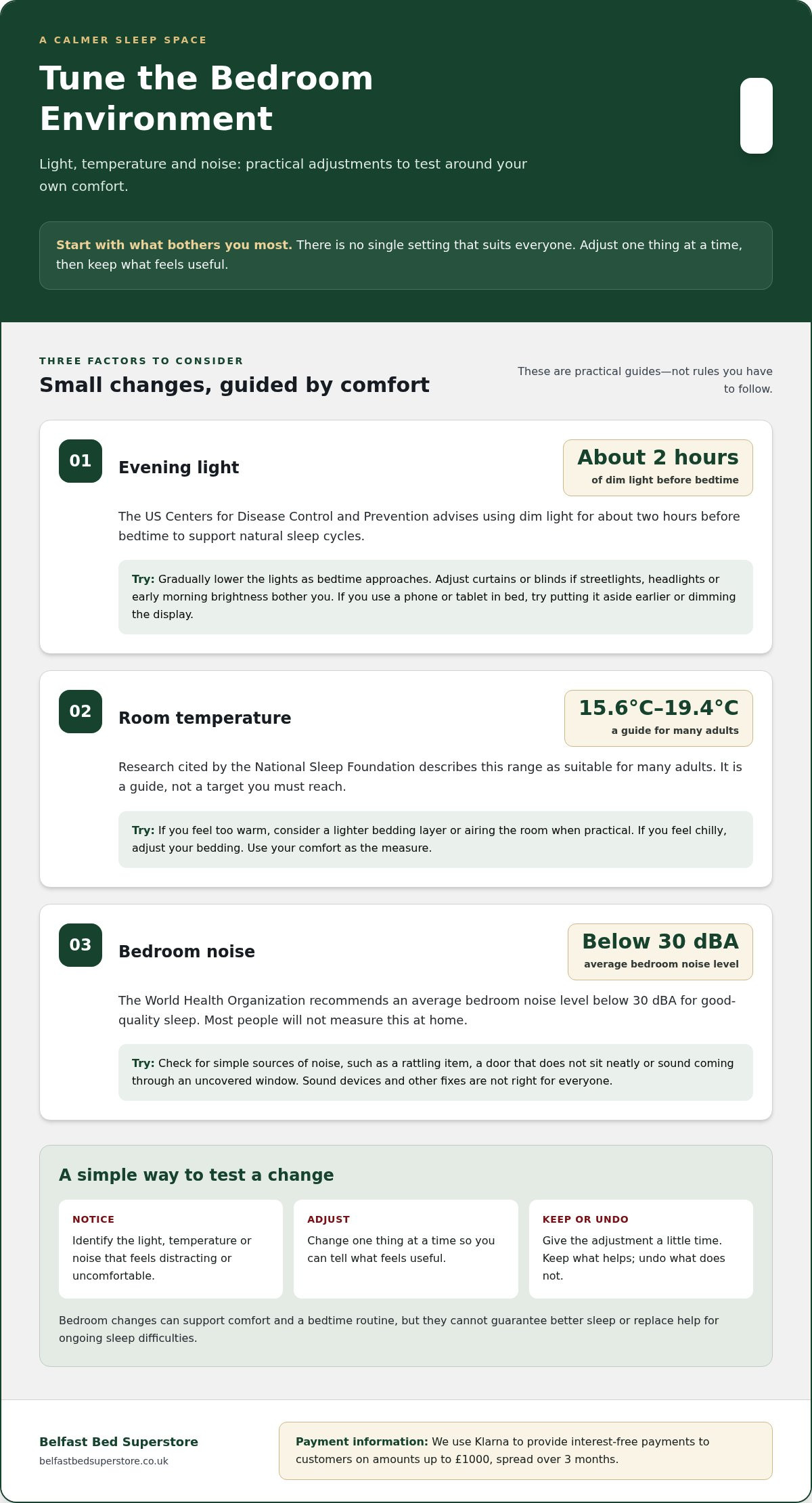
Daylight and evening light serve different purposes. During the day, open curtains or blinds when it suits your routine. As bedtime approaches, softer, dimmer lighting can make the room feel less bright and busy. The US Centers for Disease Control and Prevention advises using dim light for about two hours before bedtime to support natural sleep cycles. You could try lowering the lights gradually rather than switching from bright overhead lighting to darkness all at once.
Window coverings can help manage streetlights, car headlights or early morning brightness. Curtains or blinds don’t need to transform the room; look for a practical way to reduce the light that bothers you. Screens are another possible source of bright light and stimulation late in the evening. If you use a phone or tablet in bed, try putting it aside earlier or dimming its display, then notice whether that change feels helpful.
How should you approach temperature and noise?
Choose bedding and ventilation around your own comfort. If you feel too warm, try a lighter layer or airing the room when it’s practical; if you feel chilly, adjust your bedding. Research cited by the National Sleep Foundation describes a bedroom temperature range of 15.6°C to 19.4°C as suitable for many adults, but it’s a guide, not a target you must reach. Your comfort is a useful measure.
For sound, first look for simple sources you can address: a rattling item, a door that doesn’t sit neatly, or noise passing through an uncovered window. The World Health Organization recommends an average bedroom noise level below 30 dBA for good-quality sleep, though most people won’t measure this at home. A quieter room may feel more comfortable, but sound devices or other fixes aren’t universally right for everyone.
- Light: adjust curtains, blinds or evening lighting.
- Temperature: change a bedding layer or ventilate the room when convenient.
- Noise: identify and reduce an intrusive sound where possible.
Test one change at a time over several evenings. Make a brief note of what you altered and how comfortable the room felt at bedtime and in the morning. Keep changes that suit you; set aside those that don’t. This measured approach makes bedroom design for better sleep personal and practical. If comfort points towards reviewing your bed as well, you can explore bed options as part of the wider room plan.
Choose a Bedroom Layout, Colours and Materials That Feel Calm
A room feels easier to settle into when it’s comfortable to move through and simple to use. You don’t need to clear every surface or follow a strict design style. For bedroom design for better sleep, consider how furniture, belongings and finishes work together in your everyday routine, then make choices that feel calm to you.
Keep a clear route to the bed and to furniture you use regularly, such as a wardrobe or bedside table, wherever the room allows. If storage is limited, group everyday belongings in a drawer, basket or cupboard rather than adding more items to visible surfaces. Our guide to bedroom furniture in Cambridge can also help you think through storage and room layout before changing the space.
How can layout and clutter affect the room?
Try viewing the room from the doorway and from the bed. Is there anything you have to step around, or do frequently used items feel awkward to reach? A small shift, such as moving a chair out of a walkway or placing a bedside table within reach, may make the layout feel more practical. The aim isn’t an empty room; it’s a space where furniture and belongings have a useful place.
| Design choice | Practical effect to consider |
|---|---|
| Open versus crowded layout | Clear routes make it easier to move around; excess furniture or belongings can make the room feel harder to use. |
| Layered versus single-source lighting | Separate lights can suit different tasks and moods; one overhead light may feel too bright for winding down. |
Which colours and materials suit a restful bedroom?
There’s no one shade that guarantees better sleep. Muted colours may feel quiet and understated, while richer tones can make a room feel cosy or more personal. Choose a palette you enjoy seeing at the end of the day, and remember that paint, bedding and smaller accessories can all change the overall feel without a full room refresh.
Texture matters to personal comfort, too. Smooth cotton, softly woven fabrics or a plush blanket can each feel appealing for different reasons. Think about the touch of your bedding, but also how straightforward it is to wash and care for. A delicate fabric may look inviting, yet be less practical for your everyday routine than a finish that’s easy to maintain.
Materials with a natural feel can bring warmth and texture to the room, but they’re a preference, not a requirement. The CDC guidance on a sleep-friendly bedroom focuses on a comfortable environment rather than a particular decorating style. Let that be a useful reminder: visual calm is personal, and practical choices matter as much as appearance.
If storage or furniture placement is the main challenge, explore bedroom furniture options as one part of your wider room plan.
Refresh Your Bedroom for Better Sleep with a Step-by-Step Plan
A room refresh doesn’t have to mean replacing furniture or starting from scratch. A clear process helps you focus on the part of the room that causes the most inconvenience, try a manageable adjustment and decide whether it suits your household. For bedroom design for better sleep, begin with what you notice, not with a shopping list.
What should you assess before changing the room?
Pay attention to how the bedroom works at different points in your routine. Is outside light distracting at bedtime, do sounds interrupt a quiet moment, or does clutter make it harder to settle? Notice where you feel discomfort, too. Then look at the furniture: can you reach the bed and everyday items easily, or does the layout get in your way? Set one realistic goal around the main issue.
Observe the room, prioritise one issue, adjust what you already have, test the change, then keep what works. Use this sequence to avoid making several changes at once and losing track of what actually feels useful.
- Observe: Notice which part of the room feels distracting or inconvenient, and when you tend to notice it. Look at light, sound, clutter, comfort and movement through the space.
- Prioritise: Choose the issue that affects your routine most. A blocked route or awkwardly placed bedside item may be a simpler starting point than a full room makeover.
- Adjust: Try a reversible change using what you own. Move a small piece of furniture, clear one surface, reposition a lamp or alter how you use existing curtains.
- Test: Keep the rest of the room as consistent as you can while you see how the adjustment feels. Make a brief note about comfort and whether the change fits your routine.
- Retain: Keep changes that make the room more comfortable or practical. Undo those that create a new inconvenience, even if they looked promising in theory.
Small steps are easier to assess than a full redesign. For example, if a chair collects clothes and narrows the route to the bed, first try moving it or giving it a different purpose. If the room then feels easier to use, you may have solved the immediate problem without buying more storage. If not, you’ve learned something useful before making a larger decision.
How can you test bedroom changes without overhauling the space?
Keep your notes simple and personal. Record what you changed, whether it made bedtime or getting ready easier, and whether it added any extra effort. These observations can guide your next design choice, but they aren’t medical evidence or a guarantee of better sleep. Comfort also varies between people, so agree on changes that work for anyone sharing the room.
If your room assessment points to bed comfort as the next practical step, explore bed options and consider how they’ll fit into the layout you’ve planned.
Bring Bedroom Design Together with the Right Bed and Mattress
The bed is often the room’s largest piece of furniture, so its size, position and feel all contribute to how the space works. A mattress can be an important comfort choice, but it isn’t a guaranteed remedy for sleep difficulties. Think of it as one part of a bedroom plan that also considers movement, storage and the way you use the room.
How do you make the bed fit the room and your routine?
Start by looking at the bed in relation to the room, rather than choosing it in isolation. Leave enough space to move around it where possible, and consider whether doors, drawers and wardrobes are still easy to access. A bedside table can keep regular essentials close by, but it shouldn’t make a narrow route feel tighter.
Storage can also affect the overall feel. A divan bed or ottoman bed may suit a room where you want to make use of the space around or beneath the bed, while a separate chest of drawers or wardrobe may work better for your layout and habits. The right choice depends on room proportions, the belongings you need to store and how you prefer to use the space. Think through those practical details before deciding what to bring into the room.
How can trying beds help you make a considered choice?
Firmness labels can offer a starting point, but they don’t tell you exactly how a mattress will feel to you. Comfort is personal. If you’re comparing options, take time to notice how each feels as you lie in your usual position. Consider whether the surface feels comfortable and whether you feel settled, rather than choosing based on a label or appearance alone. A pillow and bedding also contribute to the feel of the bed, so keep your usual preferences in mind.
For Cambridge and the wider Cambridgeshire area, our showroom has over 100 beds to try across over 20,000 sq ft of space. Comparing options in person gives you a chance to notice different feels and consider which suits your comfort preferences. It doesn’t guarantee a particular sleep outcome, but it can help you make a more informed choice.
- Check the fit: Consider room proportions, access around the bed and the placement of bedside items.
- Think about storage: Choose a bed or bedroom furniture that works with your belongings and daily routine.
- Compare comfort: Take time to notice your own preferences rather than relying on a firmness description alone.
Good bedroom design for better sleep brings practical room planning together with personal comfort. If you’re ready to compare options, browse our bed and mattress selection and consider how each choice could work within your room.
Make Your Next Bedroom Change One That Fits
A bedroom should work for the life you actually live, not just look calm in a photograph. As you make your next choice, consider how it will feel and function over time: whether you’re adjusting the room around your current bed or planning to choose a different one. That practical approach keeps bedroom design for better sleep personal, comfortable and realistic, without expecting a single change to guarantee better rest.
If a new bed or mattress is part of your plans, take the time to compare options and consider what feels right for you. Belfast Bed Superstore has been established since 1905, and our Cambridge showroom offers a local place to explore beds and mattresses in person.
Explore beds and mattresses at our Cambridge showroom, and take the next step towards a bedroom that feels more like your own restful space. Start at your pace, choosing comfort and practicality over pressure.
Frequently Asked Questions
Is there one best bedroom colour for better sleep?
No single colour is right for everyone, and a particular shade can’t promise better sleep. Choose a palette that feels calming to you and consider how it looks in daylight as well as under your evening lamps. Bedroom design for better sleep is about the whole atmosphere, not paint alone. Bedding, window coverings and what’s visible around the room all influence how the finished space feels.
Can bedroom plants help you sleep better?
Plants can be a lovely decorative choice, but they shouldn’t be treated as a proven sleep remedy. Before bringing one into your room, think about its care needs, whether you have a suitable spot and whether you have any personal sensitivities. A plant that needs frequent attention or crowds a bedside surface may not suit your routine. Choose greenery only if it makes the room feel more comfortable and manageable for you.
Should a mirror face the bed?
There’s no universal design rule that says a mirror must face the bed or must be kept away from it. What matters is how its position feels in your room. If it reflects passing headlights, catches a lamp’s glare or draws your attention when you’d rather wind down, try another wall or angle. Keep the mirror useful for getting ready, while making sure its new position doesn’t obstruct a doorway or walkway.
Do blackout curtains need to block every trace of light?
No, you don’t have to make the room completely dark if that doesn’t suit you. Curtains or blinds can reduce external light, but the level you prefer depends on your room and routine. If light still bothers you, check around the edges and try adjusting how the window covering sits. Consider how much morning daylight you’d like, too. Blackout products can manage light, but they can’t guarantee better sleep.
Can a bedroom redesign cure insomnia?
No, a bedroom redesign isn’t a guaranteed cure for insomnia or other sleep difficulties. A calmer, more comfortable setting may support a bedtime routine, but sleep problems can have other causes that décor or furniture changes won’t address. You can still make practical adjustments to the room, but don’t rely on a makeover alone if difficulties persist. If you’re concerned about ongoing sleep problems, seek appropriate healthcare advice.
What is the first bedroom change to try if I keep waking at night?
Start by considering what might be disturbing you, rather than assuming there’s one fix for everyone. Think about whether light, noise, feeling too warm or cool, or physical discomfort seems most noticeable. Choose one manageable adjustment, such as changing a window covering or bedding layer, and note how it feels over time. If waking continues and concerns you, consider seeking professional guidance rather than making repeated room changes alone.
Can bedroom furniture placement make a small room feel calmer?
Yes, a practical layout can make a small bedroom easier to move around and use, even though it can’t guarantee better sleep. Keep the route between the door, bed and wardrobe as clear as the space allows. Limit items on frequently used surfaces, and choose storage that fits without making access awkward. For a Cambridge bedroom, sketching the room and marking doors, drawers and furniture can help you plan before moving heavy items.
Ready to compare beds and mattresses for your Cambridge or Cambridgeshire bedroom? Explore the Belfast Bed Superstore range and find an option that fits your room and comfort preferences.


