
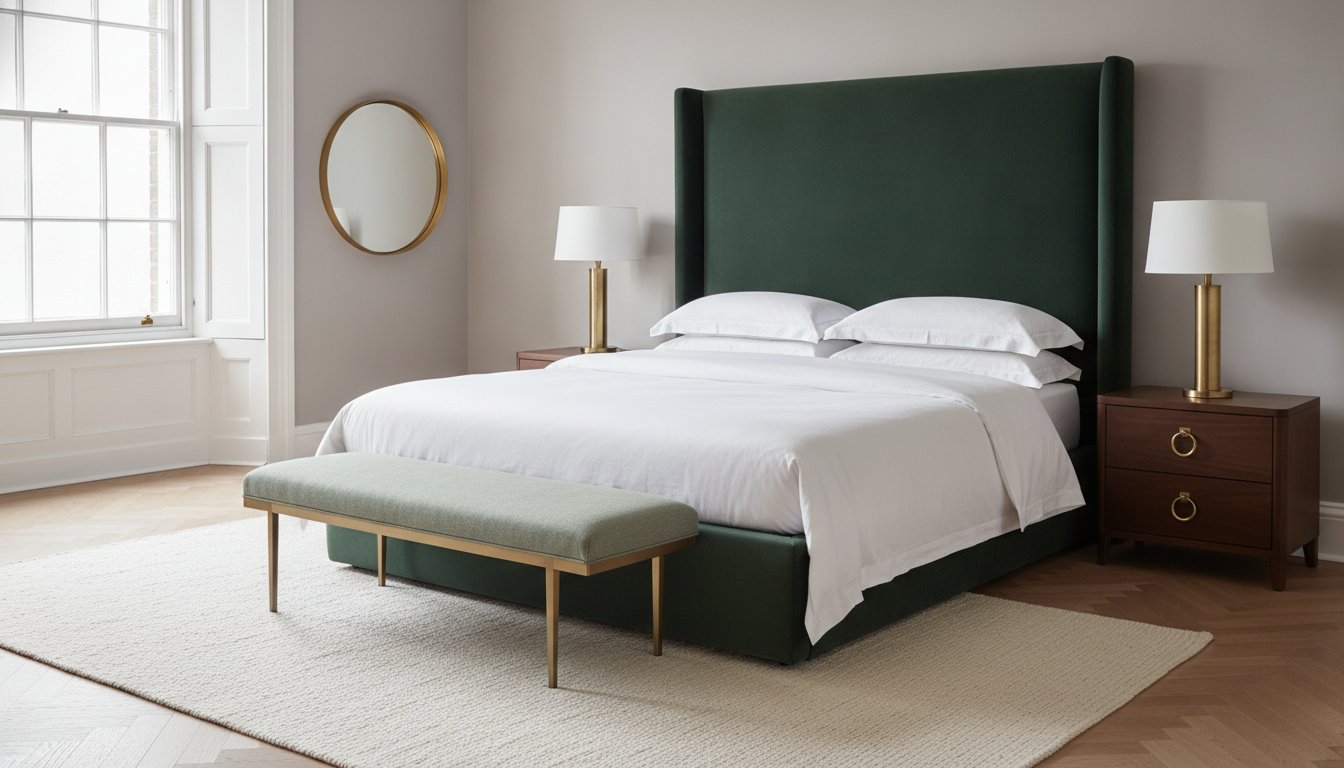
What if the most important measurement for your bedroom isn't the size of the bed itself, but the height of the headboard? It’s a common frustration to spend weeks picking out beautiful upholstery, only to find it completely disappears behind your pillows once the bed is made. We understand that choosing the right headboard height can feel like a bit of a guessing game, especially when you're trying to balance a deep, comfortable mattress with the style of your room. You want that high-end, hotel-style look, but you also need proper support when you're sitting up with a morning cuppa.
When exploring different aesthetics, specialists such as Grosvenor Furniture offer a wide variety of high-quality bedroom furniture that can help you visualize how different heights and styles will fit into your home.
Finding that perfect balance doesn't have to be complicated. Our guide will show you how to weigh up aesthetics, mattress depth, and personal comfort to get a look that’s perfectly proportioned for your home. We’ll break down the technical side of things, from the difference between strut-mounted and floor-standing options to the 2026 updates regarding UK fire safety regulations. By the time you've finished reading, you'll know exactly how to measure up for a headboard that provides both a stunning focal point and the restful sanctuary you deserve.
Key Takeaways
- Understand the three main height categories to help you select a design that balances your bedroom’s proportions perfectly.
- Save time by choosing the right headboard height using our mattress-first measuring technique, ensuring your beautiful new piece isn't hidden by pillows.
- Perform the simple "Reading Test" to find the ideal support level for your back and neck during those relaxing moments in bed.
- Learn how to account for deep luxury mattresses from brands like Hypnos to maintain a professional, high-end interior design look.
- Compare the benefits of floor-standing and strut-mounted fittings to find the most stable and stylish solution for your specific room layout.
Understanding Standard Headboard Heights in the UK
When you walk into your bedroom, the bed should feel like a welcoming retreat. A huge part of that feeling comes from the silhouette of your headboard. It acts as the anchor for the whole room, providing a sense of scale and luxury. While the history and purpose of headboards originally focused on insulation from cold walls, today they are the ultimate design statement. Choosing the right headboard height is about more than just aesthetics; it's about making sure the piece doesn't overwhelm your space or get lost behind a sea of pillows.
The height you choose influences the perceived "weight" of the furniture. A very tall headboard adds significant visual weight, which can make a large, airy room feel much cozier and more grounded. Conversely, a low-profile design keeps the room feeling open and light, which is often a blessing in smaller UK bedrooms or attic conversions with sloped ceilings. We find that many customers start their journey looking for a specific style, only to realize that the height is what actually defines the room's character.
The Three Tiers: Low, Standard, and Extra Tall
- Low-profile headboards (approx. 30-40cm above mattress): These are perfect for those who love a minimalist, modern look. They work beautifully in rooms with lower ceilings or when you want the wall art above the bed to take center stage.
- Standard headboards (approx. 60-70cm above mattress): This is the classic choice for most UK homes. It offers a balanced look that provides enough height to be visible above your pillows without dominating the entire wall.
- Tall and Statement headboards (90cm+ above mattress): If you're aiming for that boutique hotel feel, a tall headboard is the way to go. These designs create a dramatic focal point and are ideal for rooms with high ceilings where a smaller headboard might look "swallowed" by the space.
Strut-Mounted vs. Floor-Standing Heights
The way your headboard attaches to the bed base also plays a role in its final height. Strut-mounted headboards come with two wooden posts that bolt to the back of the divan. These are fantastic because they allow for slight height adjustments during fitting. You can slide the headboard up or down on the struts before tightening the bolts, giving you a little wiggle room to get the position just right.
Floor-standing models, often seen in premium ranges like Birlea Furniture, sit directly on the floor. These offer a much more fixed and sturdy aesthetic. Because they are one solid piece from the floor up, they don't lean or wobble, which is a major benefit if you've chosen a taller, heavier statement piece. When choosing the right headboard height for a floor-standing model, remember that the height is set, so measuring your mattress depth beforehand is vital to ensure the proportions look exactly as you intended.
Measuring Your Space: A Technical Height Comparison
Getting the measurements right is the difference between a bedroom that feels professionally designed and one that feels a bit "off." When you're choosing the right headboard height, don't just look at the total height from the floor. While floor-standing models are measured from the ground up, the only part that truly matters for your decor is the visible section above the mattress. If you have a standard UK mattress with a depth of 25cm, that's 25cm of your headboard that will be hidden from view. Always measure from the top of your mattress to your desired peak to see how much of the fabric or wood will actually be on display.
One technical detail we often help our customers with is "The Gap." This happens when a strut-mounted headboard is fixed too high on its posts, leaving a space between the bottom of the board and the top of the mattress. Not only does this look unfinished, but it's also a practical nuisance as your pillows will constantly slip through. To avoid this, ensure the bottom of the headboard sits at least 5cm below the top surface of your mattress. If you're looking for a bit of inspiration on how different heights look in real rooms, you can browse our full range of headboards to see various styles in situ.
The Headboard Height vs. Bed Size Matrix
Proportions are key to a balanced silhouette. For a single bed (90cm wide) or a small double, a very tall headboard can look top-heavy and make the bed seem unstable. We usually suggest a visible height of around 50cm to 60cm for these smaller sizes. However, when you move up to a King (150cm wide) or Super King, you have much more freedom. These larger beds can easily handle "statement" heights of 90cm or more, which helps the bed feel proportional to the wider mattress and the larger room it likely sits in.
Ceiling Height and Wall Space Considerations
- Low Ceilings: In cottages or attic conversions, keep the headboard height compact. A tall board will "clip" the visual height of the room, making it feel cramped.
- Period Properties: If you're lucky enough to have high ceilings, use that vertical space. A tall, upholstered headboard draws the eye upward and fills the void of a large, blank wall.
- Window Placement: If your bed sits under a window, measure carefully. You don't want the headboard to block the light or clash with the windowsill. In these cases, a low-profile design is often the smartest choice.
Remember that choosing the right headboard height isn't just about the bed; it's about the entire wall. A good rule of thumb is to ensure the top of the headboard doesn't sit exactly halfway between the floor and the ceiling, as this can look a bit too symmetrical and dull. Aim for the "Golden Ratio" where the headboard occupies roughly one-third or two-thirds of the available wall height for a more pleasing, high-end look.
Functionality: How Your Sleep Habits Dictate Height
While we've discussed how to measure your space, choosing the right headboard height also depends on what you do before you actually fall asleep. Are you someone who enjoys a late-night chapter of a book or perhaps a bit of breakfast in bed on a Sunday morning? Your headboard isn't just a wall decoration; it's the primary support for your back and neck during these quiet moments. If you treat your bed as a place for relaxation beyond just sleep, the functional height becomes just as important as the fabric choice.
We often see customers fall into the trap of picking a headboard based solely on a photo they've seen online. However, a design that looks beautiful in a minimalist showroom might not provide the comfort you need when you're actually using it. If your headboard is too low, you'll find yourself leaning against a cold wall or an uncomfortable window frame. By considering your lifestyle habits now, you can ensure your bedroom remains a sanctuary of comfort for years to come.
Ergonomics for Sitting and Propping
To find your ideal functional height, we recommend the "Reading Test." Sit comfortably on your mattress with your back against the wall, exactly where you'd normally sit to read or watch TV. Have someone measure the distance from the mattress surface to the top of your head. For most adults, this requires a visible headboard height of at least 60cm to 75cm. If the board ends at your shoulder blades, you won't have the head support you need, which often leads to neck strain and a restless night. Upholstered options are particularly beneficial here, as the added padding provides a soft, cushioned surface that mimics the feel of a high-quality sofa.
The Pillow Factor: Depth and Arrangement
Pillows are often the "enemy" of a short headboard. In the UK, a standard fluffed pillow sits about 20cm high. If you prefer a luxurious look with double-stacked pillows and decorative Euro shams, you could easily obscure 40cm or more of your headboard. On a standard 67cm single headboard, this leaves very little of the design on display. To maintain that professional, high-end look, you need to plan for the "visible window" of fabric. If you love a layered pillow arrangement, aiming for a taller headboard (around 90cm to 100cm above the mattress) ensures that your beautiful upholstery remains the star of the show even when the bed is fully dressed.

The Mattress Variable: Why Thickness Changes Everything
One of the biggest mistakes we see when people are choosing the right headboard height is forgetting to account for the mattress itself. In recent years, there has been a significant shift toward "deep mattresses" that measure 30cm or more in depth. While these provide incredible comfort, they also act like a rising tide that swallows up your headboard. If you've invested in a premium model like Hypnos Mattresses, which are known for their generous, hand-tufted layers, you might find that a standard headboard looks "sunken" or disappears entirely once you add your pillows.
This vertical growth in mattress technology means that the old standard headboard heights don't always apply. A pillow-top mattress can easily sit 10cm higher than a traditional thin mattress. If you don't adjust your choice accordingly, you lose that beautiful visible window of fabric we discussed earlier. To keep your bedroom looking its best, it's essential to look at the bed as a complete system rather than individual parts. We always suggest measuring your mattress depth before you start browsing for a new headboard to avoid any surprises on delivery day.
Calculating Your "Visible Headboard" Height
To get the proportions right, use this simple formula: Total Headboard Height - (Mattress Depth + Base Height) = Your Visible Statement. It's particularly important when choosing Sealy Mattresses with Posturepedic technology, as these often have added verticality to house their specialized support systems. Don't forget to include your mattress topper in this calculation too. A thick latex or memory foam topper can add another 5cm to 8cm, potentially hiding even more of your headboard. If you find your current headboard is looking a bit shy, you can often reclaim some of that lost visibility by adjusting the strut heights on the back of the bed, sliding the board upward until it clears the top of the mattress.
The Divan vs. Bedstead Height Difference
The type of bed base you use also changes where your headboard begins. A divan base is essentially a solid platform that raises the mattress quite high off the floor. This means your headboard starts from a higher point than it would on a wooden or metal bedstead. On a bedstead, the mattress often sits inside the frame, resting on slats that are lower than the top of the side rails. This can make the headboard appear much taller because more of its surface area is exposed. Before you buy, check whether your mattress will sit on top of the base or be recessed within it. This small detail ensures you won't end up with a headboard that looks disproportionately tall or awkwardly short.
If you're ready to find a combination that works perfectly together, you can view our latest collection of beds and mattresses to see how different heights pair up in person.
Selecting Your Perfect Headboard Style and Fitting
Once you've done the hard work of measuring your mattress and testing your sitting height, the final step is matching those numbers with the right material. The texture and colour you choose can actually play tricks on the eye, making the headboard appear taller or shorter than its physical dimensions. Choosing the right headboard height is as much about visual balance as it is about the tape measure. We've helped countless neighbors find that "just right" feeling by looking at how different fabrics interact with the light and space in their specific bedroom layout.
Material and Visual Weight
The material of your headboard significantly changes how its height is perceived in the room. A solid, dark-coloured upholstered headboard has a high "visual weight," which means it can dominate a small room and make the ceiling feel lower. If you've chosen a tall statement piece, opting for a lighter fabric or a spindle wooden design can help it feel more airy and less imposing. Spindles allow you to see the wall behind the bed, which maintains a sense of depth. If you want the benefits of a tall headboard without it feeling too heavy, look for designs with vertical tufting or fluting. These vertical lines draw the eye upward, "cheating" a bit of extra height and making your room feel grander without the need for a massive, solid block of fabric.
Installation and Stability
Stability is a vital consideration when you're opting for taller designs. While standard strut-mounted options are perfect for low or medium heights, extra-tall statement boards often require more support. For anything over 120cm from the floor, we often recommend wall-mounting the headboard. This ensures it stays perfectly level and doesn't lean or creak when you sit back to relax. Most UK divan bases come with standard pre-drilled bolt holes, but it's always worth double-checking the spacing before your new piece arrives. If you're looking for a complete, high-quality sleep system, explore premium options from brands like Relyon, which offer beautifully crafted headboards designed to fit their bases with absolute precision and stability.
Conclusion and Next Steps
Creating a beautiful bedroom is all about the details. By following our "measure twice, buy once" philosophy, you'll avoid the common pitfalls of hidden upholstery or cramped spaces. Remember to account for your mattress depth, your pillow arrangement, and the natural light in your room. A perfectly proportioned headboard doesn't just look professional; it provides the daily comfort that makes your house feel like a home. We're proud to help our local community find the best rest possible, and we're always here if you need a bit of extra guidance on the technical side of things.
- Width Check: Ensure the headboard matches your bed base (Single, Double, King, or Super King).
- Height Check: Calculate the visible height after your mattress and pillows are in place.
- Fixing Check: Decide between adjustable struts or a sturdy floor-standing model.
- Access Check: Ensure tall floor-standing models can fit through your hallways and up the stairs.
Ready to transform your space? Browse our full range of stylish headboards and mattresses to find the perfect match for your home today.
Create Your Perfect Sleep Sanctuary
Your bedroom should be a place where every detail contributes to your well-being. By considering the depth of your mattress and the way you use your bed for reading or relaxing, choosing the right headboard height becomes a simple step toward a more comfortable home. The right proportions can elevate a room from a simple sleeping space to a high-end interior design statement. Whether you're balancing a deep luxury mattress or picking a statement style for a high-ceilinged room, the focus should always be on your personal comfort and the quality of your rest.
As a family-run UK specialist since 1990, we take great pride in helping our neighbors find the perfect night's sleep. We are official stockists of world-renowned brands like Hypnos, Sealy, and Relyon. Our team is here to make the process easy with expert assembly and old bed removal services; we want you to focus on enjoying your new furniture. We're dedicated to quality and transparency, ensuring you get the best value without the stress of complicated logistics or technical confusion.
Explore our premium Headboard and Mattress collections today and take the first step toward a more restful life. We're here to help you get it right the first time and ensure your home remains your favorite place to be.
Frequently Asked Questions
What is the standard height of a headboard above the mattress?
For double and king-size beds, a standard visible headboard height typically ranges from 75cm to 100cm above the mattress surface. Single beds often feature a slightly lower profile, with a standard height of around 67cm. These dimensions are designed to ensure the headboard remains a clear focal point even after you've added your duvet and pillows. If you're aiming for the popular 2026 "hotel-style" look, you might even consider heights up to 137cm from the floor.
Can a headboard be too tall for a bedroom?
Yes, a headboard can be too tall if it overwhelms the room's proportions or clashes with architectural features like windows and sloped ceilings. When you're choosing the right headboard height, it's a good idea to leave at least 60cm of wall space between the top of the board and the ceiling. This gap prevents the room from feeling "closed in" and ensures your furniture doesn't make a smaller UK bedroom feel cramped or dark.
How do I stop my headboard from wobbling if it is very tall?
Wall-mounting is the most reliable way to secure a tall headboard and eliminate any annoying wobbles or creaks. If you prefer a floor-standing model, ensure the fixing bolts are tightened firmly into the divan base and check that the bed sits on a completely level floor. For strutted models that feel a bit top-heavy, you can use small rubber spacers or felt pads between the headboard and the wall to provide extra stability and protect your decor.
Do all headboards fit all UK bed bases?
Most headboards are designed to fit standard UK sizes, but you should always check the bolt hole spacing before buying. While a standard UK King is 150cm wide, European or US sizes can differ significantly, which may lead to alignment issues. We recommend measuring the width of your bed base rather than the mattress. This ensures the fixings match up perfectly and the headboard sits flush against the base without any awkward overhang.
How much of the headboard should be visible above the pillows?
You should aim for at least 30cm to 45cm of visible headboard above your pillows to maintain a balanced look. If you love the look of layered pillows or decorative shams, you'll need a taller headboard to ensure the fabric or wood isn't completely obscured. Planning for this "visible window" is the secret to achieving a professional, high-end interior design look that makes your bed the inviting centerpiece of the room.
Should the headboard be wider than the bed frame?
Traditionally, a headboard should be the exact same width as your bed base to create a seamless, tailored silhouette. However, when choosing the right headboard height for a modern "statement" look, some people opt for extra-wide designs that extend behind the bedside tables. If you go for an oversized style, just make sure you've accounted for the extra floor space and ensured that your light switches and sockets remain easily accessible.
Is a floor-standing headboard better than a strutted one for height?
Floor-standing headboards are generally the superior choice for taller designs because they offer much better stability and a sturdier feel. Because they sit directly on the ground, they don't lean or flex as much as strutted models can when they're set to their maximum height. Strut-mounted boards are excellent for smaller height adjustments and more compact spaces, but for a tall, heavy, or upholstered statement piece, the floor-standing option is much more dependable.


