
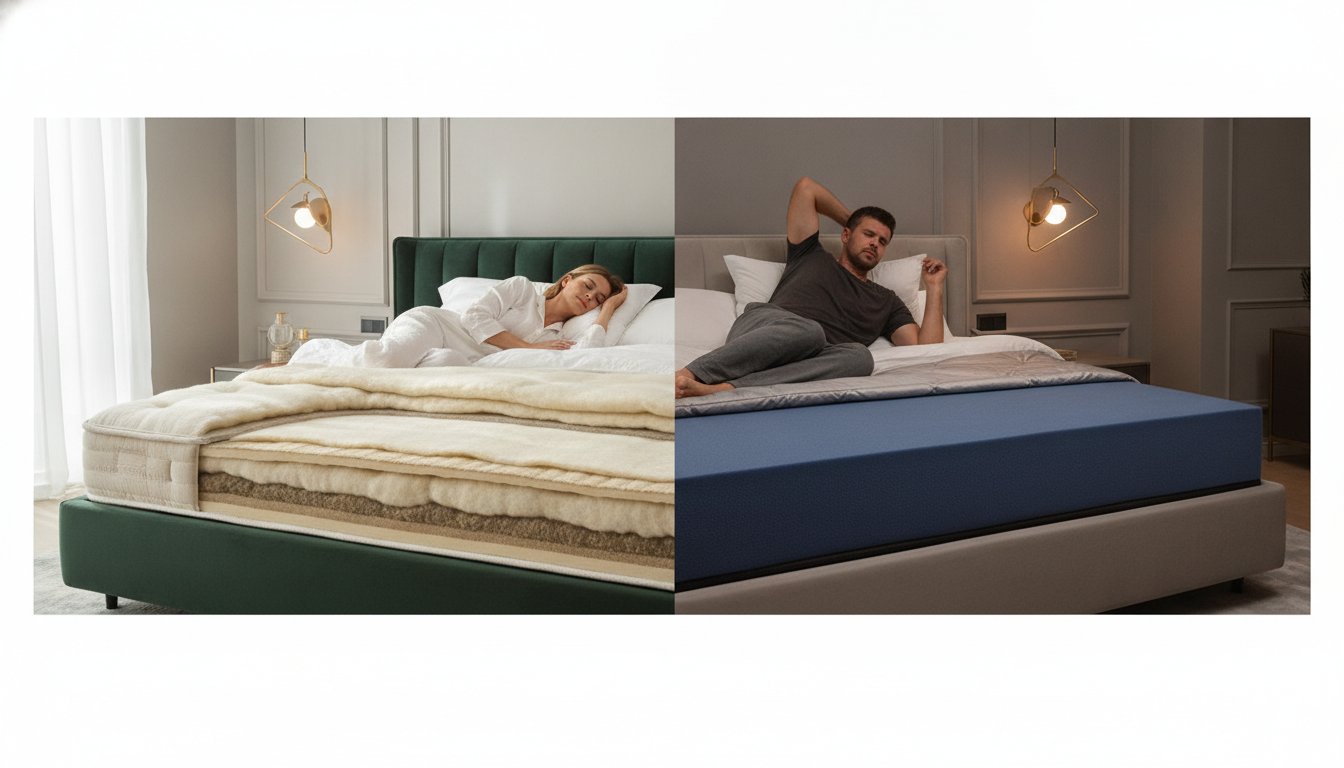
That "space-age" memory foam mattress you bought to solve your back pain might actually be the reason you're waking up at 3 AM in a sweat. While synthetic materials are often marketed as the ultimate sleep technology, the reality of a natural fibre mattress vs foam is that nature usually does it better. It's frustrating to spend your hard-earned money on a bed that starts dipping after just a few years or fills your bedroom with that distinct, chemical "new mattress" smell. We understand that you just want a reliable place to rest that doesn't feel like a furnace.
You aren't alone in feeling like the mattress market has become a bit of a maze lately. We've spoken with so many neighbors who are tired of replacing their beds every few seasons and just want something that lasts. This guide will help you cut through the marketing noise to discover the truth about what's actually inside your mattress and how it affects your health. We'll look at why high-quality natural latex can last up to 15 years while budget foams often fail in five. From debunking "chemical-free" claims to explaining how wool acts as a natural fire barrier without the need for itchy fiberglass, we're here to help you find a sustainable, cool, and supportive sleep environment that truly lasts.
Key Takeaways
- Understand the difference between petroleum-based memory foam and organic materials like wool and cotton to know exactly what you're bringing into your bedroom.
- Learn why the natural fibre mattress vs foam debate isn't just about old versus new, but rather about choosing biologically superior materials for long-term comfort.
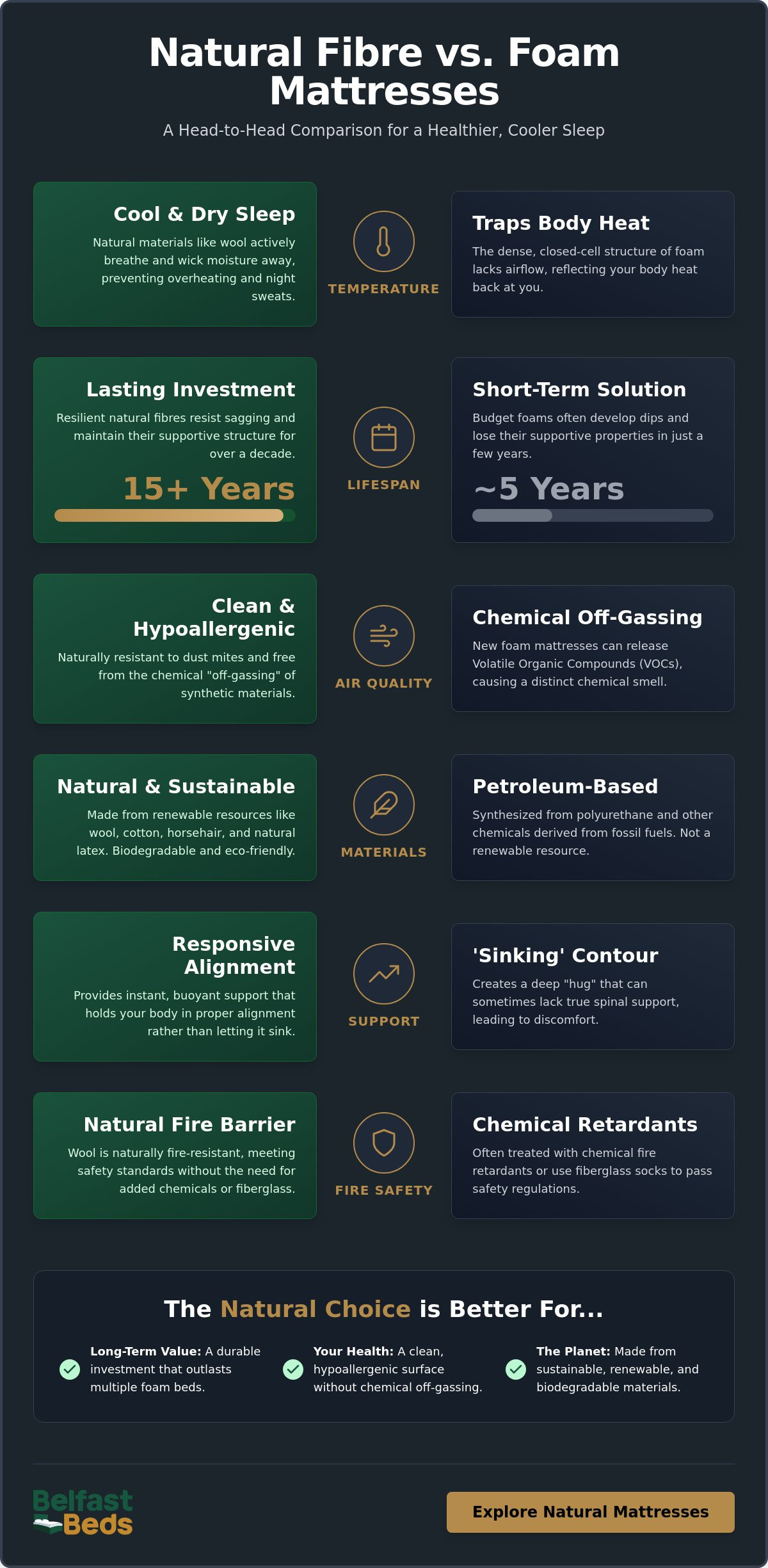
- Discover how natural fibres like wool actively wick moisture away to stop night sweats, unlike foam which often traps and reflects body heat back at you.
- See how investing in natural materials can provide over a decade of support, offering better financial value than budget foam options that may lose their shape quickly.
- Find out how to avoid chemical off-gassing and choose a hypoallergenic sleep surface that supports your well-being in your Cambridge home.
Natural Fibre Mattress vs Foam: What Are You Actually Sleeping On?
Choosing between a natural fibre mattress vs foam often comes down to what you want against your skin for eight hours every night. While both options aim to provide a good night's rest, they achieve it through very different means. A natural fibre mattress is a sustainable, breathable sleep system using animal or plant-derived fillings. On the other hand, foam mattresses rely on synthetic, polyurethane-based viscoelastic materials, commonly known as memory foam, or standard poly-foams. The fundamental choice here is between a material that breathes with you and one that acts as a dense insulator.
Understanding the various mattress materials available helps demystify why some beds feel like a cool breeze while others feel like a warm hug that won't let go. We've found that many of our customers are surprised by the complexity hidden beneath the ticking. Traditional craftsmanship, seen in heritage brands like Relyon and Hypnos, prioritizes airflow through complex layering that synthetics simply can't match.
The Anatomy of a Natural Fibre Mattress
When we look inside a premium natural mattress, we see a sophisticated blend of nature's best insulators and ventilators. Wool is the star player; it's a miracle fibre that regulates temperature and wicks away moisture before you even feel damp. For those who need a bit more "spring" in their step, horsehair and coir (coconut fibre) provide structural bounce and exceptional ventilation. These materials don't just sit there. They create a microclimate that stays dry and comfortable throughout the night. For a touch of true luxury, layers of silk and cashmere are often added to the surface. These fine fibres offer a soft, cloud-like feel that provides a physical sensation of rest that petroleum-based products struggle to replicate.
The Science of Memory Foam and Synthetics
Foam mattresses take a more industrial approach, but it's important to understand the chemistry involved. Viscoelastic foam is specifically engineered to react to your body heat. As you warm up, the foam softens and "moulds" to your shape. This provides excellent pressure relief, but it comes with a trade-off. Because foam is a dense, petroleum-based product, it lacks the natural pathways for air to escape. Instead of moving heat away, it often traps it against your body. While modern foams frequently include cooling gels, they are essentially trying to solve a heat-retention problem that natural fibres don't have in the first place. When you choose a natural fibre mattress vs foam, you're choosing between a ventilated system and a solid block of insulating material.
Busting the Myths: Is Foam Really More 'Advanced' Than Natural Fibres?
Many people assume that foam is the cutting edge choice because of its "space-age" marketing. In reality, memory foam was developed in the 1960s; it's technology that has been around for over half a century. While it was revolutionary at the time, the biological engineering found in natural materials like wool, silk, and cashmere is actually far more sophisticated for human sleep needs. These fibres have evolved over millennia to manage moisture and temperature in ways a synthetic block of chemicals simply cannot match. When comparing a natural fibre mattress vs foam, "new" doesn't always mean better.
Luxury brands like Hypnos continue to use these traditional fillings for their Royal Warrant quality beds because they offer a level of comfort that synthetics can't replicate. While foam is often praised for its "plush" feel, it's important to consider what's inside. Research from the University of Texas has shown that some foam mattresses can emit potentially harmful chemicals through off-gassing. Choosing natural fibres isn't about being old-fashioned. It's about choosing a cleaner, more responsive sleep environment.
The Support Gap: Contouring vs. Alignment
There's a common misconception that because foam "hugs" your body, it's providing better support. In truth, foam offers contouring, but it often lacks the reactive "push-back" support needed for healthy spinal alignment. Sinking too deeply into a foam mattress can cause your heavy midsection to drop, leading to back pain over time. Natural fibres work in harmony with pocket springs to provide a surface that supports your weight while remaining breathable. If you've been struggling with morning aches, you might find that our natural mattress collection provides the structured relief you've been missing.
The Durability Truth
Durability is where the natural fibre mattress vs foam debate really settles. Foam is prone to "fatigue," a process where the chemical cells break down and lose their ability to bounce back. This often results in permanent dips or "valleys" in the mattress within just 5 to 7 years. In contrast, hand-tufted natural fibres are incredibly resilient. When materials like horsehair and wool are secured with traditional hand-stitching, they maintain their loft and support for 10 to 15 years. You can see this dedication to longevity in the craftsmanship of Relyon mattresses, which are built to be an investment in your well-being rather than a temporary fix. Natural materials don't just feel better; they simply last longer.
The 2 AM Test: Temperature Regulation and Night Sweats
We've all been there. You fall asleep feeling cozy and relaxed, only to wake up at 2 AM feeling like you've run a marathon in a sauna. This interrupted rest is often the result of your mattress failing the temperature regulation test. When we look at a natural fibre mattress vs foam, the way each material handles your body heat is fundamentally different. While 83% of mattress buyers in 2026 cite comfort and health as their top priorities, many don't realize that their choice of material is the primary culprit behind those uncomfortable night sweats.
The core of the issue lies in how these materials interact with your environment. Synthetic foams are designed to insulate, while natural fibres are designed to regulate. For our neighbors in Cambridge who want a restful night without the need to constantly flip the pillow, understanding this "micro-climate" is the key to better sleep quality and long-term well-being.
| Material | Airflow | Moisture Wicking | Heat Retention |
|---|---|---|---|
| Wool & Cotton | High | Excellent | Very Low |
| Natural Latex | Medium-High | Good | Low |
| Memory Foam | Low | Poor | High |
Why You Wake Up Sweaty on Foam
Memory foam is a dense, petroleum-based product that relies on your body heat to soften and contour. Because it's a solid block with very little vertical airflow, that heat has nowhere to go. It gets trapped between your body and the mattress surface. This creates a "heat trap" effect where the mattress reflects your own warmth back at you all night long. As you sink deeper into the foam, it creates a seal around your body, further preventing any air from circulating. We often see local sleepers struggling with modern "bed-in-a-box" brands because these synthetic layers simply can't breathe. Additionally, foam is highly sensitive to room temperature; it can feel like a brick in a cold room or lose its support entirely if your bedroom gets too warm.
How Natural Fibres Create a Micro-Climate
Natural materials like wool and cotton are nature's own thermostats. Wool is particularly impressive because it doesn't just absorb moisture; it wicks it away from your skin and releases it into the air. This keep you dry and comfortable rather than damp and chilled. In a natural fibre mattress vs foam comparison, natural layers act like a high-performance sports fabric for your bed. They allow air to move freely through the mattress, carrying away excess heat before it can build up. This creates a stable micro-climate that keeps you cool in the summer and warm in the winter. If you're looking for a more breathable alternative to traditional foam, natural latex options like those from Dunlopillo offer excellent ventilation while maintaining that supportive, pressure-relieving feel you might enjoy. Combined with a crisp cotton cover, these natural materials ensure your sleep remains undisturbed by temperature spikes.
Health, Allergies, and the "New Mattress Smell"
That sharp, chemical scent that greets you when you unroll a new foam bed isn't just a sign of "freshness." It's actually the result of Volatile Organic Compounds (VOCs) escaping from the synthetic materials. When you weigh up a natural fibre mattress vs foam, you're looking at more than just comfort; you're deciding on the air quality of your bedroom. For many of our neighbors, this "off-gassing" process can cause headaches or respiratory irritation, making those first few weeks with a new bed rather unpleasant.
Safety is another area where nature holds a hidden advantage. Since May 3, 2026, federal safety standards for mattress construction have become even more rigorous. While every mattress we sell meets strict fire resistance regulations, the way they achieve this varies. Natural mattresses often use wool as a built-in flame barrier. This replaces the need for the heavy chemical treatments or fiberglass liners sometimes found in budget foam models. Choosing a bed from a trusted name like Hypnos means you're resting on materials that are naturally safe and ethically sourced.
Off-Gassing and Indoor Air Quality
Off-gassing happens when the petroleum-based chemicals used in foam production begin to break down and release into the air. This process can last anywhere from a few days to several weeks depending on the density of the foam. For sensitive sleepers, children, or anyone looking to reduce their chemical exposure, opting for natural fillings is a straightforward solution. You're essentially choosing a sleep surface that is as clean as it is comfortable. If you're ready to breathe easier, you can browse our natural fibre mattress collection to find a healthier fit for your home.
Allergies: Wool vs. Dust Mites
There's a persistent myth that natural fibres like wool trigger more allergies. In reality, true wool allergies are quite rare. Most "allergic" reactions people experience with older beds are actually caused by dust mites. These tiny pests thrive in warm, damp environments, which is exactly what a heat-trapping foam mattress provides. Because natural fibres are so efficient at wicking moisture away, they create a dry environment where dust mites struggle to survive. This makes a natural fibre mattress vs foam an easy choice for allergy sufferers. Many options from Sealy are designed with these hypoallergenic properties in mind. For a deeper look at how to choose a bed that supports your health, check out our Sealy Guide for hypoallergenic options specifically for Cambridge sleepers.
Making the Choice: Which is Right for Your Cambridge Home?
Deciding on a natural fibre mattress vs foam often depends on the specific character of your home and your personal sleep habits. Many of our neighbors in Cambridge live in beautiful older properties where managing humidity and temperature can be a bit of a challenge. In these environments, the breathability of natural materials is a significant advantage. If your bedroom tends to get warm in the summer or feels a bit damp in the winter, the airflow provided by wool and cotton layers will help maintain a consistent, comfortable surface. We want you to feel confident that your investment supports your well-being for years to come.
Budget is always a factor, but we encourage you to look at the "price per night" rather than just the initial cost. A high quality natural fibre mattress from a brand like Relyon might have a higher upfront price, but its 10 to 15 year lifespan offers much better value than a budget foam mattress that needs replacing in five. When you consider how much a good night's sleep affects your productivity and health, the long term benefits of durable, natural materials become very clear.
Your preferred sleep position also plays a role in this choice. Side sleepers often enjoy the pressure relief of foam, but they frequently struggle with the heat it generates. In these cases, a hybrid model or a natural latex option can provide that same "cloud-like" feel without the overheating. Back and stomach sleepers generally benefit from the firmer, more reactive support found in pocket-sprung mattresses with natural comfort layers, such as those in the Hypnos collection. These beds keep your spine aligned without the sinking sensation that can lead to morning stiffness.
Summary Checklist for Shoppers
- Choose Natural Fibres if: You frequently wake up feeling hot, you prefer a mattress that lasts over a decade, or you want to avoid synthetic chemicals and off-gassing in your home.
- Choose Foam if: You have a very strict short term budget, you specifically enjoy the "sinking" sensation of memory foam, or you need a lightweight mattress for an adjustable base.
- The Hybrid Option: Consider a mattress that combines a supportive pocket spring core with natural comfort layers for the best of both worlds.
Visit Belfast Bed Superstore
While reading about specifications is helpful, nothing beats a local "lay-down" test in our showroom. You need to feel the tension of the springs and the texture of the fibres for yourself to know what truly feels right. We're here to guide you through the process without any high-pressure tactics. Once you've found your perfect fit, we make things easy with local Cambridge delivery and a convenient service to remove your old bed. If you're currently refreshing a guest room and need a versatile solution, our Zip and Link Bed Guide is a great place to start. We look forward to helping you find the restful sleep you deserve.
Find Your Perfect Rest in Cambridge
Choosing between a natural fibre mattress vs foam is a decision that affects your well-being for years to come. We've explored how nature's own materials, like wool and cotton, outperform synthetic foams by regulating your temperature and providing support that actually lasts. By opting for a mattress that breathes, you're saying goodbye to night sweats and hello to a cleaner, chemical-free sleeping environment. It's about finding that perfect balance of comfort and durability that suits your specific home and lifestyle.
At Belfast Bed Superstore, we've been family-run since 1990, and we're committed to helping you find the right bed without any pressure. You can shop with confidence thanks to our 30-night sleep trial guarantee. We also provide expert local delivery and assembly throughout Cambridgeshire to make the process as easy as possible. When you're ready to feel the difference for yourself, explore our range of natural Hypnos and Relyon mattresses at our Cambridge showroom. We look forward to helping you achieve the deep, restful sleep you deserve.
Frequently Asked Questions
Do natural fibre mattresses smell?
Natural fibre mattresses don't have the chemical "off-gassing" smell that is often associated with synthetic foam. While you might notice a very faint, earthy scent of fresh wool or cotton when the bed is first delivered, this usually disappears within a few hours. Unlike petroleum-based products, these materials don't release volatile organic compounds into your bedroom air. This makes them a much fresher choice for anyone sensitive to strong odors or chemical smells.
Is memory foam better for back pain than a natural fibre mattress?
Not necessarily, as a high-quality natural mattress often provides superior support for long-term spinal health. The combination of reactive pocket springs and resilient natural layers helps keep your spine in a neutral position throughout the night. Foam can sometimes allow your hips to sink too deep, which might lead to morning stiffness. Choosing a natural fibre mattress vs foam depends on whether you prefer the "hug" of foam or the "push-back" support of nature.
How long does a natural fibre mattress last compared to foam?
A well-made natural fibre mattress typically lasts between 10 and 15 years, significantly outperforming most synthetic options. High-density foams often begin to "fatigue" or lose their supportive shape within 5 to 7 years, leading to permanent dips. Because materials like horsehair and wool are naturally resilient, they maintain their loft for much longer. This durability makes natural options a more sustainable and reliable investment for your Cambridge home.
Are natural fibre mattresses more expensive?
Natural mattresses often have a higher upfront cost because the materials are more expensive to source and the construction is more labor-intensive. However, they provide better long-term value. When you consider that a natural bed can last twice as long as a budget foam model, the "price per night" is actually lower. It's an investment in better sleep quality and fewer replacements over the next decade.
Can I use a natural fibre mattress on a slatted bed base?
You can certainly use a natural mattress on a slatted base, but you should check the gap between the slats first. We recommend that slats are no more than 7.5cm apart to ensure the natural fillings don't bulge through the gaps. If your slats are wider, you can easily use a mattress base pad to provide a more even surface. This protects the mattress and ensures you get the full benefit of its support.
Is wool in a mattress hot to sleep on?
Wool is actually one of the coolest materials you can sleep on. While people often associate wool with winter warmth, its primary job in a mattress is to move moisture away from your body and allow air to circulate. This prevents the "clammy" feeling often found with synthetics. In the natural fibre mattress vs foam debate, wool is the clear winner for anyone who struggles with overheating or night sweats.
What is the best mattress for someone with chemical sensitivities?
A natural fibre mattress is the ideal choice for anyone with chemical sensitivities or respiratory issues. These beds avoid the synthetic adhesives and flame retardant chemicals often found in polyurethane foams. By choosing organic cotton, wool, or natural latex, you're creating a sleep environment with very low VOC emissions. This leads to cleaner indoor air quality and a more restful night for sensitive sleepers in your household.
Do I need to flip a natural fibre mattress?
Most traditional natural mattresses are designed to be flipped and rotated regularly to settle the fillings evenly. This simple bit of maintenance helps your bed stay comfortable and supportive for its entire 15-year lifespan. While some modern "no-turn" versions exist, we usually recommend turnable models for the best durability. Our team can always show you the best techniques for managing your specific mattress during our local delivery and assembly.


