
Choosing the most famous name in sleep doesn't always guarantee the best night's rest for your back or your thermostat. You've likely seen the sleek adverts for the Emma mattress vs traditional pocket sprung options and wondered if a box delivered to your door can really outshine a master-crafted bed in 2026. It's a common dilemma, particularly when you're worried about waking up too hot or finding your mattress sagging after only a few years of use.
We believe that a mattress is a vital investment in your health and daily happiness, not just a quick purchase. We want to help you discover the honest differences between trendy bed-in-a-box foam and time-tested pocket sprung craftsmanship so you can find your perfect match. You deserve a bed that offers natural temperature regulation and proper spinal alignment without that restrictive sinking feeling that some synthetic materials create.
This comparison explores which path leads to a better night's sleep over the next ten years. We'll look at the technical details of foam versus springs, the reality of heat retention, and how to ensure your new bed meets strict UK safety standards for total peace of mind.
Key Takeaways
- Identify the core construction differences between synthetic "bed-in-a-box" models and the handcrafted steel coils found in traditional pocket sprung units.
- Compare the "sinking" sensation of memory foam against the active, zoned support of pocket springs to find your ideal level of spinal alignment.
- Address the Emma mattress vs traditional pocket sprung choice by weighing the convenience of foam against the natural breathability and cooling of materials like wool and cotton.
- Learn how to select a mattress based on your BMI and sleeping style to prevent common issues like premature sagging and mid-night overheating.
- Understand why testing a mattress in person offers more reliable long-term satisfaction than relying on a complex mail-order return process.
Understanding the "Bed-in-a-Box" vs. Traditional Craftsmanship
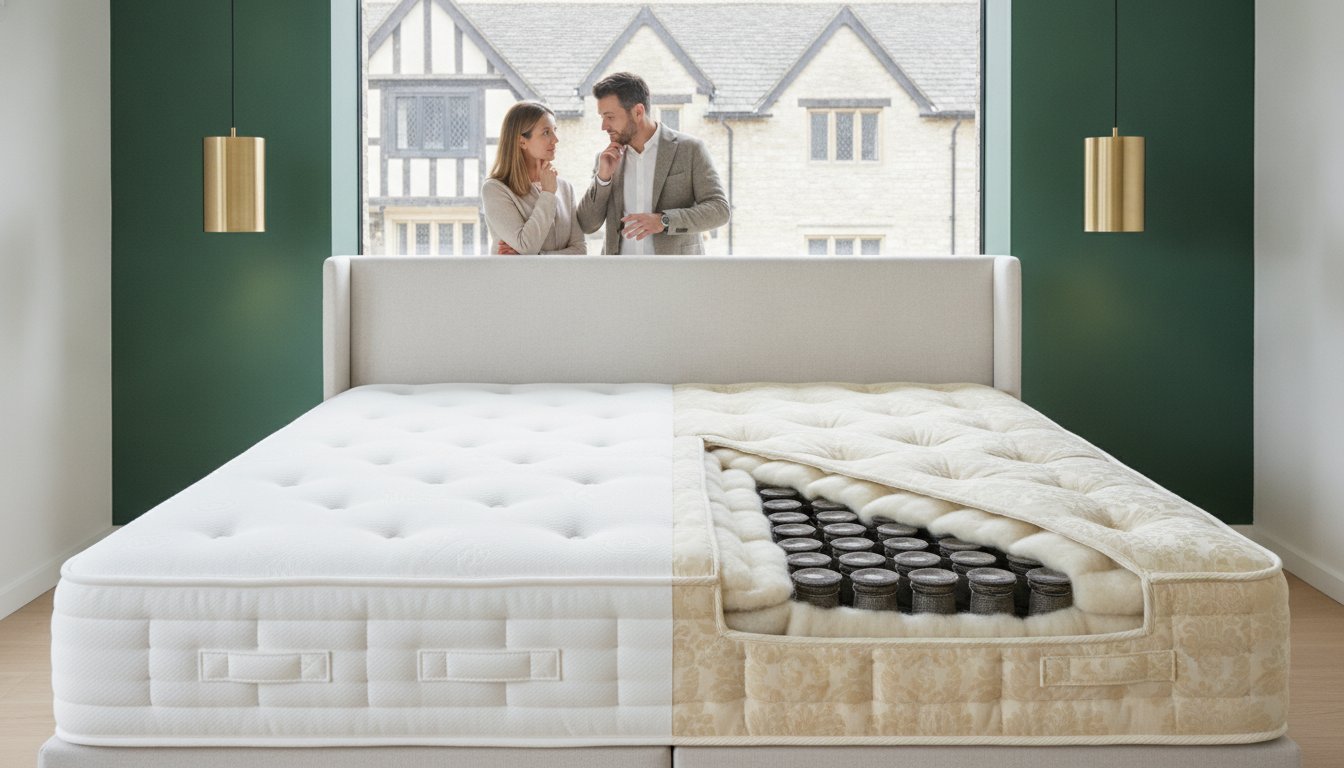
When you're weighing up the choice between an Emma mattress vs traditional pocket sprung bed, you're really choosing between two very different ways of making things. The "bed-in-a-box" model is a marvel of modern shipping. It's designed to be squashed, rolled, and popped into a cardboard box for easy delivery. Traditional mattresses, like the ones we've specialized in for years, are built as solid units from day one. They use individual steel coils and natural fillings that simply wouldn't survive being vacuum-packed. While the convenience of a box is great for a quick delivery, that same flexibility can lead to "roll-off" at the edges, where the mattress feels like it's sloping away as you get near the side.
The fundamental difference comes down to how these beds are assembled. Mass-produced foam beds are often cut from large blocks of material in a factory setting. A traditional pocket sprung mattress is assembled with a focus on longevity. When you choose a handcrafted bed from our local collection, you're getting a product that hasn't been compromised by the need to fit into a shipping container. It's about choosing the stability of steel and the comfort of natural layers over the convenience of a cardboard box.
What is an Emma Mattress Actually Made Of?
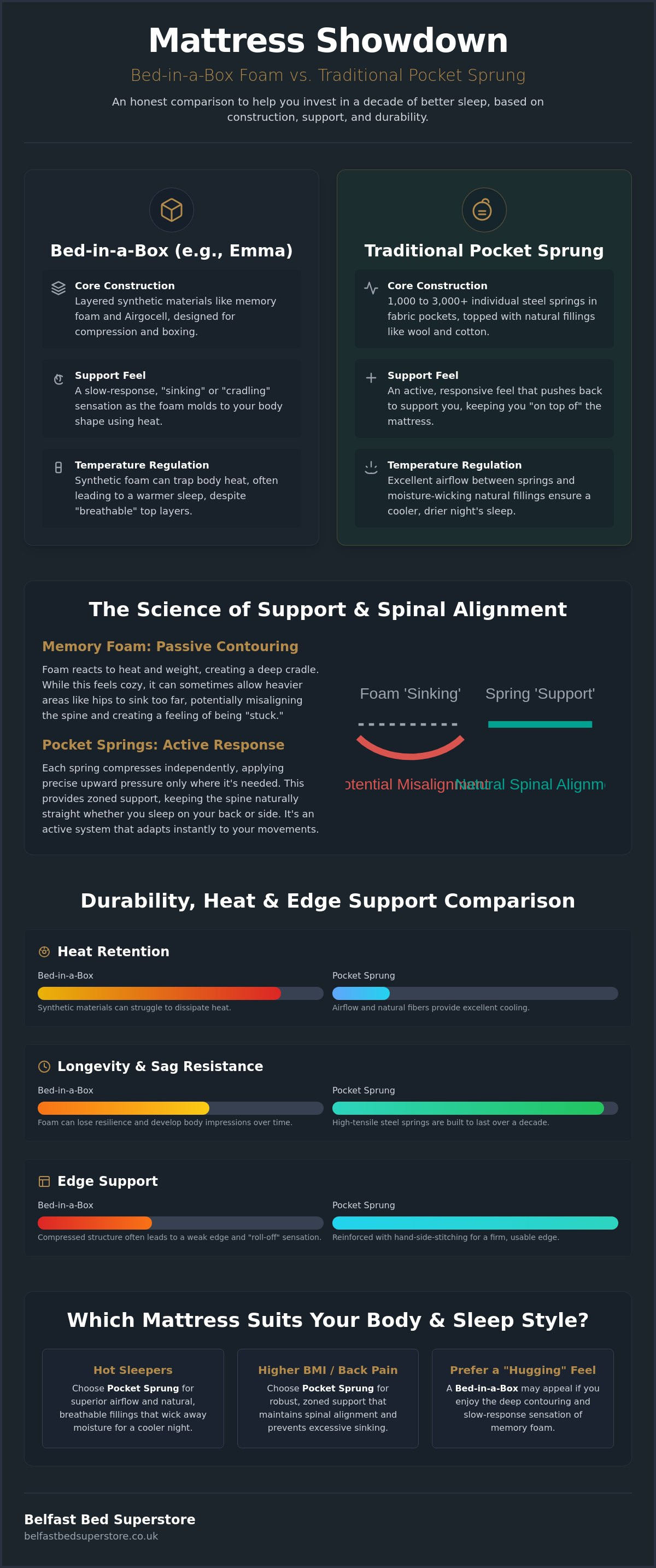
An Emma mattress is primarily a foam product. It uses layers like Airgocell foam for breathability and memory foam for that classic body-moulding feel. In their hybrid versions, they add a thin layer of micro-springs. These synthetic materials are cost-effective and easy to move, but they do come with a few trade-offs. Deciding between an Emma mattress vs traditional pocket sprung choice often comes down to how you feel about synthetic materials. The "new mattress smell" or off-gassing is a frequent topic of conversation with our customers. It's the scent of the chemicals used in the foam production escaping once the plastic seal is broken. It usually fades after a few days, but it's a stark reminder of the synthetic nature of the product.
The Anatomy of a Traditional Pocket Sprung Mattress
A traditional pocket sprung mattress is a much more complex piece of engineering. Inside, you'll find anywhere from 1,000 to over 3,000 individual springs. Because each spring is in its own fabric pocket, they only compress where you apply pressure. This creates a much more tailored support system than a solid block of foam. We often point people towards brands like Relyon or Hypnos because they use genuine hand-side-stitching. This isn't just for looks; it's a structural necessity that keeps the mattress shape intact for a decade or more. Understanding the different mattress construction types helps you see why a handcrafted bed is a long-term investment in your health. You can explore the specific hand-stitched mattress benefits that keep our local customers coming back to us year after year.
The Science of Support: Memory Foam vs. Pocket Springs
When you lie down at the end of a long day, the way your mattress pushes back determines how you'll feel the next morning. In the ongoing debate of an Emma mattress vs traditional pocket sprung beds, the physical sensation is the biggest divider. Foam beds are famous for that deep, cradling sensation. They use your body heat to soften and mould around your shape. Traditional pocket springs work differently. They provide an active response, pushing back against your weight to keep you on top of the mattress rather than inside it.
Spinal alignment is where the science gets serious. A systematic review of controlled trials suggests that medium-firm mattresses are often the gold standard for sleep quality and back health. Both foam and sprung mattresses aim for this, but they achieve it through different means. Pocket springs are particularly clever because they act independently. If your hips are heavier than your shoulders, the springs under your hips compress more while the others stay firm. This keeps your spine straight whether you're a side or back sleeper. If you're unsure which feel is right for your body, we invite you to browse our full collection and see the difference for yourself.
Motion transfer is another area where both styles excel. Because the Emma uses dense foam and traditional beds use individual fabric pockets for each spring, movement doesn't bounce across the bed. If your partner tosses and turns, you won't feel every wiggle. It's a massive win for light sleepers who need undisturbed rest to function well.
Pressure Relief: The Foam Argument
Memory foam is a champion at reducing joint pressure. It contours so closely that it can feel like you're floating. This is a huge benefit for lightweight sleepers or anyone dealing with sensitive nerve pain. However, some people experience what we call the "quicksand" effect. Because the foam takes time to reshape itself, it can feel like you're fighting the bed just to turn over in the middle of the night. It's a cozy feeling for some, but for others, it feels restrictive.
Dynamic Support: The Pocket Spring Advantage
Steel springs don't have a "reset" time. They adjust to your movements instantly. This dynamic support is why many of our local customers prefer traditional builds. You aren't stuck with a one-size-fits-all firmness level either. Traditional beds come in specific tensions like soft, medium, or firm. If you're looking for orthopaedic support, you might want to read our guide on Hypnos vs Sealy for back pain to see how different brands tackle spinal health. This variety ensures your mattress is built for your specific height and weight.
Durability, Heat, and the "Sagging" Factor
The most common complaint we hear from folks switching away from foam is that they're waking up in a sweat. When comparing an Emma mattress vs traditional pocket sprung model, the way each handles your body heat is often a dealbreaker. Foam is an insulator by nature; it's designed to trap energy to soften the material. Even with modern cooling gels, it often can't compete with the natural ventilation provided by a sprung interior. Our local customers across Cambridgeshire and East Anglia frequently tell us they prefer the airy feel of a bed that lets their skin breathe throughout the night.
There's also the matter of the edges. Because boxed mattresses must be flexible enough to roll into a tight cylinder, they often lack the reinforced perimeter found in traditionally made beds. You'll notice this immediately when you sit on the edge of the bed to put your socks on. A traditional bed feels like a solid, supportive piece of furniture right to the very edge. A rolled foam bed can sometimes feel like it's collapsing under that concentrated weight, making the usable sleeping surface feel smaller than it actually is.
Temperature Regulation: Natural vs. Synthetic
Natural fibres like wool, cotton, and silk are mother nature's own climate control system. They don't just sit there; they actively wick moisture away from your skin and allow air to circulate through the mattress layers. Synthetic foams rely on chemical additives to try and mimic this effect, but they eventually reach a heat soak point where they can't absorb any more warmth. If you love the pressure relief of foam but hate the heat, you might find our guide to Dunlopillo mattresses helpful, as latex offers a more breathable, natural alternative to memory foam.
Long-Term Value and the Environment
Choosing between an Emma mattress vs traditional pocket sprung isn't just about the first night; it's about the 3,000th night. Durability is where the investment really pays off. A standard foam mattress typically lasts between five and seven years before the memory starts to fade and permanent dips appear. In contrast, a high-quality pocket sprung unit can easily provide consistent support for 10 to 15 years. This sagging factor isn't just about comfort. Once the foam loses its resilience, it can't keep your hips and shoulders aligned, which often leads to those familiar morning aches.
We also have to think about what happens when the mattress reaches the end of its life. Steel springs and natural fillings are far easier to recycle than dense blocks of synthetic foam. When you calculate the cost per night over a decade, a premium Hypnos mattress often works out as better value than buying two or three budget foam beds in the same timeframe. It's a choice that's better for your wallet, your back, and our local East Anglian environment.
Personalised Sleep: Which Mattress Suits Your Body Type?
You'll wake up feeling much more refreshed when your mattress matches your body type and sleeping style. Finding the right balance in the Emma mattress vs traditional pocket sprung debate depends heavily on your unique shape. Heavier sleepers, particularly those with a higher BMI, often find that all-foam mattresses lack the necessary "uplift." Instead of holding you up, the foam can compress too much. This leads to a "trapped" feeling that makes it difficult to turn over during the night. Traditional springs act like a suspension system. They push back against your weight to keep you resting on top of the bed rather than sinking into it.
The fabrics and base you choose also impact your comfort. Emma mattresses typically feature polyester knit covers. These are stretchy and durable for the delivery process, but they can feel a bit synthetic. Traditional mattresses often use luxury damask. This is a tightly woven, breathable fabric that adds a layer of stability and a touch of luxury to your bedroom. Your choice of base matters too. A slatted base can make any mattress feel slightly firmer, while a solid divan base provides a consistent, flat surface that helps your investment last for years. If you want to see how these materials feel for yourself, view our latest mattress collections online or in-store.
The Best Choice for Couples
Your relationship can actually benefit from the right mattress technology. If you and your partner have different body weights, a standard foam mattress might struggle to support you both equally. Traditional brands like Relyon offer mattresses with variable tensions. This means one side can be firmer than the other to suit each person's needs. While foam is famous for motion isolation, high-quality pocket springs achieve the same result. Because the springs move independently, you won't be bounced around when your partner gets out of bed. You also get the added benefit of superior edge support, which is vital when two people are sharing the full width of the mattress.
Support for Back and Joint Pain
You can maintain your natural lumbar curve more easily with a bed designed for spinal health. Many people mistakenly think a "firm" mattress is the only answer for a bad back, but too much firmness can create painful pressure points. You need a surface that contours to your spine while providing deep support. Sealy Posturepedic technology is a fantastic middle ground in the Emma mattress vs traditional pocket sprung comparison. It uses specially engineered springs to provide extra support where you need it most, helping to align your body and reduce morning aches.
Beyond the Box: Why Testing a Mattress in Cambridge Matters
Relying on a 100-night trial sounds like a fantastic safety net, but it's often a reactive solution to a problem that could've been avoided. When you're choosing between an Emma mattress vs traditional pocket sprung model, the convenience of a box often masks the reality of what happens if you don't like it. Online-only brands hope their trial period makes up for the lack of expert guidance. In reality, once that foam mattress has expanded to its full size, it's nearly impossible to get back into a box. You're left coordinating with couriers and moving a heavy, floppy weight through your home; it's a far cry from the easy delivery promised on the website.
We believe your time is better spent finding the right bed the first time around. By visiting a specialist showroom, you can compare the physical sensation of different materials side-by-side. You'll quickly see how the "active" support of a traditional spring compares to the "passive" sink of foam. This hands-on experience demystifies the purchasing process and ensures you aren't just guessing based on a glossy advert. It's much easier to make a confident decision when you can feel the quality of the stitching and the resilience of the springs for yourself.
The Showroom Advantage
Spending just 15 minutes with a sleep expert often beats 100 hours of scrolling through online reviews. We can help you identify exactly why one tension feels better than another based on your posture. In our showroom, you can try established brands like Birlea Furniture or Flintshire Furniture to see how they pair with different bedstead styles. It's about getting a feel for real luxury materials, like natural wool and hand-side-stitching, before you make a ten-year commitment to your rest.
White-Glove Service in Cambridgeshire
We take pride in being your "friendly local expert" right here in the East Anglian region. Unlike national couriers who might leave a heavy box on your doorstep, our local delivery teams provide a full white-glove service. We don't just drop off a product; we offer professional assembly and can even arrange for old bed removal. This level of care ensures your new investment is set up correctly for maximum longevity. We invite you to visit us for a personalised "comfort test" to settle the Emma mattress vs traditional pocket sprung debate for yourself. Our goal is your long-term satisfaction, not just a quick transaction.
Invest in a Decade of Better Rest
Deciding between an Emma mattress vs traditional pocket sprung model ultimately comes down to whether you value short-term convenience or long-term physical well-being. We've seen that while foam offers a quick delivery, traditional craftsmanship provides the natural breathability and edge-to-edge support needed for a truly restorative sleep environment. A mattress is a ten-year investment in your health; it's worth taking the time to get it right.
As a family-run business since 1990, we're here to help you find that perfect fit without any pressure. We offer 0% finance on all our premium brands and provide a full old bed removal and recycling service across Cambridgeshire to make your transition as smooth as possible. Don't leave your comfort to chance or a complex return process.
Visit our Cambridge Showroom to test the UK’s leading mattress brands today and feel the difference that expert guidance makes. Your perfect night's sleep is closer than you think, and we can't wait to help you discover it.
Frequently Asked Questions
Is an Emma mattress better for back pain than a pocket sprung one?
Pocket sprung mattresses often provide better zoned support for back pain because the individual coils push back against your weight. While foam offers excellent pressure relief for joints, it can sometimes lack the "uplift" needed to keep the spine neutral. In the Emma mattress vs traditional pocket sprung comparison, those with chronic lower back issues often find the active response of steel springs more reliable for long-term comfort.
Do Emma mattresses sag over time?
Foam mattresses are more prone to permanent indentations over time compared to steel spring units. Because foam relies on chemical resilience, it can lose its "memory" after five to seven years of use. This is especially true if the mattress is used by heavier sleepers or hasn't been rotated regularly. Traditional springs maintain their height and tension much longer because steel is a more durable structural material.
Why are traditional pocket sprung mattresses more expensive?
The cost reflects the premium materials and the time-intensive craftsmanship required for assembly. Traditional beds use high-grade steel and natural fillings like wool and cotton, which are more expensive than synthetic foams. Hand-side stitching, a feature found in luxury brands, requires skilled labour to secure the mattress borders. This creates a bed that lasts twice as long as most boxed alternatives, offering better value over time.
Can you use a pocket sprung mattress on a slatted bed frame?
You can use a pocket sprung mattress on a slatted frame as long as the gaps between the slats are no wider than 7.5cm. If the gaps are too large, the individual springs can get caught between them, which leads to an uneven surface and premature wear. We always recommend checking your bed base condition before putting a new mattress on it to ensure you get the full level of support.
Do I need to flip a traditional pocket sprung mattress?
Many modern pocket sprung mattresses are designed as "non-turn," meaning you only need to rotate them head-to-toe every few months. However, some traditional models are seasonal and require flipping to make use of different cooling or warming layers. Rotating your mattress is essential to even out the pressure on the springs and fillings, helping the unit keep its shape for its full lifespan.
Is foam or spring better for hot sleepers in the summer?
Pocket springs are the superior choice for hot sleepers because they allow air to circulate freely through the mattress core. Natural fillings like wool and cotton also help by wicking away moisture from your skin. When comparing an Emma mattress vs traditional pocket sprung model in the summer, synthetic foam tends to trap body heat, which can lead to a restless and uncomfortably warm night's sleep.
How long should a traditional pocket sprung mattress last?
A high-quality pocket sprung mattress should provide consistent support for 10 to 15 years. This longevity is significantly higher than the five to seven years expected from most all-foam mattresses. By choosing a bed with durable steel coils and natural comfort layers, you're investing in a product that maintains its structural integrity and comfort levels for over a decade of nightly use.
What is the best spring count for a king-size mattress?
The ideal spring count for a king-size mattress is generally between 1,000 and 2,000 in a single layer. This provides a high level of independent support without the springs being too small to be effective. When you see counts higher than 3,000, it usually means the manufacturer has added layers of tiny micro-springs on top of the main support unit for extra contouring and pressure relief.


