
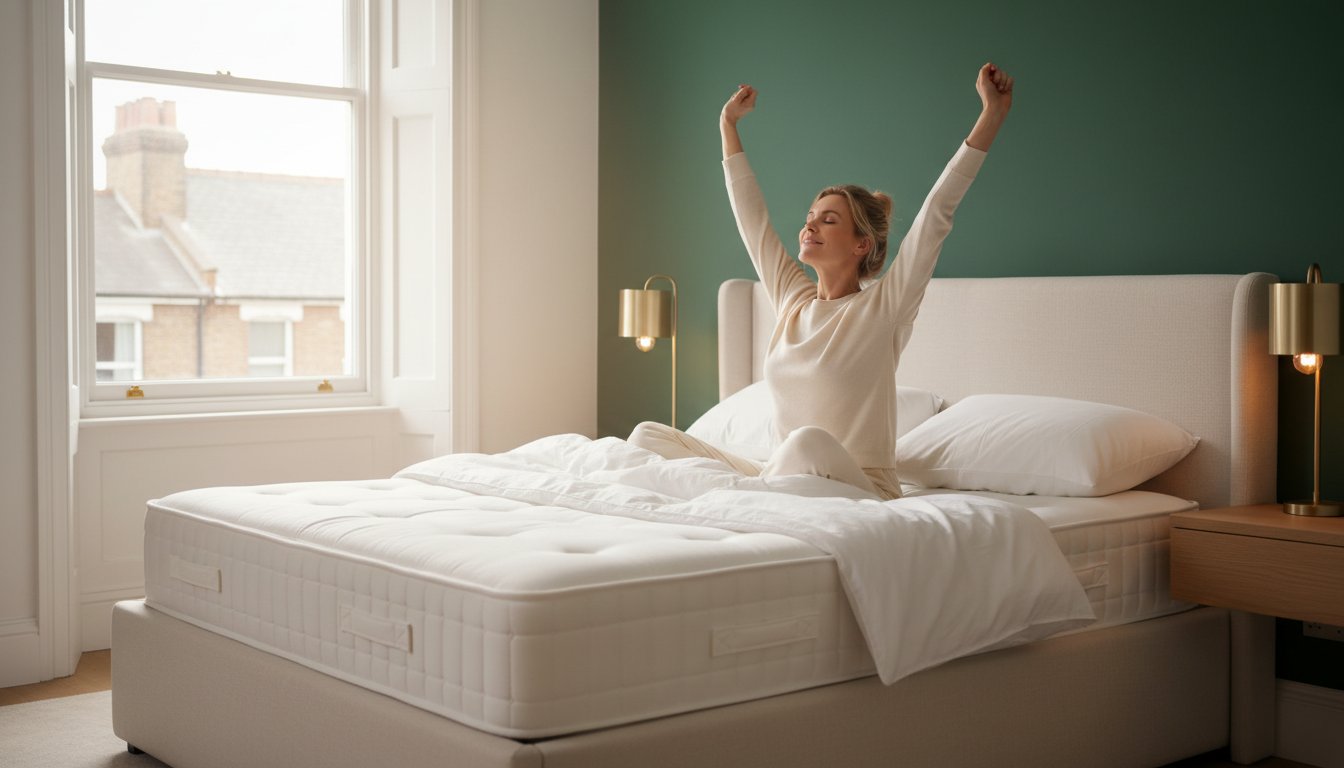
What if the bed you're relying on for a good night's rest is actually the reason you're waking up with a stuffed nose and a foggy head? It's a common struggle for many of our neighbors here in Belfast, especially since recent 2026 data shows that 41% of people are now prioritizing sleep health as their top wellness goal. We know how frustrating it is to feel congested and unrefreshed, or to worry that a premium, natural material might actually trigger your hay fever. Finding a genuine hypoallergenic mattress for allergy sufferers shouldn't be a guessing game filled with confusing labels and technical jargon.
You deserve to breathe clearly throughout the night and enjoy a luxurious sleep surface that supports your health. We're here to help you reclaim your sleep and wake up refreshed by demystifying the latest 2026 industry standards, such as the new GOTS 8.0 regulations and updated Oeko-Tex certifications. This guide previews the best options from trusted brands like Hypnos and Sealy, ensuring you find a durable, hygienic solution that makes every morning feel better than the last.
Key Takeaways
- Identify whether your current bed is causing morning congestion by using our simple "morning after" test to check for hidden allergens.
- Debunk common myths about natural fillings and see why materials like British wool are often the healthiest choice for sensitive lungs and clear breathing.
- Follow our expert steps to match a hypoallergenic mattress for allergy sufferers with your unique sleep style and specific triggers like dust or hay fever.
- Complete your sleep sanctuary by understanding how slatted bases and specialized pillows keep your bedroom environment fresh and well-ventilated.
- Get the inside scoop on why premium brands like Hypnos and Sealy lead the way in providing long-term hygiene and a better start to your day.
Hypoallergenic vs. Anti-Allergy: Finding Your Perfect Sleep Solution
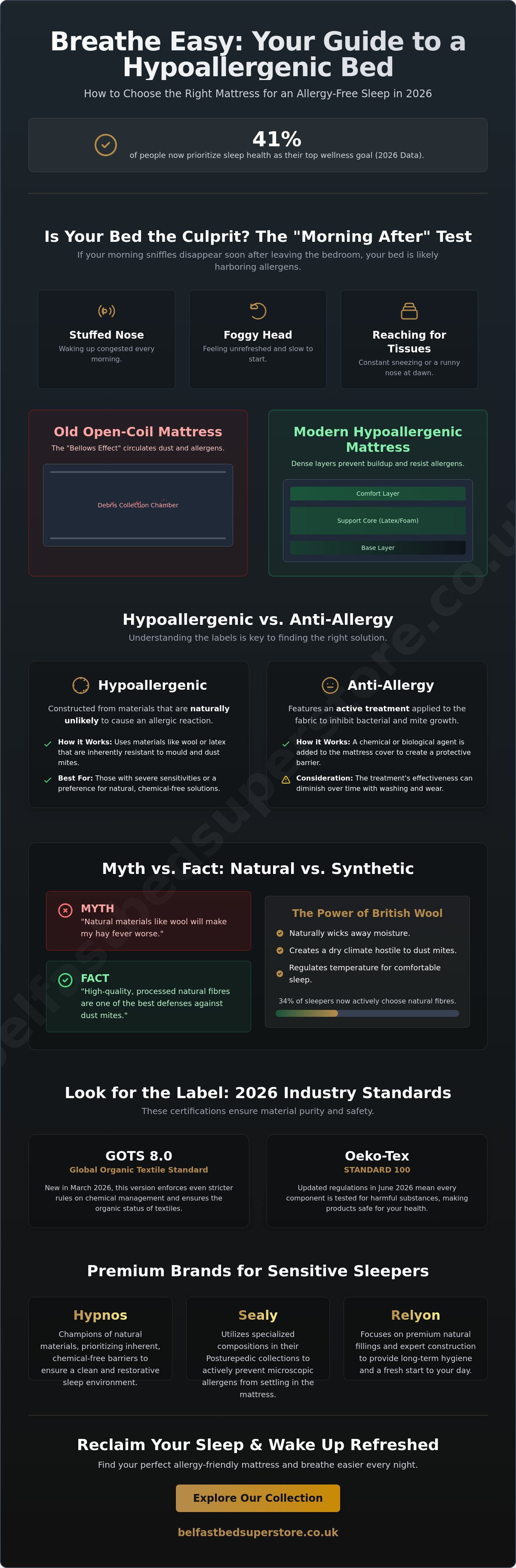
Have you ever noticed that your morning sniffles disappear about twenty minutes after you leave the bedroom? We call this the "Morning After" test. If you find yourself reaching for tissues every single dawn but feel fine by the time you've reached the kitchen, your bed is likely harboring irritants. For many, finding the right hypoallergenic mattress for allergy sufferers is the first step toward a clear-headed start to the day. We've helped plenty of folks across Northern Ireland realize that their "seasonal" allergy was actually just an old, dusty mattress. In 2026, sleep hygiene standards have reached a new peak. With the release of GOTS Version 8.0 in March 2026 and updated Oeko-Tex regulations coming in June, manufacturers are now held to much stricter rules regarding chemical management and material purity.
The difference between labels can be confusing for even the most seasoned shopper. Hypoallergenic mattresses use materials that are naturally hostile to common triggers like mould and dust. Anti-allergy products, on the other hand, usually feature an active treatment applied to the fabric to inhibit bacterial growth. While both offer benefits, choosing the right one depends on how sensitive you are and what specifically triggers your reactions. A quality sleep surface should do more than just feel cozy; it should act as a barrier between you and the microscopic world that disrupts your rest.
The Science of Sleep Hygiene
Traditional open-coil mattresses can unfortunately act like a collection chamber for debris. Every time you move, the springs create a bellows effect, circulating air that is often filled with dead skin cells and moisture. This creates a perfect playground for house dust mites, which are the primary cause of nighttime congestion. A stuffy nose isn't just a part of waking up; it's often a sign that your bedroom ecosystem needs a refresh. Modern designs, like those found in the Sealy Posturepedic collection, use specialized compositions to prevent these microscopic guests from settling in.
Which Label Should You Trust?
Manufacturers often use "allergy-friendly" as a broad marketing term, but it lacks the weight of a certified claim. If you have severe hay fever or asthma, you should look for passive materials like latex or wool that don't require chemical interventions. Active anti-allergy treatments are great for adding an extra layer of protection, especially in synthetic models, but they can sometimes fade over time. A hypoallergenic mattress is defined as a sleep surface constructed from materials that are inherently unlikely to cause an allergic reaction. Premium brands like Hypnos and Relyon prioritize these natural barriers to ensure your sleep environment stays clean and restorative for years to come.
Synthetic vs. Natural Fillings: Which is Best for Allergy Sufferers?
There's a common worry we hear at our Belfast showroom: "Won't natural materials make my hay fever worse?" It's a fair question, but the reality is often the opposite. While some might assume synthetic is the only safe route, high-quality natural fibres are actually some of the best tools for reducing dust mites in your home. In fact, 2026 market trends show that 34% of sleepers are now actively choosing latex and natural fibres specifically for their hypoallergenic properties. Choosing a hypoallergenic mattress for allergy sufferers isn't just about what's inside the bed; it's about how those materials manage the environment around your body while you sleep.
The "natural is bad" myth usually stems from memories of old, dusty feather pillows. Modern premium mattresses use sophisticated cleaning processes and specific fibres that dust mites find very unattractive. Whether you prefer the cradling feel of memory foam or the bounce of a pocket-sprung natural model, the goal is the same: keeping your sleep surface dry, breathable, and clear of irritants. We take pride in helping you find that balance, ensuring you get a premium night's rest without the morning-after congestion.
The Benefits of Natural Fibres
British wool is a bit of a secret weapon in the bedding world. It naturally wicks away moisture and regulates temperature, creating a dry micro-climate that dust mites simply can't survive in. Brands like Hypnos Mattresses lead the way here, using sustainable and clean-processed fillings that provide a luxury feel without the irritation. If you're looking for the gold standard, latex is another fantastic natural choice. It's inherently antimicrobial and resistant to dust mites, making it a dependable option for anyone who values long-term hygiene and deep, restful sleep. These materials don't just feel supportive; they actively work to keep your air clear all night long.
The Synthetic Advantage
For those with particularly sensitive respiratory systems or severe asthma, synthetic materials offer a different kind of peace of mind. Memory foam and reflex foam feature a "closed-cell" structure. This solid core makes it physically difficult for allergens to penetrate the deep layers of your bed. Polyester fibres used in modern mattresses are also designed to be incredibly breathable, preventing the heat buildup that often encourages mould growth. We often recommend these to our local customers who need a predictable, irritation-free surface at a fair price. If you aren't sure which path to take, you can browse our full range of allergy-friendly options to find your perfect match.
The Ultimate Selection Framework for Allergy-Friendly Mattresses
Choosing a new bed shouldn't feel like a guessing game. We've helped thousands of Belfast neighbors find relief by using a simple three-step framework. It starts with identifying your specific triggers. While some people react to seasonal pollen, others struggle with the microscopic world living inside their bedding. Gaining a scientific perspective on dust mites helps you understand that these creatures need humidity and skin cells to survive. By choosing a hypoallergenic mattress for allergy sufferers that prioritizes ventilation, you're effectively cutting off their life support. This logic ensures you aren't just buying a soft surface, but a healthier lifestyle.
The final step in our framework is evaluating "Cover Tech." In 2026, we're seeing incredible advances in high-density weaves that are so tight they act as a physical barrier against allergens. Some premium models even feature probiotic treatments. These are natural "good bacteria" woven into the fabric that actively consume the organic matter dust mites feed on. When you combine these covers with a core designed for airflow, you create a sleep environment that stays fresh and clean for years. You'll wake up feeling lighter and more refreshed because your body hasn't spent the night fighting off irritants.
Selection by Sleep Style
Your favorite sleeping position dictates the type of hypoallergenic support you need. Side sleepers typically require the deep pressure relief found in latex or high-tier foam hybrids to keep their spine aligned without causing shoulder pain. If you sleep on your back or front, you'll need a firmer surface that doesn't compromise on breathability. We often recommend Sealy Posturepedic models for this. Their specialized construction is designed to support your natural alignment while using materials that resist allergen buildup. It's about finding that perfect balance between physical comfort and respiratory health.
Construction Matters
Airflow is your best friend when it comes to hygiene. Look for mattresses with breathable mesh borders, as these allow moisture to escape rather than letting it settle in the fillings. You should also consider the finish of the mattress. Quilted tops are generally smoother and have fewer crevices for dust to hide in compared to traditional deep-tufted models. Individual pocket springs promote constant air circulation through the mattress core, which prevents the moisture buildup that traditional open-coil cages often encourage. This simple design choice makes a massive difference in the long-term cleanliness of your bed.
Beyond the Mattress: Creating an Allergen-Free Sleep Environment
Choosing the right hypoallergenic mattress for allergy sufferers is a brilliant first step, but it's only one part of the puzzle. To truly reclaim your sleep, you need to look at the entire bedroom ecosystem. We've seen many of our Belfast customers find that even the best mattress can be let down by an old, dusty frame or a pillow that's seen better days. Creating a sanctuary for clear breathing means ensuring every layer of your bed, from the floor up, is designed to discourage dust mites and mould.
Your bed frame plays a much bigger role in hygiene than you might think. A slatted base is often the best choice because it allows air to circulate freely around the underside of your mattress. This constant airflow prevents the moisture buildup that allergens love. If you're looking for a stylish yet practical option, Birlea Furniture offers a fantastic range of easy-to-clean bedstead designs that prioritize both aesthetics and ventilation. Keeping the area under your bed clear of "dust bunnies" is also much easier with a raised frame, helping you maintain a pristine environment with minimal effort.
Essential Bedding Accessories
We often call pillows the forgotten link in the allergy chain. Since your face is in direct contact with your pillow for eight hours a night, it's vital to choose one that mirrors the hypoallergenic properties of your mattress. Latex or memory foam pillows are excellent choices as they don't provide the "nooks and crannies" that traditional feathers do. Additionally, a high-quality mattress protector is your first line of defence. It acts as a physical barrier against skin cells and sweat. We recommend washing your protector every two weeks at 60 degrees Celsius to ensure any lingering irritants are completely neutralized.
A Weekly Routine for Better Breathing
Maintenance is the secret to long-term relief. We suggest using the "Air Out" method every single morning. Instead of making your bed immediately, pull the duvet back and leave the mattress exposed for at least an hour. This allows any overnight moisture to evaporate, making the bed less hospitable for mites. When you do your weekly clean, give the mattress surface a light vacuum using a HEPA-filter attachment. Keeping your bedroom temperature between 16 and 18 degrees Celsius also helps; dust mites struggle to thrive in cooler, well-ventilated spaces. If you're ready to complete your sleep setup, you can view our range of bedroom furniture and accessories to find everything you need for a fresh start.
Finally, consider the impact of the delivery day itself. Bringing a new, clean mattress into a room while an old, allergen-heavy bed is still present can lead to immediate cross-contamination. Our professional assembly service includes the option for old bed removal, ensuring that the minute your new mattress arrives, the old triggers are gone for good. It's a straightforward way to ensure your new investment starts its life in a truly hygienic space.
Premium Brands for Sensitive Sleepers: Hypnos, Sealy, and Relyon
Waking up refreshed starts with choosing a brand that takes your health as seriously as your comfort. While there are many budget options out there, investing in a premium name pays off through superior material purity and long-term durability. We've seen first-hand how a high-quality hypoallergenic mattress for allergy sufferers can transform a customer's quality of life. Brands like Hypnos, Sealy, and Relyon don't just build beds; they engineer sleep environments that actively resist the buildup of allergens. By choosing a trusted manufacturer, you're ensuring that the "morning after" experience remains consistently clear and restorative for years to can come.
Our Belfast showroom features these brands because they lead the industry in hygiene standards. In 2026, these manufacturers have stayed ahead of the curve by adopting the latest non-toxic certifications and moisture-wicking technologies. This means you aren't just buying a soft surface. You're investing in a piece of furniture that's been rigorously tested to ensure it doesn't harbor the triggers that lead to nighttime congestion or skin irritation.
Hypnos: The Natural Choice
Hypnos holds a Royal Warrant, which is a testament to their commitment to quality and ethical sourcing. Their 2026 collections, including the "Whole Sleep Collection" and "Cotton Origins," feature natural materials like wool and cotton that are promoted as naturally repelling allergens. They use "Red Tractor" assured wool, giving you peace of mind that the fillings are clean, sustainable, and free from harsh chemical residues. This focus on purity makes Hypnos a top choice for those seeking natural luxury. Their pocket spring systems are designed to promote superior airflow, preventing the stagnant, humid conditions that dust mites love.
Sealy and Relyon: Technical Excellence
Sealy is world-renowned for its Posturepedic technology, but its benefits for sensitive sleepers are equally impressive. Their core 2026 models, such as the High Point II Hybrid and Brenham II Hybrid, are marketed as having a hypoallergenic composition specifically designed to prevent dust mites. Many of their ranges carry the "Allergy UK" seal of approval, providing an extra layer of clinical reassurance for our local customers.
If you prefer traditional craftsmanship, Relyon offers hand-crafted excellence with a focus on breathable luxury. They use a strategic blend of high-quality natural fillings and hypoallergenic polyester fibres to create a sleep surface that feels plush while remaining safe for sensitive lungs. Whether you choose the technical precision of Sealy or the heritage feel of Relyon, you're choosing a bed that prioritizes your physical comfort and your quality of life. We're proud to offer local delivery you can trust on all these premium brands, ensuring your new path to better sleep is as smooth as possible.
Wake Up Refreshed Every Single Morning
Choosing the right bed is the most important decision you'll make for your respiratory health and sleep quality. We've explored how the latest 2026 hygiene standards and advanced material science make it simple to find a high-quality hypoallergenic mattress for allergy sufferers. Whether you choose the natural purity of British wool or the high-tech barrier of a foam hybrid, the result is the same: clear breathing through the night. By combining your new mattress with a breathable frame and a fresh routine, you can finally leave morning congestion behind.
We want you to feel completely confident in your investment. We offer a 30-night sleep trial guarantee and 0% finance options on leading brands like Hypnos and Sealy. Our team also provides professional home assembly to ensure your new sanctuary is set up perfectly from the moment it arrives. You don't have to settle for another night of restless, stuffy sleep.
Browse our full range of hypoallergenic mattresses and start sleeping better today. We're ready to help you find your perfect match and enjoy the rest you deserve.
Frequently Asked Questions
What is the best type of mattress for someone with severe dust mite allergies?
Latex or high-density memory foam mattresses are generally the best choice for severe dust mite allergies because their solid cores lack the open spaces where mites typically thrive. These materials are inherently resistant to pests and mould. If you prefer a traditional feel, choosing a hybrid hypoallergenic mattress for allergy sufferers that features a sealed foam layer provides a strong physical barrier against common irritants.
Can a natural wool mattress be hypoallergenic?
Yes, high-quality wool is naturally hypoallergenic and highly resistant to dust mites due to its incredible moisture-wicking properties. By keeping the sleep surface dry, wool prevents the humid conditions that allergens need to survive. We often recommend wool-filled models from brands like Hypnos for our local customers who want a natural, breathable solution without the risk of triggering nighttime reactions.
How often should I replace my mattress if I suffer from allergies?
You should aim to replace your mattress every seven to eight years to maintain a healthy sleep environment. Even with a high-quality protector, skin cells and moisture inevitably accumulate over time, providing a food source for dust mites. If you start waking up with increased congestion or itchy eyes before this timeframe, it's a clear sign that the internal fillings may have reached their limit.
Is memory foam better than pocket springs for allergy sufferers?
Both options offer unique benefits depending on your specific triggers. Memory foam provides a solid barrier that prevents allergens from nesting deep inside the bed core. However, pocket springs promote better airflow, which helps keep the mattress dry and discourages mould growth. For many, a hybrid model that combines a pocket-sprung core with a foam top offers the most balanced solution for hygiene and comfort.
Does a mattress protector really help with allergies?
A high-quality mattress protector is your first line of defence against nighttime triggers. It acts as a physical shield, stopping skin cells, sweat, and dust from entering the mattress layers. To keep it effective, we suggest washing your protector every two weeks at 60 degrees Celsius. This temperature is essential to kill any lingering mites and ensure your sleep surface remains truly fresh and clean.
What is the difference between a hypoallergenic mattress and an anti-allergy mattress?
A hypoallergenic mattress is made from materials that are naturally resistant to allergens, while an anti-allergy mattress has been actively treated to inhibit dust mites. Choosing a hypoallergenic mattress for allergy sufferers is often the preferred route for those with chemical sensitivities. Both labels aim to provide a cleaner sleep, but the "hypoallergenic" tag refers to the inherent nature of the materials like latex or wool.
Can a new mattress cause an allergic reaction?
While rare, some people experience temporary respiratory irritation from "off-gassing," which is the smell of new foams and adhesives. This isn't a traditional allergic reaction to dust or pollen. To avoid this, look for Oeko-Tex certified models that meet strict safety standards. Letting your new bed air out in a well-ventilated room for 24 hours usually resolves any initial scent and ensures a comfortable first night.
How do I know if my current mattress is causing my morning congestion?
If your congestion clears up shortly after you leave the bedroom, your mattress is likely the culprit. You can also check for physical signs like visible sagging or a damp feel, which suggest the internal hygiene has been compromised. If you feel significantly better when sleeping in a different room or a hotel, it's a strong indicator that your current bed is harboring allergens and needs replacing.


