
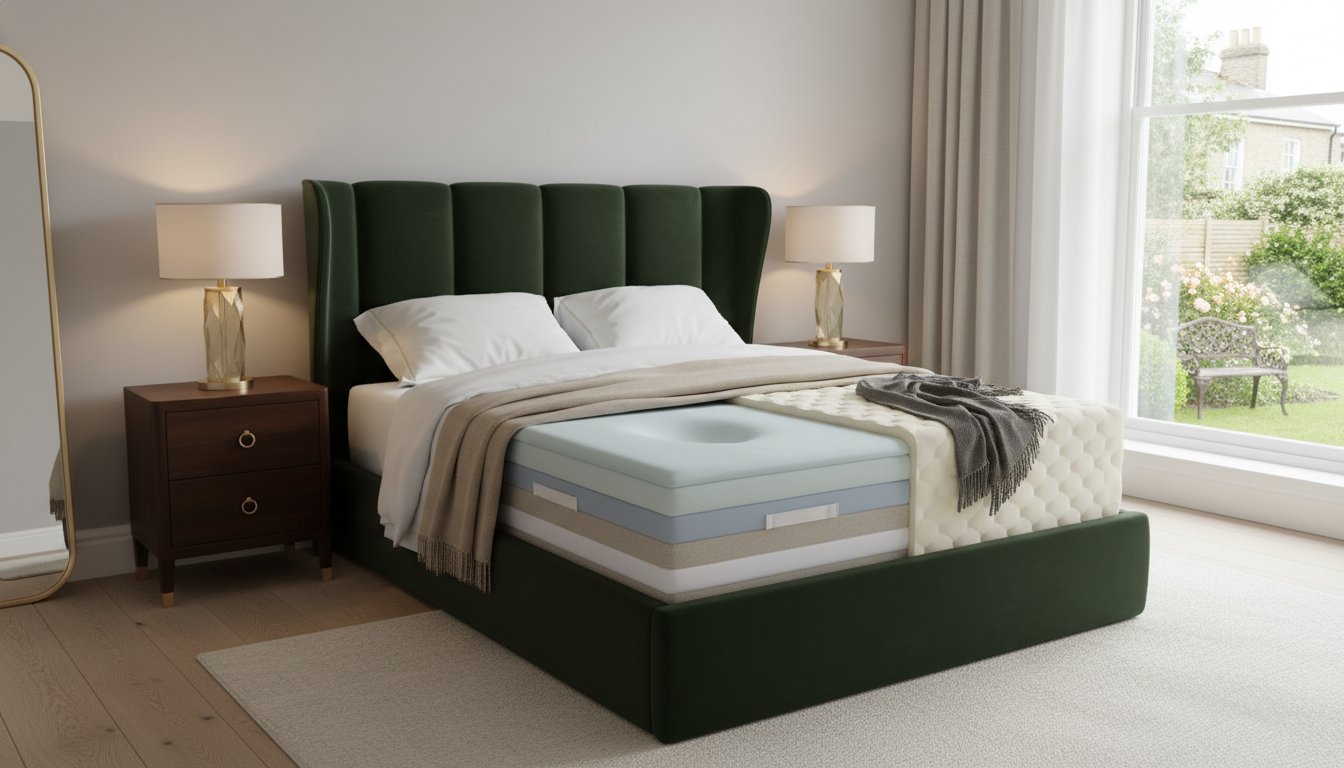
The softest mattress in the shop might actually be the primary cause of your morning back stiffness. It's a common mistake to chase a plush, cloud-like feel when your spine is actually crying out for structural alignment. If you've spent your nights tossing and turning to escape sharp pressure points, you know that choosing between latex vs memory foam for back pain is often a confusing journey. We've helped many neighbors in our community move past this frustration because we believe nobody should wake up feeling older than they truly are.
This guide will help you discover whether the contouring hug of memory foam or the buoyant support of latex is the ultimate solution for your aches. We're here to settle the debate by looking at the science of spinal lift versus pressure redistribution. You'll gain a clear understanding of which material suits your specific sleep position, ensuring your next bed is a long-term investment in your physical well-being. We'll look at everything from modern cooling gel infusions to the natural durability of rubber tree sap so you can make a confident, informed choice for your home.
Key Takeaways
- Learn how keeping your spine in its natural S-curve stops the pelvic tilt that leaves you feeling stiff each morning.
- See why the deep, heat-responsive contouring of memory foam is often the best choice for soothing sharp pressure points.
- Discover the buoyant uplift of latex, which helps you stay cool and move easily throughout the night without feeling stuck.
- Decide between latex vs memory foam for back pain by comparing how each material regulates temperature and supports your specific sleep position.
- Find out why a hybrid mattress might be your secret weapon for combining traditional spring support with modern comfort layers.
Understanding Spinal Alignment: Why Your Mattress Material Matters for Back Pain
Imagine your spine as a delicate bridge. If the foundations at either end aren't perfectly balanced, the middle starts to sag or crack. This is exactly what happens when you sleep on a surface that doesn't respect your body's natural S-curve. Many people in our local community come to us looking for a soft bed because it feels nice for five minutes in a showroom. However, we often explain that surface feel is very different from deep structural support. When comparing latex vs memory foam for back pain, the goal isn't just to feel cozy; it's to ensure your vertebrae remain in a neutral position from the moment you close your eyes until the sun comes up.
Back pain often occurs because your body is literally fighting the mattress all night long. If your hips sink too far into a low-quality foam, it creates an unnatural pelvic tilt. This stretches the ligaments in your lower back and forces your muscles to stay active just to protect the spine. You aren't actually resting; you're performing a low-intensity workout while you sleep. Choosing between different mattress materials is about finding a surface that does the heavy lifting for you so your muscles can finally switch off.
The Role of Pressure Relief in Pain Management
When a mattress is too firm, your shoulders and hips take the brunt of your weight. These high-pressure zones don't just cause immediate discomfort; they restrict blood flow and lead to that familiar morning stiffness. True support isn't about hardness. It's about a material's ability to redistribute your weight so no single joint is overloaded. This is why brands like Sealy focus so heavily on zonal support systems. These designs allow your heavier areas to sink just enough to keep the spine straight while providing a gentle cradle for your joints. Better circulation means fewer micro-awakenings and a body that feels refreshed rather than battered.
Material Density and Long-Term Spinal Integrity
Density is the secret to long-term spinal health. Low-density foams might feel great initially, but they often lose their shape within a year or two. This leads to troughing, where you're stuck in a permanent dip that ruins your alignment. High-density latex or premium memory foam maintains its integrity even for heavier sleepers. If you have a larger frame, you need a material with a higher push-back factor to prevent your spine from bowing. We always recommend looking at the build quality of brands like Relyon or Hypnos. Their use of high-quality materials ensures the mattress doesn't sag, providing the same level of spinal lift on year ten as it did on night one.
Memory Foam for Back Pain: Deep Contouring and Pressure Relief
Memory foam has a unique way of responding to your body that feels almost like a custom-made mold. When you lie down, your body heat and weight trigger a reaction in the visco-elastic material. It softens and flows around your curves, which is why it's often a champion for those dealing with sharp, localized pain. When comparing memory foam and latex, the foam's ability to absorb energy is often its standout feature. This energy absorption is also why it's excellent at motion isolation. If your partner moves, you won't feel a thing. For someone recovering from a back injury, this undisturbed rest is vital for the body's healing process.
You might have heard that memory foam sleeps hot. In the past, this was often true because the dense structure trapped air. However, modern technology has changed the game entirely. Many of the mattresses we offer now use open-cell structures or gel-infused layers. These innovations pull heat away from your skin so you get the benefits of the contouring hug without waking up in a sweat. It's a significant leap forward for those who need the pressure relief but worry about temperature. We've seen many neighbors find great relief with Sealy mattresses that utilize these advanced cooling foams.
Targeting Lower Back and Sciatica Relief
One of the biggest wins for lower back pain is how memory foam fills the "lumbar gap." This is the space between your lower spine and the mattress. By filling this void, the foam provides 100% surface contact, ensuring no part of your back is left unsupported. Side sleepers especially benefit because the material allows shoulders and hips to sink in while keeping the waist supported. Memory foam redistributes your body weight across the entire surface to significantly reduce the pressure on sensitive nerves.
Potential Drawbacks for Back Pain Sufferers
It's not the perfect solution for everyone. Because the foam takes a moment to return to its original shape, some people feel "stuck" when trying to roll over. This slow response can be frustrating if you have limited mobility or if your back pain flares up when you're trapped in one position. Also, lower-quality foams can sometimes sag too much, creating a hammock effect that actually strains the spine. If you're a stomach sleeper, you might find that your hips sink too deep, which arches your back and causes more pain. When weighing up latex vs memory foam for back pain, these lifestyle factors are just as important as the material science itself.
Latex Mattresses: Buoyant Support and Natural Spinal Alignment
Latex is the material of choice for those who want to feel "on top" of their bed rather than "in" it. While memory foam uses your body heat to soften and cradle you, latex provides an immediate push-back. This "uplift" factor is a game-changer for spinal health. It ensures that your heavy midsection stays elevated, preventing the dip that often leads to morning aches. When weighing up latex vs memory foam for back pain, it's this active resistance that often wins over people with chronic lower back issues. You won't feel like you're fighting to get out of a hole every time you want to roll over.
One of the most impressive benefits of latex is its longevity. While a standard memory foam mattress typically lasts between 6 to 8 years, a high-quality latex mattress can maintain its supportive shape for 10 to 20 years. This durability means your investment in sleep health pays off for over a decade. We often recommend brands like Hypnos for neighbors who want a bed that won't sag after just a few seasons. Plus, latex is naturally breathable. The material features a "pin-core" structure that allows air to circulate freely, making it the superior choice if you find yourself waking up hot and bothered. It's a cleaner sleep environment too, as natural latex is inherently resistant to dust mites and mold.
Dunlop vs. Talalay: Nuances for Back Support
Choosing the right type of latex matters for your specific pain profile. Dunlop latex is the denser, firmer option. It's excellent for providing heavy-duty lumbar support because it doesn't give way easily under weight. Talalay latex goes through an extra vacuum and flash-freeze process, resulting in a softer, more consistent feel. This makes Talalay a better fit for those who need a bit more pressure relief on their joints without losing that signature bounce. For chronic stiffness, Dunlop is usually the hero because it offers the most stable foundation for your spine.
Buoyancy and Ease of Movement
If you're someone who tosses and turns to find comfort, the "instant response" of latex is a lifesaver. You don't have to wait for the bed to "reset" when you change positions. The elastic nature of the material provides active support that adjusts immediately as you move, whereas memory foam offers a more passive, slow-reacting cradle. This buoyancy prevents your spine from dipping during transitions, keeping your alignment secure all night long. By staying on the surface, your body can regulate its temperature more effectively, leading to a deeper and more restorative recovery for your back muscles.
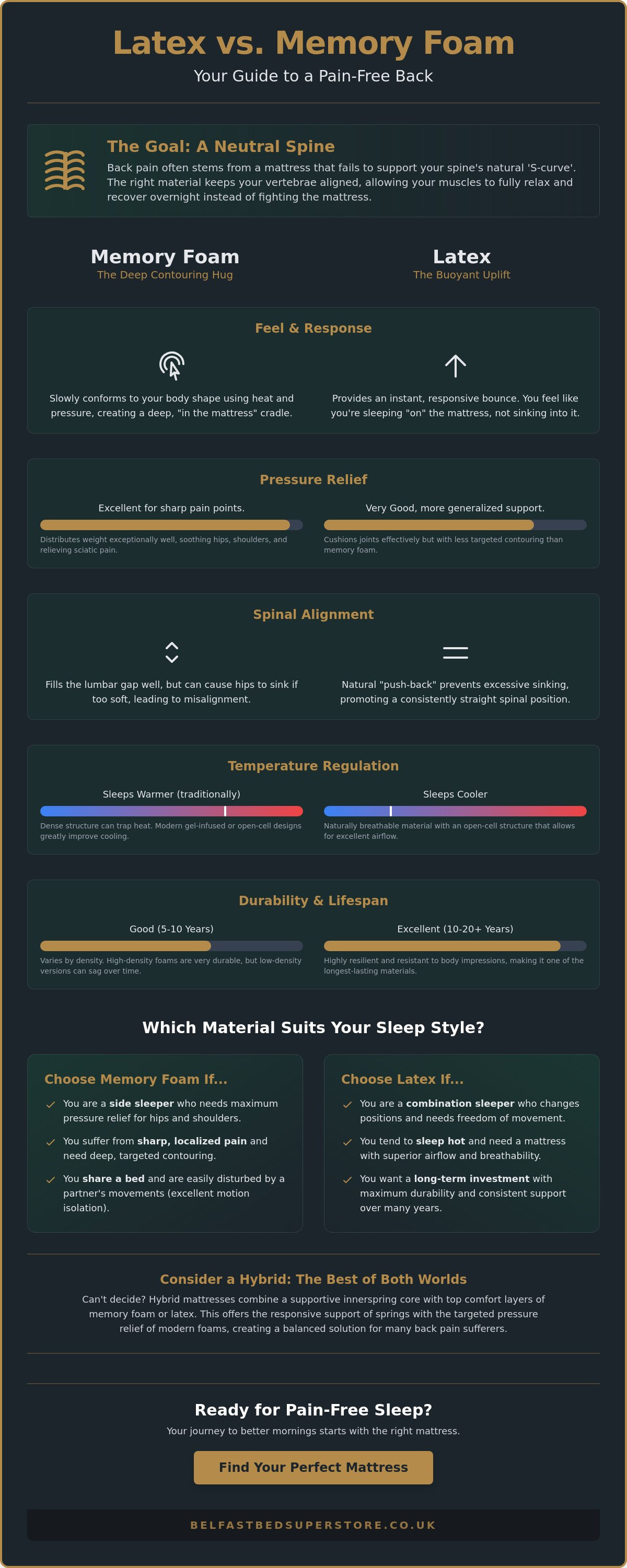
The Direct Comparison: Latex vs. Memory Foam for Your Pain Profile
Deciding between latex vs memory foam for back pain isn't about finding a universal winner. It's about matching a material’s physical properties to your body's specific needs. If you're a lighter individual, you might find that memory foam provides the necessary "give" to cushion your joints effectively. Heavier neighbors often prefer the resilient lift of a Sealy mattress or a latex option, as these prevent the deep sinkage that can lead to spinal misalignment. While memory foam offers that famous "sinking in" sensation, latex keeps you "floating on top," which is a vital distinction for anyone who finds it difficult to move during the night.
Temperature and value also play huge roles in your long-term satisfaction. We've seen that while memory foam often has a more accessible initial price point, latex is a champion of longevity. Spending a bit more now on a material that stays supportive for up to 20 years often proves more economical than replacing a foam bed every 6 or 8 years. Additionally, if you're a hot sleeper, the natural breathability of latex helps maintain a steady body temperature. This prevents the tossing and turning that often leads to increased muscle tension and morning stiffness.
Matching Material to Your Sleep Position
- Side Sleepers: Memory foam usually wins here. It allows your shoulders and hips to dip just enough to keep your spine straight, preventing the "pins and needles" feeling in your extremities.
- Back Sleepers: You'll likely prefer the balanced lift of latex. It supports the natural S-curve of your spine without letting your hips drop too low into the mattress.
- Stomach Sleepers: Firm latex is essential. It provides the "active" support needed to prevent your lower back from arching too much, which is a primary cause of lumbar strain for front-sleepers.
Choosing Based on Your Type of Pain
If you live with chronic lower back pain, the buoyant support of latex often provides the most stable foundation for daily recovery. For those dealing with acute injuries or sharp nerve pain like sciatica, the deep contouring of memory foam can create a feeling of weightlessness that takes the pressure off sensitive areas. If your main struggle is waking up with general stiffness, the cooling properties of latex can prevent the restless movement that keeps your muscles from fully relaxing. If you're ready to find your perfect match, you can browse our full collection of quality mattresses and beds to start your journey toward pain-free mornings.
The Expert Verdict: How to Choose Your Path to Pain-Free Sleep
Choosing the right bed is a deeply personal journey. While we've looked at the science behind latex vs memory foam for back pain, the "best" mattress ultimately depends on your unique body shape and how you move at night. Many of our neighbors find they don't have to pick just one material. Hybrid mattresses have become a leading choice for spinal health because they combine the best of both worlds. These designs typically offer:
- Pocket Spring Foundations: Individual springs that provide deep, structural lift for your spine.
- Specialized Comfort Layers: Top tiers of latex or memory foam to cradle sensitive pressure points.
- Enhanced Edge Support: Making it much easier to sit on the side of the bed or get up in the morning.
- Superior Breathability: Allowing air to flow through the spring unit to keep the sleep surface cool.
When you visit a showroom to try a new bed, don't just sit on the edge for a few seconds. We recommend the 15-minute rule. Lie down in your primary sleeping position for at least a quarter of an hour. It takes that long for your muscles to fully relax and for your spine to settle into the material. Only then will you feel if the mattress is truly keeping you aligned or if your body is starting to compensate for a lack of support. High-quality mattresses are heavy, so we always suggest professional delivery and setup to ensure your new investment is handled with care.
Premium Brands for Back Health
We've curated a selection of brands that we trust for their specific orthopaedic benefits. Hypnos mattresses are world-renowned for using natural fillings that provide exceptional support while remaining naturally breathable. If you need a more technical approach to posture, the zoned support systems found in Sealy mattresses are specifically engineered for posturepedic health. For those who prefer a more traditional feel, Relyon mattresses have been a staple for long-lasting back support for generations in homes across the region.
The 30-Night Guarantee and Peace of Mind
Your body needs time to unlearn the bad habits caused by an old, sagging mattress. It usually takes at least 21 days for your muscles and ligaments to fully adjust to a new, supportive system. This is why we offer a 30-night trial. We want you to be absolutely certain of your choice. If you aren't sure where to start, you can visit our local showroom for a hands-on test or reach out for an expert online consultation. We're here to help you move toward a life where you wake up feeling refreshed and pain-free.
Your Journey to Pain-Free Mornings Starts Here
Deciding between latex vs memory foam for back pain is the first step toward reclaiming your energy and well-being. Whether you choose the deep, cradling pressure relief of memory foam or the resilient, cooling lift of natural latex, the right surface is out there. We've seen how modern hybrid designs can bridge the gap, offering the structural integrity of pocket springs with the specialized comfort of premium materials. The goal is simple: a spine that stays aligned and muscles that can finally relax.
As family-run experts since 1990, we take pride in helping our neighbors find their perfect rest without the stress. We make the transition to a better lifestyle easy with 0% Finance available on premium brands and a professional old bed removal and recycling service. You don't have to worry about the logistics; we'll handle the heavy lifting for you. It's time to invest in a sleep system that works as hard as you do.
Explore our range of back-supporting mattresses with a 30-night sleep trial and discover the difference that expert guidance makes. You deserve to wake up feeling refreshed, supported, and ready to take on the day.
Frequently Asked Questions
Is a firm mattress always better for back pain?
No, a rock-hard mattress isn't the universal cure for a bad back. While you need enough stability to prevent sagging, a bed that is too firm can create painful pressure points on your shoulders and hips. This often causes your spine to arch unnaturally. Most people find that a medium-firm feel provides the best balance of structural support and gentle cushioning for the joints.
How long does a memory foam mattress last before it starts to sag?
A high-quality memory foam mattress typically provides reliable support for 6 to 8 years. Over time, the visco-elastic cells begin to soften and lose their ability to bounce back, which can lead to the "hammock effect." If you start noticing a permanent dip where you sleep or wake up with new stiffness, it's usually a sign that the foam's internal structure has finally tired.
Can I use a mattress topper to fix back pain instead of buying a new bed?
A topper can improve the surface feel of a bed that is too firm, but it won't fix a mattress that has lost its support. If your current mattress is sagging or has collapsed springs, a topper will simply sink into the existing dip. You can't build a stable sleep surface on a broken foundation, so a new mattress is usually the only way to ensure proper spinal alignment.
Is latex or memory foam better for people who sleep hot?
Latex is generally the superior choice for those who struggle with overheating at night. The material features a natural open-cell structure and is often manufactured with "pin-core" holes that allow air to move freely. While many modern memory foam options use cooling gels, latex doesn't rely on body heat to contour, so it stays naturally temperature-neutral throughout the night.
What is the best mattress for a side sleeper with lower back pain?
Side sleepers often get the most relief from memory foam because it allows the shoulders and hips to sink in while filling the gap at the waist. This prevents the spine from twisting or bowing during the night. When evaluating latex vs memory foam for back pain, side sleepers usually prefer the deeper "give" of foam to avoid the pins-and-needles sensation in their arms and legs.
How much should I expect to spend on a high-quality mattress for back health?
The price of a mattress varies based on the density of the materials and whether it uses natural or synthetic components. Natural latex often requires a higher initial investment because of the specialized harvesting and manufacturing processes involved. Memory foam is generally more accessible for different budgets. It's helpful to view the purchase as a long-term investment in your health that will last between 8 and 20 years depending on the material you choose.
Does a latex mattress smell "rubbery" when new?
Natural latex sometimes has a very faint, sweet scent similar to vanilla when it's first unpacked, but it doesn't have the harsh chemical smell associated with some synthetic foams. This natural aroma is harmless and typically disappears within a few days. Keeping your windows open and using a breathable mattress protector can help any initial scent dissipate even faster.
What is the difference between an orthopaedic mattress and a standard one?
An orthopaedic mattress is specifically engineered to support the joints and maintain the natural curve of the spine. These models often use firmer spring systems or high-density foam layers to distribute weight more evenly. While a standard mattress focuses on general comfort, an orthopaedic model is designed to reduce the tossing and turning that causes morning aches, making it a more purposeful choice for back health.


