

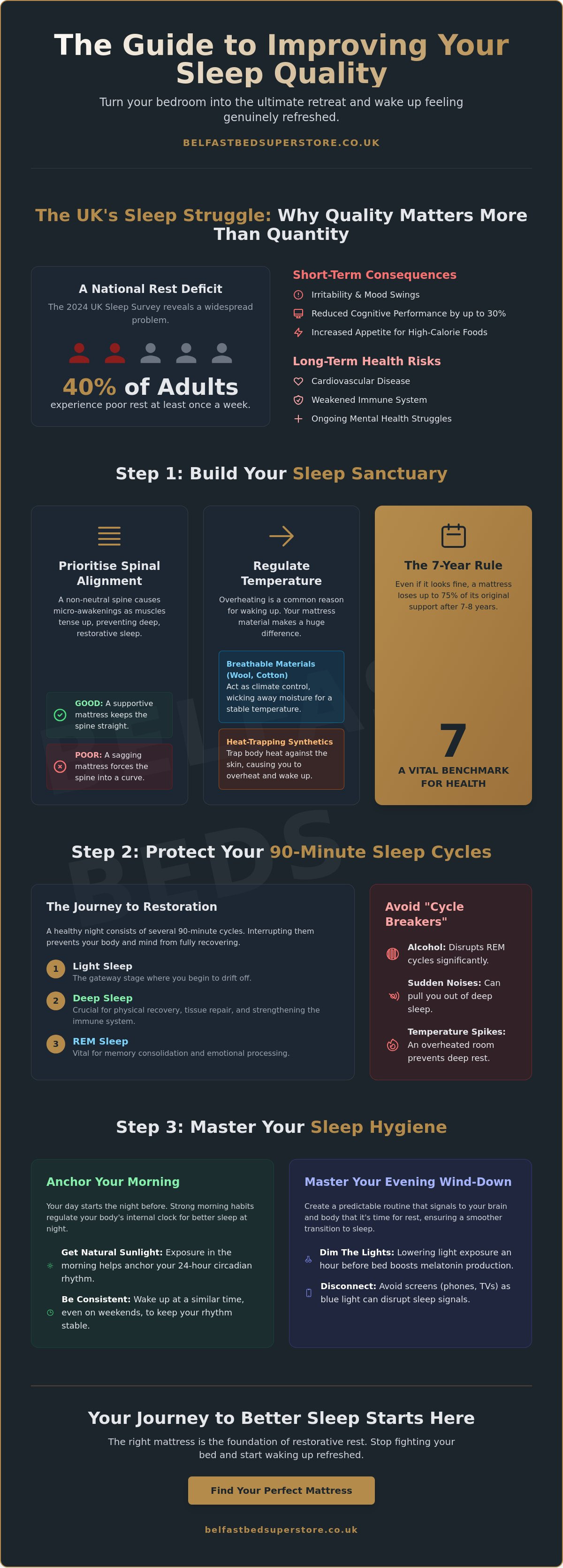
What if the secret to a productive morning in Belfast isn't found in a strong cup of tea, but in the eight hours you spent fighting your lumpy mattress last night? It's a common struggle, as the 2024 UK Sleep Survey revealed that 40% of adults across the country now experience poor rest at least once every week. You likely know the feeling of waking up with nagging aches or that heavy brain fog that makes the simplest tasks feel like a mountain. We understand how frustrating it is when your bed feels more like a hurdle than a sanctuary. This guide explains how to improve sleep quality through a blend of expert habits and environmental tweaks designed for long-term comfort.
You'll discover a comprehensive approach to restorative rest that prioritizes your physical well-being and spinal health. We're going to share practical steps to help you ditch the tossing and turning for good. From understanding why your current mattress might be the culprit to building a sustainable nightly routine, you'll gain the tools needed to wake up feeling genuinely refreshed. Let's look at how you can turn your bedroom into the ultimate retreat for 2026.
Key Takeaways
- Wake up feeling truly refreshed by learning how to anchor your 24-hour circadian rhythm using simple morning habits and natural sunlight.
- Master a predictable evening "wind-down" routine that signals your brain it’s time for rest, ensuring a smoother transition into deep, restorative sleep.
- Discover how to improve sleep quality by optimising your sleep sanctuary, focusing on proper spinal alignment to eliminate the micro-awakenings that leave you tired.
- Recognise the hidden warning signs of a degrading mattress and learn why the "7-year rule" is a vital benchmark for protecting your long-term physical health.
Understanding Sleep Quality: Why It Matters More Than Quantity
Waking up feeling truly refreshed in Belfast depends on more than just the time you spend under the duvet. Many of our customers tell us they spend nine hours in bed but still feel sluggish when the alarm goes off. This happens because sleep quality is the efficiency of your sleep cycles in repairing the body. While duration is part of the puzzle, the real magic happens within your sleep architecture. This is governed by your 24-hour circadian rhythm, which acts as your body’s internal master clock. It dictates when you feel alert and when your brain starts producing melatonin to prepare for rest.
To understand how to improve sleep quality, you have to look at what happens after you close your eyes. There is a massive difference between "time in bed" and "actual restorative sleep." You could be in bed for a long time, but if your environment or habits prevent you from reaching deep sleep and REM, you won't feel the benefits. Gaining a foundational Understanding Sleep Hygiene is the first step in ensuring your body moves through these cycles without interruption.
The Consequences of Poor Sleep Quality
Missing out on high-quality rest shows up quickly in your daily life. In the short term, you'll likely experience irritability, poor concentration, and a noticeable increase in your appetite for high-calorie foods. Some studies suggest that a single night of disrupted sleep can reduce your cognitive performance by as much as 30%. It's a common mistake to believe in the "sleep debt" myth. You can't simply catch up on lost rest during the weekend; your body requires consistent nightly cycles to maintain health. Over the long term, poor sleep quality is linked to serious issues like cardiovascular disease, a weakened immune system, and ongoing mental health struggles.
The Stages of a Healthy Sleep Cycle
A healthy night of rest isn't one long block of unconsciousness. Instead, your brain moves through several 90-minute cycles consisting of different stages. Light sleep acts as the gateway, but the real work happens during Deep Sleep and REM. In the Deep Sleep stage, your body focuses on physical recovery, including tissue repair and immune system strengthening. REM (Rapid Eye Movement) is equally vital, as this is when memory consolidation and emotional processing occur. We often see people struggle with "cycle breakers" that prevent them from reaching these deep levels. Common culprits include:
- Alcohol consumption: It might help you fall asleep faster, but it's a major disruptor of REM cycles.
- Sudden noises: Unexpected sounds can kick you back into light sleep even if they don't fully wake you up.
- Temperature spikes: An overheated room often prevents the body from staying in deep restorative stages.
Focusing on how to improve sleep quality means protecting these stages from start to finish. When you support your body’s natural rhythm with the right environment and habits, you'll find that seven hours of high-quality sleep feels much better than ten hours of tossing and turning.
Optimising Your Sleep Sanctuary: The Physical Foundation of Rest
Your mattress isn't just a piece of furniture; it's the most vital tool in your health arsenal. Think of it as the foundation for every physical and mental recovery process that happens while you drift off. When we talk about how to improve sleep quality, we have to start with spinal alignment. If your spine isn't neutral, your body experiences micro-awakenings throughout the night as your muscles tense to compensate for poor support. A 2021 study found that even brief interruptions can reduce sleep efficiency by 15 percent, preventing you from reaching the deep, restorative stages of sleep you need to feel refreshed.
Temperature regulation is another critical factor for a good night's rest. Many sleepers wake up during the night because they've overheated, often due to synthetic materials trapping body heat against the skin. Choosing breathable surfaces makes a world of difference. We often recommend Hypnos Mattresses because they use natural fillings like wool and cotton. These materials act as a personal climate control system, naturally wicking away moisture and keeping you at a steady, comfortable temperature regardless of the season.
Choosing the Right Support System
Finding the right base for your body type is essential for long-term comfort. Pocket sprung systems are superior to traditional open coils because each spring moves independently, offering better motion isolation if your partner tosses and turns. For those seeking targeted pressure relief, Relyon Mattresses offer exceptional latex options. Latex is naturally resilient and pushes back against your weight, which helps maintain that crucial alignment. Side sleepers usually benefit from a medium feel to cushion shoulders, while back sleepers often require a firmer surface to prevent the lower back from dipping.
The Role of Pillows and Bedding
A pillow is effectively a mattress for your neck. If it's too high or too flat, it strains your cervical spine and causes morning stiffness. Natural latex pillows are excellent for support without the heat retention often found in standard memory foam. When it comes to linens, look for natural fibres with a thread count between 200 and 400. Higher isn't always better; excessively high thread counts can actually reduce breathability, making it harder to stay cool during the night.
Creating a Restful Bedroom Environment
We advocate for the "Cave Method" to transform your bedroom into a sleep haven. This involves keeping the room cool, ideally between 16 and 18 degrees Celsius, and completely dark. Light exposure can suppress melatonin production by up to 50 percent, so investing in high-quality blackout blinds is a smart move for UK homes. Reducing clutter is just as important. A messy room creates "clutter stress," making it harder for your brain to switch off. Following Harvard's sleep secrets, you should also consider white noise machines to mask outside traffic or neighbourhood sounds. If you're ready to transform your room, you can view our latest mattress collections to find your perfect match.
Mastering Sleep Hygiene: A Step-by-Step Evening Routine
Improving your sleep starts long before your head hits the pillow. We define sleep hygiene as the specific set of habits and environmental factors that prepare your brain for deep rest. Your body functions on a circadian rhythm, which means it thrives on a predictable wind-down sequence. When you follow the same steps every night, you signal to your brain that it's time to transition from active to rest mode. This consistency is one of the most effective ways to learn how to improve sleep quality without needing complex interventions. A 2024 study indicated that individuals with a set routine fall asleep 15% faster than those with irregular habits.
The science centres on melatonin, the hormone responsible for your sleep-wake cycle. When your eyes detect darkness, the pineal gland increases melatonin production to make you feel drowsy. Artificial light disrupts this natural flow, tricking your brain into thinking it's still daytime. As your local sleep experts here in Belfast, we've seen how small changes to your evening can lead to a much better morning after. We define the Digital Sunset as the hour before bed without screens, allowing your natural hormones to take the lead.
The 60-Minute Wind-Down Framework
Following a structured plan helps your nervous system decompress. We recommend this three-step approach:
- Step 1: Dim the lights and engage the Digital Sunset. Switch off phones, tablets, and laptops. This 60-minute screen-free window is non-negotiable for deep rest.
- Step 2: Gentle physical preparation. A warm bath or light stretching helps lower your core body temperature. This is also a great time to ensure your bed offers the right support. Many of our customers find that a premium Sealy mattress provides the perfect foundation for this physical relaxation.
- Step 3: Mental decluttering. Spend 10 minutes journaling or reading a physical book. This helps quieten a racing mind and prevents "sleep onset insomnia."
Managing Light and Tech in the Bedroom
Blue light is particularly aggressive because it mimics daylight, which suppresses the pineal gland. According to 2024 sleep research, even 30 minutes of blue light exposure can delay melatonin onset by up to 90 minutes. For more detailed advice on environmental factors, you can explore Mayo Clinic's guide to better sleep, which highlights the importance of a restful environment.
We strongly suggest removing the TV from the bedroom entirely. This strengthens the vital association that your bed is for sleep only, rather than entertainment or work. If you find that tech use is absolutely unavoidable, always enable "Night Mode" or use blue light filters. While these tools reduce the impact, they aren't a total substitute for a dark, screen-free sanctuary. Creating this boundary is a proven method for anyone looking at how to improve sleep quality in a busy, modern world.
Lifestyle Habits That Influence Your Nightly Rest
Most people think sleep is a switch you flip at 11 PM. In reality, your body begins preparing for rest the moment you step out of bed. Setting a solid foundation during the day is the most effective way to see a 25% to 30% increase in deep sleep cycles. Getting natural sunlight within 30 minutes of waking up anchors your circadian rhythm. This simple act tells your brain exactly when to start the countdown to bedtime, making it much easier to drift off naturally when the sun goes down.
Dietary Choices and Timing
What you eat and drink has a direct impact on how to improve sleep quality. To keep your rest on track, consider these adjustments to your daily routine:
- The Caffeine Curfew: Stick to a strict cut-off point. Because caffeine has a half-life of about five to six hours, that 4 PM cup of tea is still circulating in your system at midnight. We recommend finishing your last caffeinated drink at least 8 hours before your head hits the pillow.
- Watch the Spice: Avoid heavy, spicy, or acidic foods late in the evening. A 2023 study published in the Journal of Clinical Sleep Medicine found that high-fat meals eaten close to bedtime lead to more frequent awakenings due to indigestion.
- Sleep-Promoting Snacks: If you're hungry before bed, focus on foods rich in magnesium and tryptophan. A small bowl of Greek yoghurt or a handful of walnuts can help relax your muscles and prepare your brain for rest.
Don't fall for the "nightcap" trap. While a glass of wine might help you drift off faster, it prevents you from reaching the restorative REM stage. You'll likely wake up feeling groggy and unrefreshed, even if you spent eight hours in bed.
Exercise and Daily Activity
Regular aerobic activity is a game changer for anyone wondering how to improve sleep quality. Just 30 minutes of moderate exercise can significantly increase the amount of slow-wave sleep you get, which is the stage where your body performs vital repairs. However, timing is everything for your internal clock.
Intense HIIT sessions or heavy lifting within 3 hours of sleep can spike cortisol levels and raise your core body temperature. This makes it harder for your brain to transition into rest mode. Stick to morning or afternoon workouts to give your heart rate and temperature time to settle. Combining exercise with morning light exposure is the ultimate "double win." Even a short walk around your local Belfast neighbourhood helps regulate your melatonin production for the following night, ensuring you feel tired at the right time.
If you've mastered your daily habits but your mattress is still letting you down, explore our range of Sealy mattresses for the ultimate support and comfort.
When to Upgrade: Signs Your Bed is Ruining Your Sleep
You can follow every lifestyle tip on how to improve sleep quality, but if your mattress has lost its structural integrity, your efforts will likely fall short. Your bed is the most used piece of furniture in your home, and its condition directly impacts your spinal health and daily energy levels. It's helpful to view a new mattress as a vital investment in your long-term well-being rather than just a household purchase.
If you aren't sure whether your current setup is to blame for your restless nights, use this quick checklist to identify a failing mattress:
- You wake up with stiff joints or lower back pain that eases after an hour of moving around.
- There are visible dips, lumps, or sagging areas, especially in the centre.
- The bed makes audible creaking or groaning noises when you turn over.
- You find yourself rolling toward the middle of the bed involuntarily.
- You consistently feel more rested after sleeping in a hotel or a friend's spare room.
The National Bed Federation generally recommends the 7-year rule for replacements. While a high-quality option like Sealy Mattresses is engineered with premium Posturepedic technology for superior durability, internal components eventually degrade. Even if the top cover looks clean, the springs and foam layers lose their ability to push back against your body weight after 20,000 hours of use. This loss of support forces your muscles to work throughout the night just to keep your spine aligned.
The Anatomy of an Upgrade
Finding the right replacement requires more than a quick sit-test. We suggest using the 10-minute rule: lie down in your actual sleeping position for at least ten minutes to let the materials settle. It's also wise to look for a 30-night sleep trial to ensure the tension suits your frame. Don't overlook the importance of professional assembly. A mattress is only as good as the base it sits on, and expert setup ensures the structural integrity of the entire sleep system remains intact from day one.
How Belfast Bed Superstore Supports Your Journey
We're dedicated to helping you achieve the "perfect morning" through honest, expert advice tailored to your specific needs. Our team understands that getting rid of an old, bulky mattress is a challenge, so we provide convenient old bed removal and recycling services across the UK. We also believe that financial constraints shouldn't stand in the way of your health. That's why we offer flexible 0% finance options, making it easier to bring home a premium bed that truly knows how to improve sleep quality for years to come.
Take the First Step Toward Better Mornings
You've seen that learning how to improve sleep quality is about more than just counting hours. It requires a dedicated evening routine and a sleep environment that actually supports your spine. When your mattress passes the seven-year mark, it often loses the ability to provide that essential restorative rest your body needs to function. At Belfast Beds, we bring over 30 years of local expertise in British sleep systems to help you make the right choice. We're proud to be authorised stockists of Hypnos, a Royal Warrant holder known for handcrafted excellence. To ensure you find the perfect fit, we provide a 30-night sleep guarantee and interest-free credit options. You deserve a bedroom that feels like a retreat rather than a source of frustration. Explore our range of premium mattresses and start sleeping better today. We can't wait to help you rediscover what a truly great night's rest feels like.
Frequently Asked Questions
How long does it take to improve sleep quality after changing habits?
You'll typically notice a difference in 14 to 21 days after establishing a consistent routine. Your body needs this three-week window to reset its internal clock and adjust to new habits like a regular bedtime. We've seen many of our Belfast customers report feeling more alert in the mornings once they've stuck to a schedule for at least 20 nights. Consistency is the real secret to how to improve sleep quality over the long term.
Can a bad mattress cause insomnia or just physical pain?
A worn-out mattress can definitely trigger secondary insomnia by making it impossible to find a comfortable position. While physical pain is common, the mental frustration of tossing and turning often leads to a cycle of sleep-onset anxiety. If your mattress is over 8 years old, it likely lacks the support needed for deep rest. We recommend checking your bed for visible dips deeper than 2.5cm, as these often cause both back ache and sleepless nights.
Is it better to sleep in a cold room or a warm room?
Sleeping in a cool room between 16°C and 18°C is the most effective way to help your body's core temperature drop for rest. Research from the Sleep Council suggests that a room over 24°C leads to restlessness, while anything under 12°C makes it hard to drift off. It's much easier to stay cosy under a 10.5 tog duvet in a cool room than it is to cool down in a stuffy one during the summer.
How much caffeine is too much if I want to sleep well?
You should limit your intake to 400mg of caffeine per day and stop drinking it at least 6 hours before your planned bedtime. A standard mug of instant coffee contains about 100mg, while a double espresso can reach 150mg. Because caffeine has a half-life of 5 hours, having a brew at 4:00 PM means half of it is still in your system at 9:00 PM. This interferes with your ability to reach deep, restorative sleep stages.
Does a mattress topper actually improve sleep quality or is it a temporary fix?
A mattress topper is a temporary comfort solution rather than a permanent fix for a failing bed. While a 5cm memory foam topper can soften a firm surface, it won't provide the structural support of a new pocket sprung mattress. If your current bed is sagging or has lumps, a topper will simply follow those same dips. It's a great way to add a bit of luxury, but it doesn't replace the need for a supportive base.
What is the best sleeping position for improving sleep quality?
Side sleeping is widely considered the best position for how to improve sleep quality, particularly for reducing snoring and aiding digestion. Around 54% of UK adults sleep on their sides, which helps keep airways open and reduces pressure on the spine. If you choose this position, make sure you have a medium-firm pillow to keep your neck aligned with your shoulders. This prevents that stiff neck feeling when you wake up in our Northern Ireland weather.
How often should I really replace my pillows?
You should replace your pillows every 1 to 2 years to maintain proper neck support and hygiene. Over 24 months, a pillow can accumulate dust mites and lose up to 30% of its original loft. A simple test is to fold your pillow in half; if it doesn't spring back immediately, it's time to visit us for a fresh one. Good pillows ensure your head stays at the right angle for clear breathing all night without interruptions.
Can weighted blankets help with sleep quality and anxiety?
Weighted blankets use deep pressure stimulation to increase serotonin levels and can reduce anxiety scores by 60% in many users. These blankets, typically weighing between 5kg and 10kg, mimic the feeling of being hugged, which helps calm the nervous system. They are particularly popular here in Belfast for those who struggle with restless legs or high stress. Most experts suggest choosing a blanket that is roughly 10% of your total body weight for the best results.


